

Heat dissipation structure and heat dissipation method of PCR detector
A technology of heat dissipation structure and detector, applied in the field of PCR amplification
- Summary
- Abstract
- Description
- Claims
- Application Information
AI Technical Summary
Problems solved by technology
Method used
Image

Examples
Embodiment
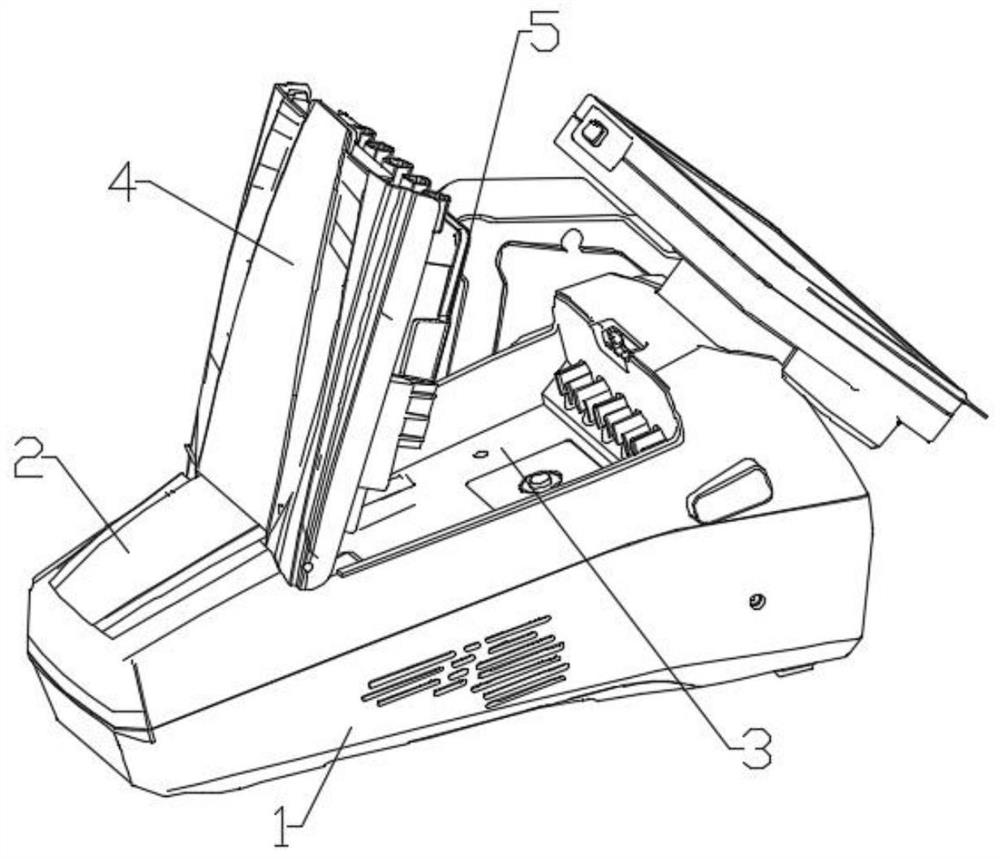
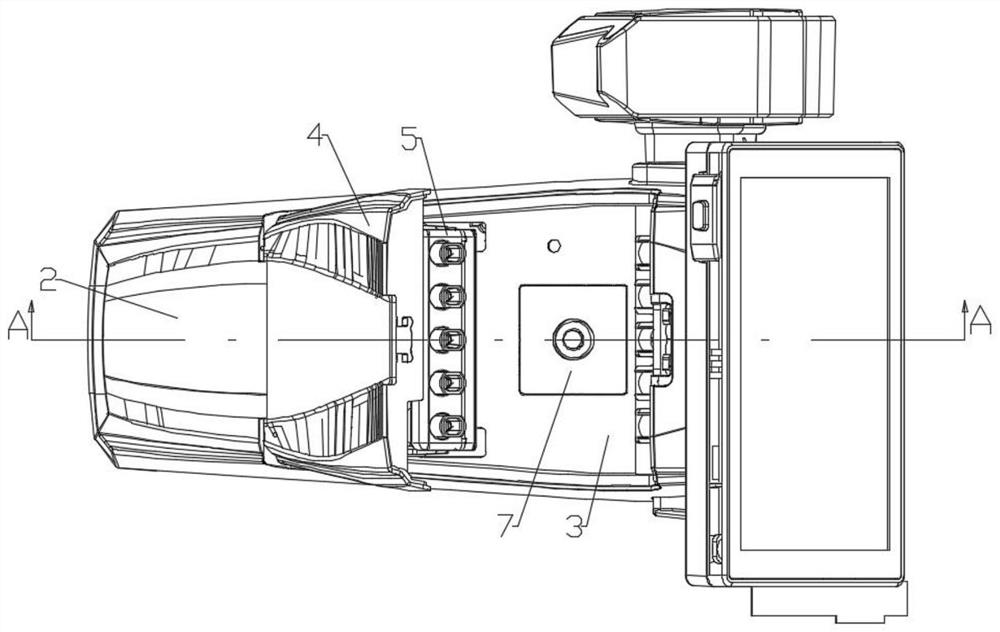
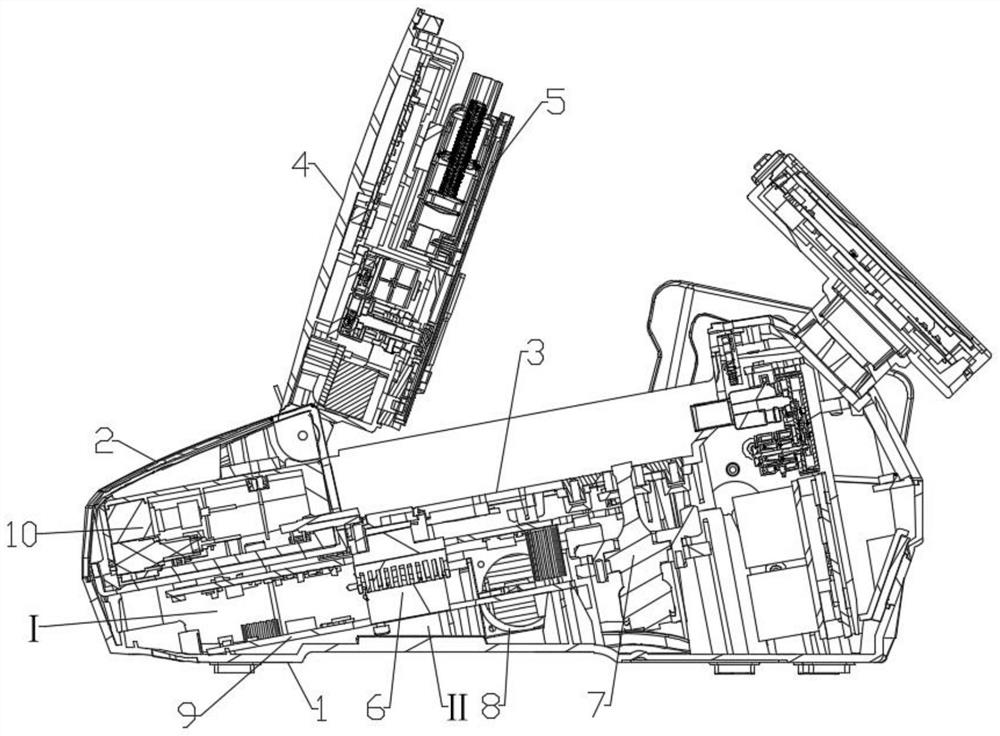
[0041] combine Figure 1-5 As shown, this embodiment discloses a heat dissipation structure of a PCR detector, which includes a lower case 1 and a detection case 2, the lower case 1 and the detection case 2 are fixed by a buckle connection, and the lower case 1 It forms a hollow cavity structure with the detection housing 2, see Figure 4-5 As shown, the lower case 1 includes a first side 102, a second side 103, a third side 104, a fourth side 105 and a first bottom 101, the first bottom 101 is placed on the ground horizontally, and the first bottom 101 The width of one end is smaller than the width of the opposite end, and the four corners of the lower surface of the first bottom surface 101 are provided with support installation grooves 107, and a support body is fixedly connected in the support installation groove 107; the first side surface 102 is fixedly connected to the upper width of the first bottom surface 101 The smaller end, the second side 103 is fixedly connected...
PUM
 Login to View More
 Abstract
Description
Claims
Application Information
 Login to View More