
Bismuth oxide-assisted zirconia-based electrolyte, and preparation method and application thereof
A zirconia-based, electrolyte technology, applied in the electrolysis process, electrolysis components, circuits, etc., can solve the problems of high sintering temperature and high content of scandium in the electrolyte, and achieve the effect of lowering the sintering temperature, reducing the scandium content, and uniform synthesis
- Summary
- Abstract
- Description
- Claims
- Application Information
AI Technical Summary
Problems solved by technology
Method used
Image

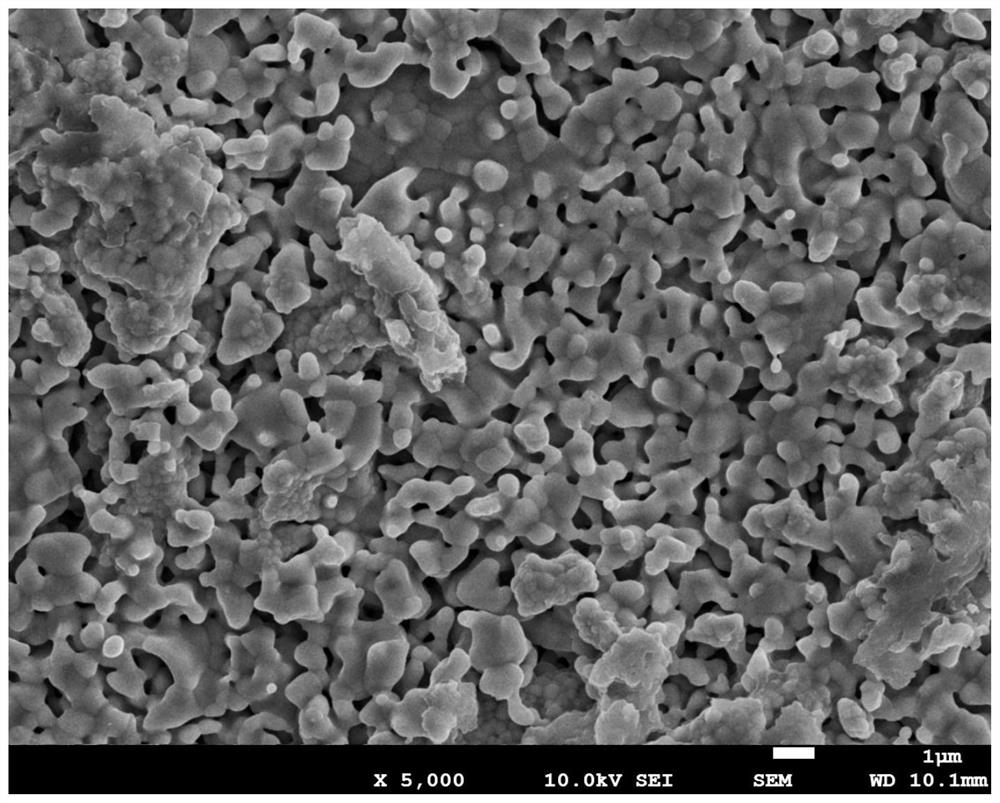
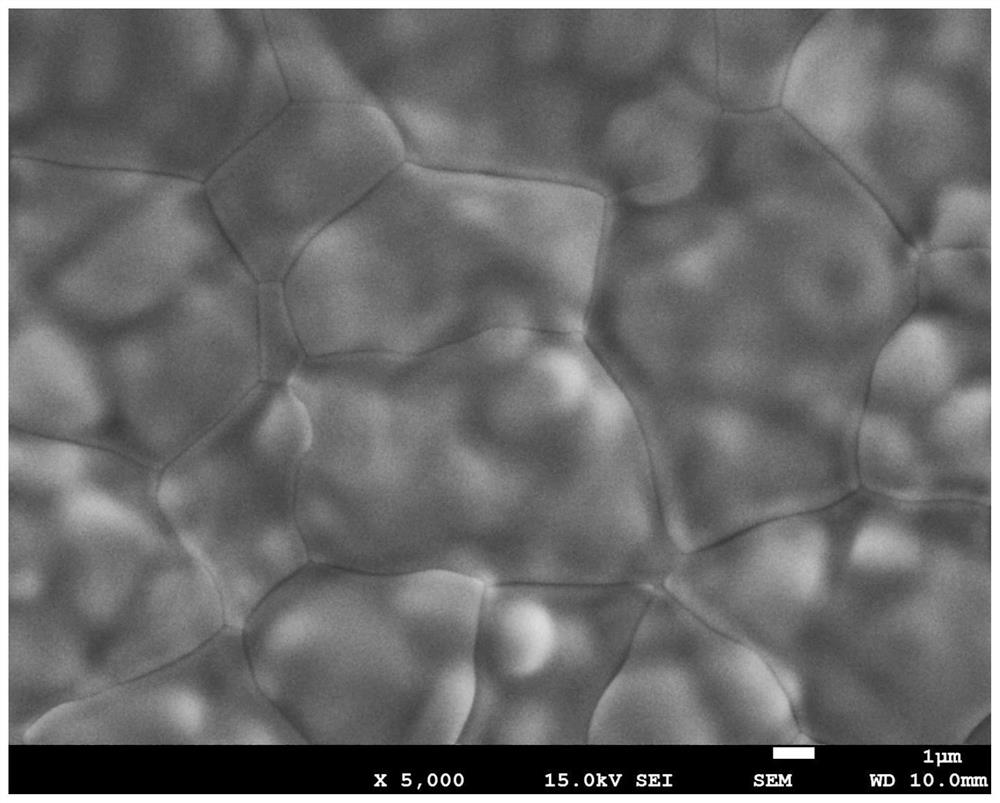
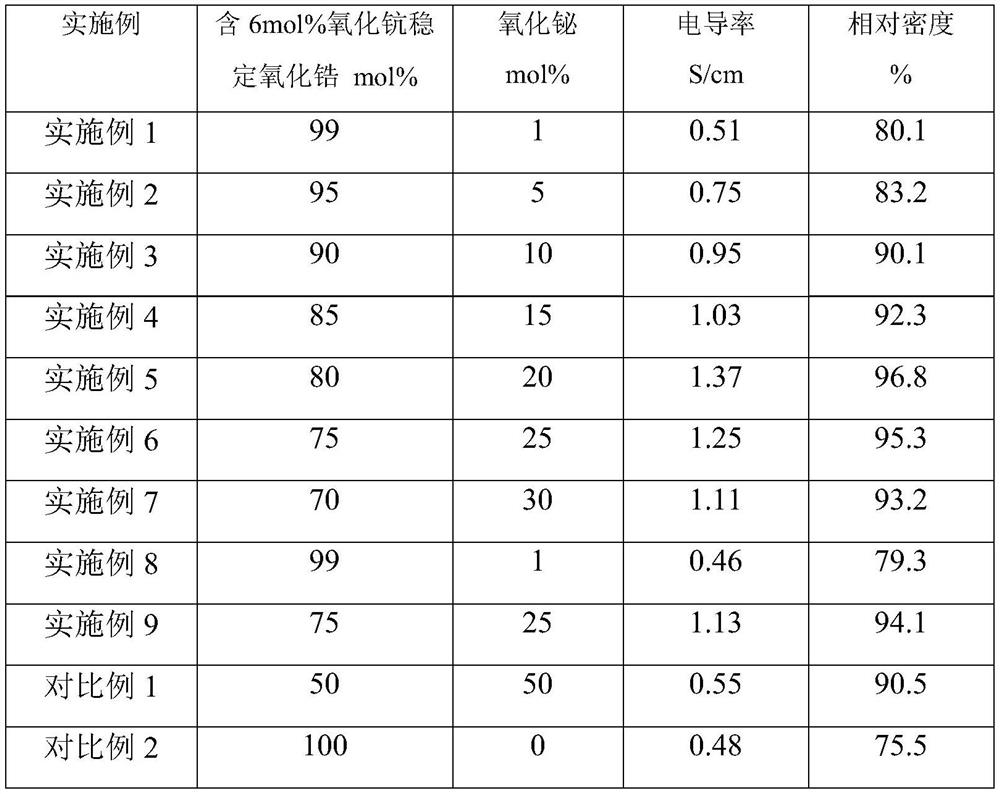
Examples
Embodiment 1
[0032] This example provides a method for preparing a bismuth oxide-assisted zirconia-based electrolyte by using a sol-gel method, and the specific details are as follows:
[0033] S1: zirconium oxynitrate, scandium nitrate, bismuth nitrate, citric acid, ethylenediaminetetraacetic acid according to the target product (Sc 2 o 3 ) 0.06 (Bi 2 o 3 ) x (ZrO 2 ) 0.94–x The stoichiometric ratio of (x=0.01) was dissolved in 0.5mol / L nitric acid solution, heated to 90°C and stirred to make the water gradually volatilize to obtain a jelly;
[0034] S2: Dry the jelly obtained in S1 in an oven at 250°C to form a precursor powder;
[0035] S3: Sintering the precursor obtained in step S2 at a constant temperature of 500° C. for 5 hours, further ball milling the sintered powder for 24 hours, and sieving the powder below 200 mesh to obtain bismuth oxide composite scandium oxide stabilized zirconia-based electrolyte powder;
[0036] S4: Press the zirconia-based electrolyte powder obtai...
Embodiment 2
[0038] This example provides a method for preparing a bismuth oxide-assisted zirconia-based electrolyte by using a sol-gel method, and the specific details are as follows:
[0039] S1: zirconium oxynitrate, scandium nitrate, bismuth nitrate, citric acid, ethylenediaminetetraacetic acid according to the target product (Sc 2 o 3 ) 0.06 (Bi 2 o 3 ) x (ZrO 2 ) 0.94–x The stoichiometric ratio of (x=0.05) was dissolved in 1mol / L nitric acid solution, heated to 90°C and stirred to make the water gradually volatilize to obtain a jelly;
[0040] S2: Dry the jelly obtained in S1 in an oven at 250°C to form a precursor powder;
[0041] S3: Sintering the precursor obtained in step S2 at a constant temperature of 500° C. for 5 hours, further ball milling the sintered powder for 24 hours, and sieving the powder below 200 mesh to obtain bismuth oxide composite scandium oxide stabilized zirconia-based electrolyte powder;
[0042] S4: Press the zirconia-based electrolyte powder obtaine...
Embodiment 3
[0044] This example provides a method for preparing a bismuth oxide-assisted zirconia-based electrolyte by using a sol-gel method, and the specific details are as follows:
[0045] S1: zirconium oxynitrate, scandium nitrate, bismuth nitrate, citric acid, ethylenediaminetetraacetic acid according to the target product (Sc 2 o 3 ) 0.06 (Bi 2 o 3 ) x (ZrO 2 ) 0.94–x The stoichiometric ratio of (x=0.1) is dissolved in 1.5 mol / L nitric acid solution, wherein scandium oxide and bismuth oxide are added in a molar ratio of 90:10, heated to 90°C and stirred to gradually volatilize the water to obtain a jelly ;
[0046] S2: Dry the jelly obtained in S1 in an oven at 250°C to form a precursor powder;
[0047]S3: Sintering the precursor obtained in step S2 at a constant temperature of 500° C. for 5 hours, further ball milling the sintered powder for 24 hours, and sieving the powder below 200 mesh to obtain bismuth oxide composite scandium oxide stabilized zirconia-based electrolyt...
PUM
| Property | Measurement | Unit |
|---|---|---|
| Conductivity | aaaaa | aaaaa |
| Conductivity | aaaaa | aaaaa |
| Conductivity | aaaaa | aaaaa |
Abstract
Description
Claims
Application Information
 Login to View More