Medium-salt-concentration electrolyte for lithium-sulfur battery
What is AI technical title?
AI technical title is built by Patsnap AI team. It summarizes the technical point description of the patent document.
A lithium-sulfur battery and electrolyte technology, applied in lithium batteries, secondary batteries, non-aqueous electrolyte batteries, etc., can solve the problems of capacity decay, side reactions between lithium anode and electrolyte, self-discharge during storage, etc., to achieve the proportion of use The effect of reducing and improving the dissociation ability of lithium salt and low viscosity
Pending Publication Date: 2022-07-29
WUHAN UNIV
View PDF0 Cites 0 Cited by
Summary
Abstract
Description
Claims
Application Information
AI Technical Summary
This helps you quickly interpret patents by identifying the three key elements:
Problems solved by technology
Method used
Benefits of technology
Problems solved by technology
[0004] In view of the above technical problems, the present invention provides a medium-salt-concentration electrolyte for lithium-sulfur batteries to solve the problem of rapid capacity fading, serious self-discharge during storage, and lithium negative electrode and electrolytic The problem of serious side reactions between liquids
Method used
the structure of the environmentally friendly knitted fabric provided by the present invention; figure 2 Flow chart of the yarn wrapping machine for environmentally friendly knitted fabrics and storage devices; image 3 Is the parameter map of the yarn covering machine
View more
Image
Smart Image Click on the blue labels to locate them in the text.
Viewing Examples
Smart Image
Click on the blue label to locate the original text in one second.
Reading with bidirectional positioning of images and text.
Smart Image
Examples
Experimental program
Comparison scheme
Effect test
Embodiment 1
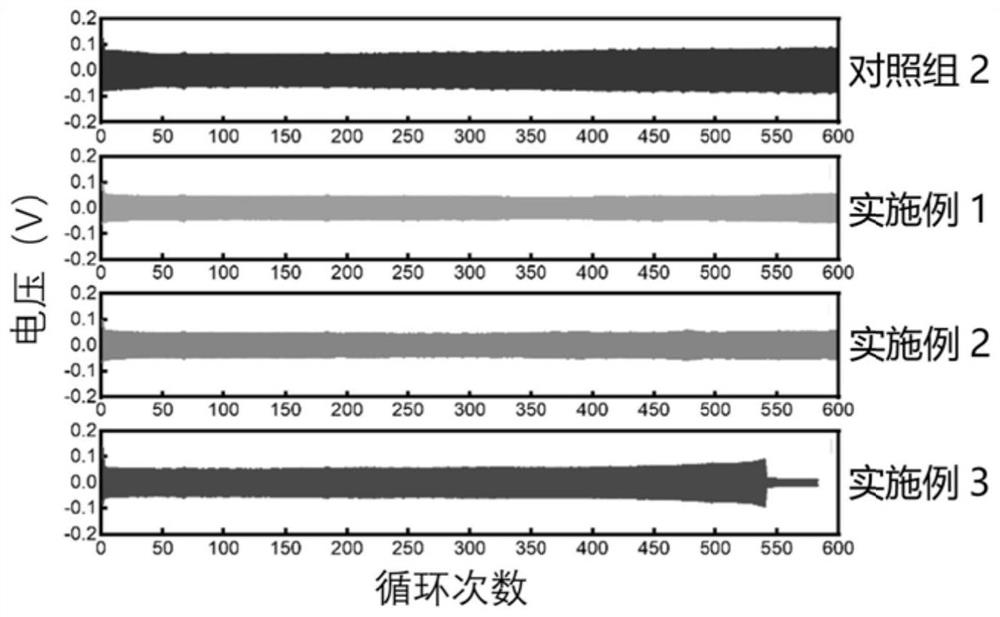
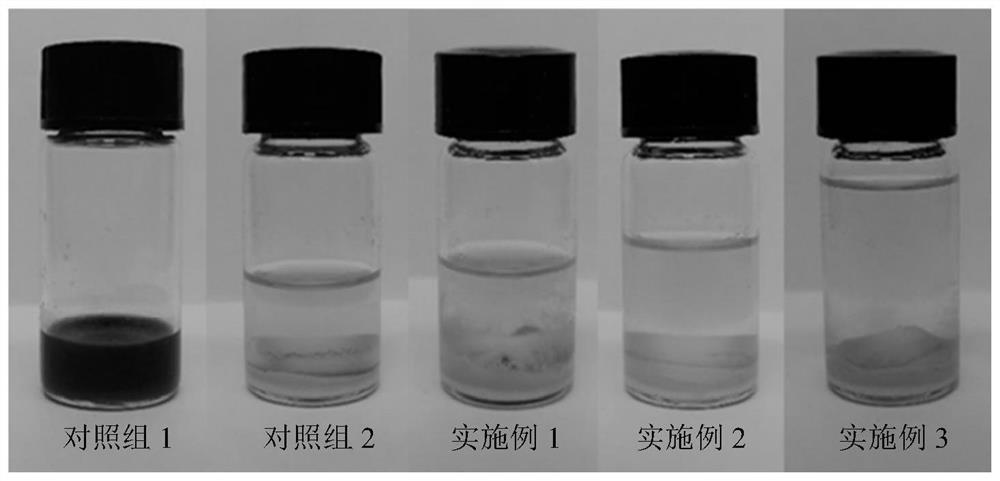
[0031] Lithium bis(trifluoromethylsulfonyl)imide, lithium bisfluorosulfonimide, tetrahydrofuran, isopropyl ether, 1,1,2,2-tetrafluoroethyl 2,2,3,3-tetrafluoro The solution was prepared with propyl ether in a ratio of 1:3:8:2:5.
Embodiment 2
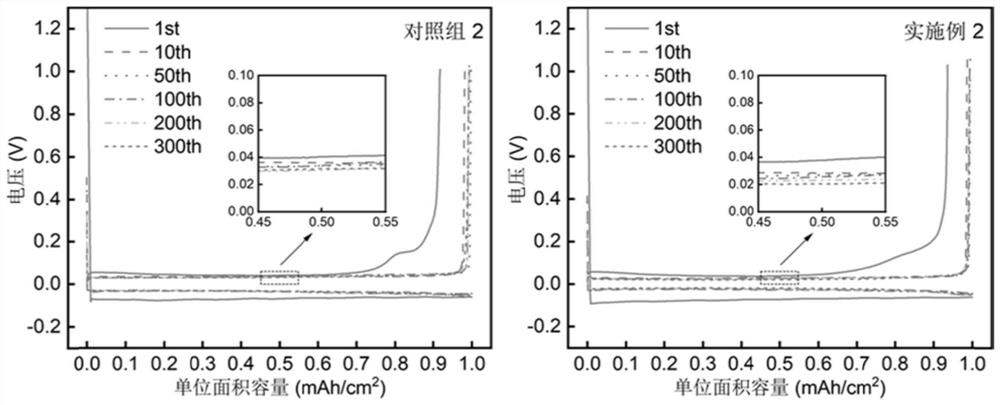
[0033] Lithium bis(trifluoromethylsulfonyl)imide, lithium bisfluorosulfonimide, tetrahydrofuran, isopropyl ether, 1,1,2,2-tetrafluoroethyl 2,2,3,3-tetrafluoro The solution was prepared with propyl ether in a ratio of 1:3:8:2:9.
Embodiment 3
[0035] Lithium bis(trifluoromethylsulfonyl)imide, lithium bisfluorosulfonimide, tetrahydrofuran, isopropyl ether, 1,1,2,2-tetrafluoroethyl 2,2,3,3-tetrafluoro The solution was prepared with propyl ether in a ratio of 1:3:8:2:18.
[0036] control group 1
[0037] The electrolyte of the control group was prepared by dissolving lithium bis(trifluoromethylsulfonyl)imide in a mixed solvent of ethylene glycol dimethyl ether-1,3-dioxolane with a volume ratio of 1:1. With a concentration of 1 mol / L, this electrolyte is the most widely used electrolyte in current lithium-sulfur batteries.
[0038] control group 2
[0039] A solution was prepared by bis(trifluoromethylsulfonyl)imide lithium, lithium bisfluorosulfonimide, tetrahydrofuran and isopropyl ether in a ratio of 1:3:8:2.
the structure of the environmentally friendly knitted fabric provided by the present invention; figure 2 Flow chart of the yarn wrapping machine for environmentally friendly knitted fabrics and storage devices; image 3 Is the parameter map of the yarn covering machine
Login to View More
PUM
Login to View More
Abstract
The invention discloses a medium-salt-concentration electrolyte for a lithium-sulfur battery. The electrolyte contains a diether-fluorinated ether three-solvent system formed by a mixed lithium salt, a first ether solvent, a diether solvent and at least one fluorinated ether solvent, the mixed lithium salt contains a lithium salt capable of forming a passive film on the lithium metal negative electrode; the oxygen coordination steric hindrance of the first ether solvent is small (the number of carbon atoms in molecules / the number of oxygen atoms is smaller than or equal to 4), and lithium salt can be dissociated; the oxygen coordination steric hindrance of the second ether solvent is relatively large (the number of carbon atoms / the number of oxygen atoms in molecules is greater than or equal to 5), so that the salt concentration and the electrolyte viscosity can be reduced; the fluorinated ether solvent can further reduce the concentration of the lithium salt and improve the miscibility of the electrolyte, the fluorinated group can promote formation of a stable lithium metal negative electrode passivation layer, and the deposition and stripping efficiency of negative electrode metal is improved. The electrolyte provided by the invention can be used for assembling a lithium battery, and the assembled lithium battery is long in cycle life, weak in self-discharge effect, high in conductivity, low in viscosity, good in wettability and relatively high in commercial application value.
Description
technical field [0001] The invention belongs to the technical field of batteries, and particularly relates to a medium salt concentration electrolyte for lithium-sulfur batteries. Background technique [0002] Due to the very high theoretical specific capacity of lithium metal, lithium metal batteries using lithium metal as the negative electrode have great potential as next-generation secondary batteries due to their outstanding theoretical energy density. During the charging and discharging process, the electrolyte will continuously undergo side reactions with metallic lithium and accompanied by the growth of lithium dendrites, thus causing the battery capacity to decay or short-circuit. NCM cathode materials and sulfur-containing materials also cause severe self-discharge and capacity fading of the battery along with the dissolution of components. Elemental sulfur is abundant and inexpensive, and has a very high theoretical specific capacity (1670mAh / g). However, tradit...
Claims
the structure of the environmentally friendly knitted fabric provided by the present invention; figure 2 Flow chart of the yarn wrapping machine for environmentally friendly knitted fabrics and storage devices; image 3 Is the parameter map of the yarn covering machine
Login to View More
Application Information
Patent Timeline
Application Date:The date an application was filed.
Publication Date:The date a patent or application was officially published.
First Publication Date:The earliest publication date of a patent with the same application number.
Issue Date:Publication date of the patent grant document.
PCT Entry Date:The Entry date of PCT National Phase.
Estimated Expiry Date:The statutory expiry date of a patent right according to the Patent Law, and it is the longest term of protection that the patent right can achieve without the termination of the patent right due to other reasons(Term extension factor has been taken into account ).
Invalid Date:Actual expiry date is based on effective date or publication date of legal transaction data of invalid patent.


 Login to View More
  Login to View More