

System and method for health monitoring of electrical systems
a technology for electrical systems and health monitoring, applied in the field of system and method for health monitoring of electrical systems, can solve the problems of large and complex modern aircraft electrical wiring systems, high maintenance costs, waste of time, etc., and achieve the effect of reducing false positive fault indications
- Summary
- Abstract
- Description
- Claims
- Application Information
AI Technical Summary
Benefits of technology
Problems solved by technology
Method used
Image

Examples
Embodiment Construction
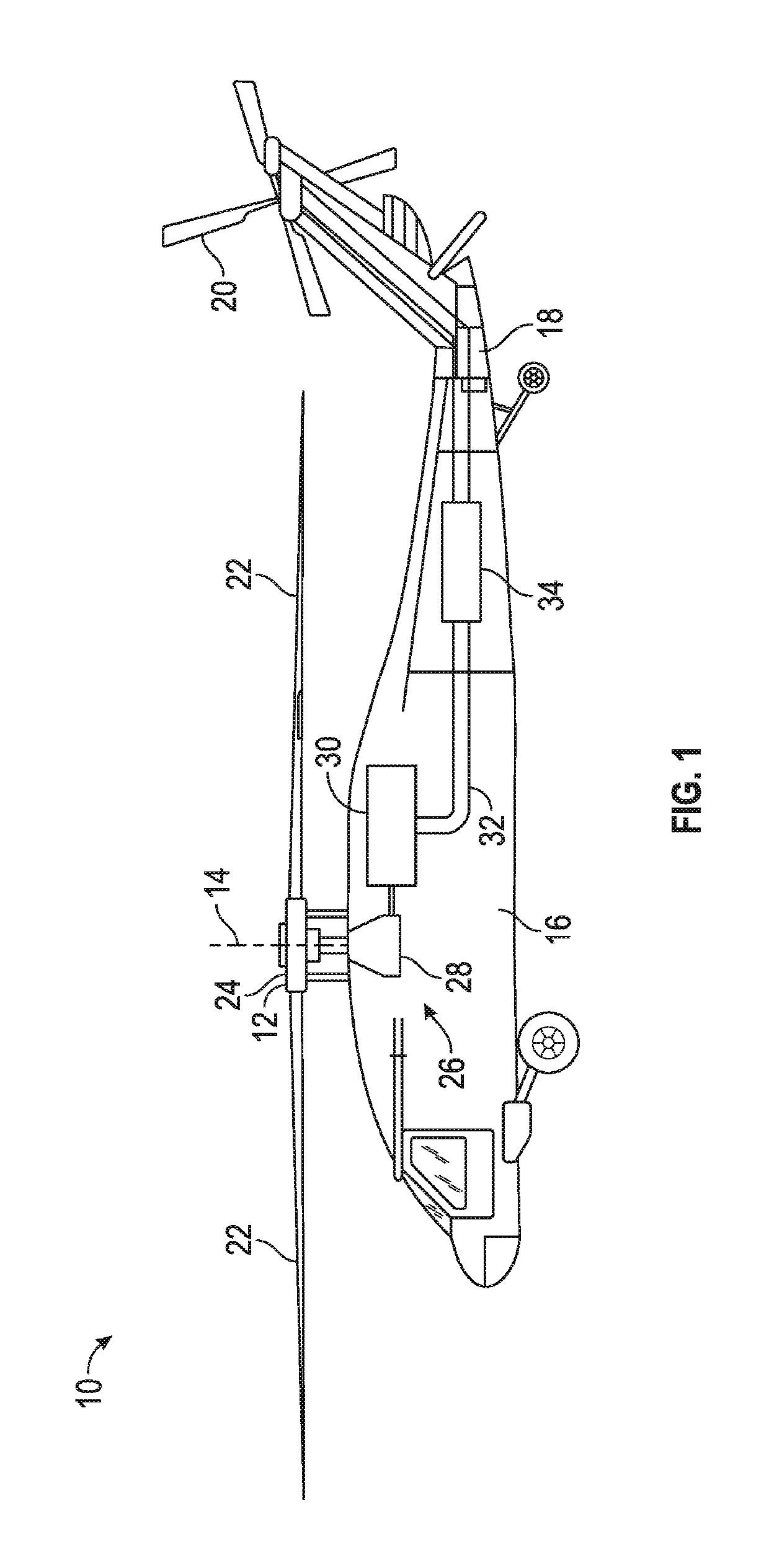
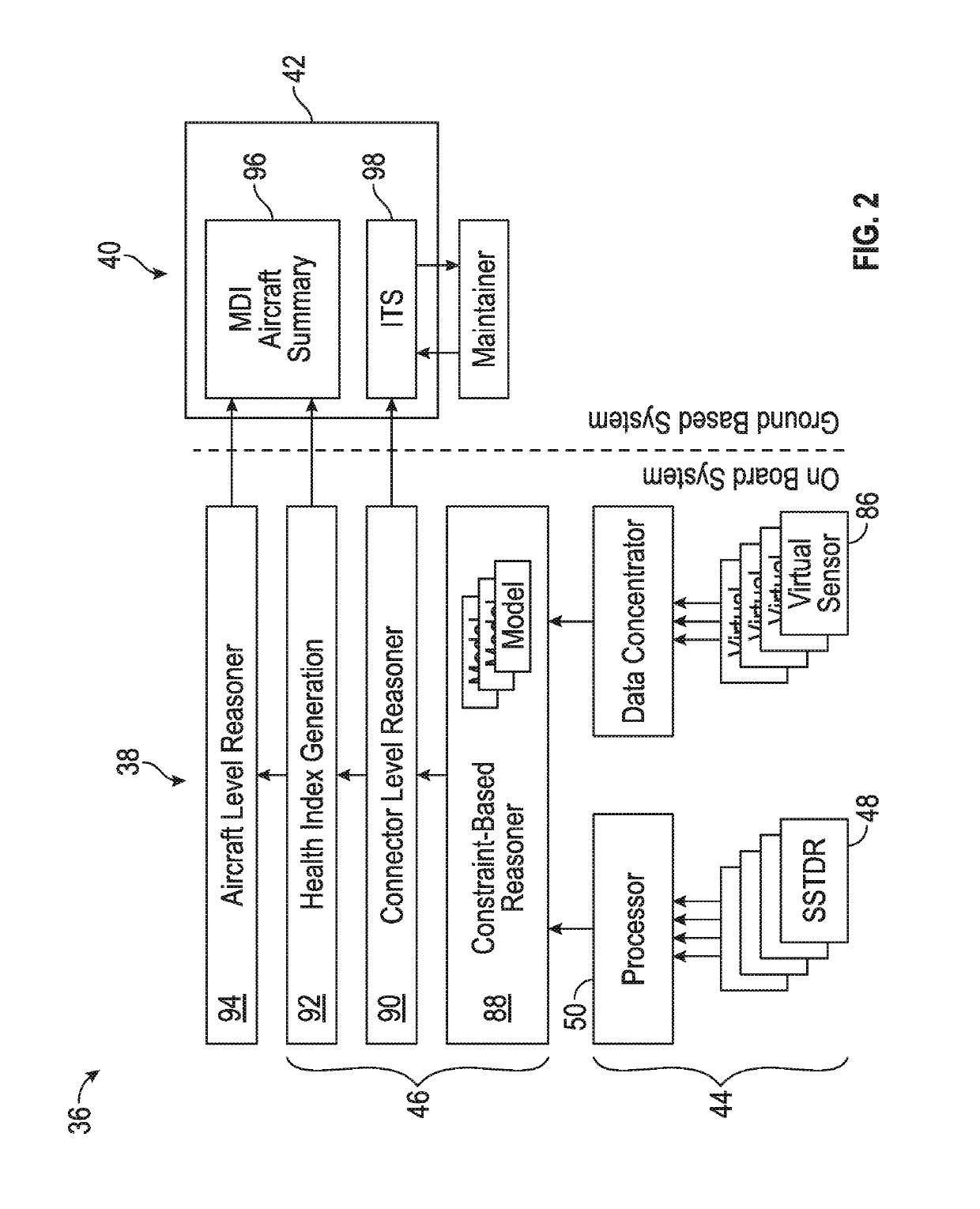
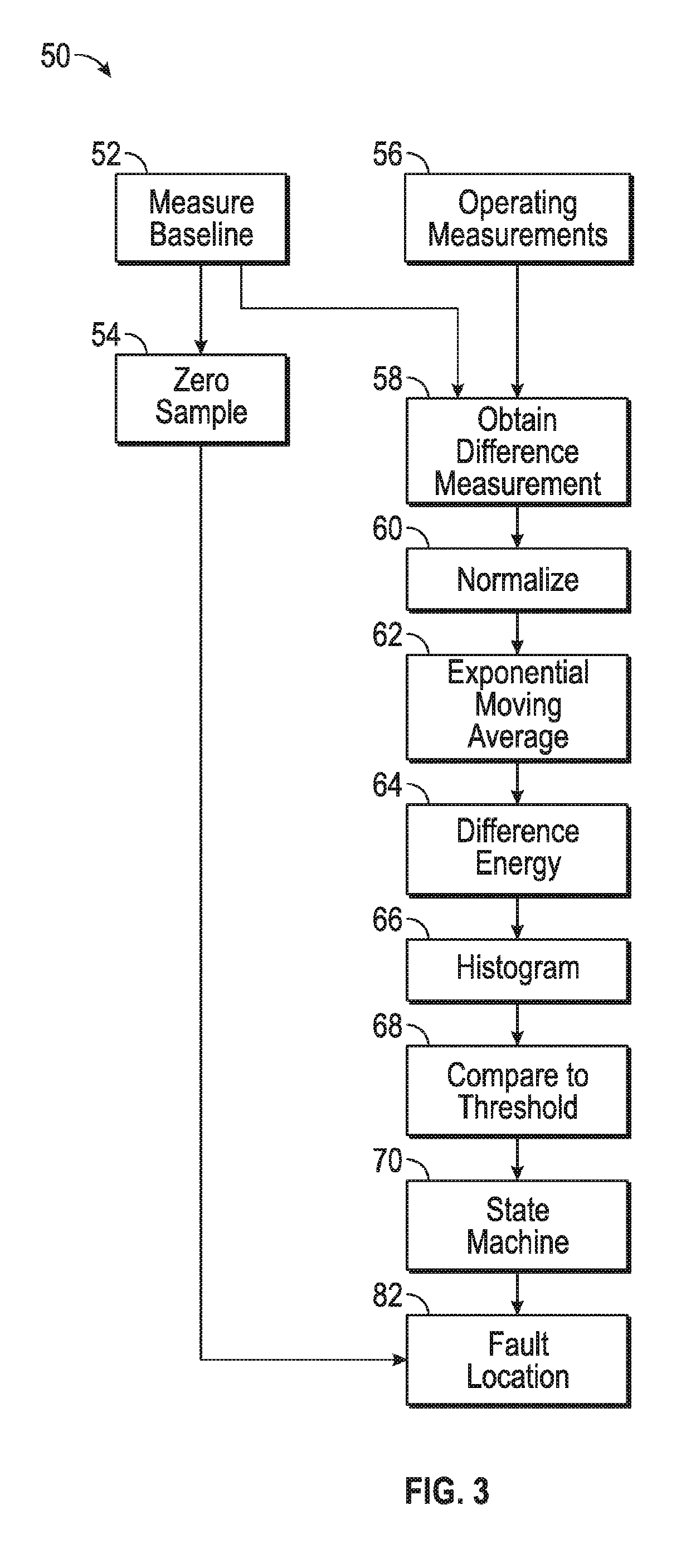
[0032]FIG. 1 illustrates an exemplary rotary-winged aircraft 10 having a main rotor system 12, which rotates about a rotor axis 14. The aircraft 10 includes an airframe 16 which supports the main rotor system 12 as well as an extending tail 18 including a tail rotor 20. The main rotor system 12 includes a plurality of rotor blade assemblies 22 mounted to a rotor hub assembly 24. The main rotor system 12 is driven by a transmission 26. The transmission 26 includes a main gearbox 28 driven by one or more engines, illustrated schematically at 30. The main gearbox 28 and engines 30 are considered as part of the non-rotating frame of the aircraft 10. In the case of a rotary wing aircraft, the main gearbox 28 may be interposed between one or more gas turbine engines 30 and the main rotor system 12. The aircraft further includes a tail rotor shaft 32 and tail rotor gearbox 34 connected to the transmission 26 to drive rotation of the tail rotor 20. The aircraft 10 further includes an electr...
PUM
 Login to View More
 Abstract
Description
Claims
Application Information
 Login to View More