
Method and apparatus for quick prototyping of embedded peripherals
a technology for embedded peripherals and prototyping methods, applied in the direction of source code generation, error detection/correction, instruments, etc., can solve the problems of many time-consuming iterations in the process, and achieve the effect of improving the manner in which sensors are designed and deployed
- Summary
- Abstract
- Description
- Claims
- Application Information
AI Technical Summary
Benefits of technology
Problems solved by technology
Method used
Image

Examples
Embodiment Construction
[0039]The use of conventional tools and methodologies to test embedded sensors has led to the discovery of significant drawbacks with the conventional approach. Conventional sensor prototyping is complex, time consuming, and it requires a high level of knowledge to produce results. There is no single, streamlined approach that produces good results, and to even achieve acceptable results, the conventional approach requires many manual iterations, which is inefficient. Each prototype attempt is developed individually, piece-by-piece, and one small piece at a time. Even where templates are utilized to take advantage of previously written program code, conventional sensor prototyping techniques inefficiently demand that a software professional repeat complex, disparate tasks over and over again.
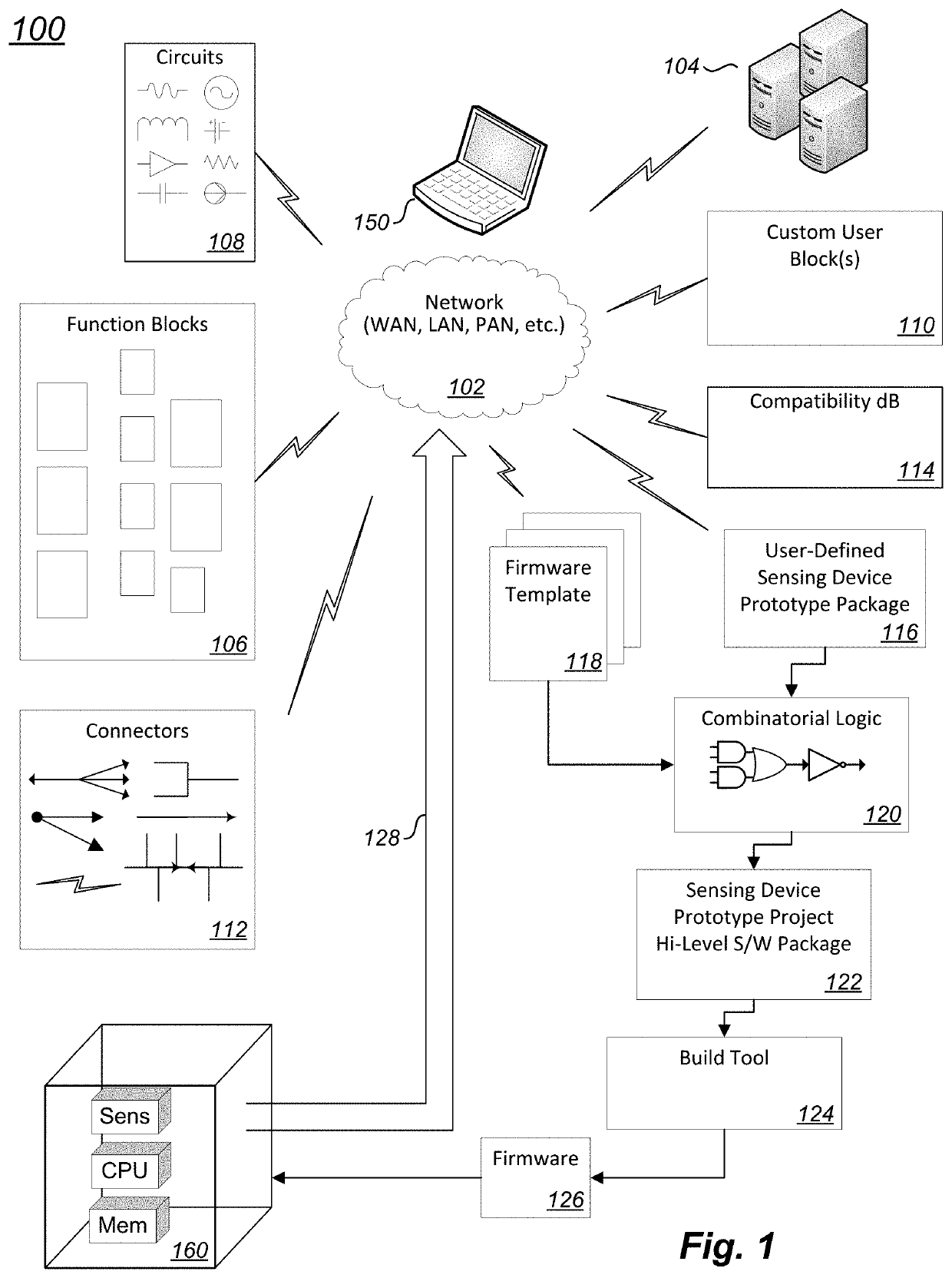
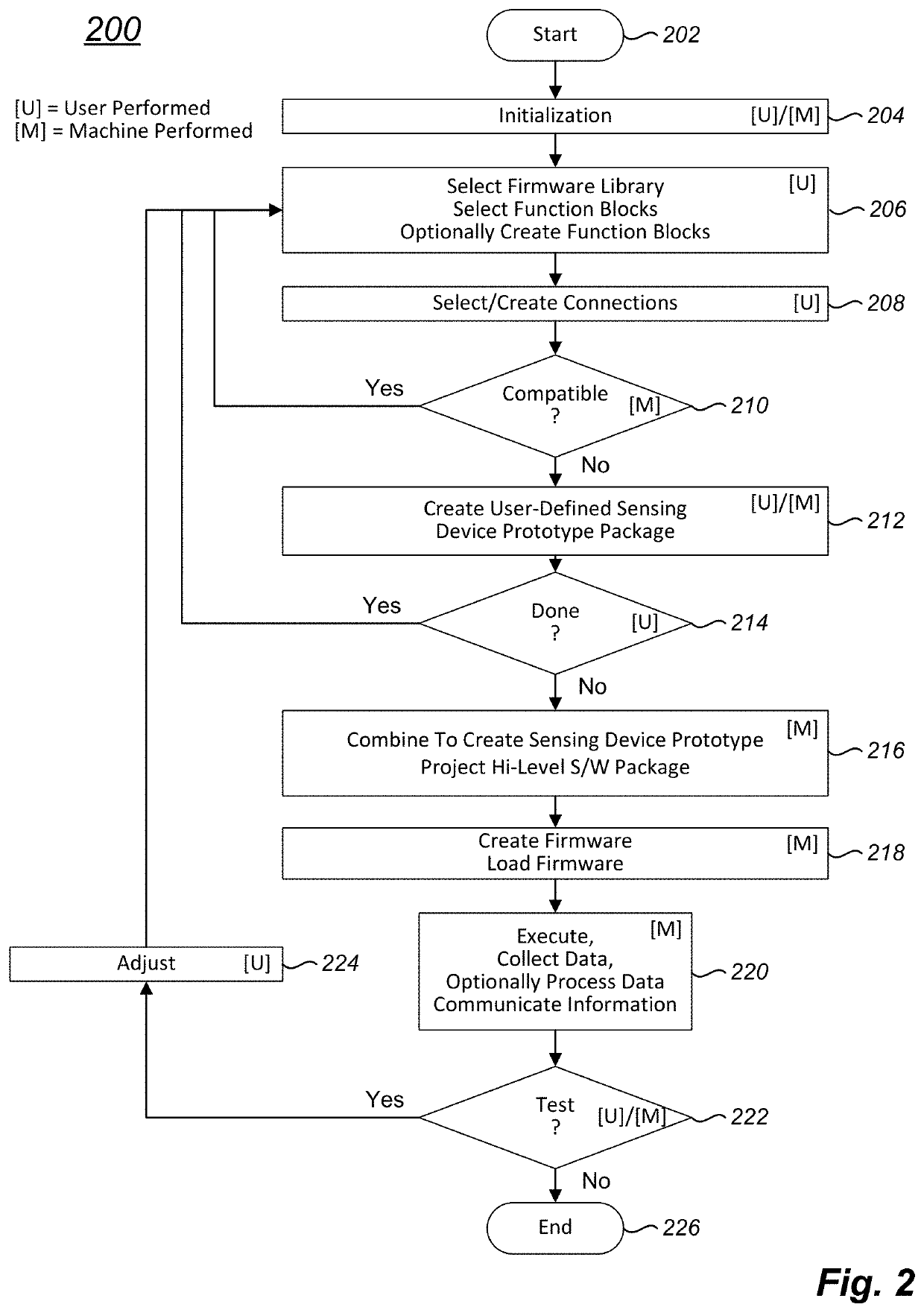
[0040]Now presented is an improvement over the conventional technology. The new embedded sensor prototype system described in the present disclosure addresses and corrects the identified flaws o...
PUM
 Login to View More
 Abstract
Description
Claims
Application Information
 Login to View More