Hemoglobin based oxygen carrier and method of preparation

a technology of oxygen carrier and hemoglobin, which is applied in the direction of haemoglobin/myoglobin, blood disorder, non-active ingredients of pharmaceuticals, etc., can solve the problems of red blood cell administration problems, serious and irreversible damage to organs, and source of potential infection, etc., and achieve the effect of increasing oxygen transpor

a technology of oxygen carrier and hemoglobin, which is applied in the direction of haemoglobin/myoglobin, blood disorder, non-active ingredients of pharmaceuticals, etc., can solve the problems of red blood cell administration problems, serious and irreversible damage to organs, and source of potential infection, etc., and achieve the effect of increasing oxygen transpor

US11298407B2Active Publication Date: 2022-04-12THE GOVERNING COUNCIL OF THE UNIV OF TORONTO

Image

Smart Image Click on the blue labels to locate them in the text.
Viewing Examples
Smart Image
  • Hemoglobin based oxygen carrier and method of preparation
  • Hemoglobin based oxygen carrier and method of preparation
  • Hemoglobin based oxygen carrier and method of preparation

Examples

Experimental program
Comparison scheme
Effect test

example 1

Preparation of Hb-cyclooctyne

[0080]A solution of human hemoglobin A (HbA)(Oxygenix Co. Ltd., Tokyo JP) (0.5 mM in 1.5 mL of 50 mM sodium borate buffer, pH 9.0) was oxygenated by stirring under a stream of oxygen with photoirradiation for 2 h at 4° C. The sample was then deoxygenated by stirring under a stream of nitrogen for 2 h at 37° C.

[0081]Trimesoyl tris(3,5-dibromosalicylate) (TTDS) (synthesized according to Kluger et al., 1992) was added (2 eq. of a 0.2 M solution in DMSO) and this mixture was stirred for 12 min. Then, amine-cyclooctyne (N-[(1R,8S,9s)-Bicyclo[6.1.0]non-4-yn-9-ylmethyloxycarbonyl]-1,8-diamino-3,6-dioxaoctane) was added (40 eq. of a 1 M solution in DMSO) and the sample was flushed with carbon monoxide. After 1 h of stirring at room temperature, the mixture was passed through a Sephadex™ G-25 column equilibrated with phosphate buffer (0.02 M, pH 7.4). The collected fraction was concentrated by centrifugation through a filter (30 kDa cut-off) and stored under an a...

example 2

Preparation of Hb-azide

[0082]The procedure is identical to the preparation of Hb-cyclooctyne with the following exceptions: amine-azide (4-azidomethyl-benzylamine) (prepared according to Yang et al., 2010) was added instead of amine-cyclooctyne; the mixture was passed through a G-25 column equilibrated with MOPS buffer (0.1 M, pH 8.0) instead of phosphate buffer. The products were analyzed by reverse-phase HPLC and mass spectrometry as previously described.

example 3

SPAAC of Hb-cyclooctyne with Hb-azide

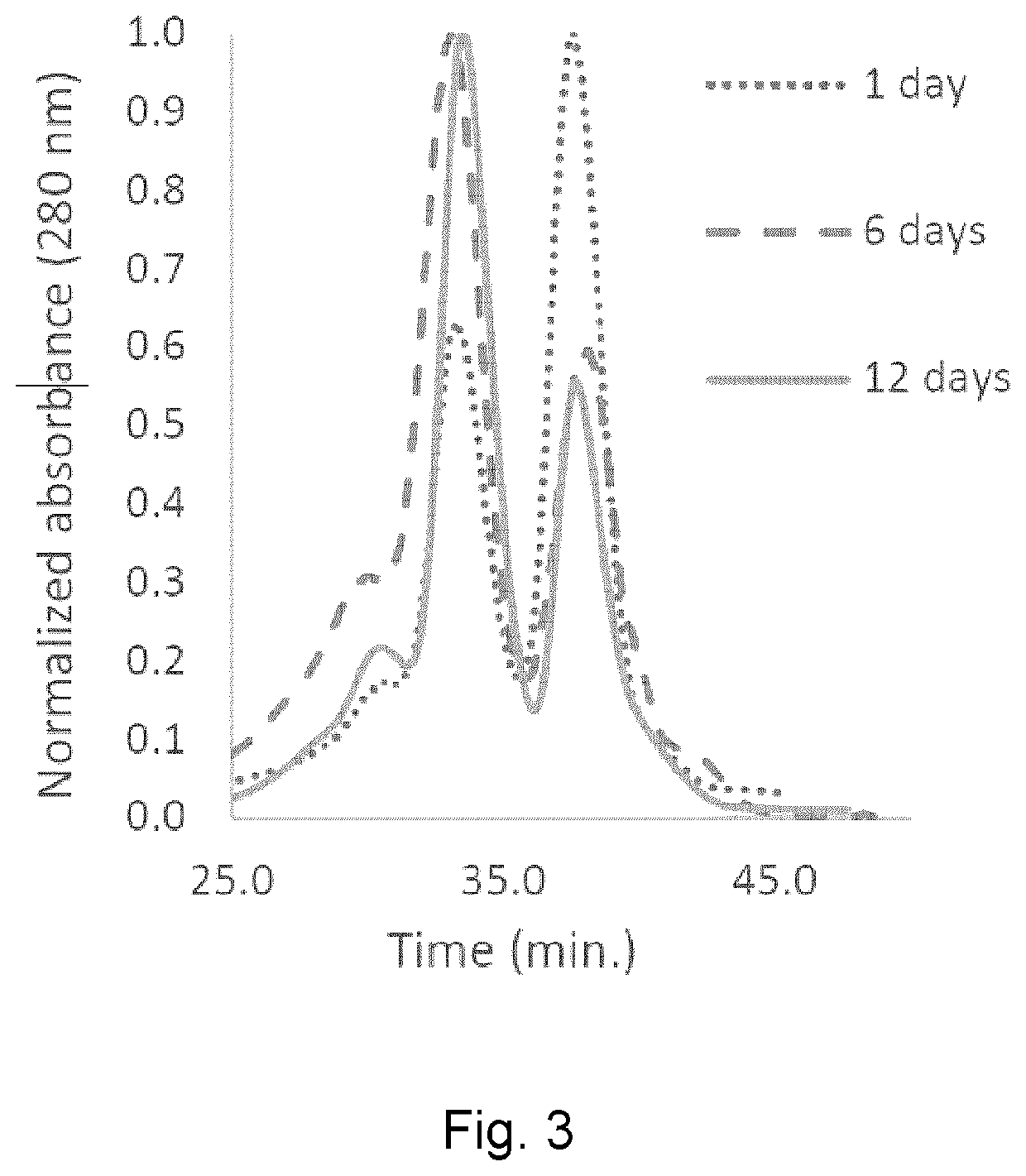
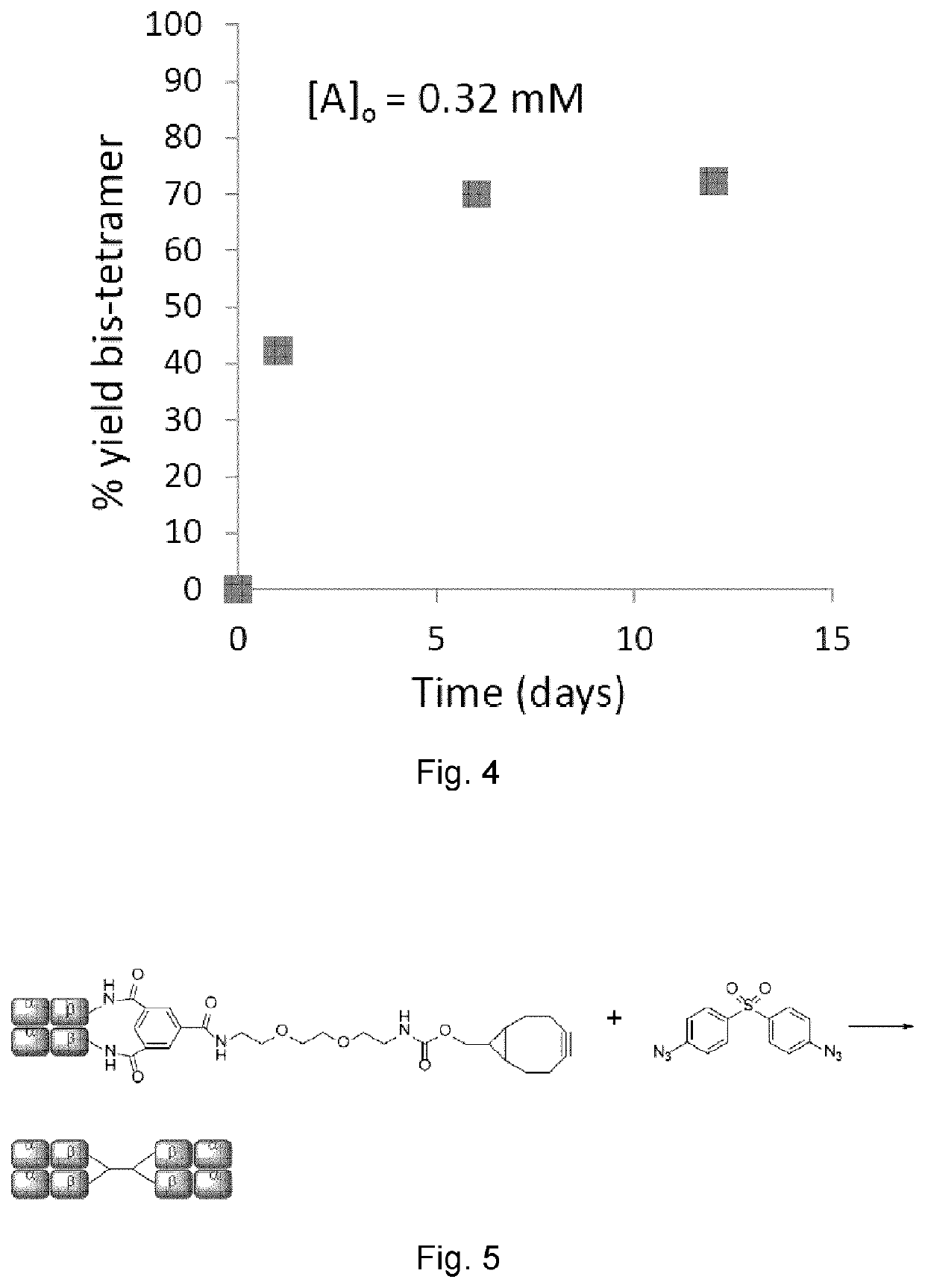
[0083]Hb-cyclooctyne (1 eq., 100 μL of a 0.32 mM stock solution in 0.02 M phosphate buffer, pH 7.4) was combined with Hb-azide (1 eq., 133 μL of a 0.24 mM stock solution in 0.02 M phosphate buffer, pH 7.4) and this mixture was incubated for 12 days at 4° C. under an atmosphere of carbon monoxide. The products were analyzed by HPLC using a Superdex™ G-200 HR size-exclusion column (10 mm×300 mm) and tris-HCl (37.5 mM, pH 7.4) elution buffer containing magnesium chloride (0.5 M). The eluent was monitored at 280 nm.

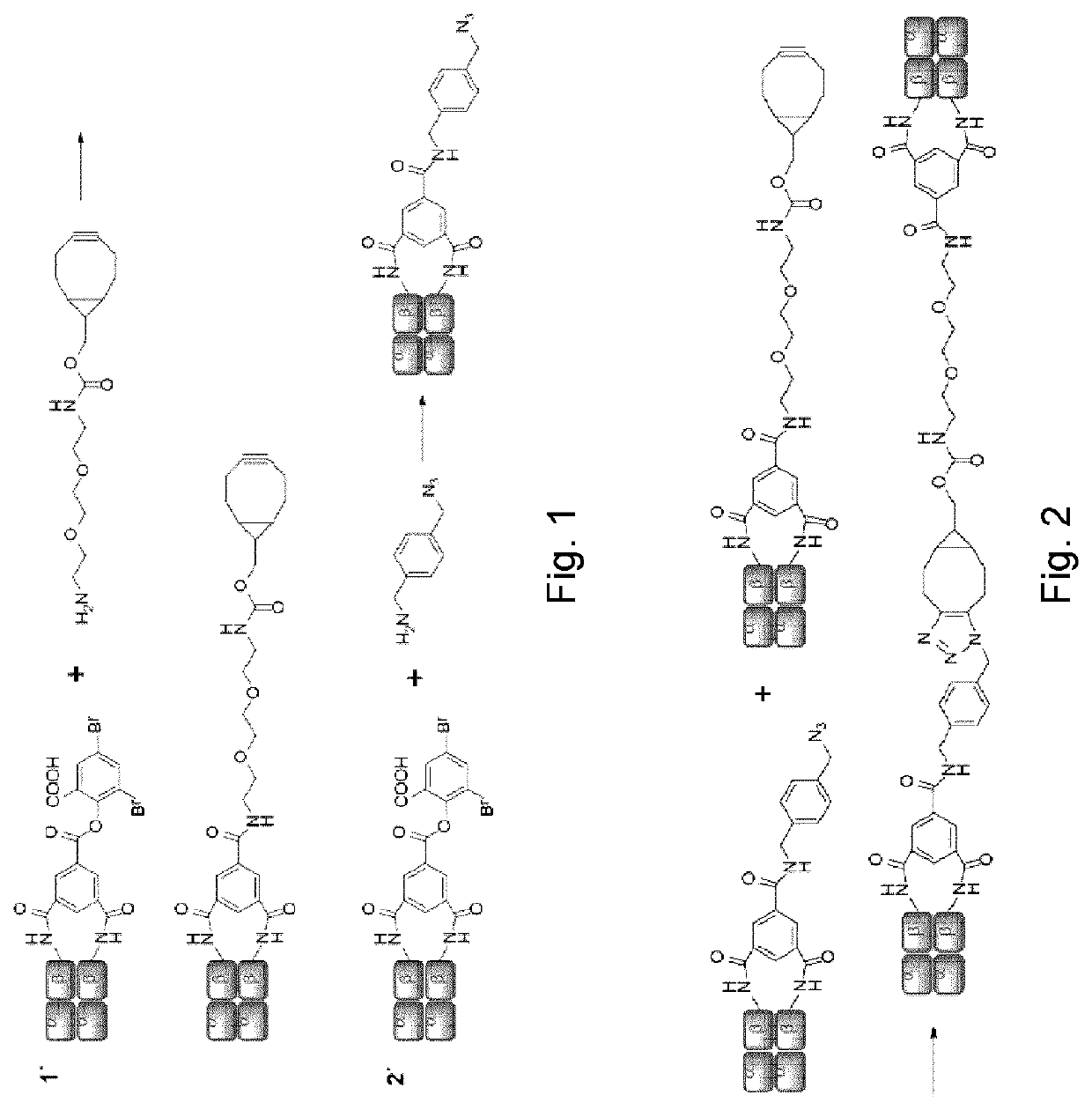
[0084]Human Hb was cross-linked with trimesoyl tris(3,5-dibromosalicylate) (FIG. 1, scheme 1), a trifunctional reagent that reacts with the ε-amino groups of each β-lys-82, leaving the third ester available for further reaction. The polyanionic electrophile reacts site-specifically with residues residing within Hb's cationic funnel that normally associate with 2,3-diphosphoglycerate. Addition of an amine-functionalized hydrocarbon derivati...

the structure of the environmentally friendly knitted fabric provided by the present invention; figure 2 Flow chart of the yarn wrapping machine for environmentally friendly knitted fabrics and storage devices; image 3 Is the parameter map of the yarn covering machine
Login to View More

PUM

PropertyMeasurementUnit
pHaaaaaaaaaa
pHaaaaaaaaaa
pHaaaaaaaaaa
Login to View More

Abstract

The disclosure concerns a class of hemoglobin based oxygen carriers (HBOCs) comprising a first hemoglobin protein cross-linked by a chemical reaction that is followed by a strain-promoted alkyne-azide cycloaddition (SPAAC) reaction or by a strain-promoted alkyne-nitrone cycloaddition (SPANC) in the absence of added copper salts to a second modified cross-linked hemoglobin protein. The resulting construct is an HBOC that is capable of binding oxygen and releasing same in a useful manner upon addition in an appropriate solution to the circulatory system of a patient. The disclosure also concerns a method of production of the HBOC where a first and second hemoglobin protein are produced by covalently linking hemoglobin to an angle strained cycloalkyne moiety. A compound comprising at least 2 azide or nitrone moieties is then added for reacting under conditions conducive to SPAAC or SPANC in reaction in absence of copper ions with the first and second hemoglobin protein for causing covalent linkage of the first and second hemoglobin protein to the compound comprising said at least 2 azide or nitrone moieties, resulting in said HBOC. The HBOC can be used for transfusion, perfusion or for increasing oxygen transport.

Description

CROSS-REFERENCE TO RELATED APPLICATIONS AND DOCUMENTS[0001]This application claims priority from U.S. provisional patent applications 62 / 397,546 filed on Sep. 21, 2016 and 62 / 418,907 filed on Nov. 8, 2016. A sequence listing in electronic form is being filed concurrently. The content of the priority applications and of the sequence listing are herewith incorporated herein by reference in their entirety.TECHNOLOGICAL FIELD[0002]The present disclosure relates to a hemoglobin-based oxygen carrier (HBOC), in particular to hemoglobin bis-tetramers, and to a method for preparing the protein assemblies by the strain-promoted alkyne-azide cycloaddition. The invention also pertains to the use of the hemoglobin bis-tetramers in a method for increasing oxygen transport in vivo in an individual or for use in transfusions or perfusions.BACKGROUND[0003]The potential use of modified hemoglobin as a substitute for red blood cells in transfusions or perfusions is widely documented to fill a critical...

Claims

the structure of the environmentally friendly knitted fabric provided by the present invention; figure 2 Flow chart of the yarn wrapping machine for environmentally friendly knitted fabrics and storage devices; image 3 Is the parameter map of the yarn covering machine
Login to View More

Application Information

Patent Timeline
12 Apr 2022
Publication
US11298407B2
IPC
A61K35/14; A61K38/42; A61K47/64; A61K47/55
CPC
A61K38/42; A61K47/55; A61K47/643; A61K47/6445; C07K14/805; A61P7/00
Inventors
KLUGER, RONALD HENRY; SINGH, SERENA