Method and apparatus for determining the position of the tibial exit point of the anterior cruciate ligament
- Summary
- Abstract
- Description
- Claims
- Application Information
AI Technical Summary
Benefits of technology
Problems solved by technology
Method used
Image

Examples
Embodiment Construction
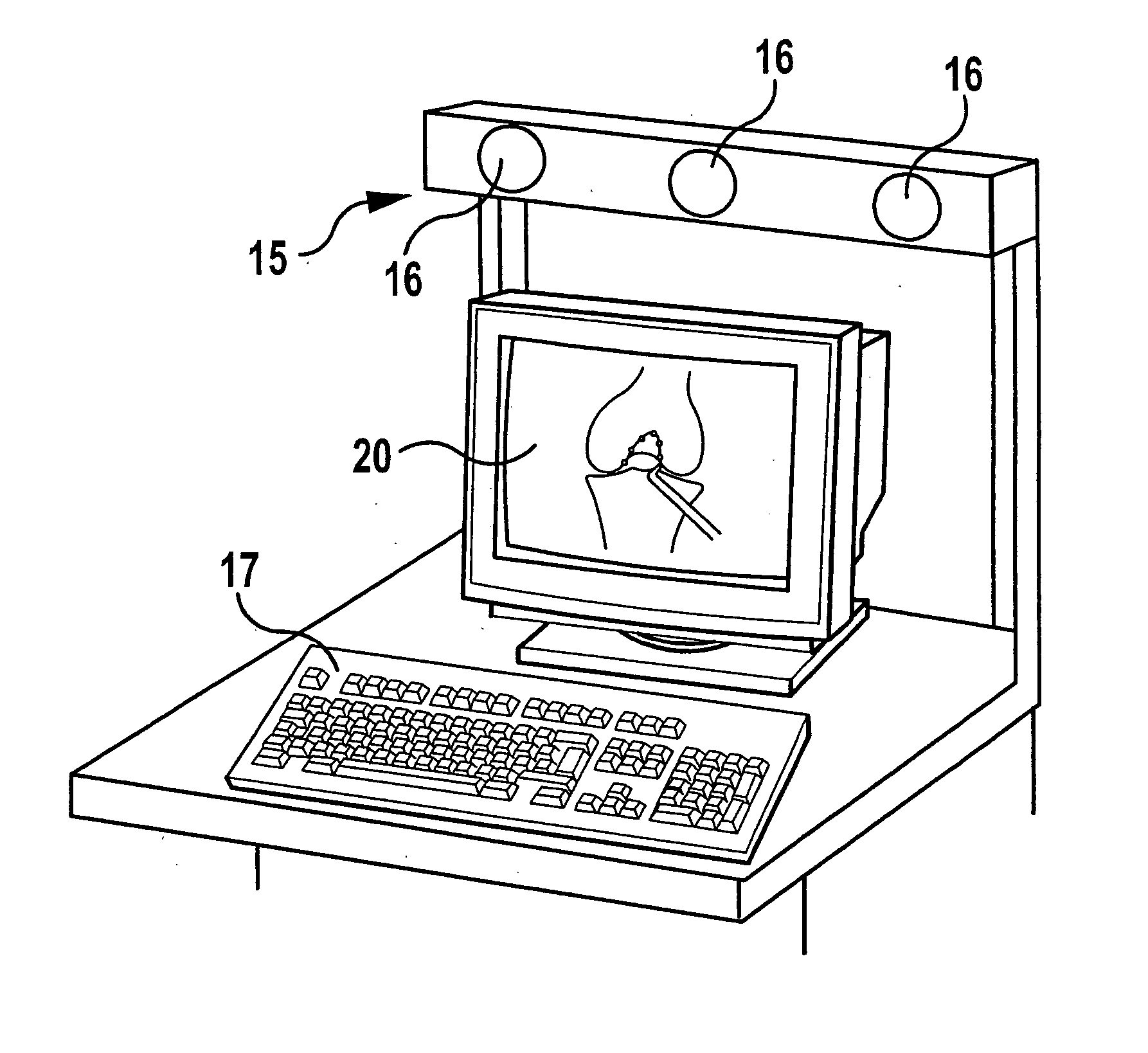
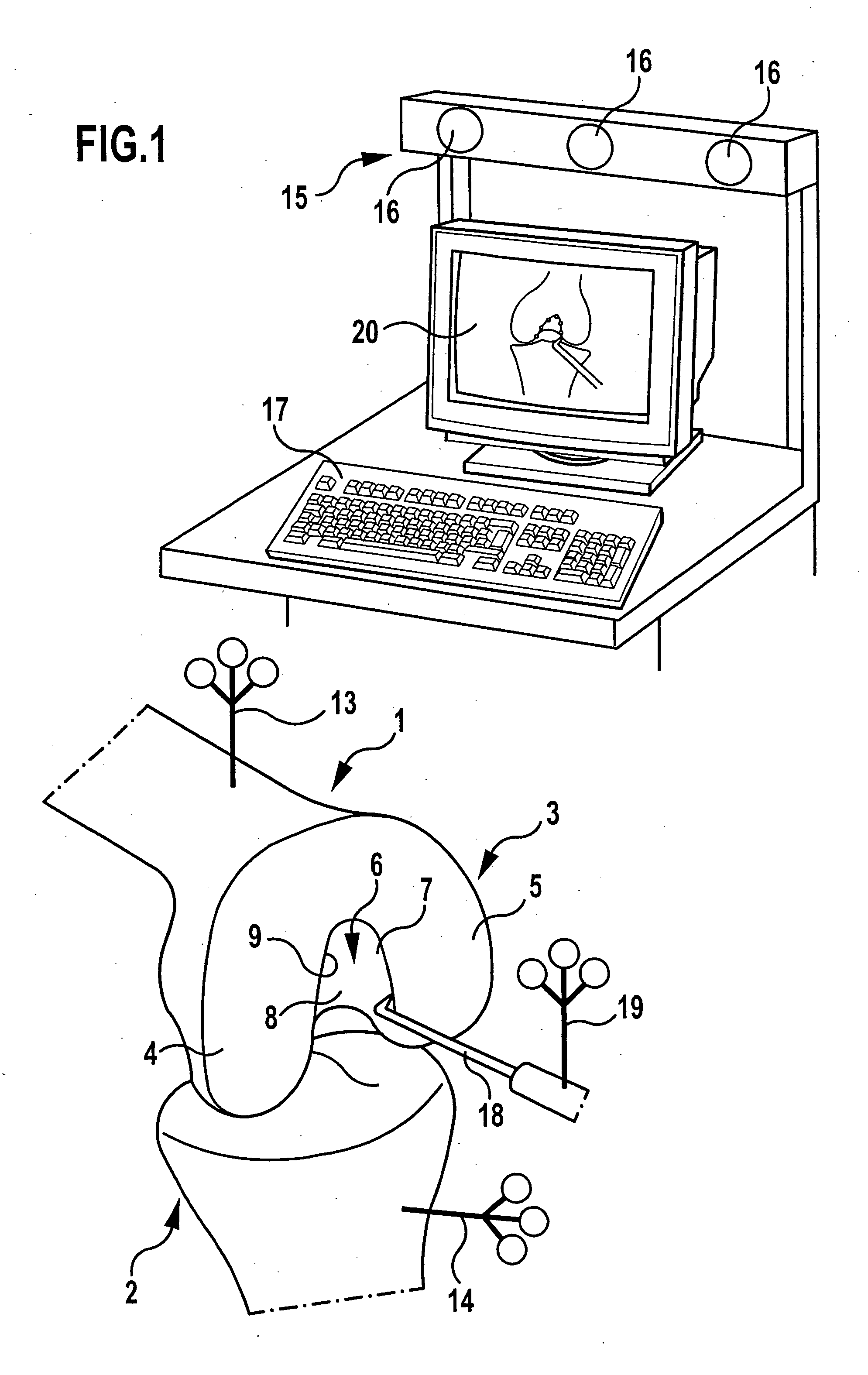
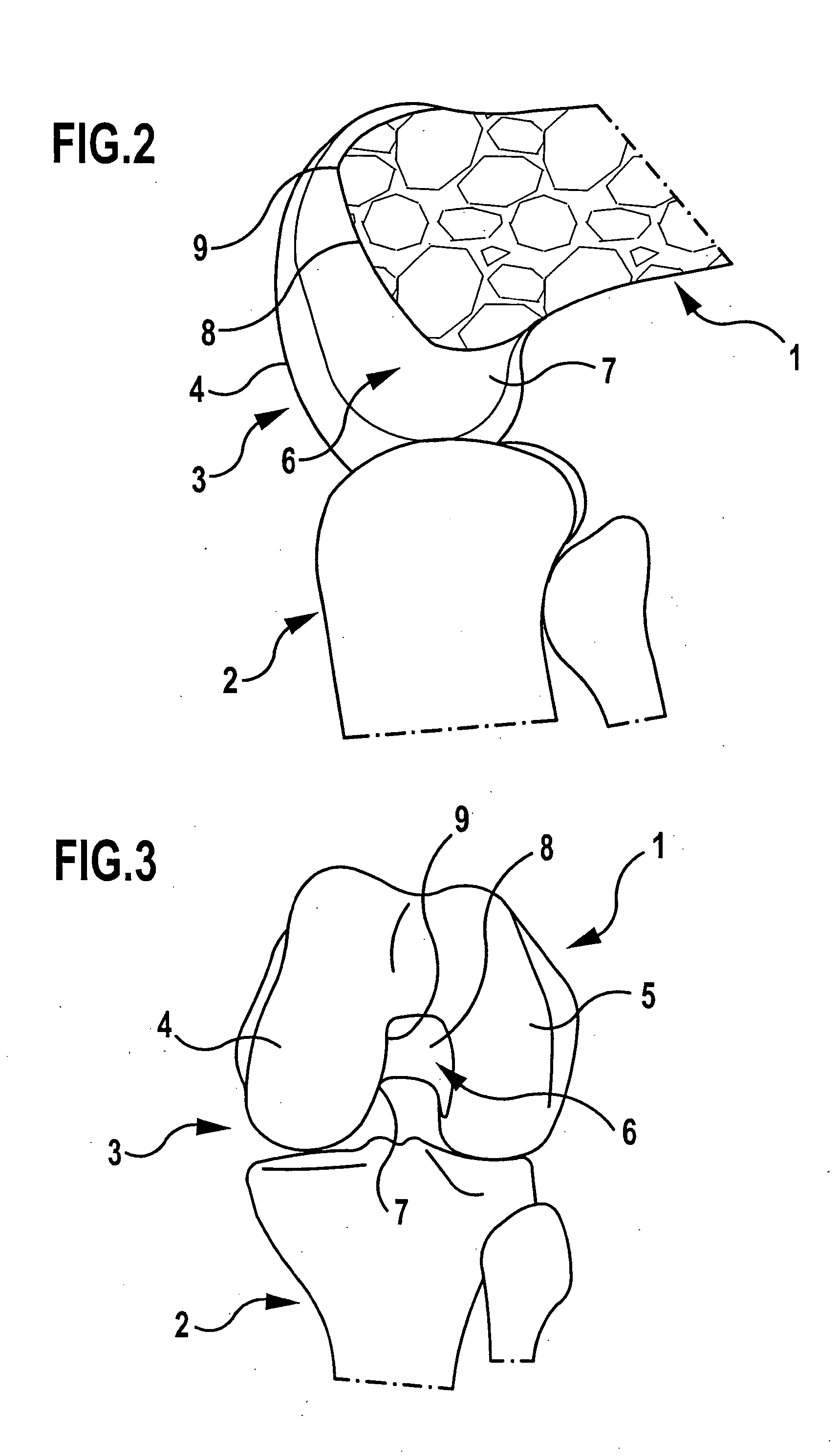
[0031] Represented in the drawing are the distal end of a femur 1 and the proximal end of a tibia 2, which together form a knee joint 3; the other parts of the knee joint have been omitted for clarity. In this region, the femur 1 forms two adjacent areas of the joint, the condyles 4, 5, which between them form a cavity. This cavity is usually referred to as the notch 6. This notch is bounded laterally by side surfaces 7 of the condyles 4, 5. On the upper side there extends a roof 8 running obliquely in relation to the longitudinal axis of the femur 1. On the front side, that is the anterior side, the notch 6 is closed, whereas to the rear side of the knee joint, that is the posterior side, it is open. Toward the areas of the joint that are the condyles 4, 5, the notch 6 is bounded by an approximately U-shaped front edge 9. This forms the transition between an osseous region and a cartilaginous region and is easy for the surgeon to feel and therefore locate.
[0032] The femur 1 and th...
PUM
 Login to View More
 Abstract
Description
Claims
Application Information
 Login to View More
 - R&D
- Intellectual Property
- Life Sciences
- Materials
- Tech Scout
- Unparalleled Data Quality
- Higher Quality Content
- 60% Fewer Hallucinations
Browse by: Latest US Patents, China's latest patents, Technical Efficacy Thesaurus, Application Domain, Technology Topic, Popular Technical Reports.
© 2025 PatSnap. All rights reserved.Legal|Privacy policy|Modern Slavery Act Transparency Statement|Sitemap|About US| Contact US: help@patsnap.com