When a computer system is attacked or “infected” by a computer
exploit, the adverse results are varied, including disabling system devices; erasing or corrupting
firmware, applications, or data files; transmitting potentially sensitive data to another location on the network; shutting down the computer system; or causing the computer system to
crash.
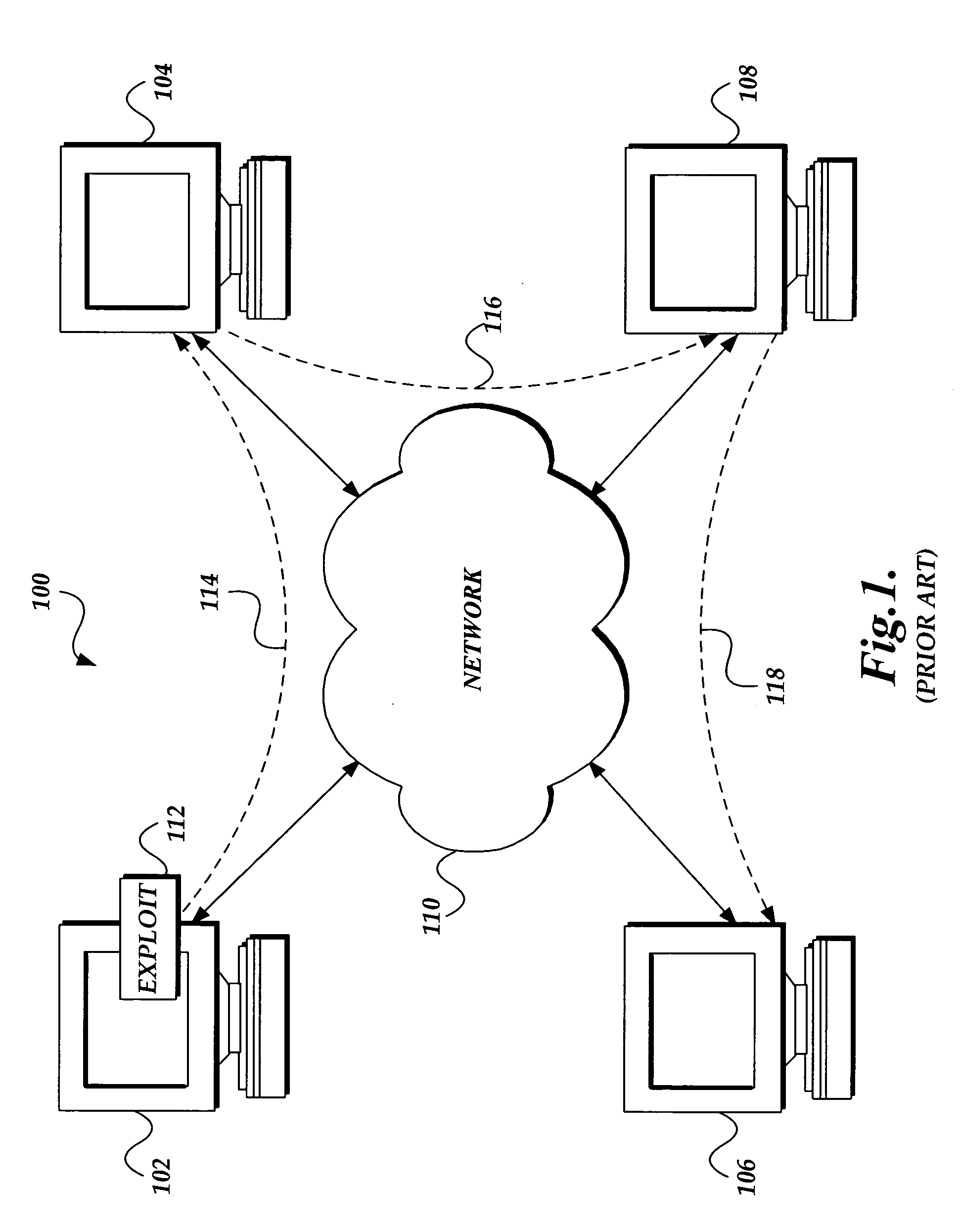
Yet another pernicious aspect of many, though not all, computer exploits is that an infected computer system is used to infect other computers.
Clearly, due to the speed and reach of the modern computer networks, a computer
exploit 112 can “grow” at an exponential rate, and quickly become a local epidemic that quickly escalates into a global computer
pandemic.
Unfortunately, anti-
virus software typically works with “known,” identifiable computer exploits.
One of the core deficiencies in this exploit detection model is that an unknown computer exploit may propagate unchecked in a network until a computer's anti-
virus software is updated to identify and respond to the new computer exploit.
These polymorphic exploits are frequently unrecognizable by anti-
virus software because they modify themselves before propagating to another computer system.
Unfortunately, properly configuring a firewall so that permissible network activities are uninhibited and that impermissible network activities are denied is a sophisticated and complicated task.
In addition to being technically complex, a firewall configuration is difficult to manage.
When firewalls are improperly configured, permissible network traffic may be inadvertently
shut down and impermissible network traffic may be allowed through, compromising the internal network.
As yet a further limitation of firewalls, while a firewall protects an internal network, it does not provide any protection for specific computers.
In other words, a firewall does not adapt itself to a specific computer's needs.
Yet another issue related to firewalls is that they do not provide protection from computer exploits originating within the borders established by a firewall.
In other words, once an exploit is able to penetrate the network protected by a firewall, the exploit is uninhibited by the firewall.
This situation frequently arises when an employee takes a
portable computer home (i.e., outside of the corporate firewall protection) and uses it at home in a less secured environment.
As such, they cannot be released as rapidly and freely as anti-virus updates from anti-virus software providers.
Unfortunately, even with in-house testing, a
software update may cause one or more other computer system features to break or malfunction.
Thus, software updates create a huge dilemma to parties that rely upon the computer systems.
More specifically, does a party update their computer systems to protect them from the
vulnerability and risk disrupting their computer systems' operations, or does the party refrain from updating their computer systems and run the risk that their computer systems may be infected?
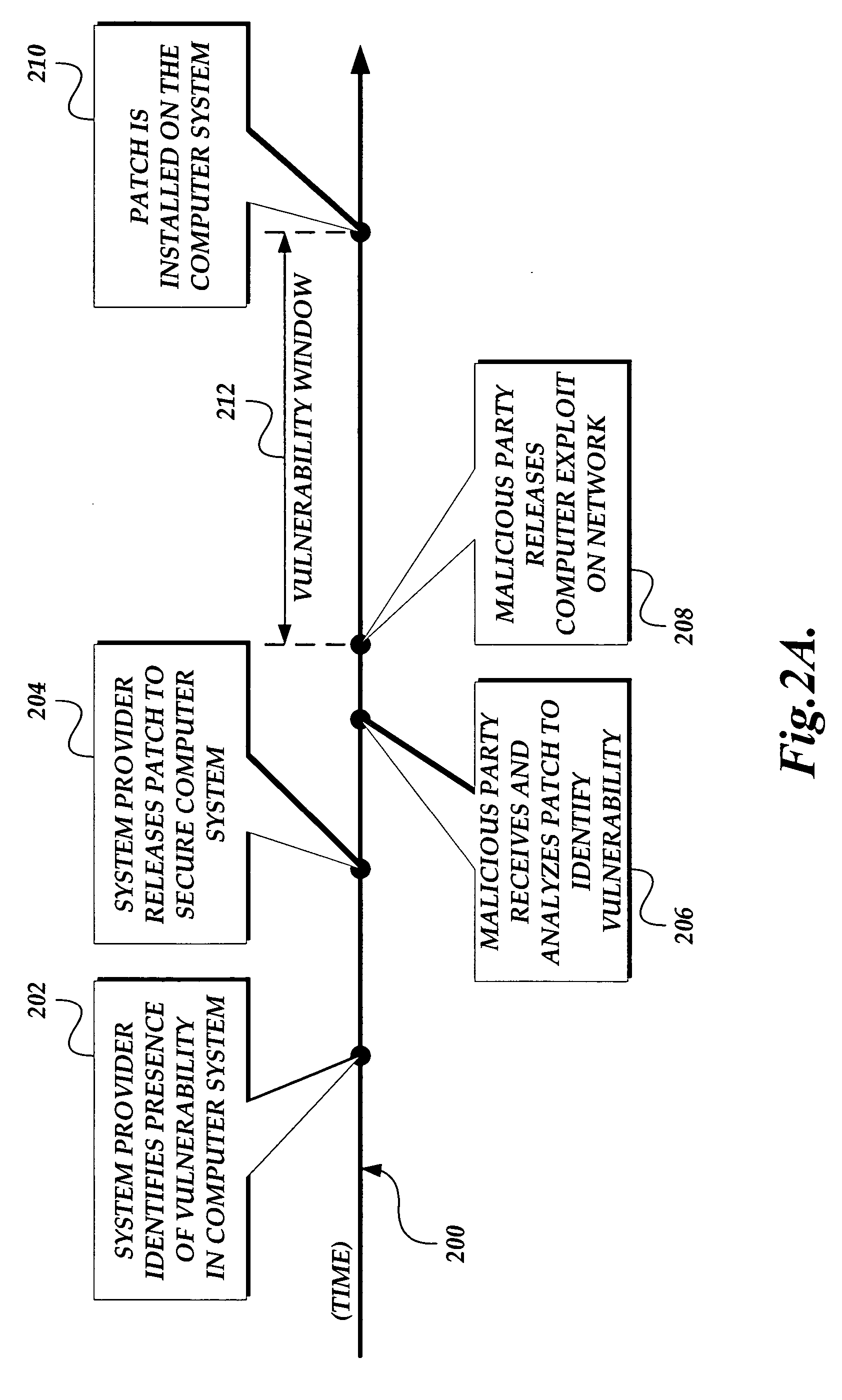
Unfortunately, as happens all too often, after the
operating system provider releases the patch, at event 206, a malicious party downloads the patch and, using some
reverse engineering as well as any information made public by the operating system or others, identifies the specifics regarding the “fixed”
vulnerability in the operating system.
While the goal of issuing a software patch, also known as a “fix,” is to correct an underlying vulnerability, the “fix” is often a complex piece of software code which itself, unfortunately, may create or contain a new vulnerability that could be attacked by a computer exploit created by a malicious party.
While a “fix” is available, the malicious party realizes that, for various reasons including those described above, not every vulnerable computer system will be immediately upgraded.
As this is a new computer exploit, there is neither an operating system patch nor an anti-virus update available to protect vulnerable computer systems from the
attack.
Sadly, whether the vulnerability window is large or small, an infected computer costs the computer's owner substantial amounts of money to “disinfect” and repair, if it is at all possible.
This cost can be enormous when dealing with large corporations or entities that may have thousands or hundreds of thousands of devices attached to a network 110.
Such a cost is further amplified by the possibility that such an exploit tamper or destroys customer data, all of which may be extremely difficult or impossible to trace and remedy.



 Login to View More
  Login to View More