

System and method for enabling users to interact in a virtual space
a virtual space and user technology, applied in the field of packet communication, can solve the problems of not all network topologies can handle broadcasts, communication is much more difficult, and the architecture is further limited
- Summary
- Abstract
- Description
- Claims
- Application Information
AI Technical Summary
Benefits of technology
Problems solved by technology
Method used
Image

Examples
Embodiment Construction
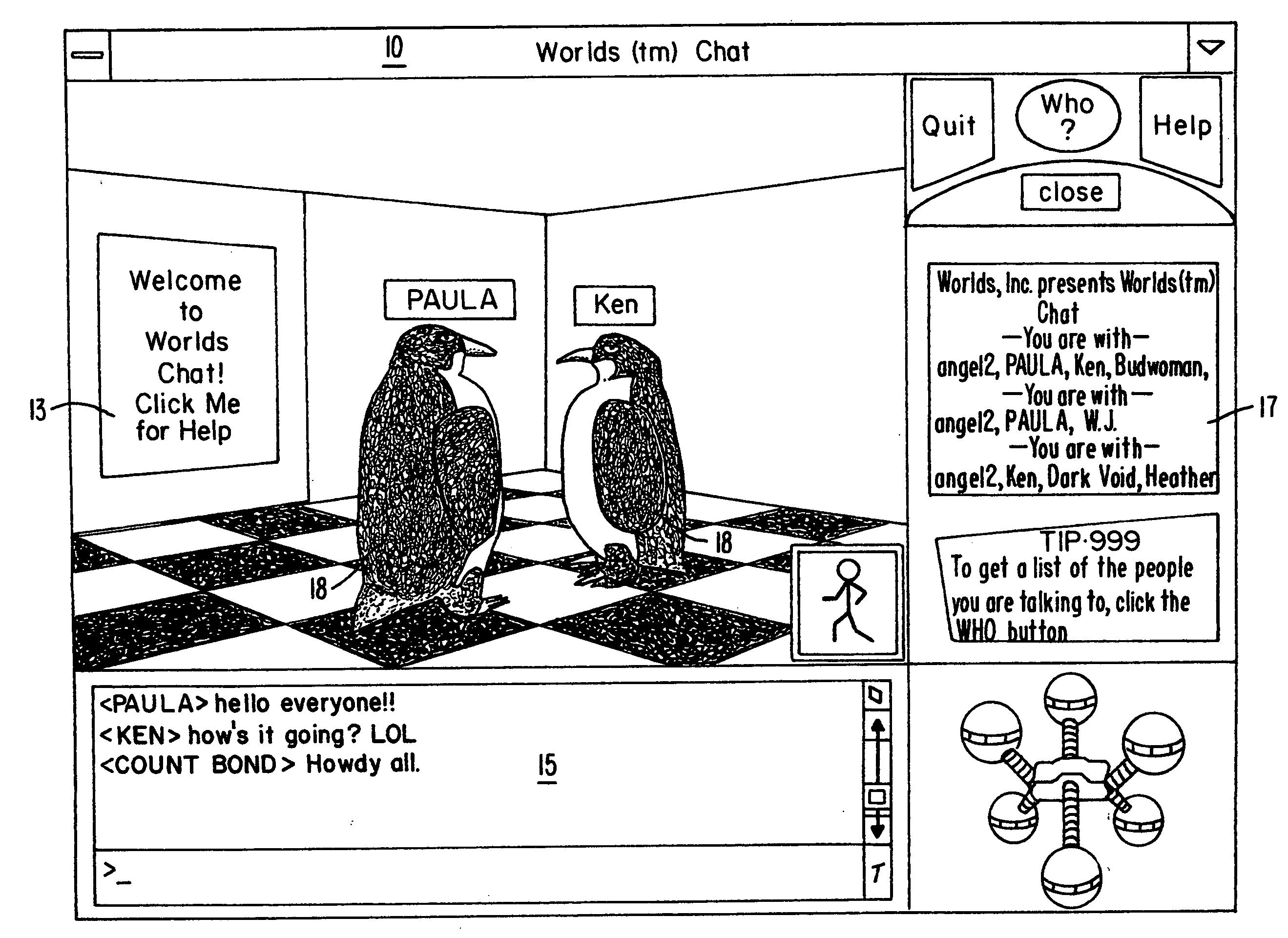
[0015] Although the preferred embodiment of the present invention can be used in a variety of applications, as will be apparent after reading the below description, the preferred embodiment is described herein using the example of a client-server architecture for use in a virtual world “chat” system. In this chat system, a user at each client system interacts with one or more other users at other client systems by inputting messages and sounds and by performing actions, where these messages and actions are seen and acted upon by other clients. FIG. 1 is an example of what such a client might display.
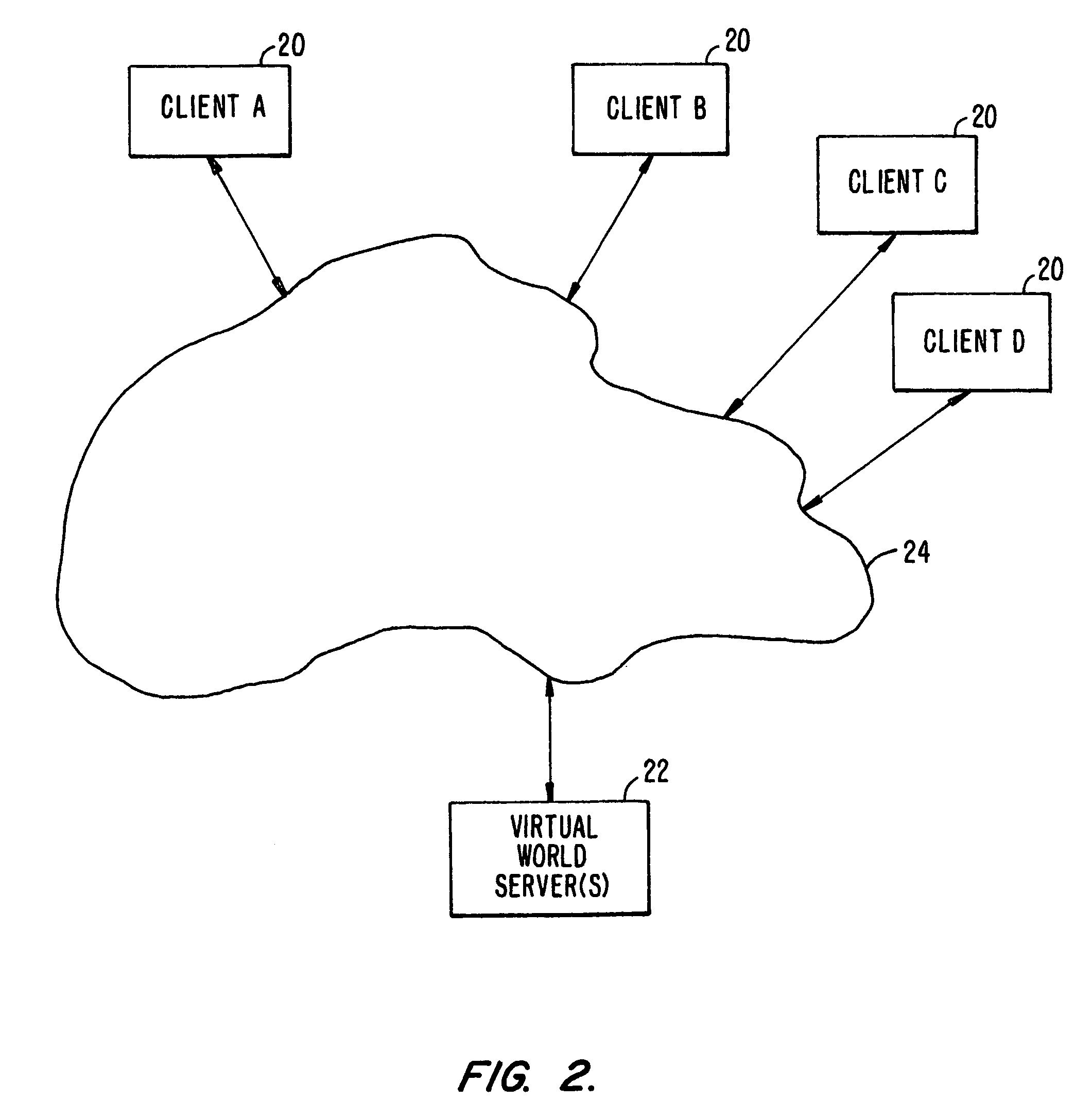
[0016] Each user interacts with a client system and the client system is networked to a virtual world server. The client system are desktop computers, terminals, dedicated game controllers, workstations, or similar devices which have graphical displays and user input devices. The term “client” generally refers to a client machine, system and / or process, but is also used to refer to the ...
PUM
 Login to View More
 Abstract
Description
Claims
Application Information
 Login to View More