
Microporous polyethylene film having excellent physical properties, productivity, and quality consistency, and method of producing same
a technology of microporous polyethylene and physical properties, which is applied in the direction of cell components, electric/magnetic/electromagnetic heating, cell component details, etc., can solve the problems of patents not disclosing a characteristic, different stretching ratios in the transverse direction, and not using a stretching process, etc., to ensure the stability of a battery and excellent physical properties. , the effect of excellent productivity
- Summary
- Abstract
- Description
- Claims
- Application Information
AI Technical Summary
Benefits of technology
Problems solved by technology
Method used
Image

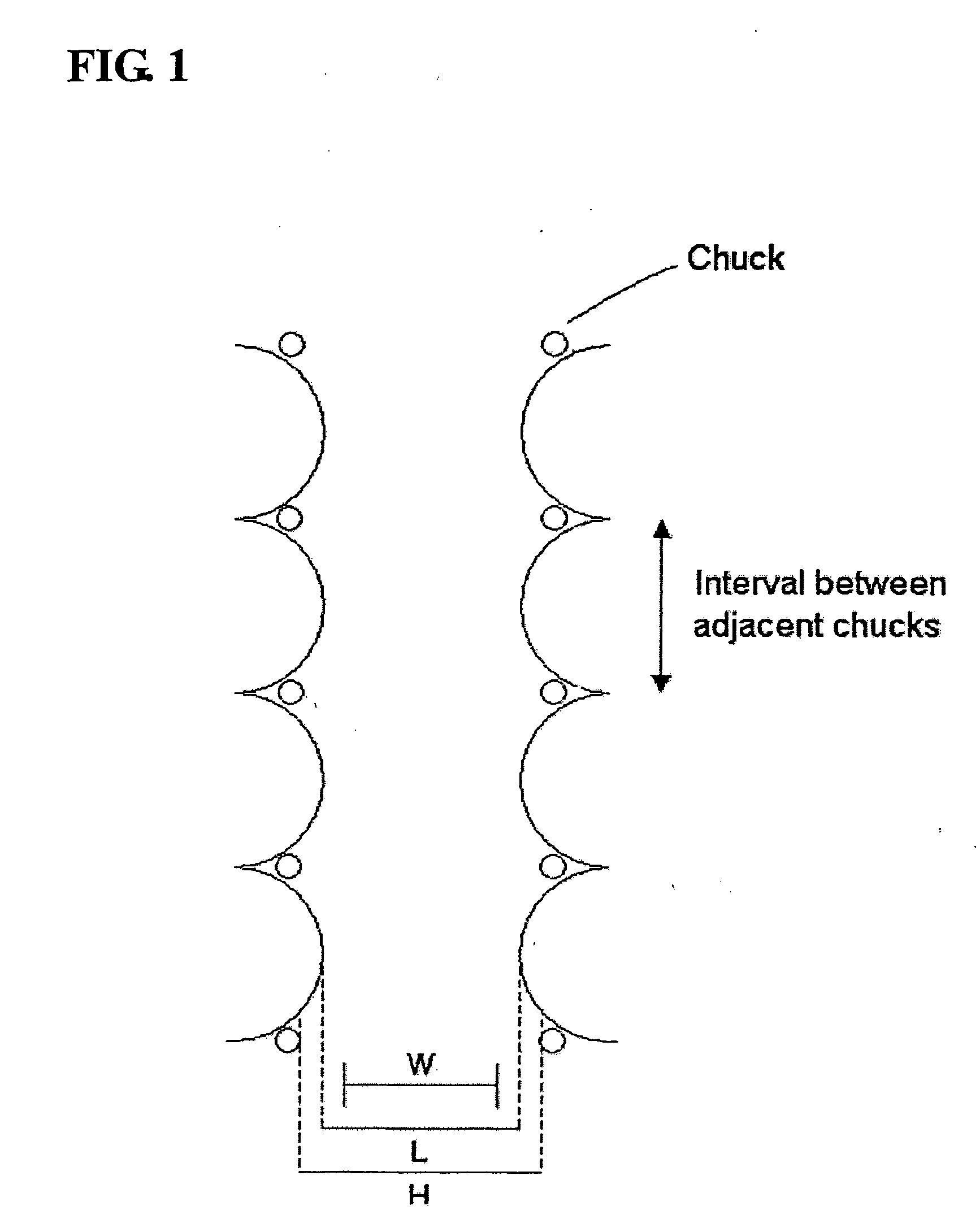
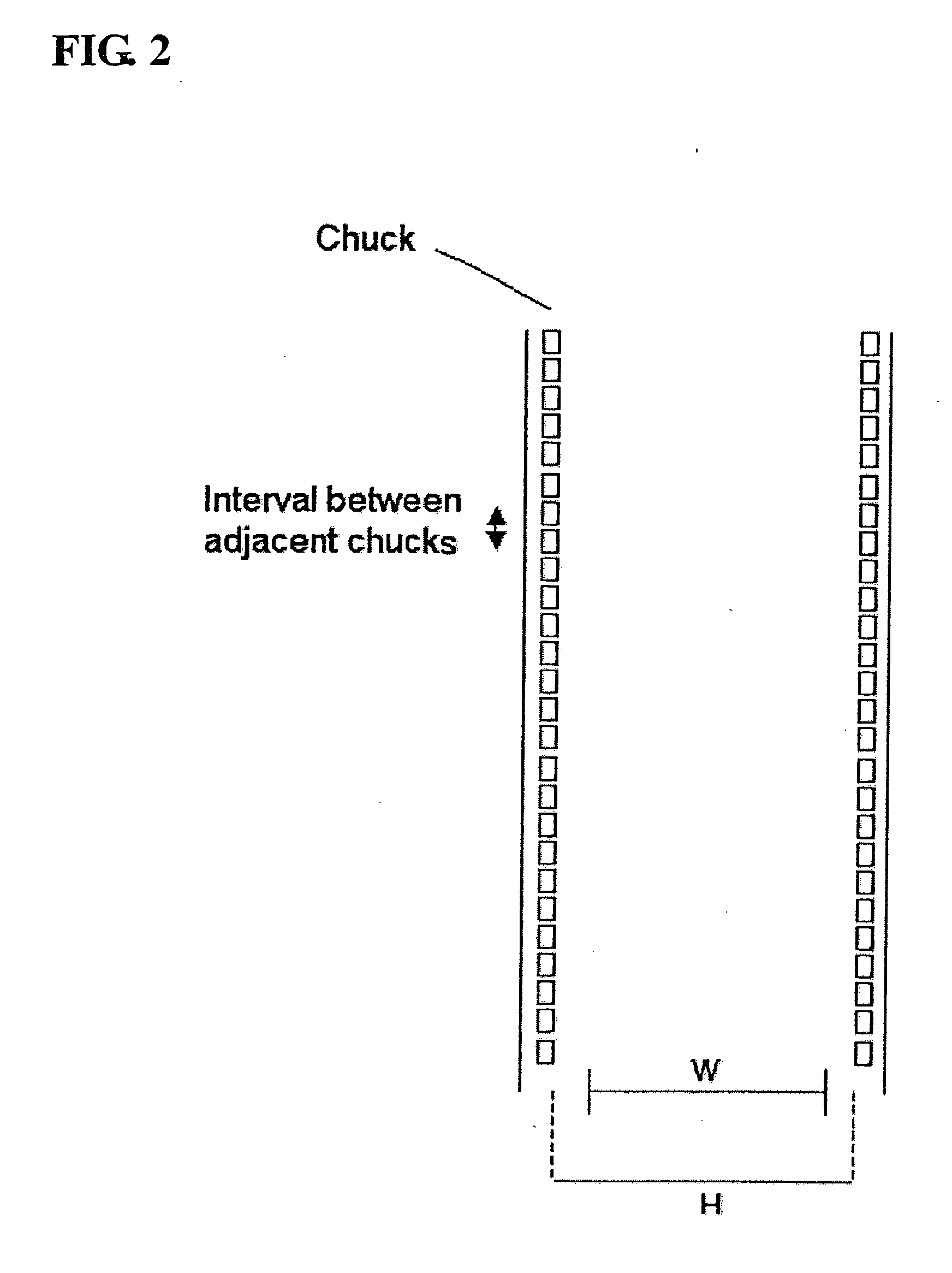
Examples
example 1
[0088] High density polyethylene having a weight average molecular weight of 2.2×10⁵ was used as component I. A paraffin oil having a kinetic viscosity of 110 at 40° C. was used as component II. Contents of components I and II were 30 wt % and 70 wt %, respectively.
[0089] Stretching was conducted in machine and transverse directions at 118 and 119° C. which corresponded to temperatures at which 50 wt % of a crystalline portion of polyethylene was melted so that machine and transverse direction stretching ratios were 6.1 times and 6 times, respectively. The number of stretching rolls which were used to conduct the stretching in the machine direction was 5. Stretching speed ratios (speed ratio between the adjacent rolls in the front and the rear) of the stretching rolls were set at 1.2-1.5-1.5-1.5-1.5 times. In this case, the speeds of the rolls were increased to be approximately 1.2-1.8-2.74.1-6.1 m / min. Surfaces of the stretching rolls were all coated with chromium so as to have ro...
example 2
[0090] High density polyethylene having a weight average molecular weight of 4.7×10⁵ was used as component I. The remaining conditions were the same as those of example 1.
example 3
[0091] High density polyethylene having a weight average molecular weight of 3.5×10⁵ was used as component I. Contents of components I and II were 10 wt % and 90 wt %, respectively. The remaining conditions were the same as those of example 1.
PUM
| Property | Measurement | Unit |
|---|---|---|
| temperature | aaaaa | aaaaa |
| diameter | aaaaa | aaaaa |
| distance | aaaaa | aaaaa |
Abstract
Description
Claims
Application Information
 Login to View More