
Method for Fabricating a Pillar-Shaped Phase Change Memory Element
a phase change memory element and pillar technology, applied in the field of high density memory devices, can solve the problems of not presented a solution that allows, the definition and formation of such small features, and the problem of manufacturing such devices with very small dimensions
- Summary
- Abstract
- Description
- Claims
- Application Information
AI Technical Summary
Problems solved by technology
Method used
Image

Examples
Embodiment Construction
[0017]The following detailed description is made with reference to the figures. Preferred embodiments are described to illustrate the present invention, not to limit its scope, which is defined by the claims. Those of ordinary skill in the art will recognize a variety of equivalent variations on the description that follows.
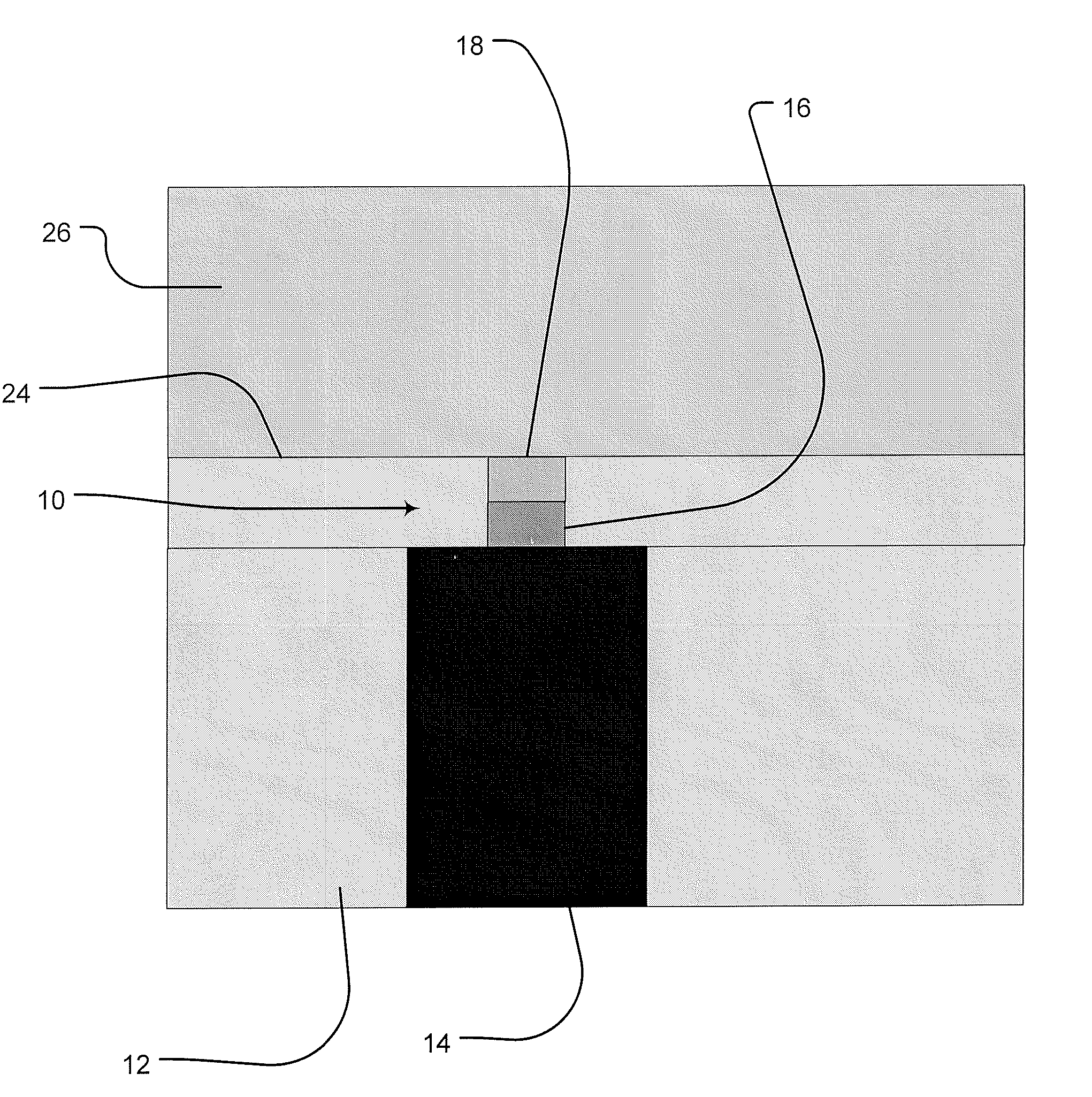
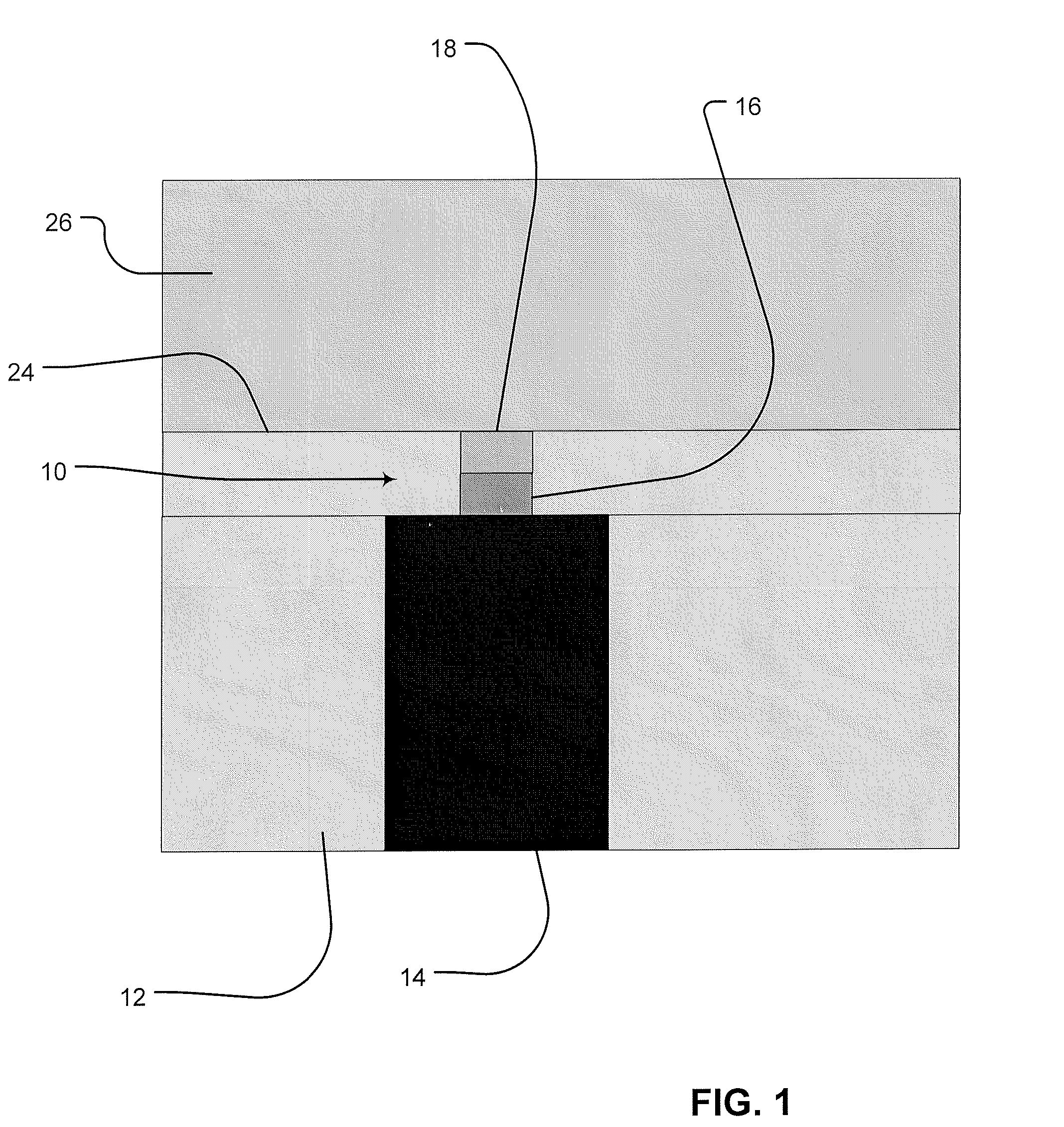
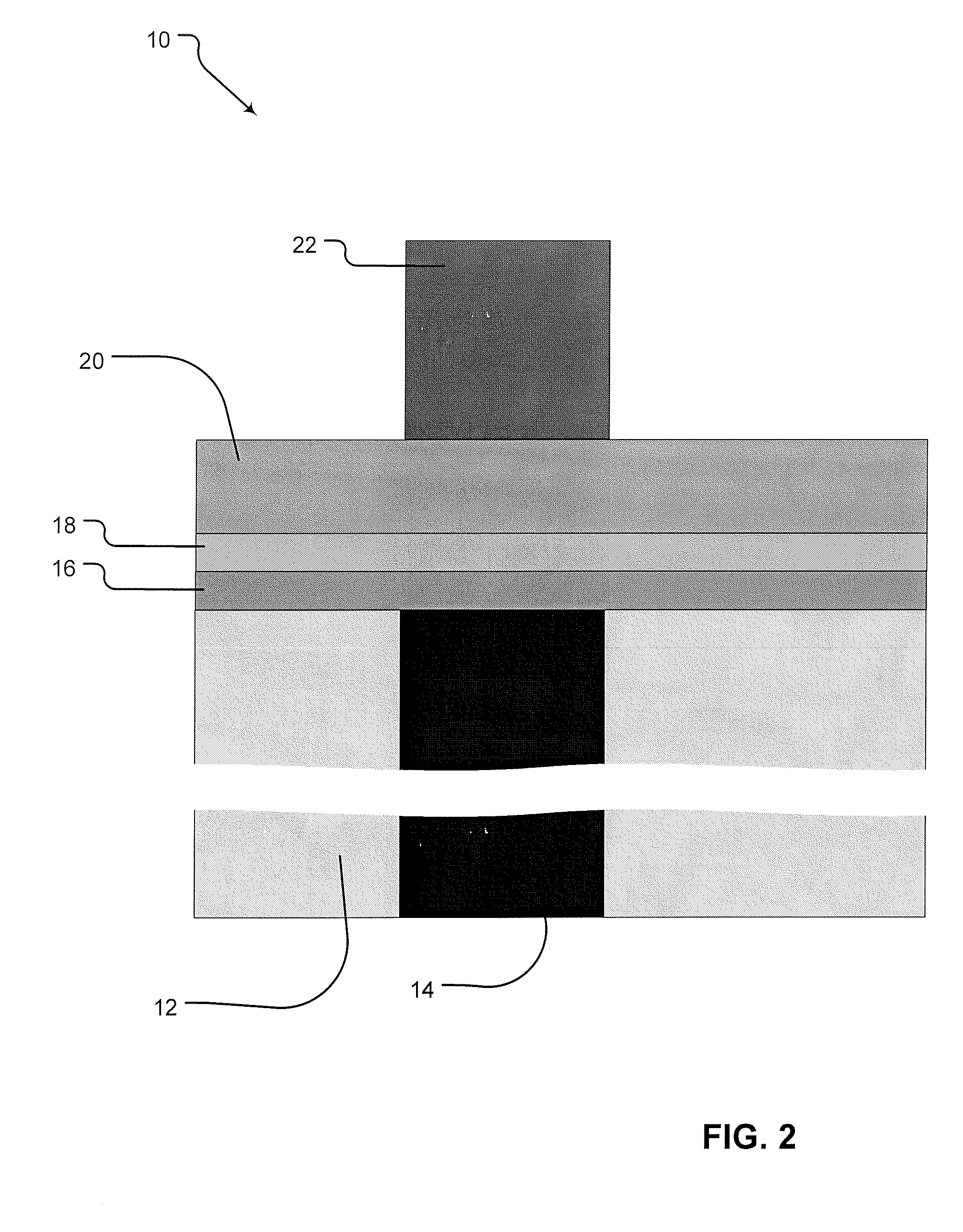
[0018]FIG. 1 depicts the pillar structure 10 of the present invention. The pillar structure is carried on a substrate 12, which typically is formed from silicon dioxide or other structure known in the art, with a contact plug 14, preferably formed from a refractory metal such as tungsten and copper, extending through the substrate to make contact with associated circuitry (not shown). Other refractory metals that could be employed include Ti, Mo, Al, Ta, Cu, Pt, Ir, La, Ni, and Ru.
[0019]The pillar itself is a relatively narrow structure having two layers—a phase change material layer 16 and an electrode layer 18. The electrode layer is a film of a material having...
PUM
 Login to View More
 Abstract
Description
Claims
Application Information
 Login to View More