
Imaging catheter and method for volumetric ultrasound
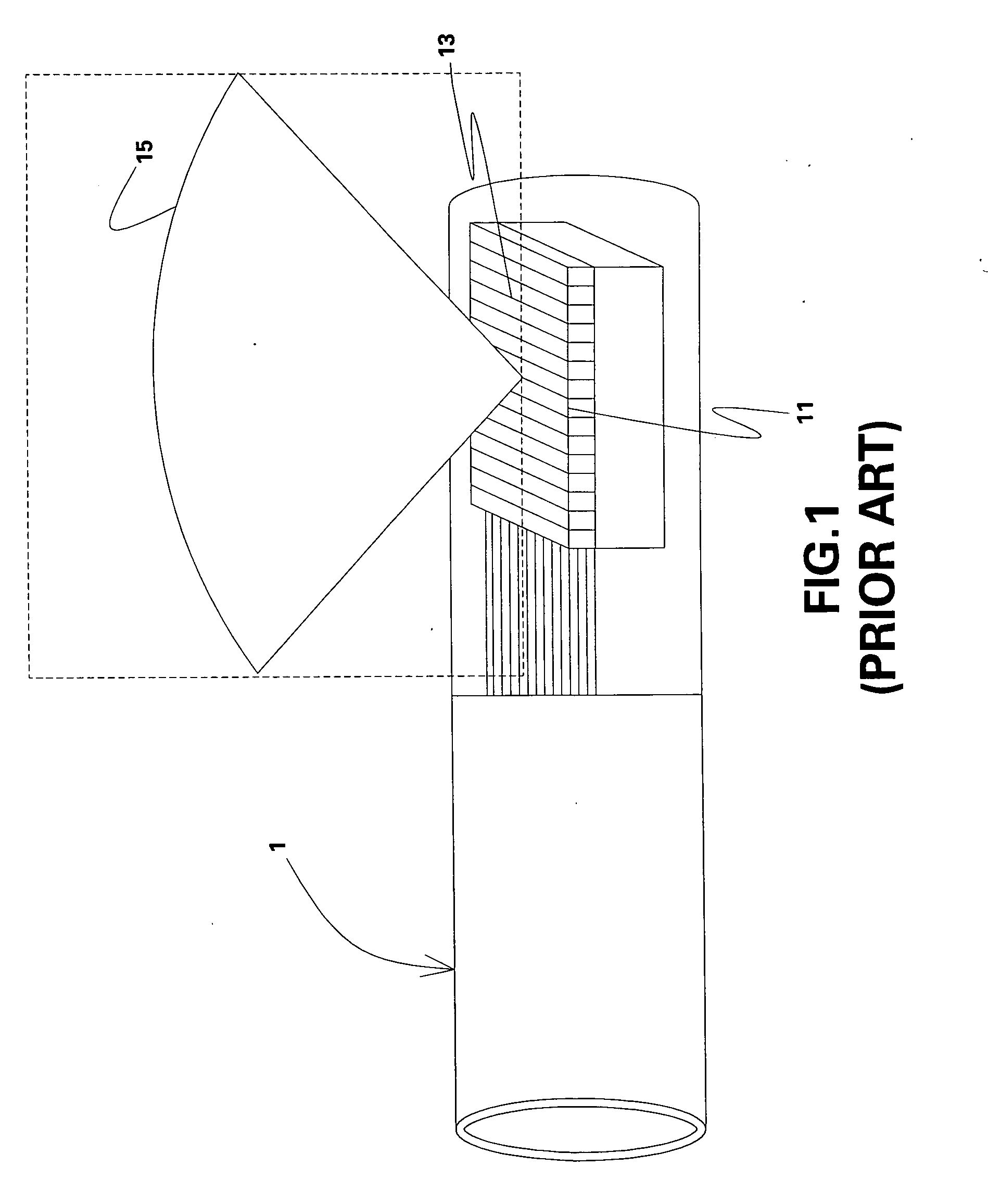
a volumetric ultrasound and imaging catheter technology, applied in the field of imaging catheters, can solve the problems of preventing the acquisition of high-quality real-time three-dimensional (rt3d) volumetric images, generally referred to as volumes, and the number of signal conductors that can physically fit within the limited size of the catheter, and the limitation is particularly severe for two-dimensional arrays
- Summary
- Abstract
- Description
- Claims
- Application Information
AI Technical Summary
Problems solved by technology
Method used
Image

Examples
Embodiment Construction
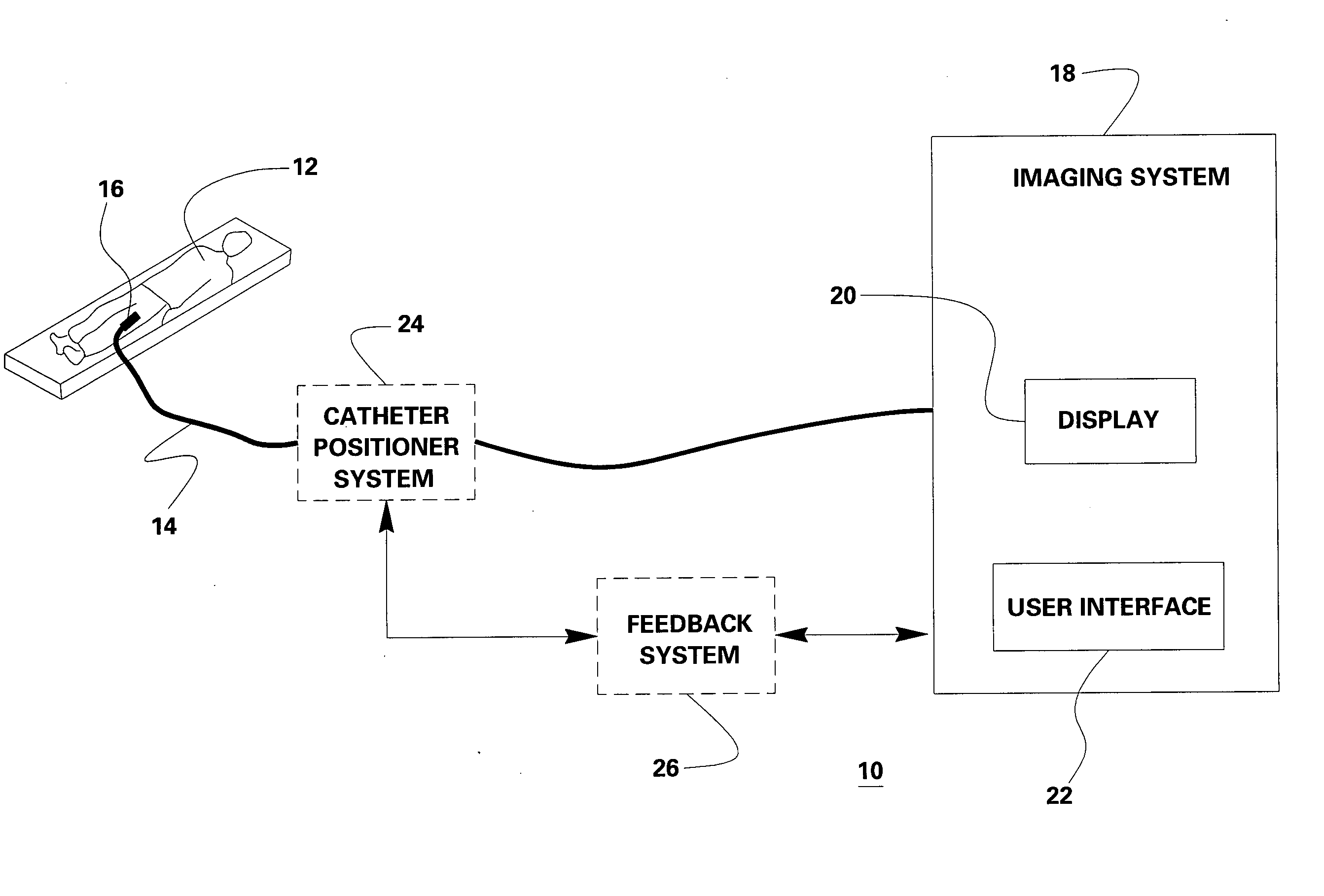
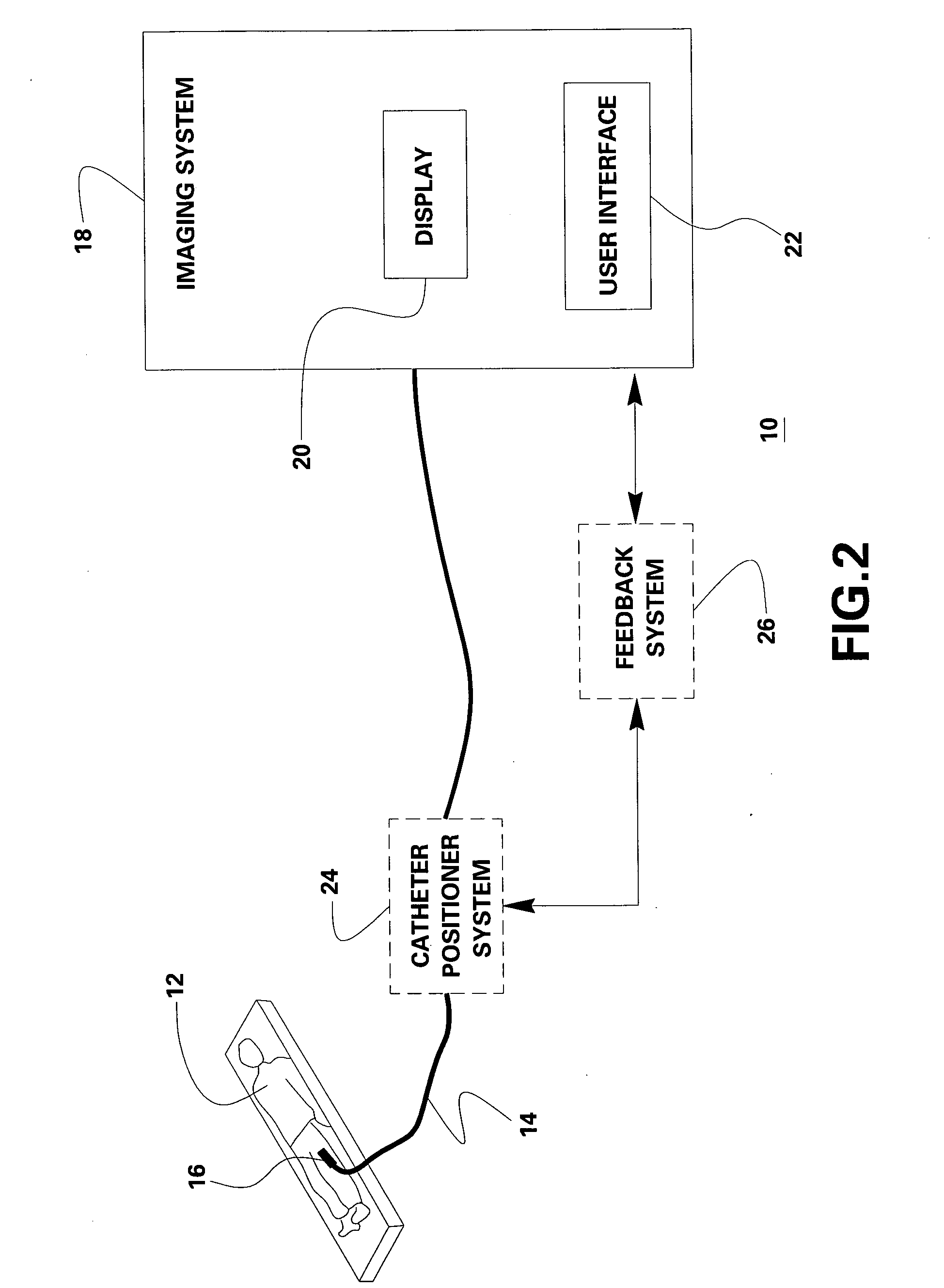
[0017] As will be described in detail hereinafter, a catheter assembly in accordance with exemplary aspects of the present technique is presented. Based on image data acquired by the catheter assembly, a three-dimensional volume of an anatomical region may be imaged and diagnostic information and / or the need for therapy in the anatomical region may be obtained.
[0018] In accordance with aspects of the present invention, the aforementioned limitations are overcome by using a transducer array that acquires image data at a given image plane and the transducer array is translated mechanically, or the active portion of the transducer is array is translated electronically, in a direction perpendicular to the image plane in order to image a 3D volume. The elements of the transducer array are electronically phased in order to acquire a sector image perpendicular to the long axis of the catheter, and the array is translated along the catheter axis in order to acquire the three-dimensional vo...
PUM
 Login to View More
 Abstract
Description
Claims
Application Information
 Login to View More