
Time-of-flight-ranging system and method for calibrating such a system
a time-of-flight ranging and time-of-flight technology, which is applied in the field of time-of-flight ranging systems and a method for calibrating such systems, can solve the problems of small differences in the operation of radio frequency oscillators, difficulty in maintaining a high degree of accuracy over a range of temperatures and operating conditions, and errors in measured distances
- Summary
- Abstract
- Description
- Claims
- Application Information
AI Technical Summary
Problems solved by technology
Method used
Image

Examples
Embodiment Construction
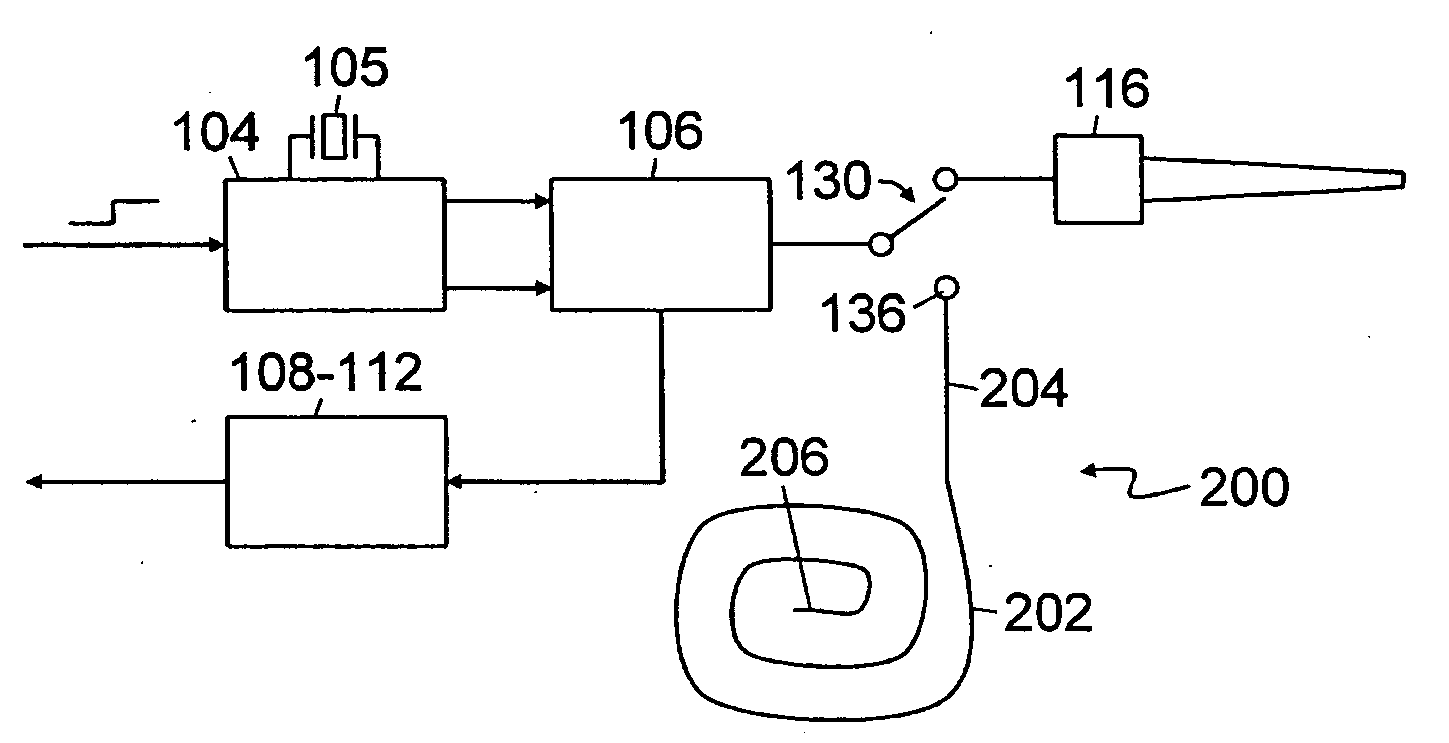
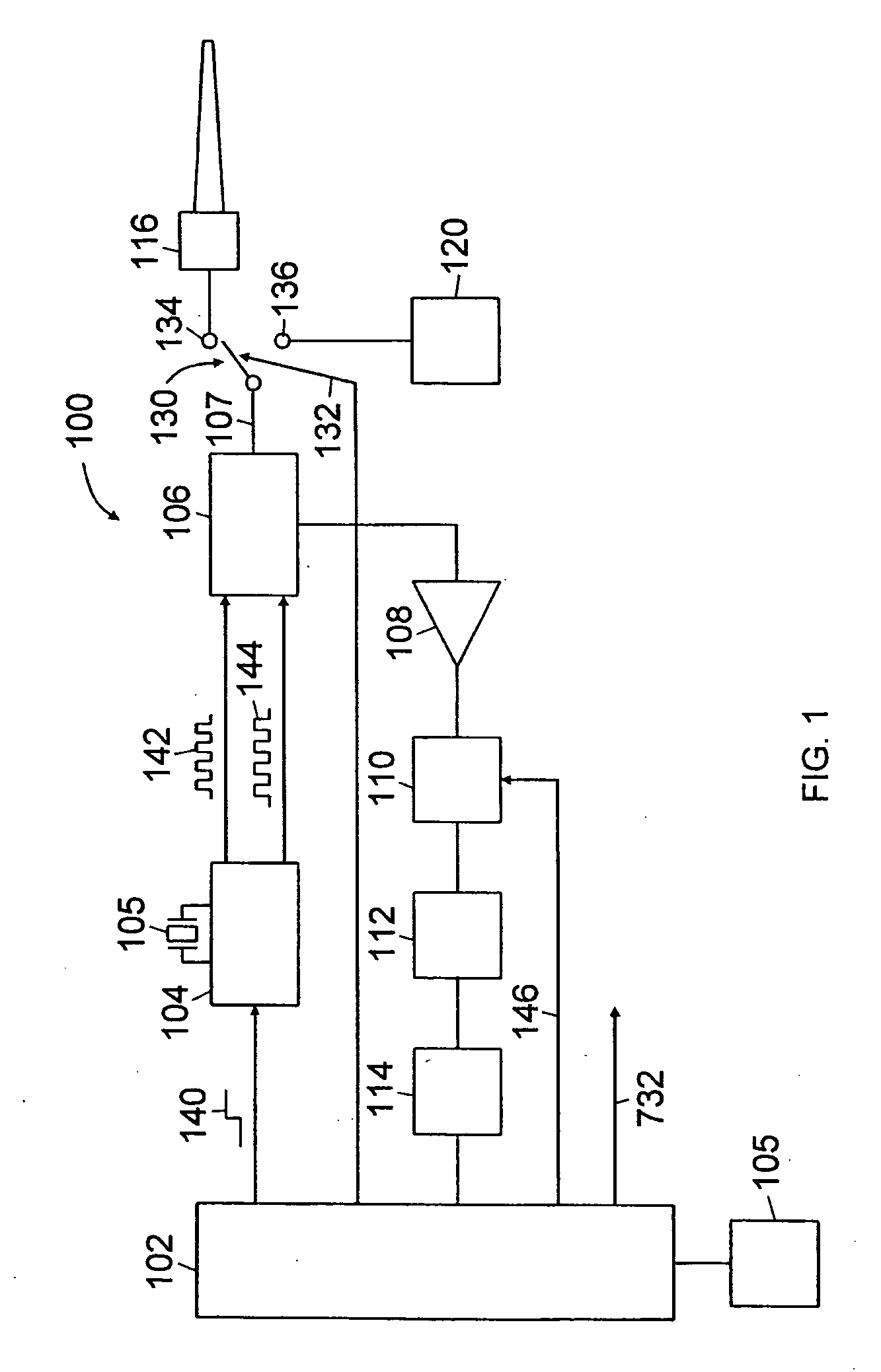
[0027]Reference is first made to FIG. 1 which shows a time-of-flight level measurement device 100. As described, the level measurement device 100 comprises a radar based or a guided wave radar time domain reflectometry (TDR) system. In accordance with one aspect of the present invention, the level measurement device 100 includes an embedded calibration mechanism or module indicated generally by reference 120. As described in more detail below, the embedded calibration module 120 provides the capability to generate internal signals and perform calibration operations to measure errors which may arise in the electronic circuitry due to the effects of temperature drift and / or component drift over time.
[0028]As shown in FIG. 1, the level measurement device 100 comprises a microcontroller or microprocessor 102, a time-base generator 104, a radar transceiver 106, an amplifier 108, a filter module 110, an envelope detector module 112, an analog-to-digital converter 114, a radiating antenna ...
PUM
 Login to View More
 Abstract
Description
Claims
Application Information
 Login to View More