[0006]It is accordingly an object of the invention to provide a decorative floor and deer finish and methods for creating and applying such a finish that overcome the hereinafore-mentioned disadvantages of the heretofore-known devices and methods of this general type and that do not visually block out the underlying artwork or visible characteristics, that allows addition of color and other visual effects able to be seen to varying depths within the veneer, and that permits sharp, even, and thick or thin definitions in veneer artwork to produce decorative and desirable visual effects.
[0007]The present invention is a new material that can be used as a hard durable, transparent veneer over concrete and provides novel processes for using this material to control sharp, even, and thick or thin definitions in artwork and, thereby, provide decorative visual effects. This hard, durable, and transparent veneer is placed over concrete and similar substrates and, in general, can be used as an
overlay finishing
system.
[0008]The novel material is a mixture of acrylic emulsions or other combinations of hard resin emulsions combined with a
high ratio of at least 60% by volume of
impact strong, transparent / translucent, uniformly spherical, non-resin, absorbent heads of acrylic,
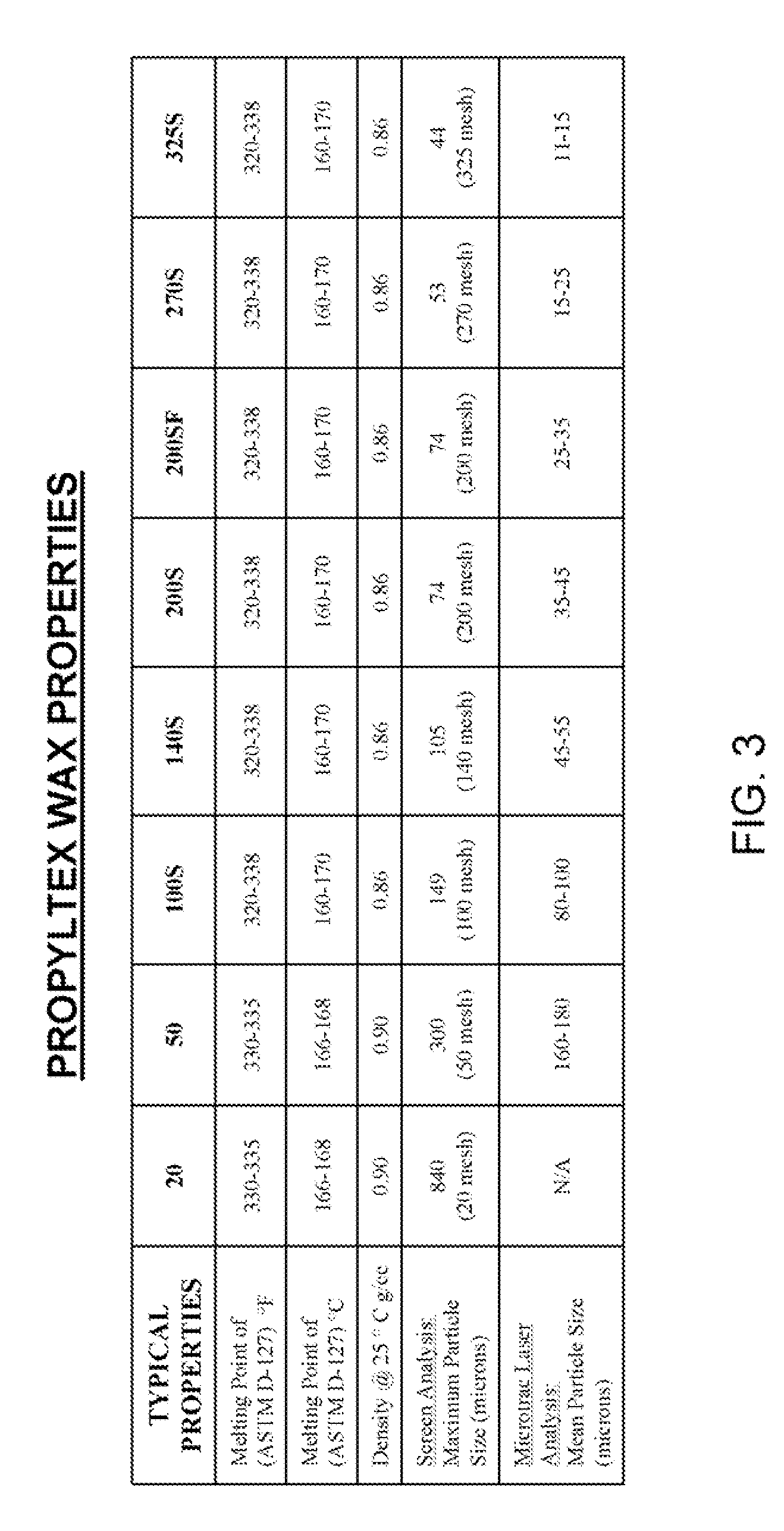
polypropylene, or other similar particulate materials that are conventionally used merely as paint texturing materials and anti-skid additives when provided in low concentrations (of the overall volume of the paint material). The high-particle-volume material of the present invention produces a workable translucent paste that dries to a hard transparent or translucent veneer and has durability similar to concrete but with a more uniform texture and a translucent appearance when dry.
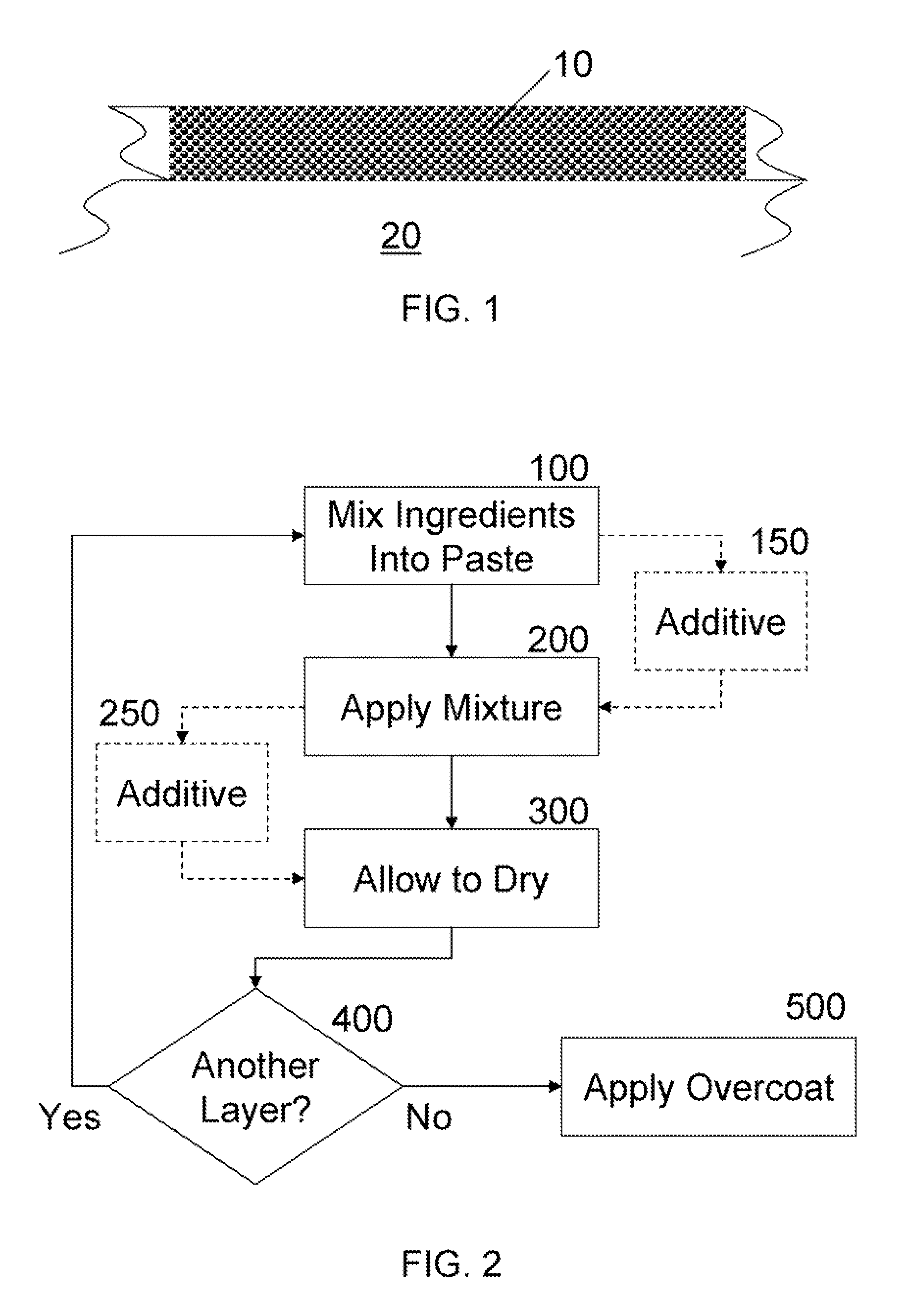
[0010]When mixed, the material is pasty. This pasty material is applied by being troweled or sprayed on the surface on which the veneer is to be created. The material also may be tinted by adding a commercial colorant(s), for example. The pasty material bonds directly to concrete, pre-painted concrete, or similar substrates. Because the paste has a substantially uniform particle consistency, it resists running or creeping when placed under stencil or tape edges. This finely controllable characteristic allows the artist to produce sharp, clean, decorative design work with the paste, such as stencil art or pre-taped decorative patterns, and the designs can be applied a first, second, or later coat applications. Decorative stencil patterns are commonly accomplished by using small amounts of color that are applied in a very thin, almost dry paint color process by a pouncing on almost dry paint color. Such application keeps the material from running under the edges of a stencil pattern placed over a substrate. Thicker and wetter stencil applications of paints and other materials tend to run under the defined edges of the stencil pattern, which results in poor decorative pattern definitions. The novel paste material containing the spherical particles resists running under any stencil pattern edges and may be applied very thin or very thick, and even by being troweled on over a decorative stencil; when the stencil is removed, the new paste material remains in place, which offers the ability to have sharp stencil definitions even in thickly applied stenciling applications. In addition, the decorative pattern is as durable as the material base to which it is applied. When dry, thickly applied patterns may be fine-sanded and polished for an extra decorative effect.
[0011]The translucent nature of the paste material allows the user to apply, if desired, a protective leveling overcoat veneer on top of the artwork. Such an overcoat application forms a tough, protecting veneer that may also be color glazed when dry and, as such, can add to and improve upon the decorative therebeneath while also being a durable surface.
[0012]Mutable
layers can be formed by applying this translucent material in different pre-tinted color
layers, or by applying decorative stencil effects or other decorative color embellishments using the material itself. Decorative effects may be produced in any or ail of these
layers, creating a translucent multi-layer appearance in a concrete surface.


 Login to View More