Check patentability & draft patents in minutes with Patsnap Eureka AI!

Use of a UUID as a Time Epoch to Determine if the System Clock Has Been Reset Backwards in Time

a technology of time epoch and system clock, applied in the field of data processing systems, can solve the problems of not providing a detection mechanism for determining if the system clock has been tampered, timestamp collision, and not detecting a clock setback event across system (re)boot events

Inactive Publication Date: 2008-08-28
IBM CORP
View PDF5 Cites 2 Cited by
  • Summary
  • Abstract
  • Description
  • Claims
  • Application Information

AI Technical Summary

Problems solved by technology

However, there can be timestamp collisions in such applications if the system clock has been reset backwards, or if there is an indication that the timestamp may have be set backward (such as during reboot).
A variety of solutions have been proposed for dealing with a system clock setback event, but these solutions suffer from a number of drawbacks.
For example, a sampling program can be run to monitor the system clock and detect any clock setback event, but because such sampling programs only work when they are active, they can not detect a clock setback event across system (re)boot events.
Other systems (such as described in RFC 4122) propose to deal with clock setback events by including a clock sequence ID value in the timestamp that is incremented whenever the system clock is set backwards in time, but these systems do not provide a detection mechanism for determining if the system clock has been tampered with or set back in the first place.
In other words, if the system clock was reset while the OS is not running, Multics refused to boot because of the possibility that the system might create a non-unique ID.
To fix this situation, the entire Multics filesystem would have to be manually reviewed to find unique IDs that are in the future, and then these IDs would have to be reset to a safe value before manually resetting the system's concept of when the last time it was running, an unduly complex and time-consuming solution.
Further limitations and disadvantages of conventional clock management solutions will become apparent to one of skill in the art after reviewing the remainder of the present application with reference to the drawings and detailed description which follow.

Method used

the structure of the environmentally friendly knitted fabric provided by the present invention; figure 2 Flow chart of the yarn wrapping machine for environmentally friendly knitted fabrics and storage devices; image 3 Is the parameter map of the yarn covering machine
View more

Image

Smart Image Click on the blue labels to locate them in the text.
Viewing Examples
Smart Image
  • Use of a UUID as a Time Epoch to Determine if the System Clock Has Been Reset Backwards in Time
  • Use of a UUID as a Time Epoch to Determine if the System Clock Has Been Reset Backwards in Time
  • Use of a UUID as a Time Epoch to Determine if the System Clock Has Been Reset Backwards in Time

Examples

Experimental program
Comparison scheme
Effect test

Embodiment Construction

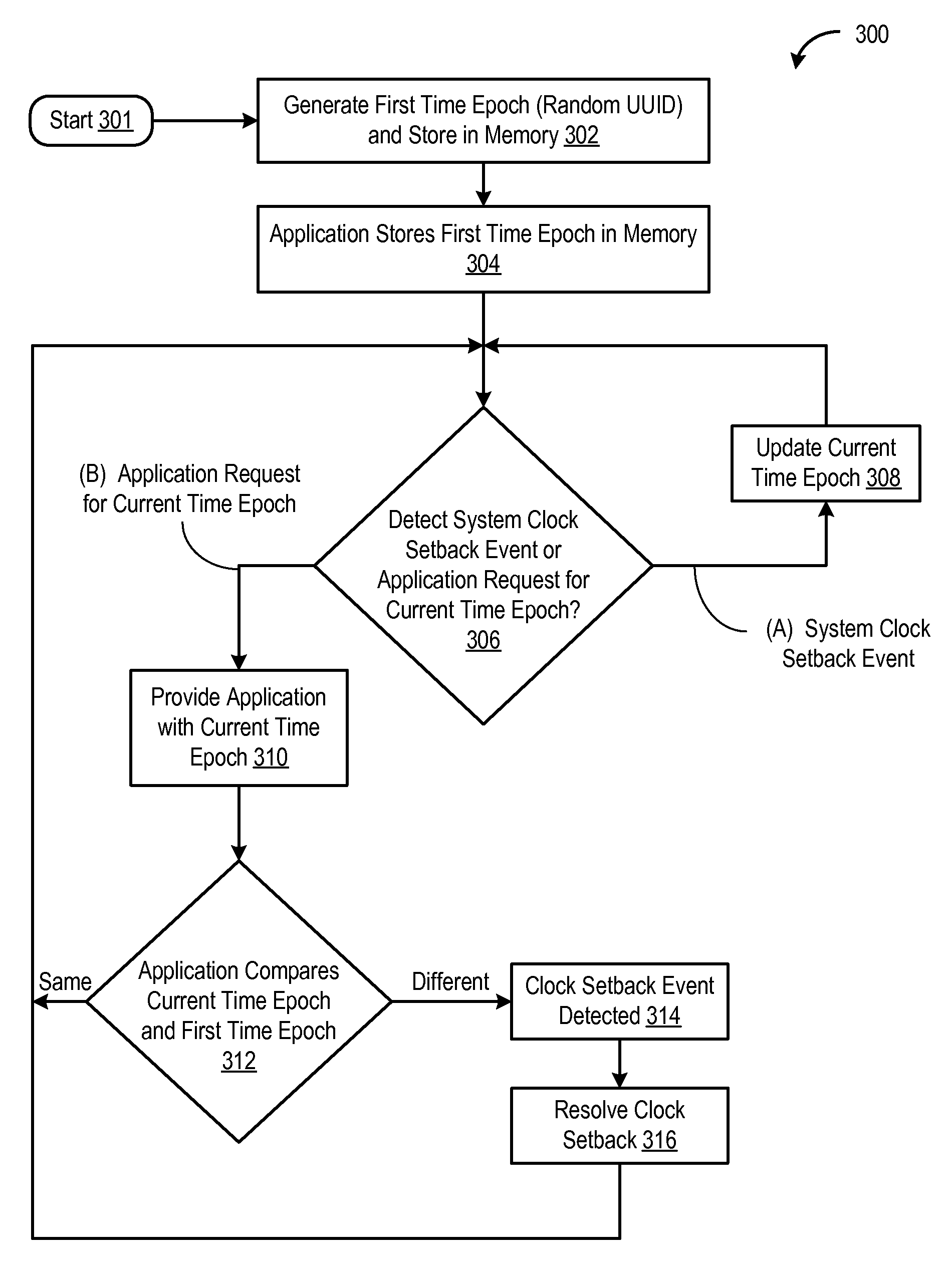
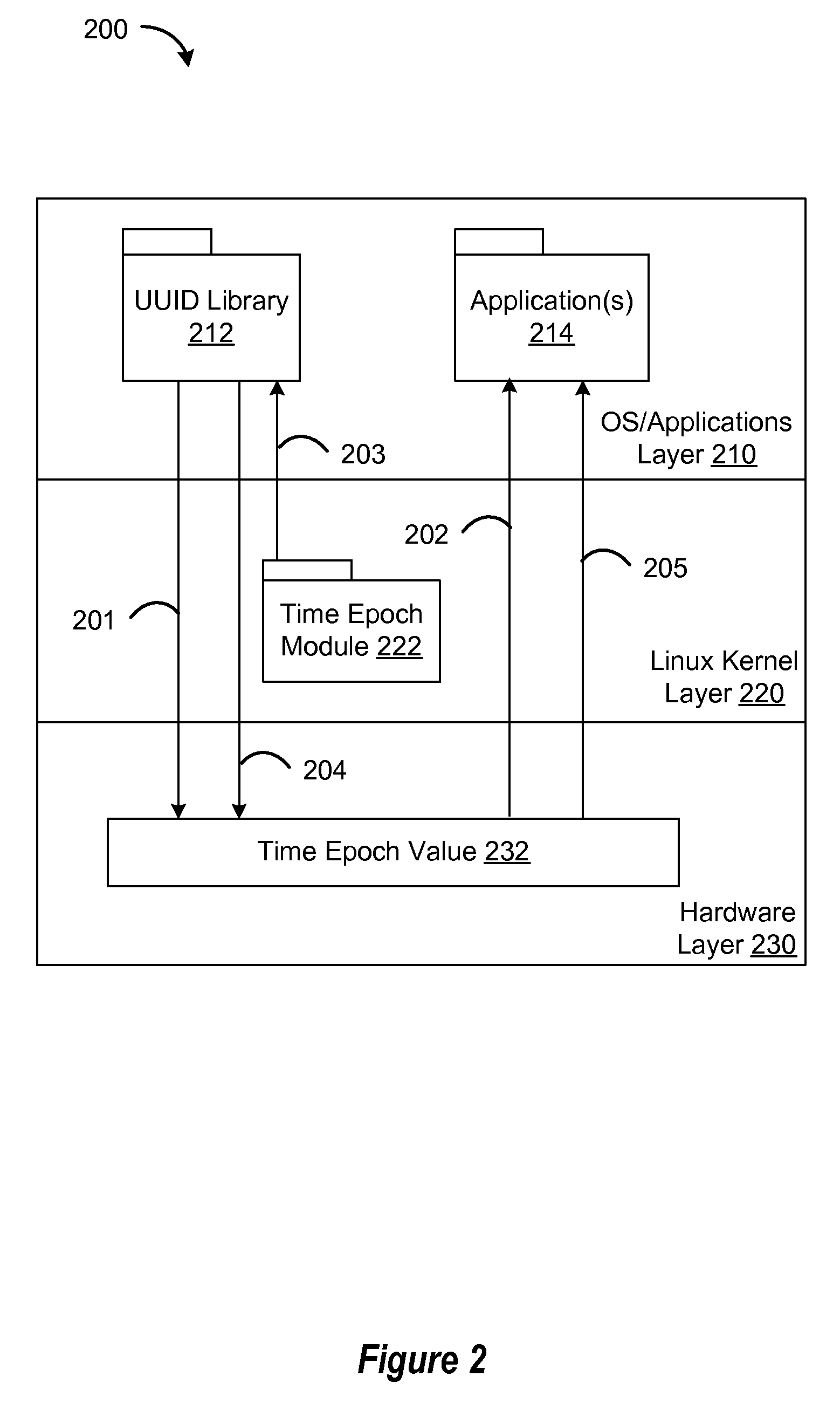
[0012]A method, system and program are disclosed for generating a random value, such as a random or type 4 UUID, at boot time and whenever the system clock is set backward in time. The random value is generated with a random number generator, such as a hardware (sometimes called “true”) random number generator or a cryptographic random number generator which has been seeded using some true (unpredictable) hardware randomness. By storing the random value, the random value serves as a time epoch indication of the system clock state at that point in time. At any subsequent point when the system clock is accessed by an application (such as when generating a timestamp or time code value, at a subsequent boot event or upon detection of a system clock setback event), a new random value (e.g., another UUID) is generated and compared to the original random value that is retrieved from memory. If the original and new random values are different, the application will know that the system clock...

the structure of the environmentally friendly knitted fabric provided by the present invention; figure 2 Flow chart of the yarn wrapping machine for environmentally friendly knitted fabrics and storage devices; image 3 Is the parameter map of the yarn covering machine
Login to View More

PUM

No PUM Login to View More

Abstract

A method, system and program are provided for determining if a system clock has been reset backwards in time by using a randomly generated set of bytes (such as a randomly generated or type 4 UUID) as a time epoch. By generating a time epoch at boot time and whenever the system clock is set back in time, an application can compare the time epoch value at an earlier point in its execution, with the current time epoch. If the time epoch values are different, the application will know that the system clock has been set back in time.

Description

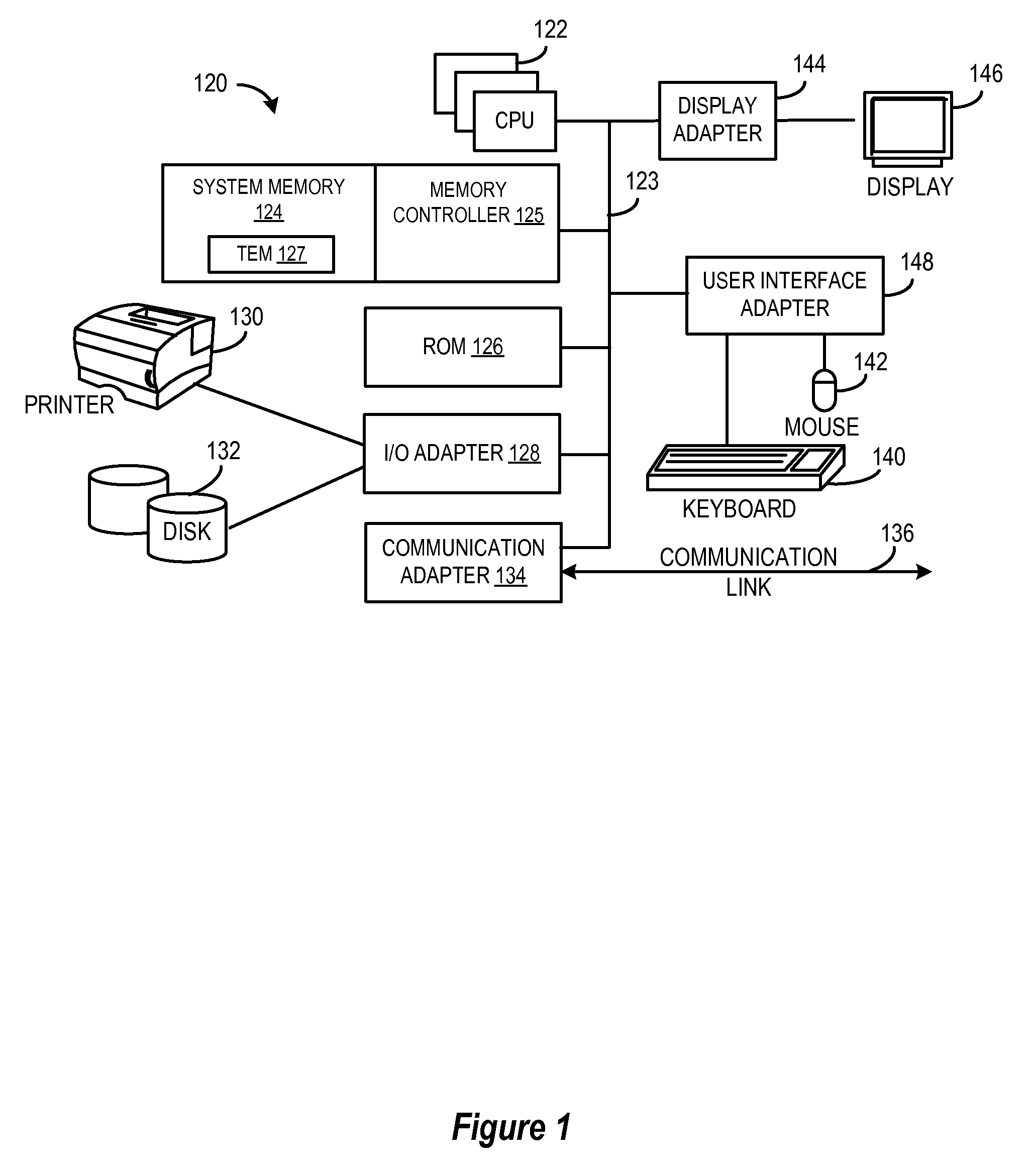
BACKGROUND OF THE INVENTION[0001]1. Field of the Invention[0002]The present invention is directed in general to the field of data processing systems. In one aspect, the present invention relates to system clock management within data processing systems.[0003]2. Description of the Related Art[0004]Data processing systems and the applications that run on them rely on timing devices, such as clocks, to operate. For example, a conventional processor contains a system clock that uses a quartz crystal to generate a constant flow of pulses to allow the processor to operate and that also provides a timing reference to all of the other hardware logic in a data processing system. A number of userspace libraries and / or applications use the system clock to generate timestamps that are used for synchronization, for calculating dependencies (such as make), for controlling system hardware (such as determining when a cache memory should be refreshed) or for generating unique and / or random identific...

Claims

the structure of the environmentally friendly knitted fabric provided by the present invention; figure 2 Flow chart of the yarn wrapping machine for environmentally friendly knitted fabrics and storage devices; image 3 Is the parameter map of the yarn covering machine
Login to View More

Application Information

Patent Timeline
no application Login to View More
IPC IPC(8): G06F1/14
CPCG06F9/54G06F1/14
Inventor TSO, THEODORE Y.
Owner IBM CORP
Features
  • R&D
  • Intellectual Property
  • Life Sciences
  • Materials
  • Tech Scout
Why Patsnap Eureka
  • Unparalleled Data Quality
  • Higher Quality Content
  • 60% Fewer Hallucinations
Social media
Patsnap Eureka Blog
Learn More