Independent Scheduling in a Wireless Network

US20080285507A1Inactive Publication Date: 2008-11-20APPLE INC
6 Cites 40 Cited by

Patent Information

Authority / Receiving Office
US · United States
Current Assignee / Owner
Publication Date
2008-11-20
Estimated Expiration
Not applicable · inactive patent

Smart Images

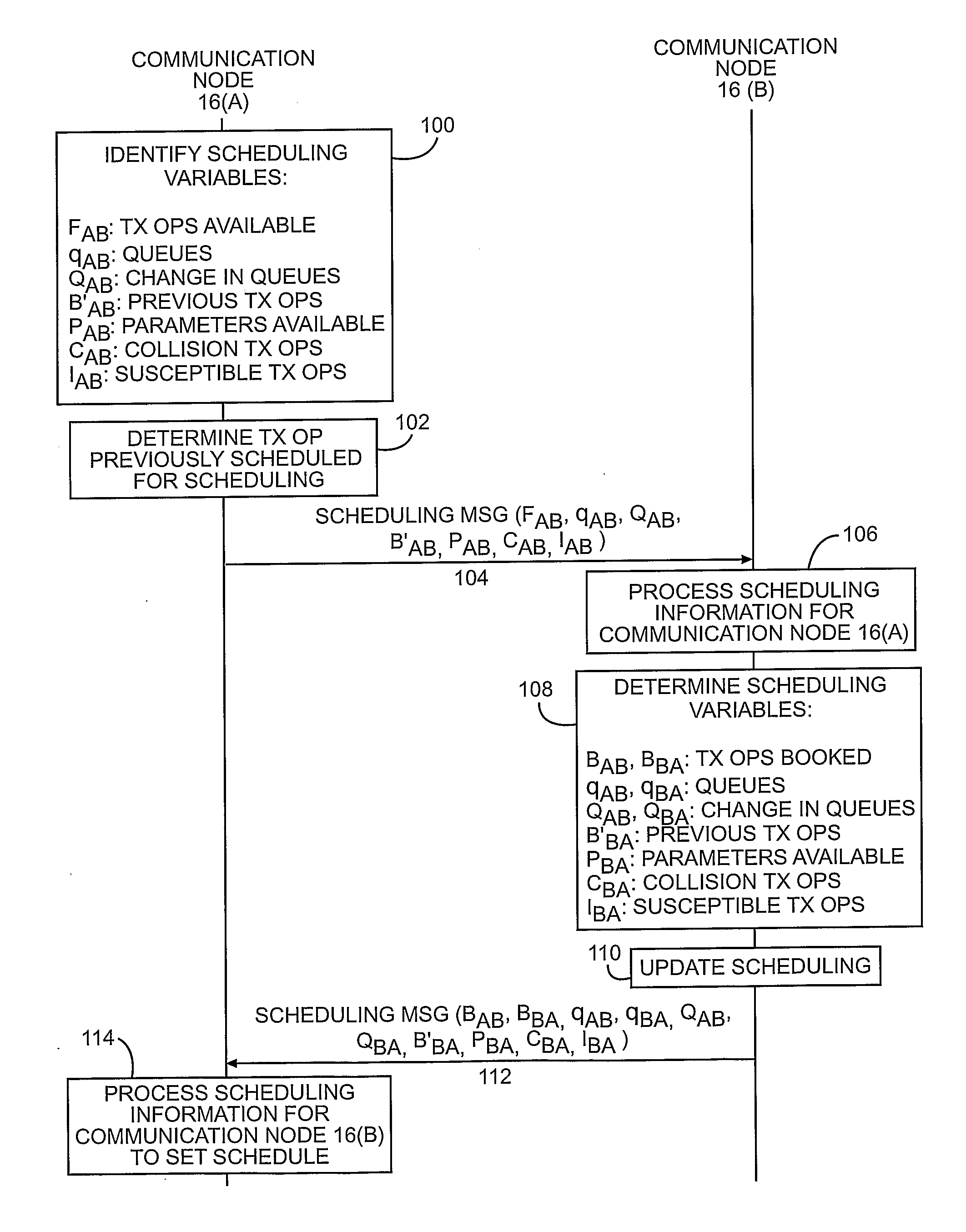
  • Figure 1
    Figure 1
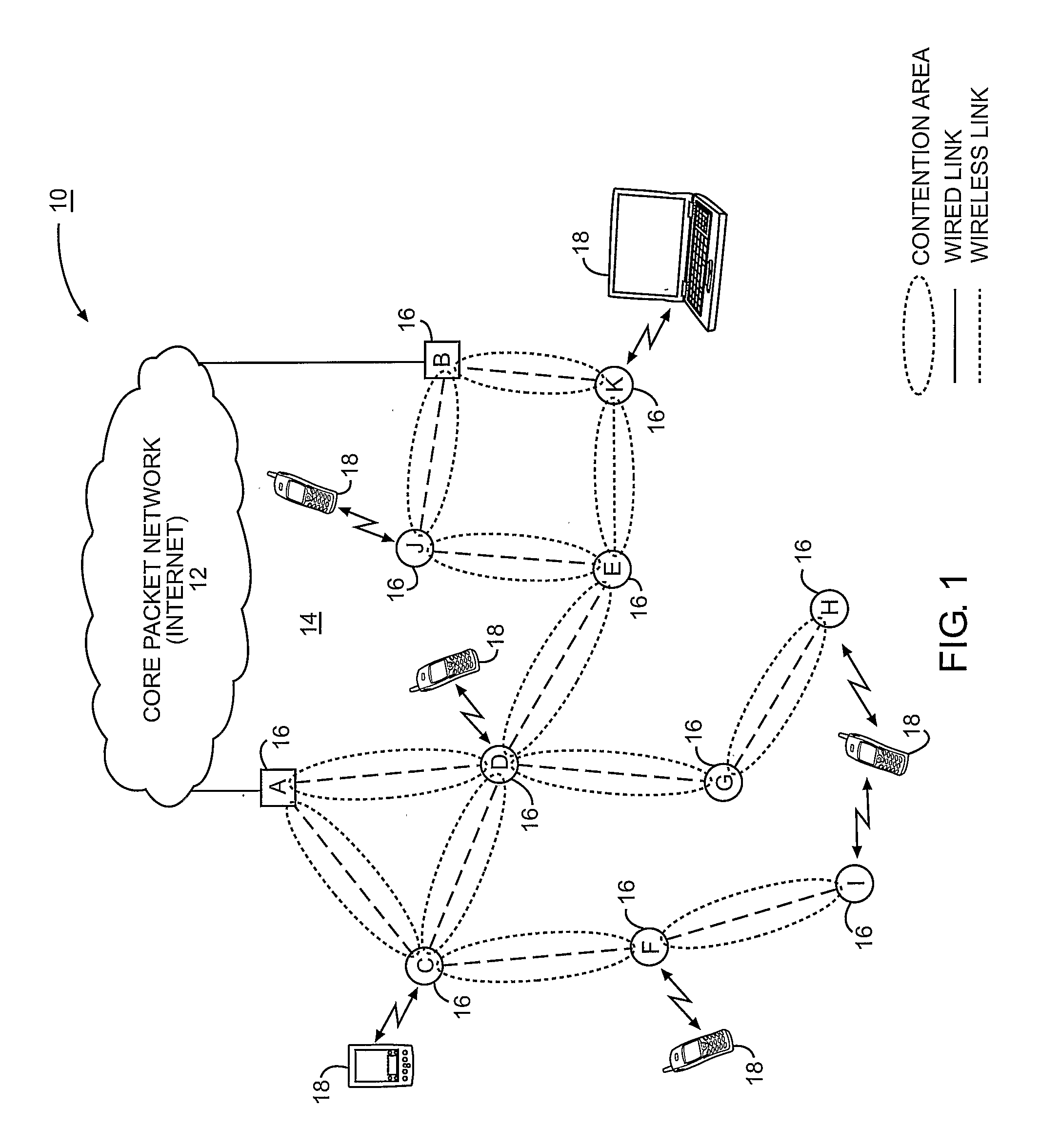
  • Figure 2
    Figure 2
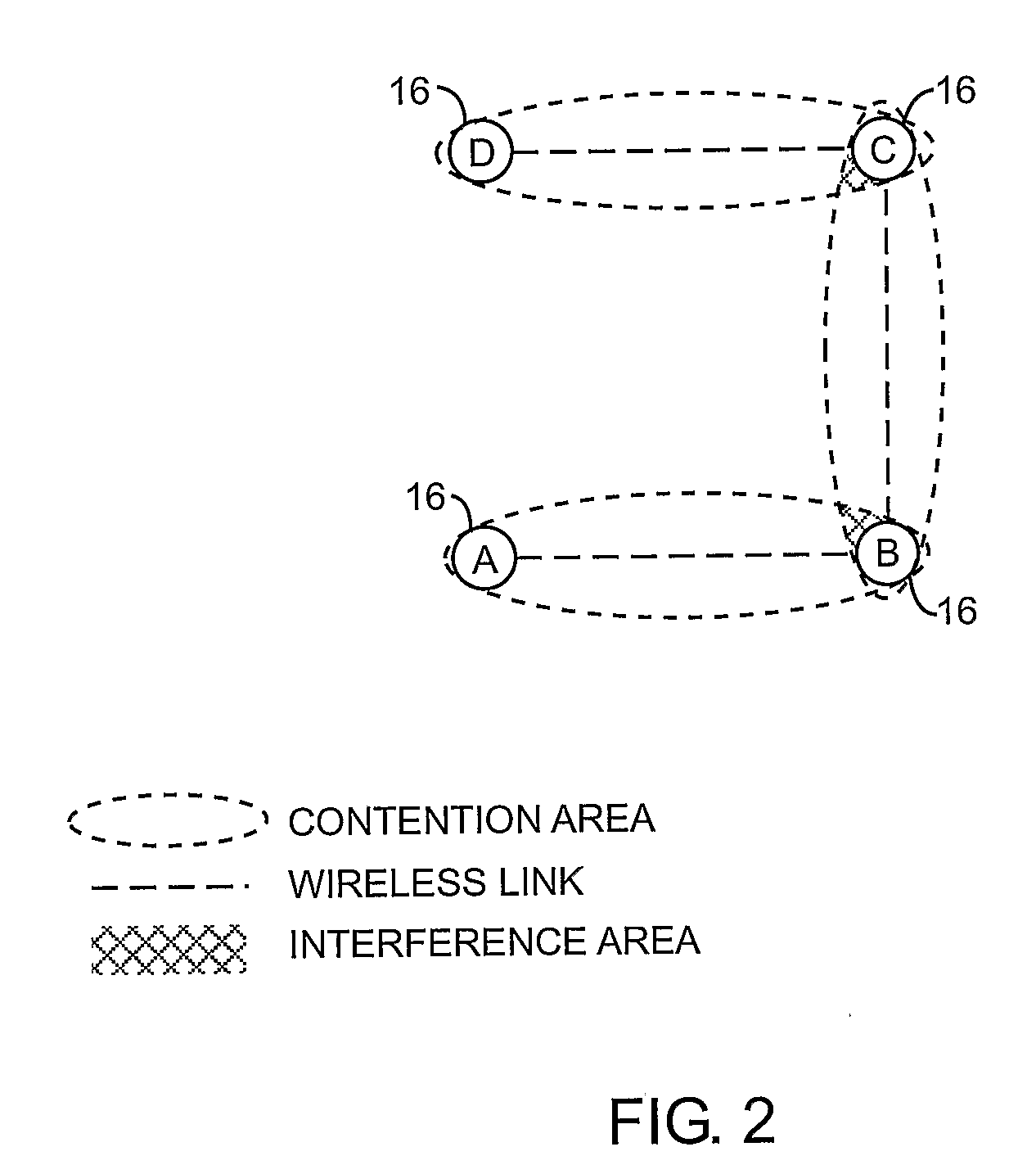
  • Figure 3
    Figure 3
Patent Text Reader

Abstract

The present invention provides a scheduling technique that allows individual nodes in a wireless communication network to independently determine their own communication schedules. The communication nodes in the wireless communication network are associated with one or more compatible communication nodes through substantially non-contending communication links, wherein the communication links within a group of compatible communication nodes are substantially non-interfering. Each node will exchange scheduling information with the various compatible communication nodes, and determine the communication schedule for future communications with those compatible communication nodes. This communication schedule may dictate when information is received from or sent to a compatible communication node during a given transmission opportunity.
Need to check novelty before this filing date? Find Prior Art

Description

[0001] This application claims the benefit of provisional patent application Ser. No. 60 / 565,950, filed Apr. 28, 2004, and provisional patent application No. 60 / 618,688, filed Oct. 14, 2004, the disclosures of which are hereby incorporated by reference in their entireties.FIELD OF THE INVENTION

[0002] The present invention relates to wireless communications, and in particular to providing scheduling throughout a wireless network.BACKGROUND OF THE INVENTION

[0003] In a wireless mesh network where communication nodes share wireless communication resources to exchange information with their neighbors to facilitate communications, each communication node must determine a schedule to control transmission and reception between the various communication nodes to provide an appropriate throughput, minimize collisions, and perhaps provide one or more quality of service levels. The scheduling generally dictates the timing and sequence of communications between neighboring communication nodes. In a...

Examples

Embodiment Construction

[0018]The embodiments set forth below represent the necessary information to enable those skilled in the art to practice the invention and illustrate the best mode of practicing the invention. Upon reading the following description in light of the accompanying drawing figures, those skilled in the art will understand the concepts of the invention and will recognize applications of these concepts not particularly addressed herein. It should be understood that these concepts and applications fall within the scope of the disclosure and the accompanying claims.

[0019]With reference to FIG. 1, a communication environment 10 is provided wherein a core packet network 12, such as the Internet, is coupled to a wireless access network 14. The wireless access network 14 is composed of numerous communication nodes 16 (A-K), which may communicate with other compatible communication nodes 16 to effectively forward communications between one or more mobile terminals 18 or between the mobile termina...