

Delivering Malformed Data for Fuzz Testing to Software Applications
a software application and data technology, applied in the direction of program control, unauthorized memory use protection, instruments, etc., can solve the problems of fatal to the proper functioning and results of the application, security vulnerabilities, and the typical time-consuming and labor-intensive nature of conventional software fuzz testing techniques
- Summary
- Abstract
- Description
- Claims
- Application Information
AI Technical Summary
Benefits of technology
Problems solved by technology
Method used
Image

Examples
Embodiment Construction
Overview
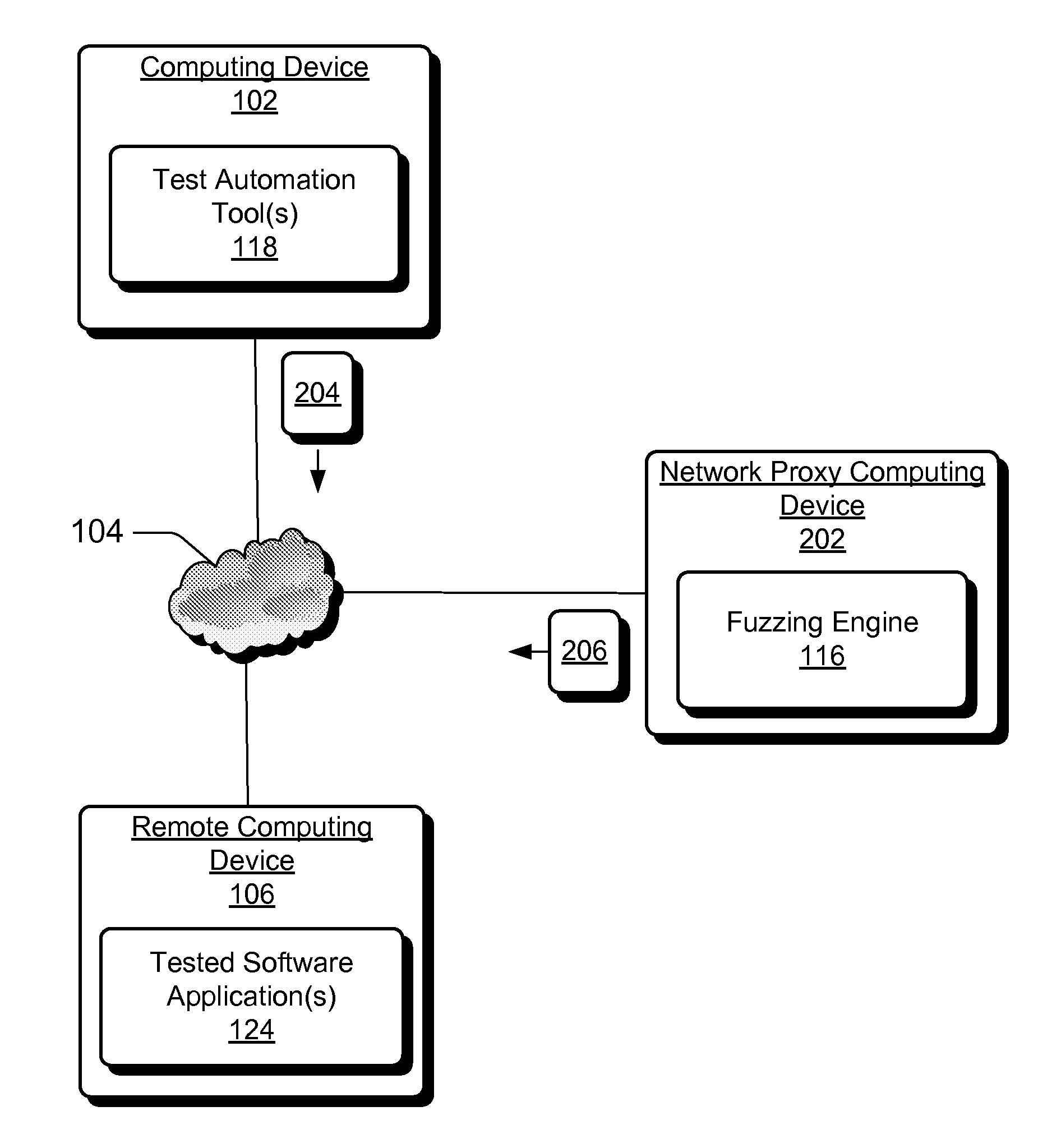
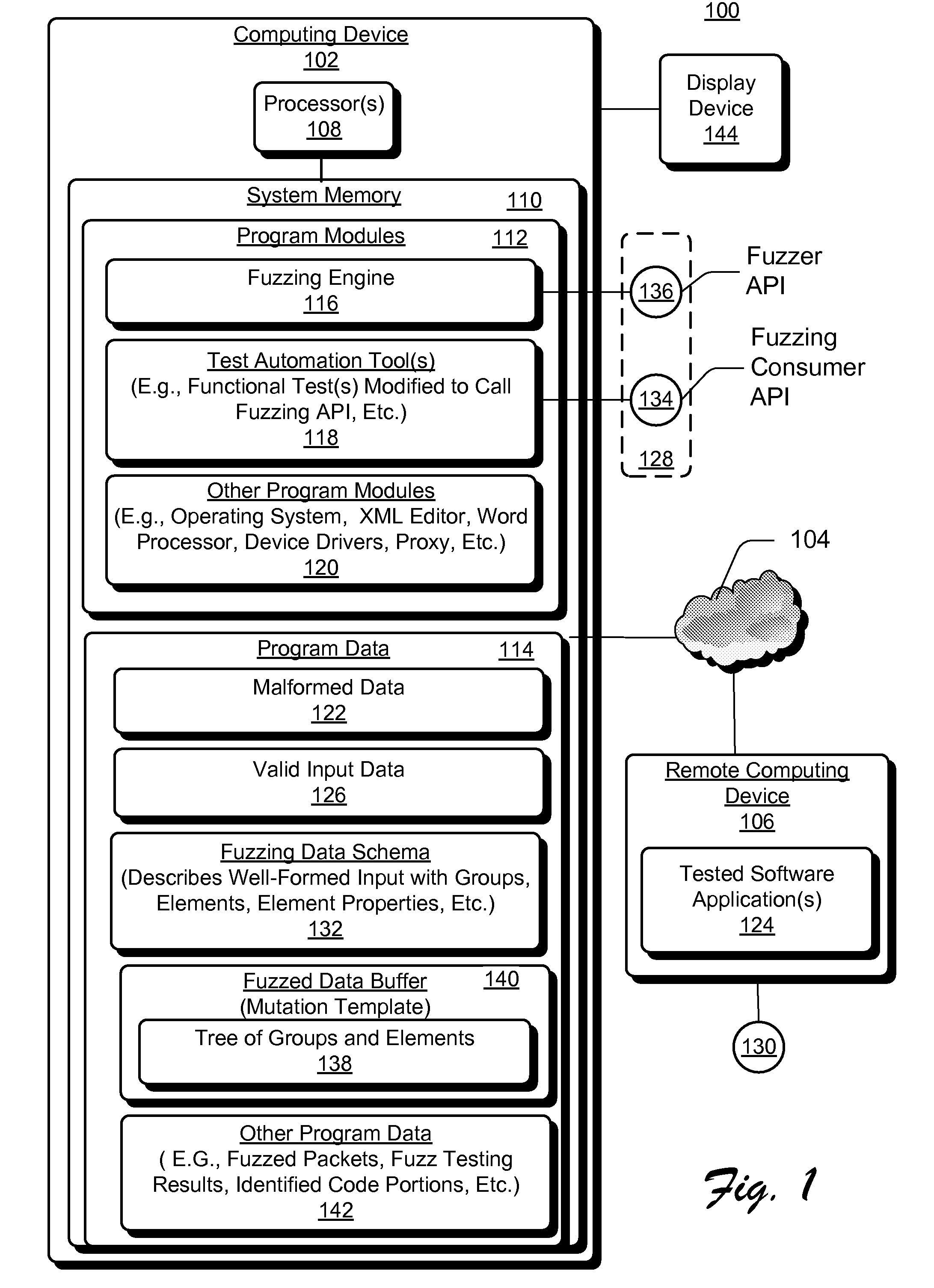
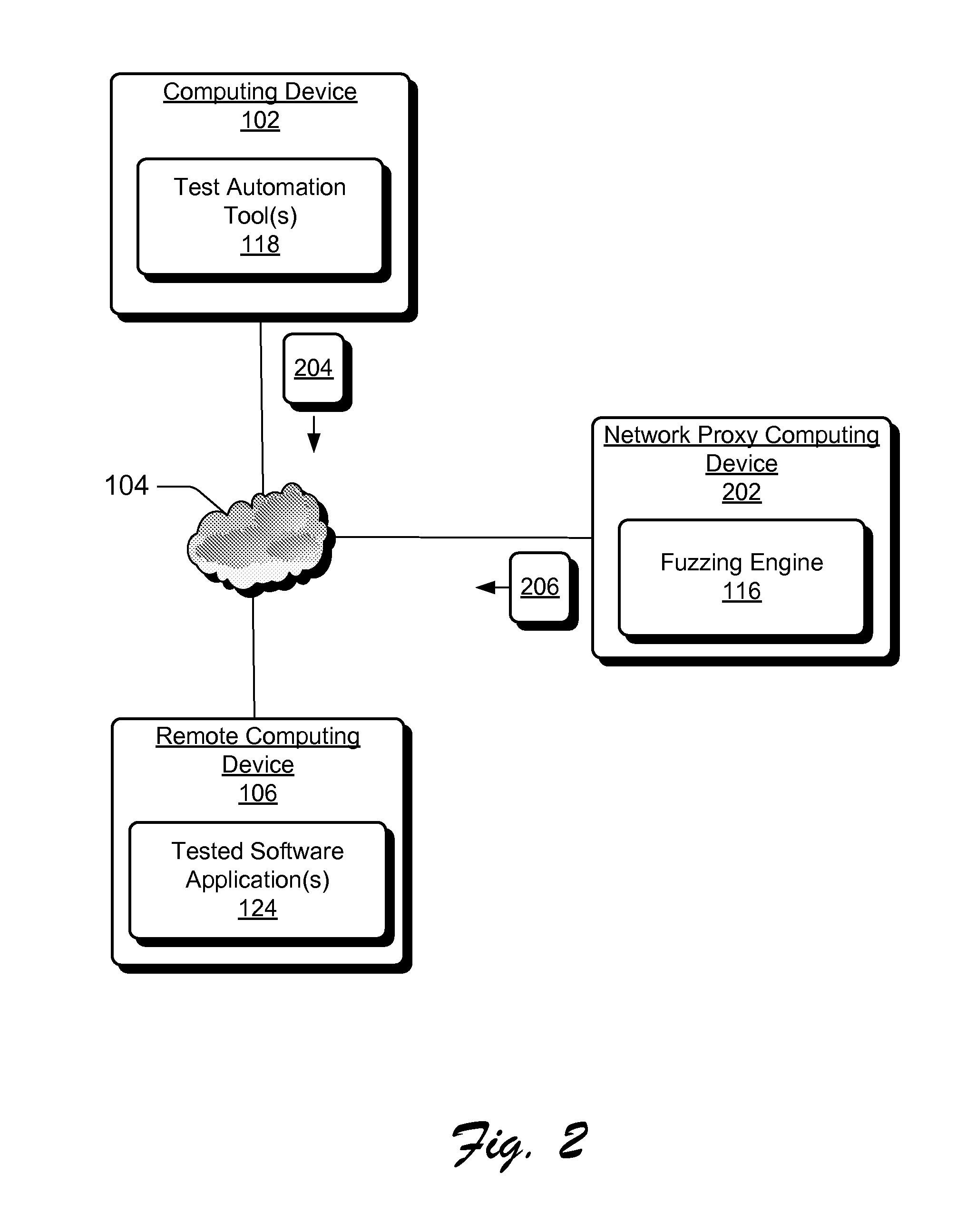
[0010]Conventional software fuzzing techniques typically deliver malformed inputs to software either by creating a file with malformed content for input into a tested application (e.g., by parsing), or by developing a specific proprietary fuzzing test tool to deliver malformed data at appropriate instances. Providing malformed inputs to software via a file is essentially limited because in certain scenarios not all tested applications are designed to accept input as files. For example to perform fuzzing of a web server fuzzed inputs need to be sent as http requests. Additionally, providing only malformed input via a final may not be sufficient to test all code paths of an application. For example, to reach a particular code path, a software application may need to be brought to one or more required states via configuration operations before the input data can be properly input to the code path for testing. For example to fuzz web server authentication implementation, it shou...
PUM
 Login to View More
 Abstract
Description
Claims
Application Information
 Login to View More