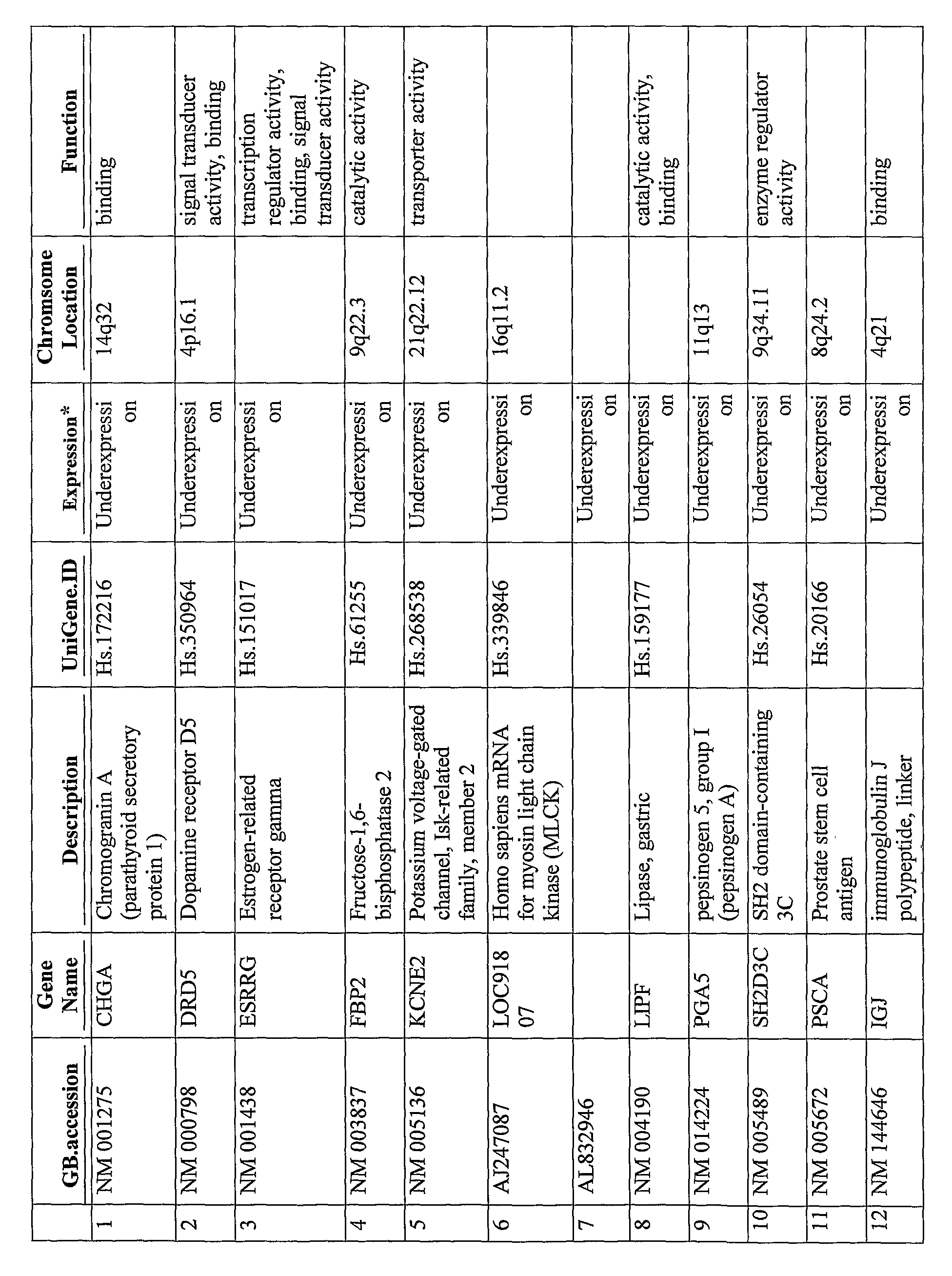
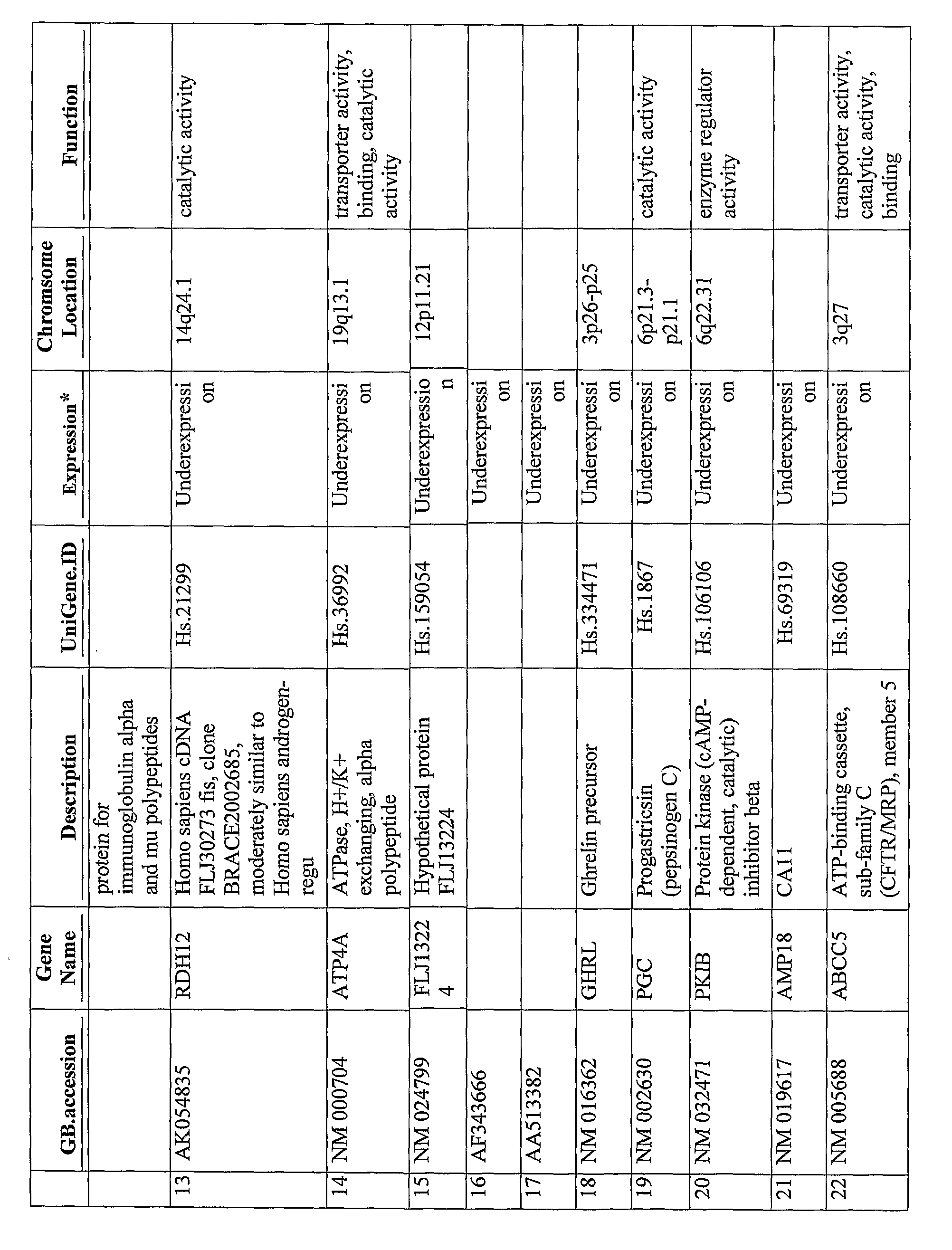
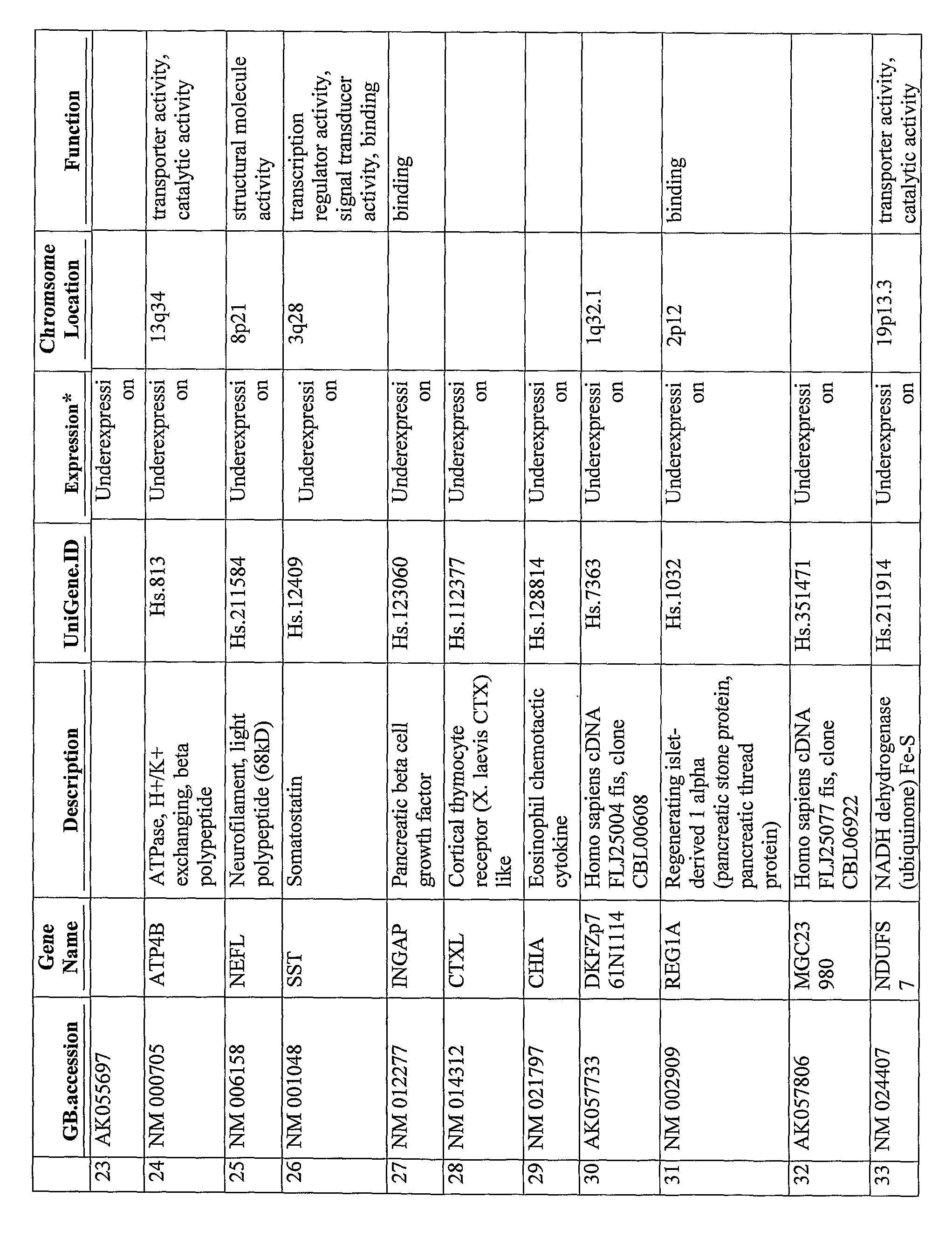
[0010]In some embodiments, the levels of expression of at least 5, at least 10, at least 20, at least 30, at least 40, at least 50, at least 60, at least 70, or at least 80 genes in FIG. 2 are detected. In some embodiments, the levels of expression of all the genes in FIG. 2 are detected, wherein substantially decreased expression of at least one of genes 1-53 in FIG. 2 and substantially increased expression of at least one of genes 54-84 in FIG. 2 in the gastric tissue suspected of being cancerous and the adjacent tissue as compared to the normal gastric mucosa tissue are indicative of presence of intestinal gastric cancer in the mammal. In some embodiments, the levels of expression of all the genes in FIG. 2 are detected, wherein substantially decreased expression of at least 2, at least 5, at least 10, at least 20, at least 30, at least 31, at least 40, or at least 50 of genes 1-53 in FIG. 2 and/or substantially increased expression of at least 2, at least 5, at least 10, at least 18, at least 20, at least 30 of genes 54-84 in FIG. 2 in the gastric tissue suspected of being cancerous and the adjacent tissue as compared to the normal gastric mucosa tissue are indicative of presence of intestinal gastric cancer in the mammal. In some embodiments, the levels of expressions of all the genes in FIG. 2 are detected, wherein substantially decreased expression of genes 1-53 in FIG. 2 and/or substantially increased expression of genes 54-84 in FIG. 2 in the gastric tissue suspected of being cancerous and the adjacent tissue as compared to the normal gastric mucosa tissue are indicative of presence of intestinal gastric cancer in the mammal.
[0011]In another aspect, the invention provides a method for assessing levels of differentiation of intestinal gastric cancer in a mammal, comprising: (a) detecting levels of expression of at least two genes shown in FIG. 3 in an intestinal gastric cancer tissue of the mammal; (b) detecting levels of expression of the genes in an intestinal gastric tissue adjacent to the cancer tissue; and (c) comparing the levels of expression of the genes in the cancer tissue to the levels of expression of the genes in the adjacent tissue; wherein substantial variance of the levels of expression of the genes between the cancer tissue and the adjacent tissue is indicative of high level of differentiation of the intestinal gastric cancer in the mammal.
[0012]In some embodiments, the levels of expression of at least 5, at least 10, at least 20, at least 30, at least 40, or at least 50 genes in FIG. 3 are detected. In some embodiments, the levels of expression of all genes shown in FIG. 3 are detected, wherein substantially increased expression of at least one of genes 1-16 shown in FIG. 3 and substantially decreased expression of at least one of genes 17-55 shown in FIG. 3 in the cancer tissue as compared to the adjacent tissue are indicative of high level of differentiation in the intestinal gastric cancer tissue. In some embodiments, the levels of expression of all genes shown in FIG. 3 are



 Login to View More