Single plate pem fuel cell

US20090123807A1Active Publication Date: 2009-05-14AUDI AG

Patent Information

Authority / Receiving Office
US · United States
Current Assignee / Owner
AUDI AG
Publication Date
2009-05-14

Smart Images

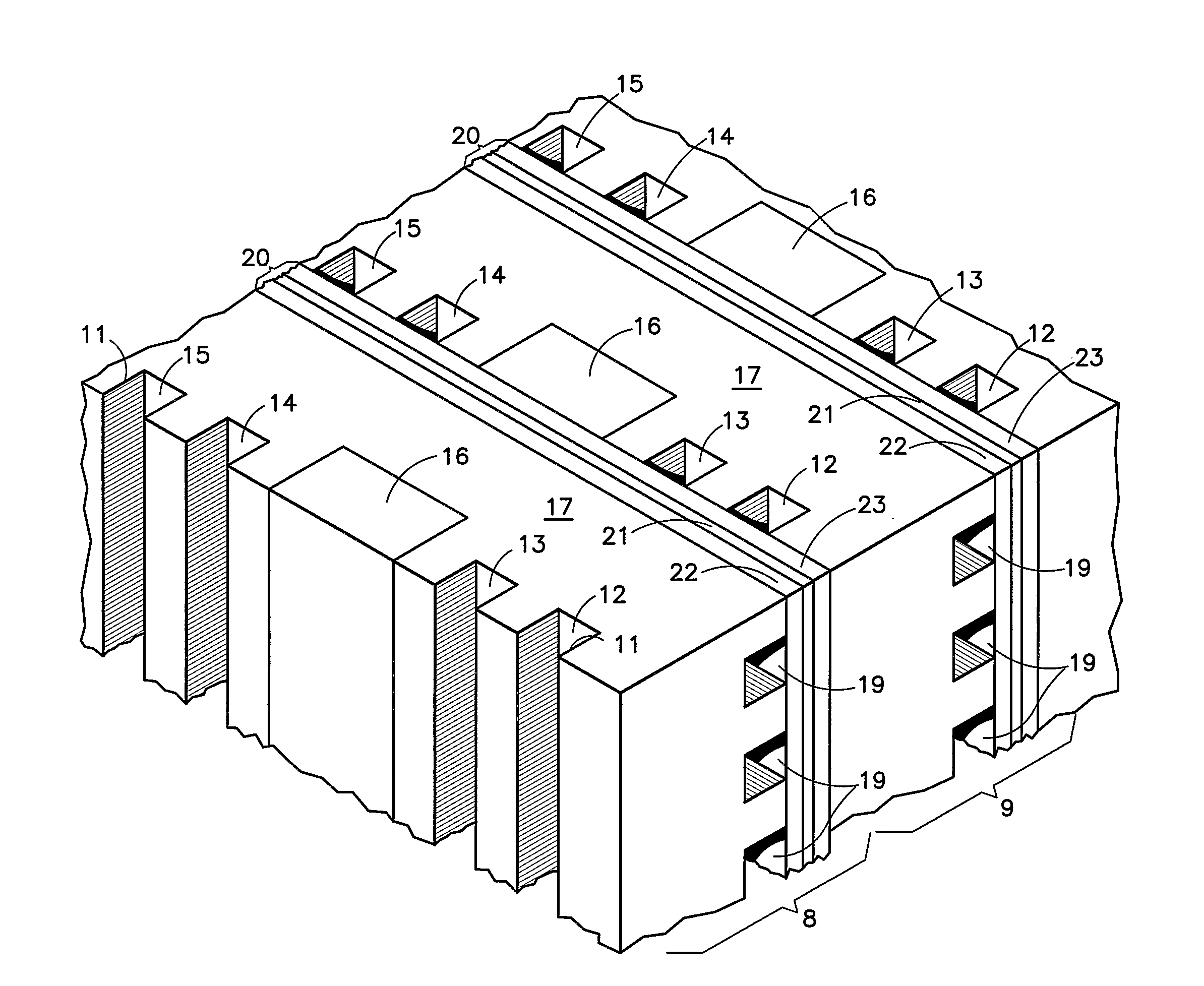
  • Figure 1
    Figure 1
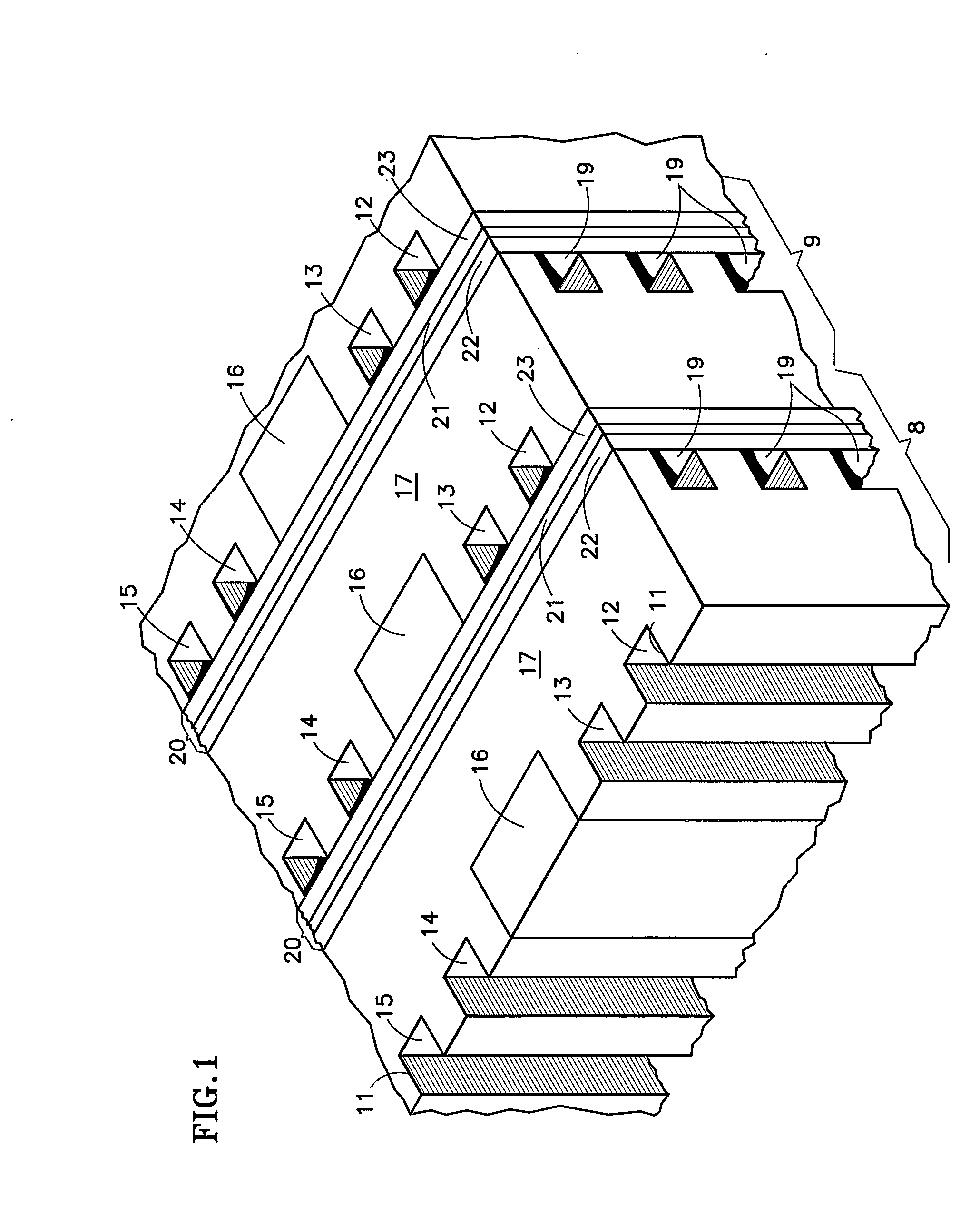
  • Figure 2
    Figure 2
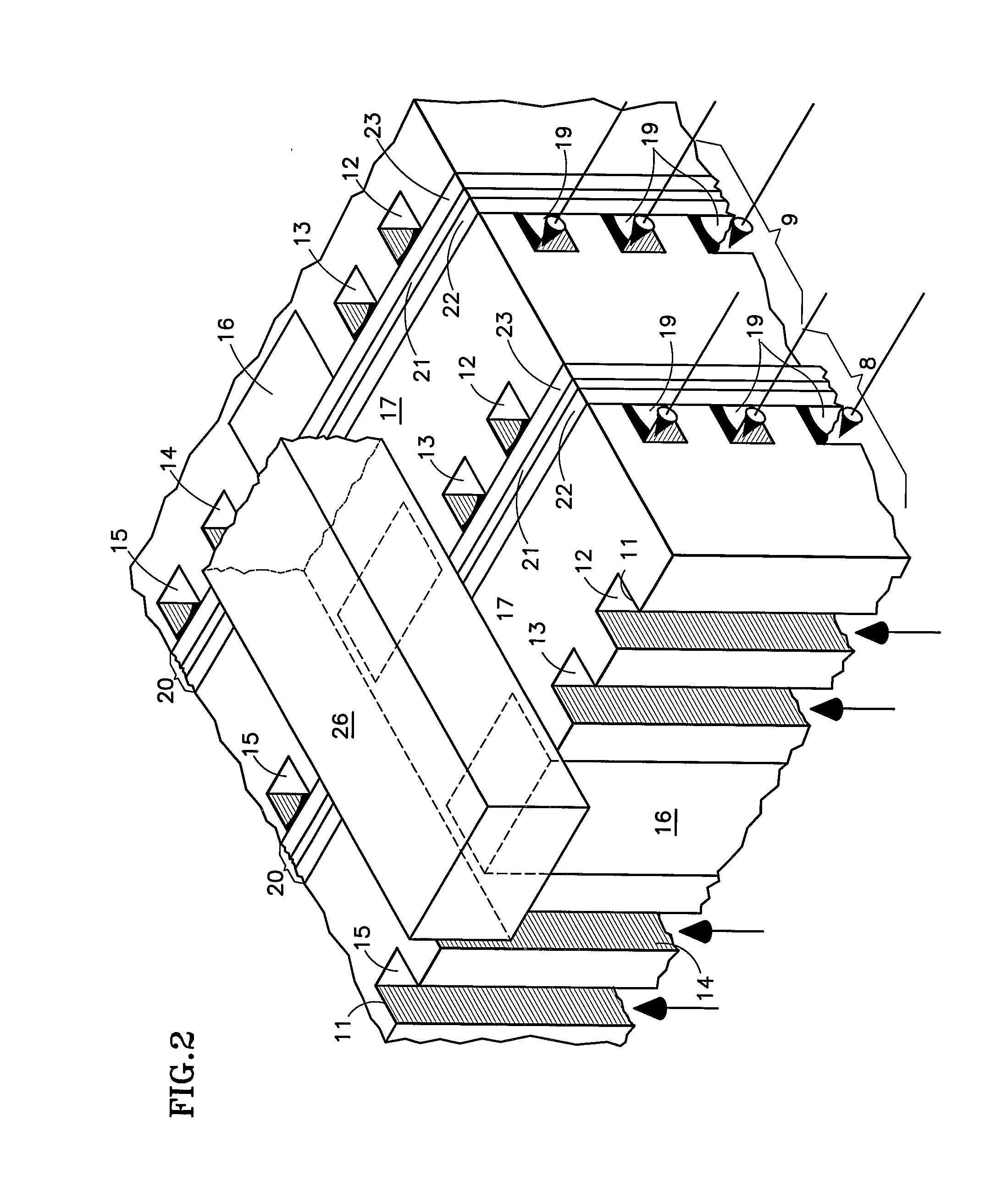
  • Figure 3
    Figure 3
Patent Text Reader

Abstract

A fuel cell stack (32) includes a plurality of fuel cells in which each fuel cell is formed between a pair of conductive, porous, substantially hydrophilic plates (17) having oxidant reactant gas flow field channels (12-15) on a first surface and fuel reactant gas flow field channels (19, 19a) on a second surface opposite to the first surface, each ˜f the plates being separated from a plate adjacent thereto by a unitized electrode assembly (20) including a cathode electrode (22), having a gas diffusion layer (GDL) an anode electrode (23) having a GDL with catalyst between each GDL and a membrane (21) disposed therebetween. Above the stack is a condenser (33} having tubes (34) that receive coolant air (39, 40) to condense water vapor out of oxidant exhaust in a chamber (43). Inter-cell wicking strips (26) receive condensate and conduct it along the length of the stack to all cells. In-cell wicking strips (1G. 1˜a) on one or both surfaces conduct the water from the inter-cell wicking strips downwardly along the entire planform of each cell. Reactant air is provided to an air inlet manifold (47) through an air inlet conduit (48) from an air pump (49).
Need to check novelty before this filing date? Find Prior Art

Description

TECHNICAL FIELD

[0001] This invention relates to a polymer electrolyte, proton exchange membrane PEM fuel cell having a single separator plate including both fuel reactant gas passages and oxidant reactant gas passages, with water wicking material disposed between some of the reactant gas channels on the same edge of the plate therewith.BACKGROUND ART

[0002] In one type of known PEM fuel cell, the reactant gas flow field channels are in “separator” plates (typically called “water transport plates”) which also have water channels in the surface of one or both plates opposite to the reactant gas flow channels. The porous and hydrophilic plates allow product water to migrate from the cathode to the water channels, and allow water to migrate from the water channels to the anode, to assure uniform humidification. Cooling of the fuel cell is typically accomplished with the water in the water channels, which is circulated externally of the fuel cell stack to a heat exchanger that is selectivel...

Claims

the structure of the environmentally friendly knitted fabric provided by the present invention; figure 2 Flow chart of the yarn wrapping machine for environmentally friendly knitted fabrics and storage devices; image 3 Is the parameter map of the yarn covering machine
Login to View More