
Device for analyzing gait
a gait and gait technology, applied in the direction of measurement devices, magnitude/direction of magnetic fields, medical science, etc., can solve the problems of large amount of electricity, computational complexity, and inability to detect the inseparable of accelerometers
Patent Information
- Authority / Receiving Office
- US · United States
- Patent Type
- Applications(United States)
- Current Assignee / Owner
- Publication Date
- 2009-08-06
Smart Images
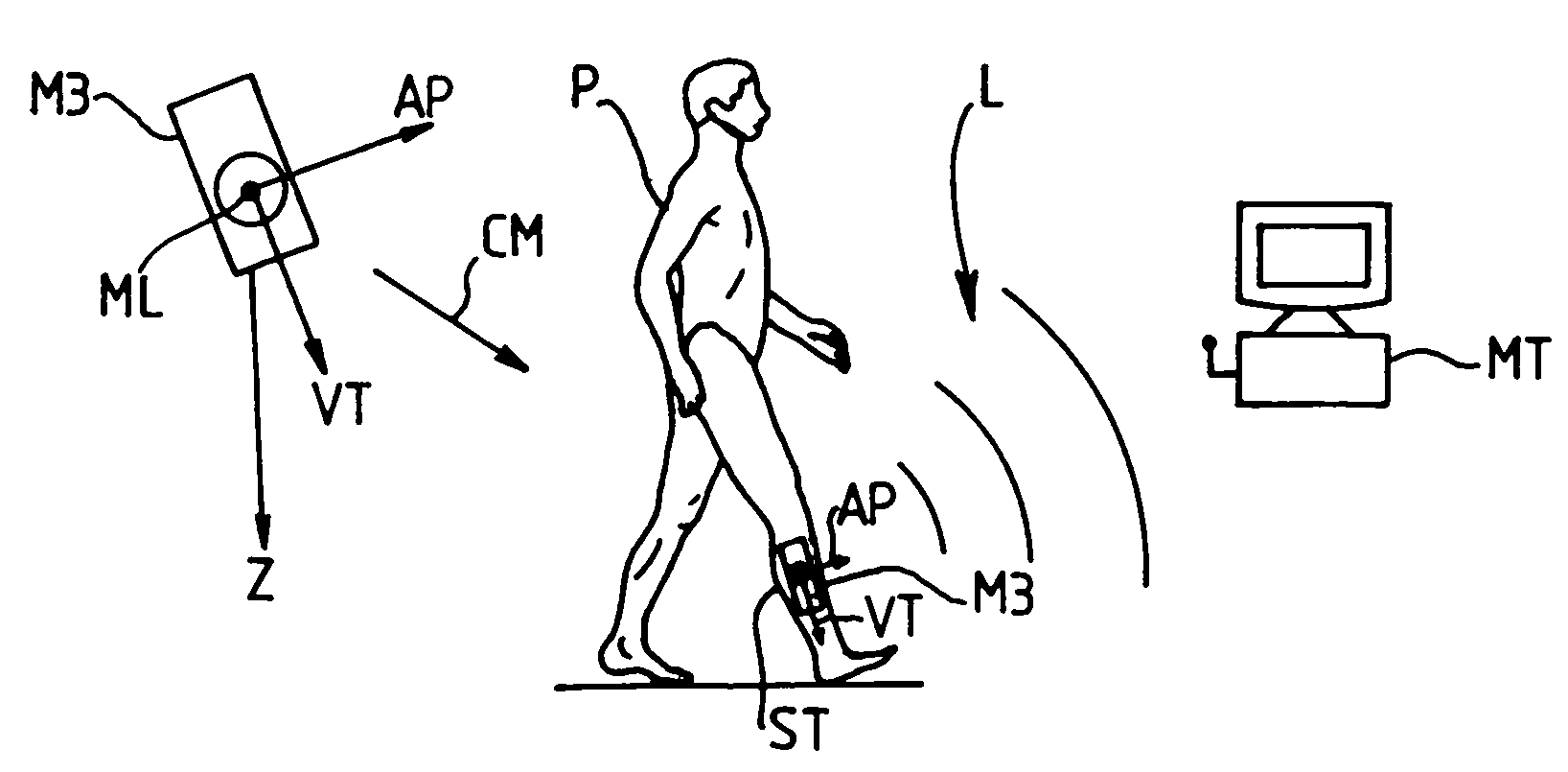
Figure 1 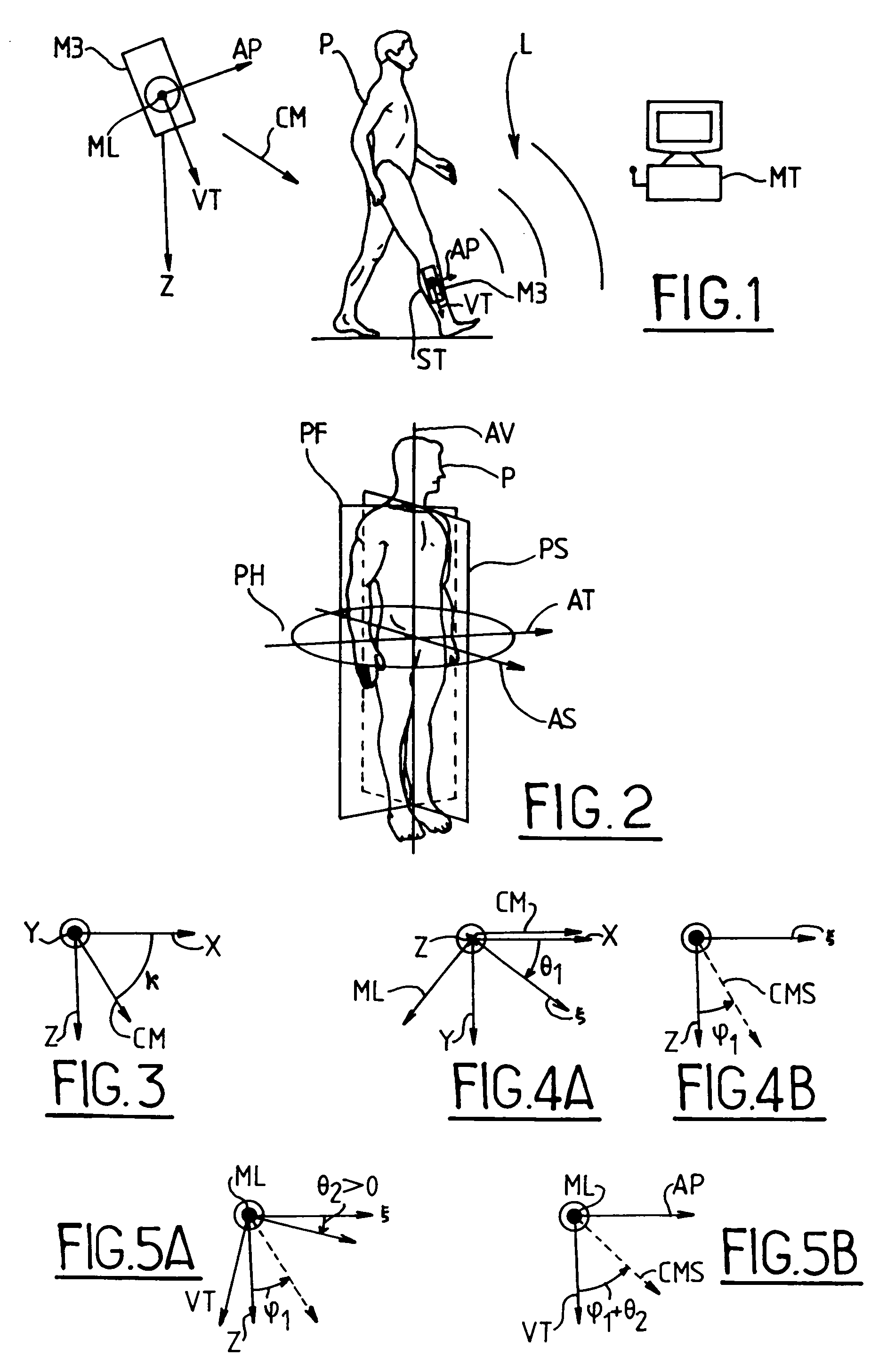
Figure 2 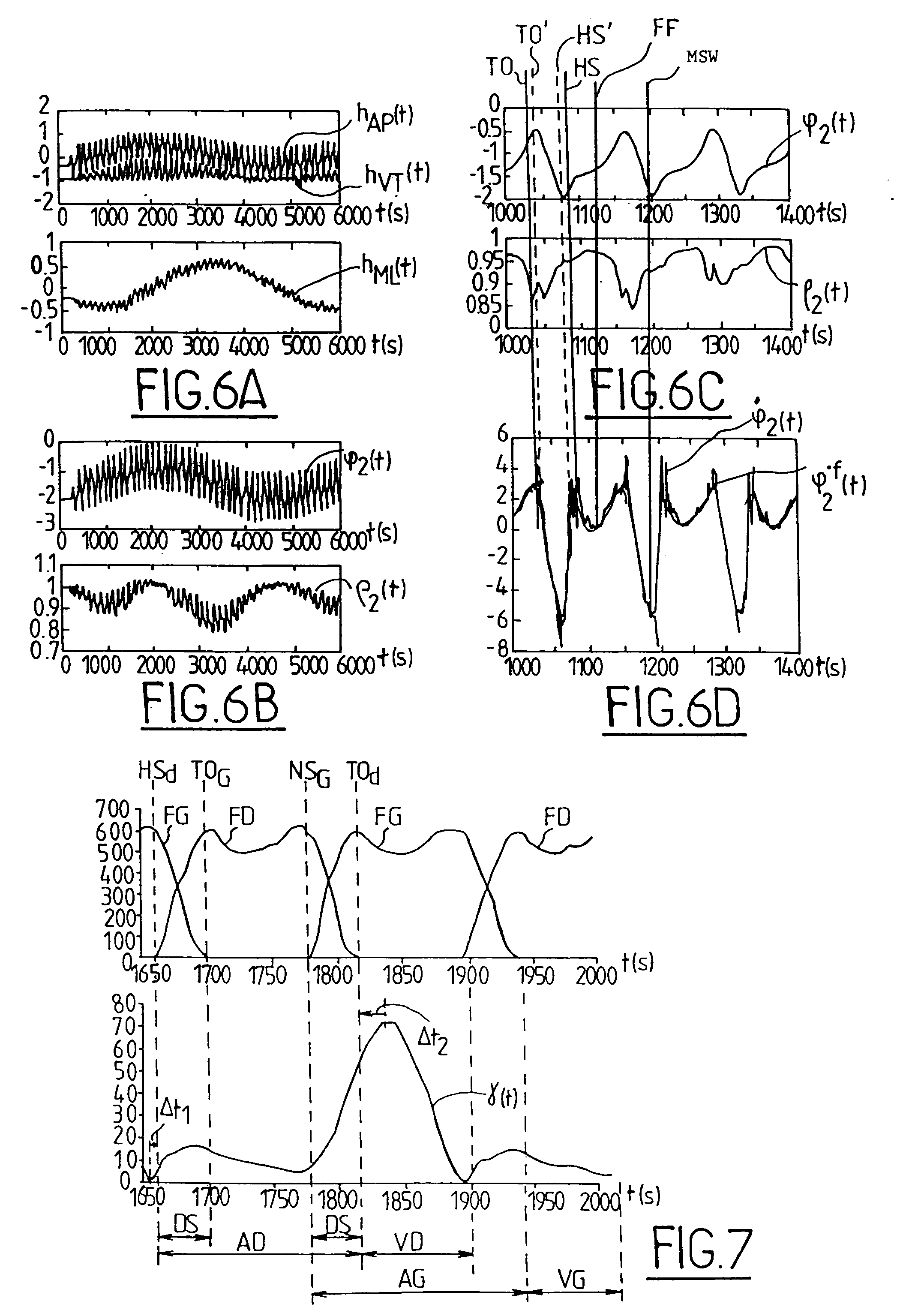
Figure 3
Abstract
Description
FIELD OF THE INVENTION
[0001] The invention relates to a device for analyzing the gait of a person, and more particularly to a device suitable for identifying instants and phases that are characteristic of the gait of said person.
[0002] In particular, a device of the invention makes it possible to determine automatically the support and the flight phases for each swing of the gait. It also makes it possible to count the number of swings and as a result to estimate the cadence of the gait.
[0003] This information presents medical and paramedical interest, particularly in podology, for clinical descriptive analysis of gait and to enable functional electrical stimulation to be triggered.BACKGROUND OF THE INVENTION
[0004] The article by K. Aminian et al. entitled “Spatio-temporal parameters of gait measured by an ambulatory system using miniature gyroscopes”, Journal of Biomechanics 35 (2000), pages 689-699, describes a method of analyzing gait that makes use of at least one gyroscope fastened...
Examples
Embodiment Construction
[0036]As shown in FIG. 1, the device of the invention comprises a three-axis magnetometer M3 suitable for fastening to a tibial segment ST of a person P, together with signal processor means connected to said magnetometer via a link L, e.g. a wireless link. In the example shown in the figure, the processor means MT comprise an office computer, but they could equally well be constituted by a portable device attached to the person's body or clothing. The link L serves to transmit to the processor means MT signals that are generated by the magnetometer M3, which magnetometer, like the person, is immersed in an ambient magnetic field, typically in the Earth's magnetic field, represented by a vector CM in the figure. The link L need not necessarily be implemented in real time: it is possible to provide means for recording the signals from the magnetometer in order to perform analysis “off-line”.
[0037]The measurement axes of the magnetometer M3 are assumed to be mutually orthogonal and th...