
Transformed Saccharomyces cerevisiae Engineered for Xylose Utilization
a technology of xylose and saccharomyces cerevisiae, which is applied in the field of recombinant yeasts, can solve the problems of inability to grow anaerobically on xylose, low tolerance to acetic acid and other inhibitory chemicals common to biomass hydrolysates, and achieves high ethanol production
- Summary
- Abstract
- Description
- Claims
- Application Information
AI Technical Summary
Benefits of technology
Problems solved by technology
Method used
Image

Examples
example 1
[0068]This invention describes that XI and XKS transformation of S. cerevisiae allows the strain to metabolize xylose efficiently as compared to wild type yeast. Expression of XI and XKS enables the yeast to grow rapidly on xylose in an aerobic environment. However, the strain does not grow anaerobically and fermentation rates are slow. A variety of selection methods and co-transformation of other yeast genes have lead to the development of a strain that metabolizes xylose much more efficiently. It is very likely that fast metabolizing yeast requires high level of protein expression that is not possible even under the control of strong glycolytic yeast promoters. To further improve the quantity and quality (catalytic function) of the proteins such as XI and XKS, we resorted to the use of SUNG fusion technology. As described herein, attachment of C-terminus of SUMO (yeast) to the N-terminus of poorly expressed protein dramatically enhances level of expression in prokaryotes and eukar...
example 2
[0072]An automated strategy was used to produce yeast strains transformed with the three-vector plasmid system in this example. Step 1: Assembly of His-tagged xylose isomerase ORF and cloning into pSUMOduo / URA (vector 1). Step 2: Gene optimization using amino acid scanning mutagenesis (AASM) to randomize lycotoxin-1 at each of 25 positions for all 20 possible amino acids in the HisEntKLyt-1 fusion peptide and cloning into pSUMOduo / TRP (vector 2). Step 3: Cloning of additional genes important for xylose utilization into pSUMOduo / LEU (vector 3).
[0073]The three-plasmid yeast expression system utilizing the portable small ubiquitin-like modifier (SUMO) vector set (Butt et al. (U.S. Pat. No. 7,083,941); Butt et al. (U.S. patent application Ser. No. 10 / 504,785); Butt et al. (U.S. patent application Ser. No. 11 / 794,532); Butt et al., 2005; Malakhov et al., 2004), providing high expression levels, was used it to express a peptide of potential commercial value in a Saccharomyces cerevisiae s...
example 3
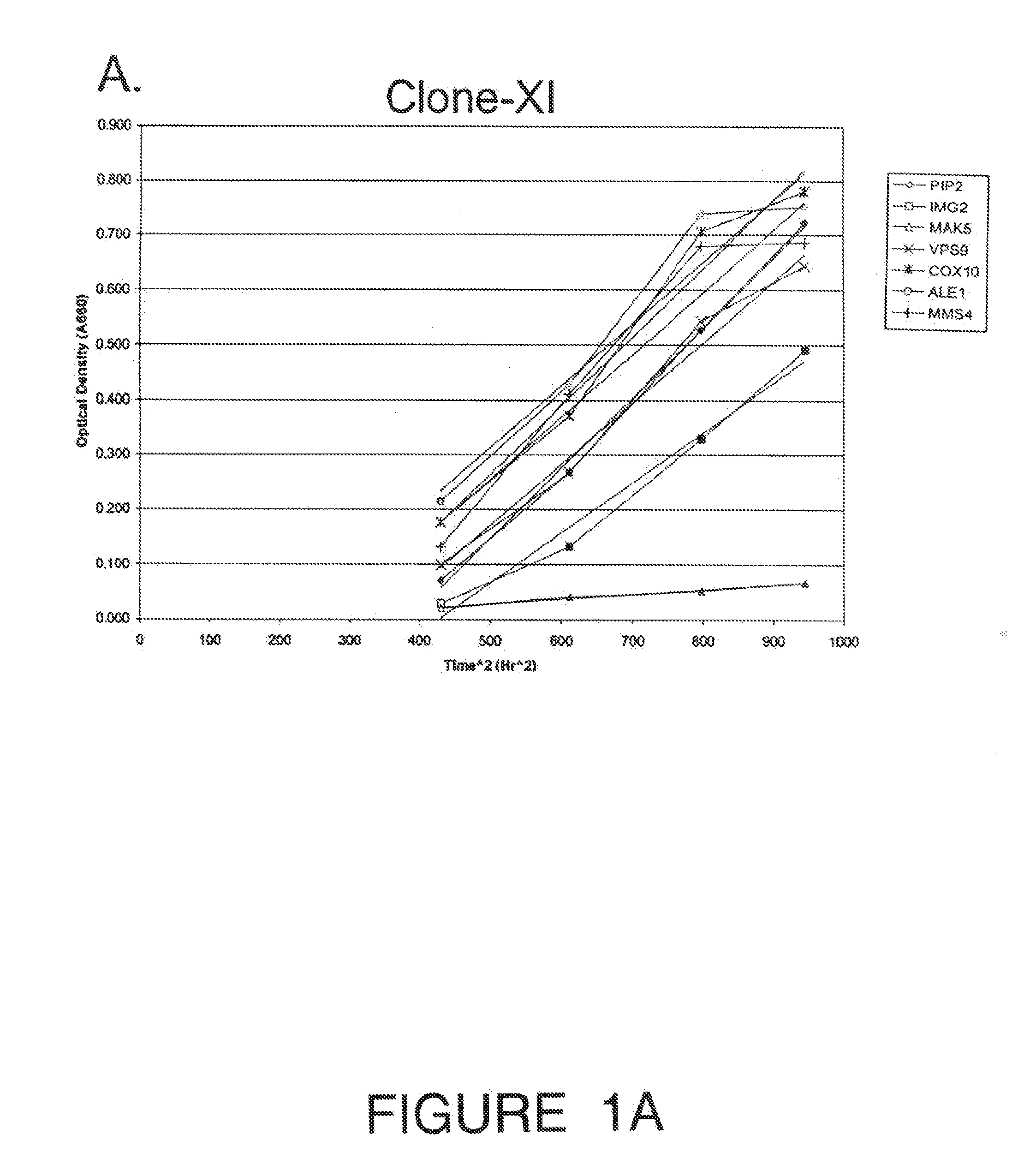
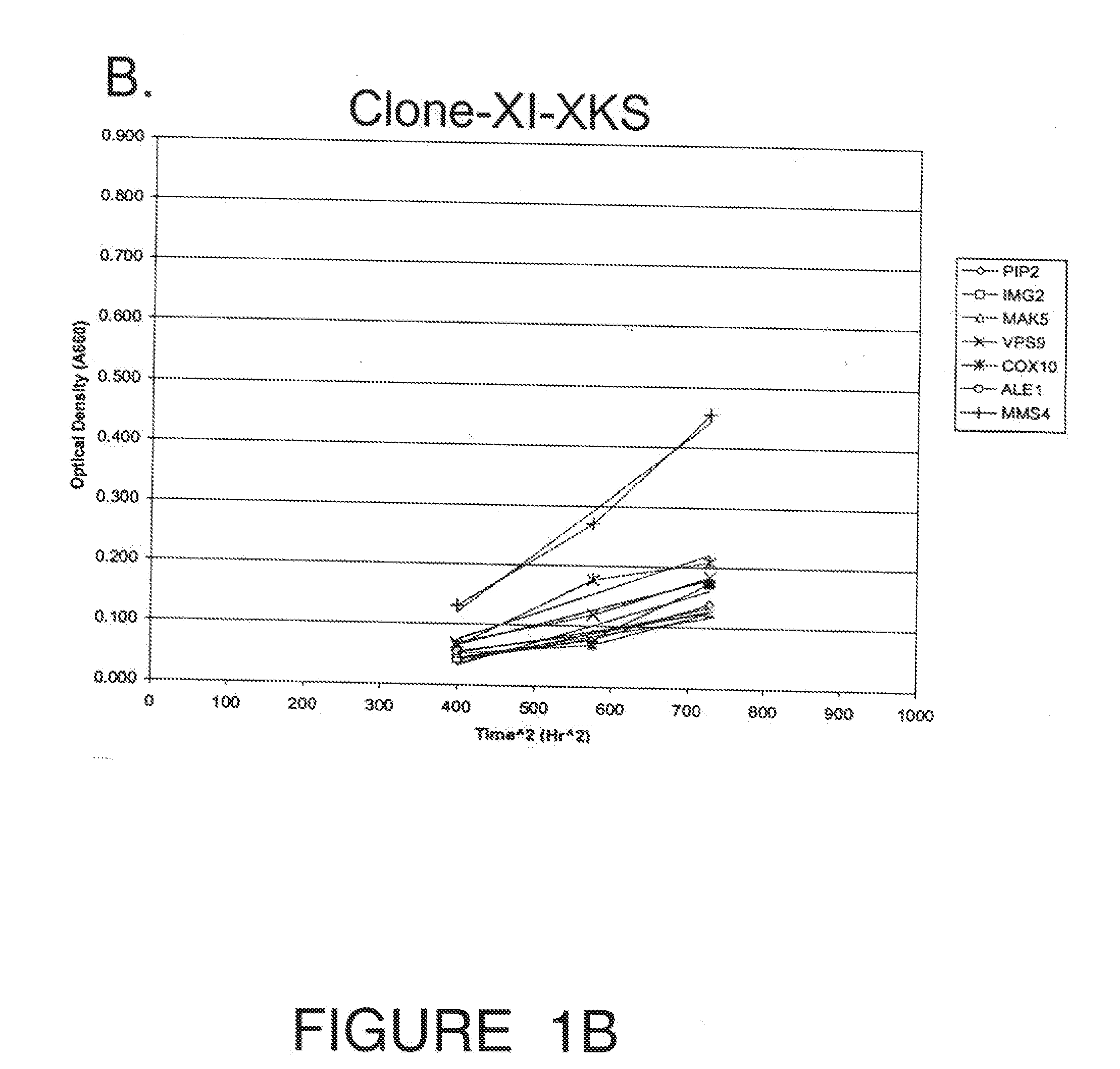
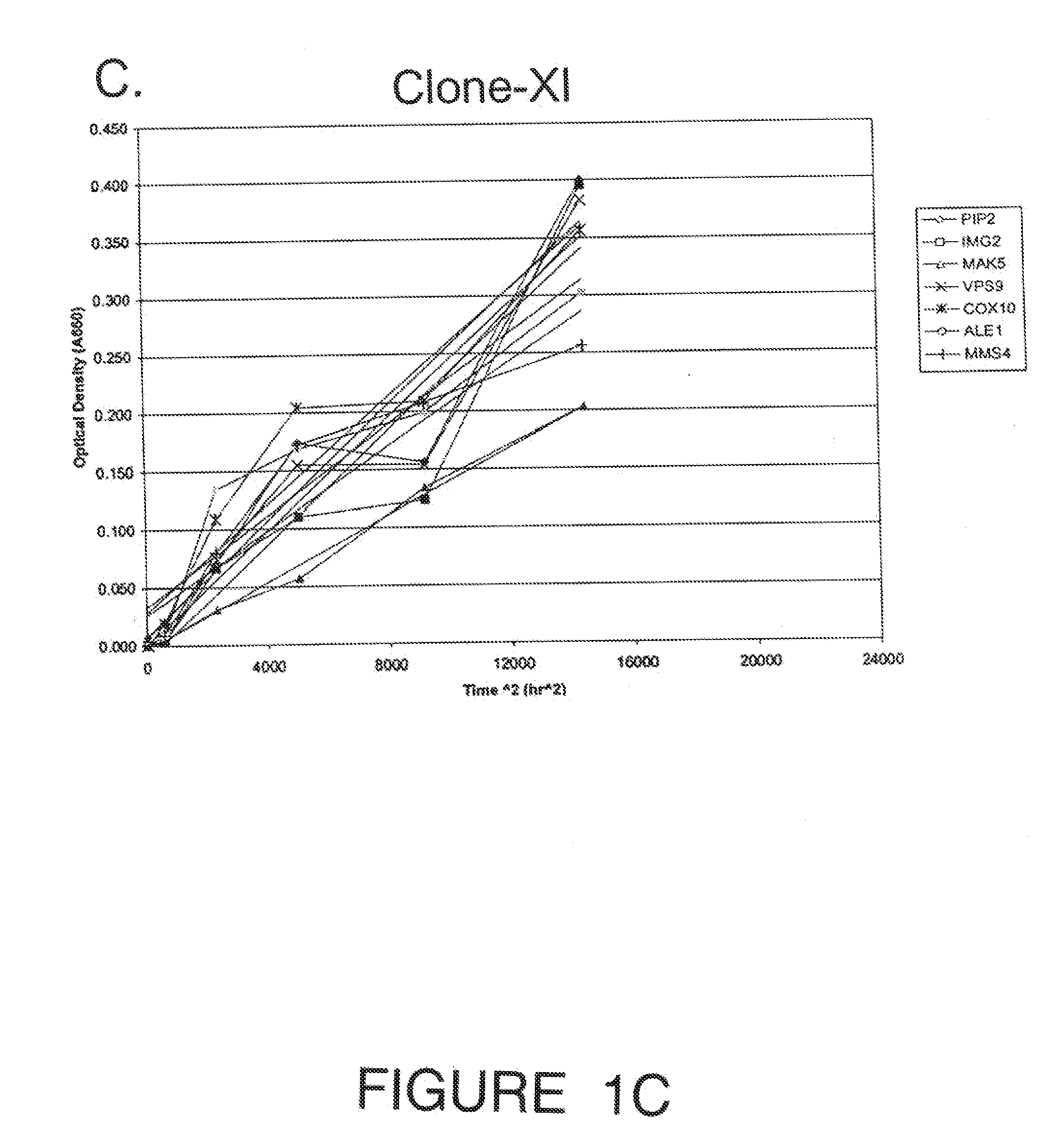
[0109]Engineering the industrial ethanologen Saccharomyces cerevisiae to ferment pentose sugars from lignocellulosic biomass is critical for commercializing cellulosic fuel ethanol production. Expression of xylose isomerase, from the anaerobic fungus Piromyces confers the ability to ferment xylose, but fermentation rates are slow. A high throughput strategy was implemented to improve fermentation rate by evaluating over-expression of each native S. cerevisiae gene: a haploid PJ69-4 MATa XI-expressing strain was mated with haploid PJ69-4 MATa strains containing the S. cerevisiae expression library of genes driven by an ADH promoter. The resulting 6113 mated diploid strains containing the XI ORF and a different yeast library clone were screened for growth on xylose in anaerobic solid cultures using an integrated robotic workcell. Nine strains were recovered from the screen, but two were eliminated when it was discovered they had lost the ability to grow on glucose. The seven strains w...
PUM
| Property | Measurement | Unit |
|---|---|---|
| Temperature | aaaaa | aaaaa |
| Fraction | aaaaa | aaaaa |
| Time | aaaaa | aaaaa |
Abstract
Description
Claims
Application Information
 Login to View More