
Back orthosis and orthotic method
a back brace and orthotic technology, applied in the field of back brace and orthotic method, can solve the problems of not providing integrated support or allowing the movement of the lumbar piece laterally in either direction, prior art fails to provide a back brace that provides a self-adjustable level of effective, etc., and achieves the effect of greater for
- Summary
- Abstract
- Description
- Claims
- Application Information
AI Technical Summary
Benefits of technology
Problems solved by technology
Method used
Image

Examples
Embodiment Construction
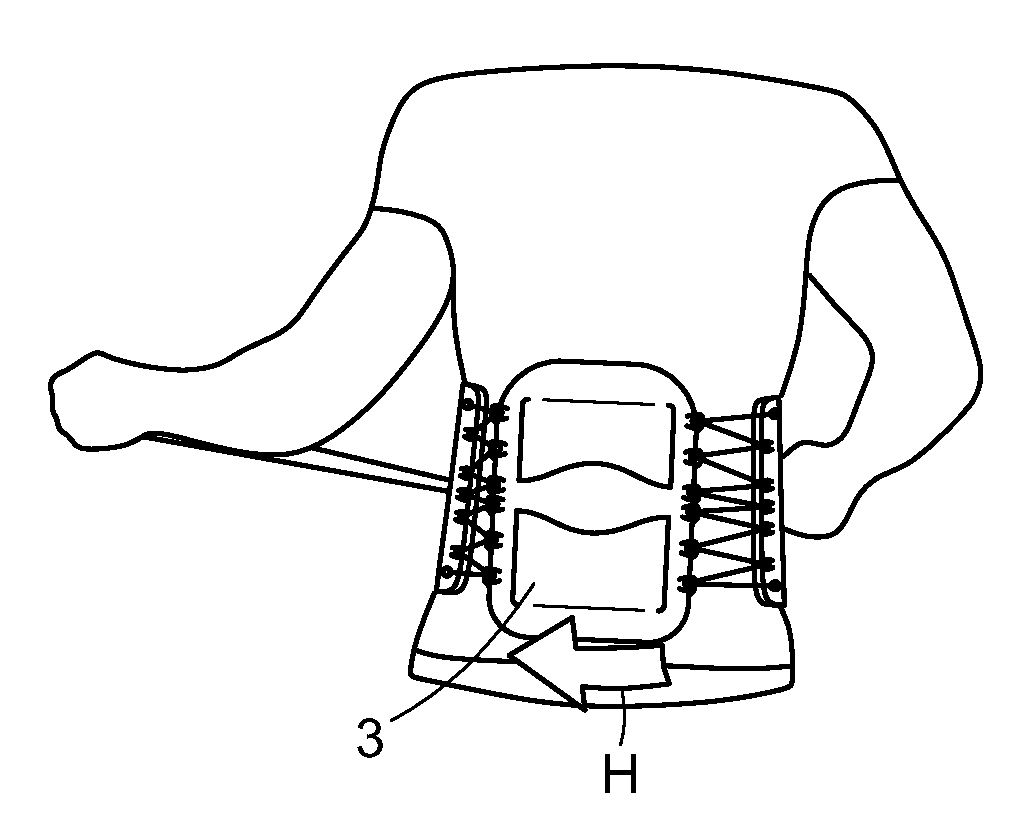
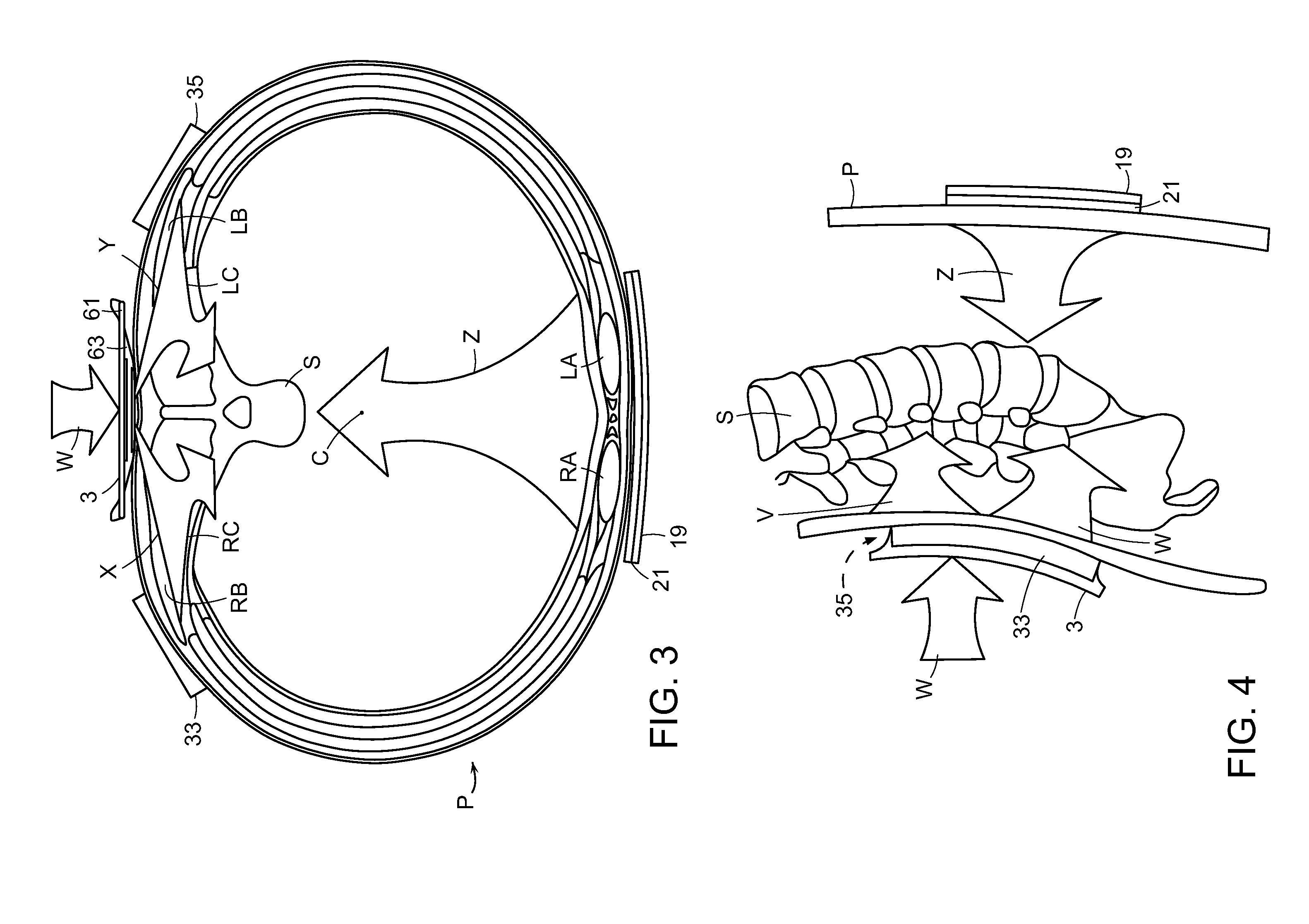
[0049]As illustrated in the accompanying drawings and discussed in detail below, one aspect of the present invention is directed to a back orthosis that, when used, provides high circumferential compression to the lower torso with a high level of mechanical advantage. The back orthosis of this aspect nevertheless also applies a continued direct, adjustable amount of active support especially to the lower back, which can be finely tuned by lateral adjustment specifically to a particular area of pain.
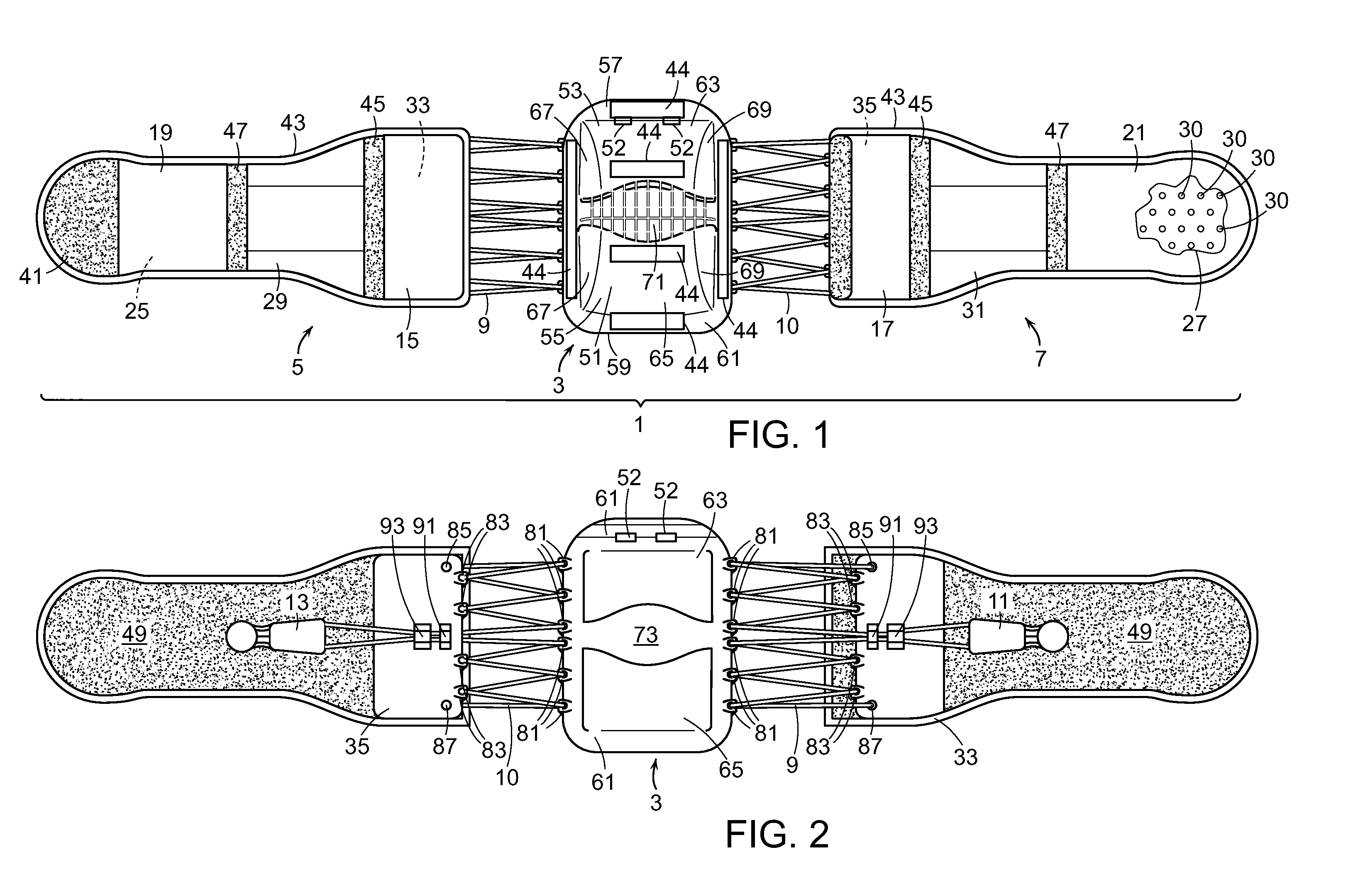
[0050]In one embodiment, the back orthosis of the present invention provides a lumbo sacral orthosis (“LSO”) 1. Referring to FIGS. 1 and 2, LSO 1 generally includes rigid separate rear lumbar panel 3, which is attached to each of right side attachment member 5 and left side attachment member 7 by respective separate right and left cords 9 and 10 to form a circumferentially attachable orthosis about a wearer's waist and torso. Right and left tensioning handles 11 and 13 can be used by any ...
PUM
 Login to View More
 Abstract
Description
Claims
Application Information
 Login to View More