
Dynamic management of end-to-end network loss during a phone call
a technology phone call, applied in the field of dynamic management of end-to-end network loss during a phone call, can solve the problems of introducing a certain amount of loss, introducing another amount of loss, and introducing additional loss in communications mediums and mechanisms
- Summary
- Abstract
- Description
- Claims
- Application Information
AI Technical Summary
Benefits of technology
Problems solved by technology
Method used
Image

Examples
Embodiment Construction
)
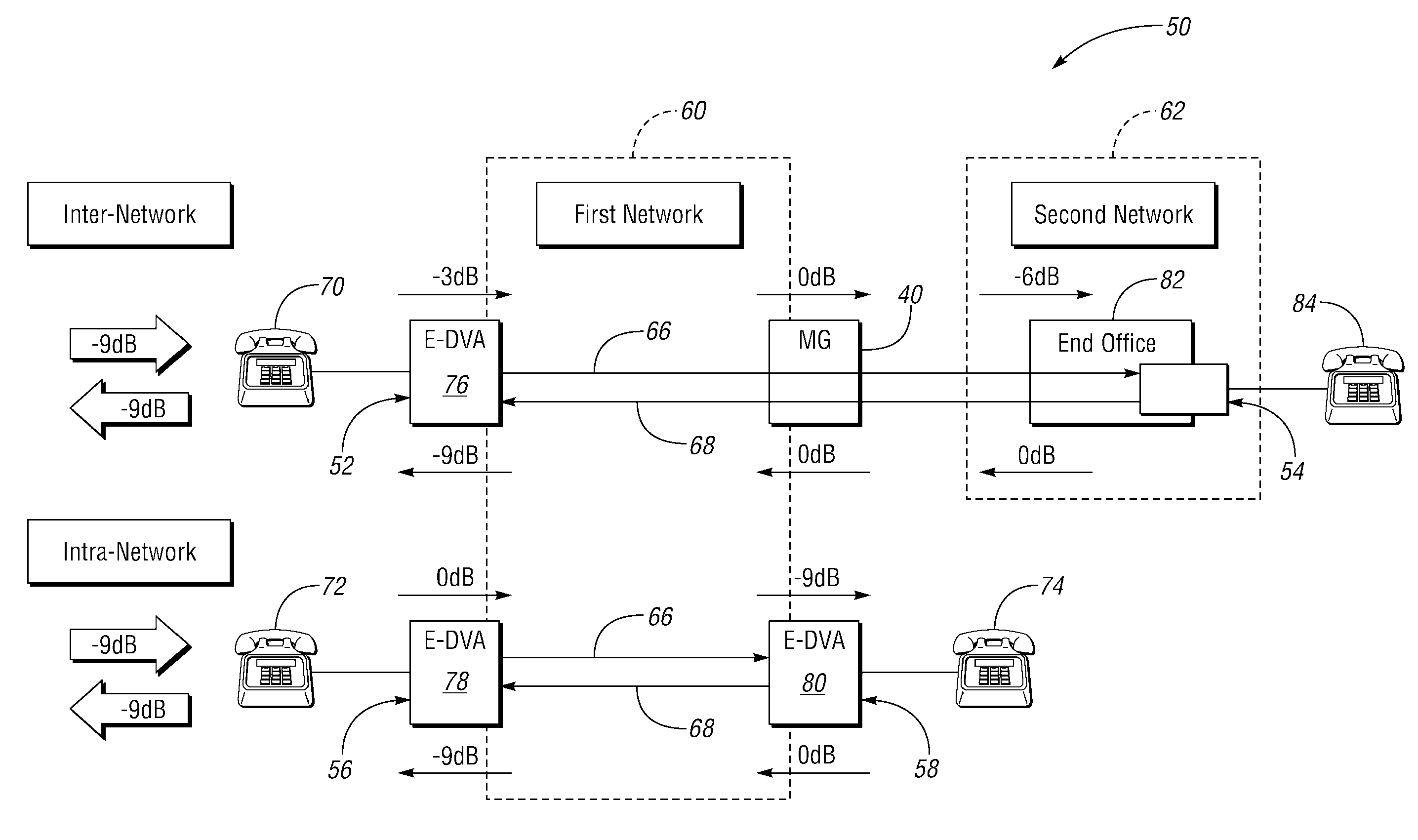
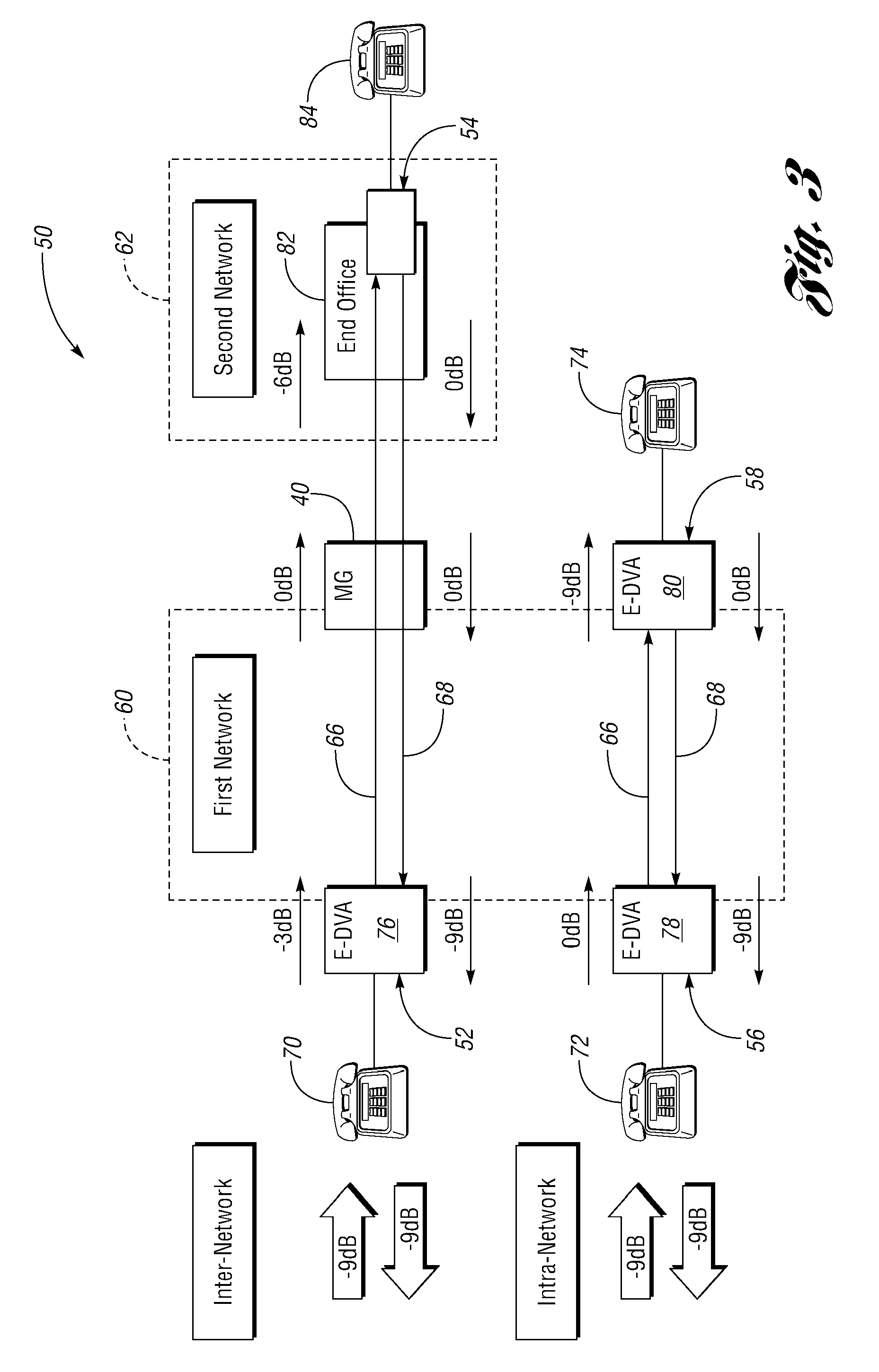
[0015]FIG. 3 illustrates a system 50 of managing phone calls between multiple endpoints 52, 54, 56, 58 in accordance with one non-limiting aspect of the present invention. The system 50 is illustrated with respect to supporting intra-network calls and inter-network calls. The intra-network calls (lower portion) are intended to characterize phone calls where the participating endpoints 56, 58 are within the same network 60. The inter-network calls (upper portion) are intended to characterize phone calls where at least two of the participating endpoints 52, 54 are within different networks 60, 62. For exemplary purposes, the first network 60 is described predominately with respect to being a packet-switched network and the second network 62 is described predominately with respect to being a circuit-switched network. Of course, the present invention is not intended to be limited to only supporting end-to-end loss between packet-switched and circuit-switched networks.
[0016]The packet-s...
PUM
 Login to View More
 Abstract
Description
Claims
Application Information
 Login to View More