
Display switching device
a switching device and display technology, applied in the field of display switching apparatuses, can solve the problems of increasing the processing time increasing the processing complexity of images, and increasing the cost of information processing terminals, so as to reduce the total processing time of rendering, delay the display of frame images, and reduce the effect of skipped frames
- Summary
- Abstract
- Description
- Claims
- Application Information
AI Technical Summary
Benefits of technology
Problems solved by technology
Method used
Image

Examples
embodiment 1
1. Embodiment 1
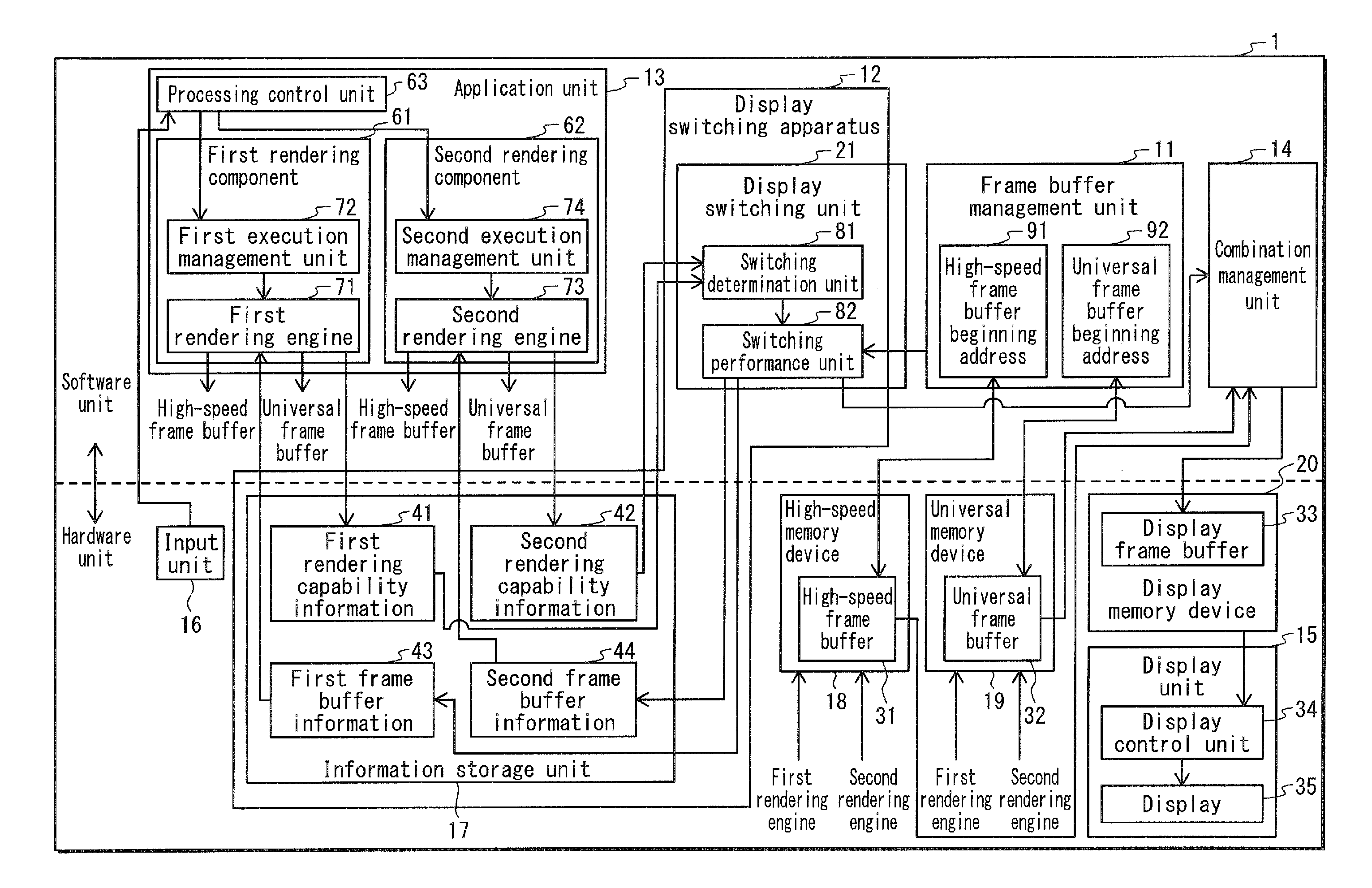
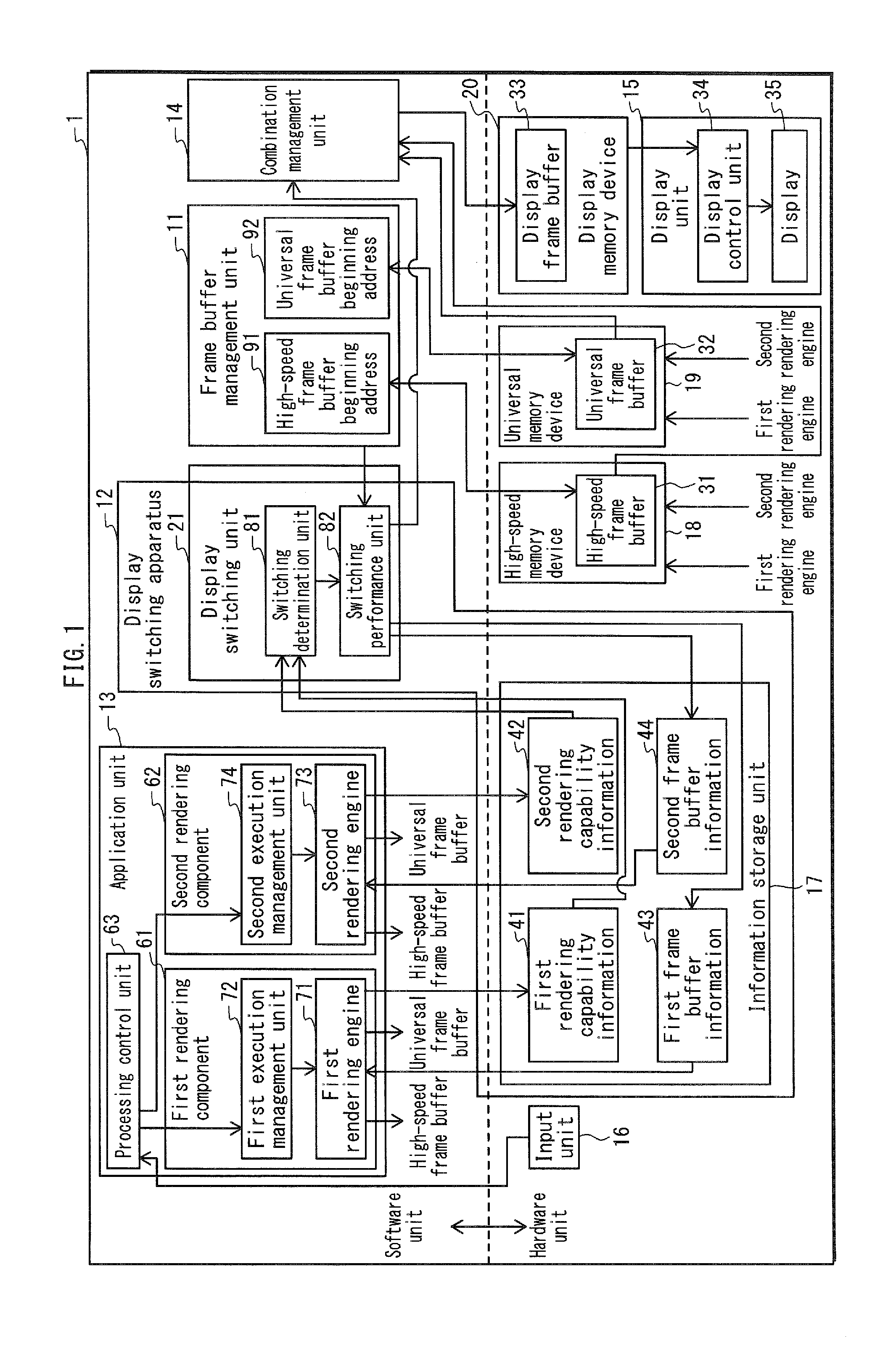
[0037]An information processing terminal 1 provided with a display switching apparatus according to an embodiment of the present invention is a portable information processing terminal provided with a touchscreen display. By way of example, the information processing terminal 1 executes a navigation application that displays the current position of the information processing terminal 1 on a map. This application includes a component that is responsible for the function of displaying the map (hereinafter referred to as a “first rendering component”) and a component that is responsible for the function of displaying a photograph (hereinafter referred to as a “second rendering component”). The map is displayed with images generated by other rendering components superimposed thereon as necessary, such as a photograph of actual scenery at a certain spot on the map.
[0038]Normally, each time the user holding the information processing terminal 1 moves, the current position o...
embodiment 2
2. Embodiment 2
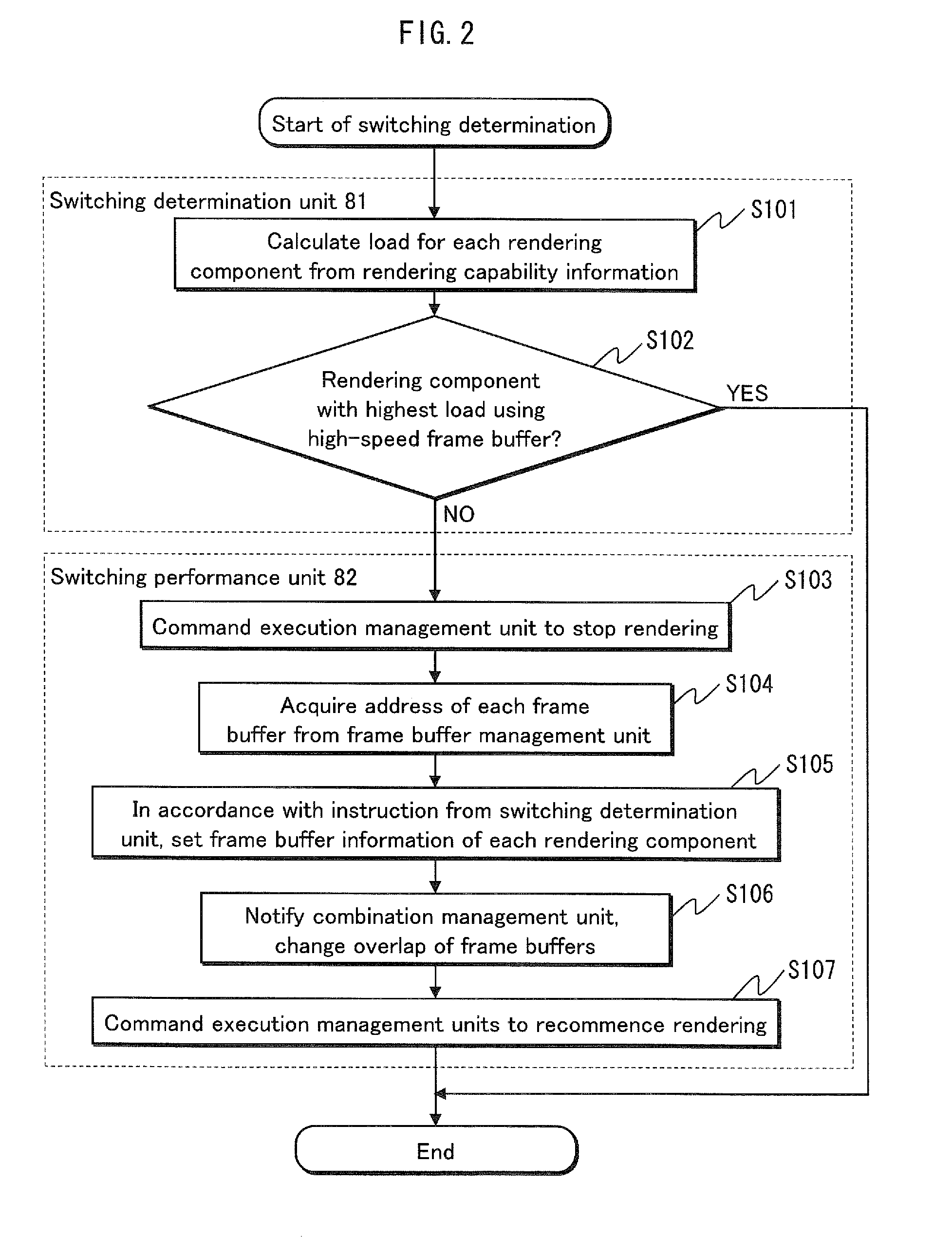
[0091]In Embodiment 1, the determination of whether to switch the buffers is made in accordance with the CPU load. In Embodiment 2, when it is determined that buffer switching in necessary, the most appropriate of a plurality of pre-established buffer switching procedures is furthermore selected. Buffers are switched according to the selected buffer switching procedure. The most appropriate buffer switching procedure is selected by predicting rendering delay, dropped frames, and CPU load for each switching procedure. A comprehensive determination is then made based on the predictions.
[0092]The plurality of buffer switching procedures refers to the following three procedures. (1) Switching the buffers without copying the contents thereof back and forth (hereinafter, “first switching procedure”). (2) Copying the content of the buffer used by the first rendering component 61 into the buffer used by the second rendering component 62 and then switching buffers (hereinafter...
PUM
 Login to View More
 Abstract
Description
Claims
Application Information
 Login to View More