Large game animals, in particular, provide a unique challenge to a hunter because these animals tend to have an exceptional sense of smell, enabling them to detect the scent of a human from great distances.
However, this means of hunting is often uncomfortable and undesirable, as one must stay perched in a tree for extended periods of time waiting for an animal to wander within range.
Furthermore, many hunters enjoy the act of stalking or following their prey, which cannot be accomplished when confined to the heights of a
tree stand.
The fickle nature of the changing direction of the wind makes staying successfully downwind a challenge and sometimes ineffective means of concealing scent.
Sprays can be expensive and inconvenient, as they require repeat application and a manual process for applying the scent.
Furthermore, some sprays can be dangerous to inhale, or may cause
skin or
eye irritation upon application.
However, natural materials, such as leaves,
bark and small twigs, naturally decompose and break down as they dry out.
The
grating covering the woodsy item storage compartment in the device lid will not prevent small quantities of natural debris from raining down through the
grating and onto clothing and equipment that is stored inside the
trunk.
Furthermore, the natural materials within the grated compartments require frequent changing, refreshing and replenishing because the scent associated with the natural materials will become exhausted over time.
Furthermore, removal of the natural materials is a complicated endeavor.
Neither method completely removes the remnants of the
natural material from the bottom of the
trunk, thus some small amount of old, scent-depleted debris will exist at the bottom of the Himes
trunk.
The Van Zee device does not introduce natural scents into the hunting gear that it houses.
A common problem associated with scent absorbing materials is that they become saturated and must be either replaced or rejuvenated.
A limitation to the Lombardi device, shared by the Van Zee device, is that neither device introduces natural scents into the hunting gear housed within the device.
A common problem associated with scent absorbing materials, such as
activated carbon, is that they become saturated and must be either replaced or rejuvenated.
This is a
time consuming and involved process as the hunter must disassemble the device, place the lining in the dryer, run the dryer for the recommended time and then reassemble the device before use.
Equipment capable of producing such oxidizing agents, while effective, is often costly.
An additional concern, besides the cost associated with the Elrod method, is that while
ozone is a natural smell, it is not a common smell, and is typically associated with a
lightning bolt strike.
Rather than having a concealing or luring effect, the generation of
ozone may inadvertently alert the animal to the presence of humans.
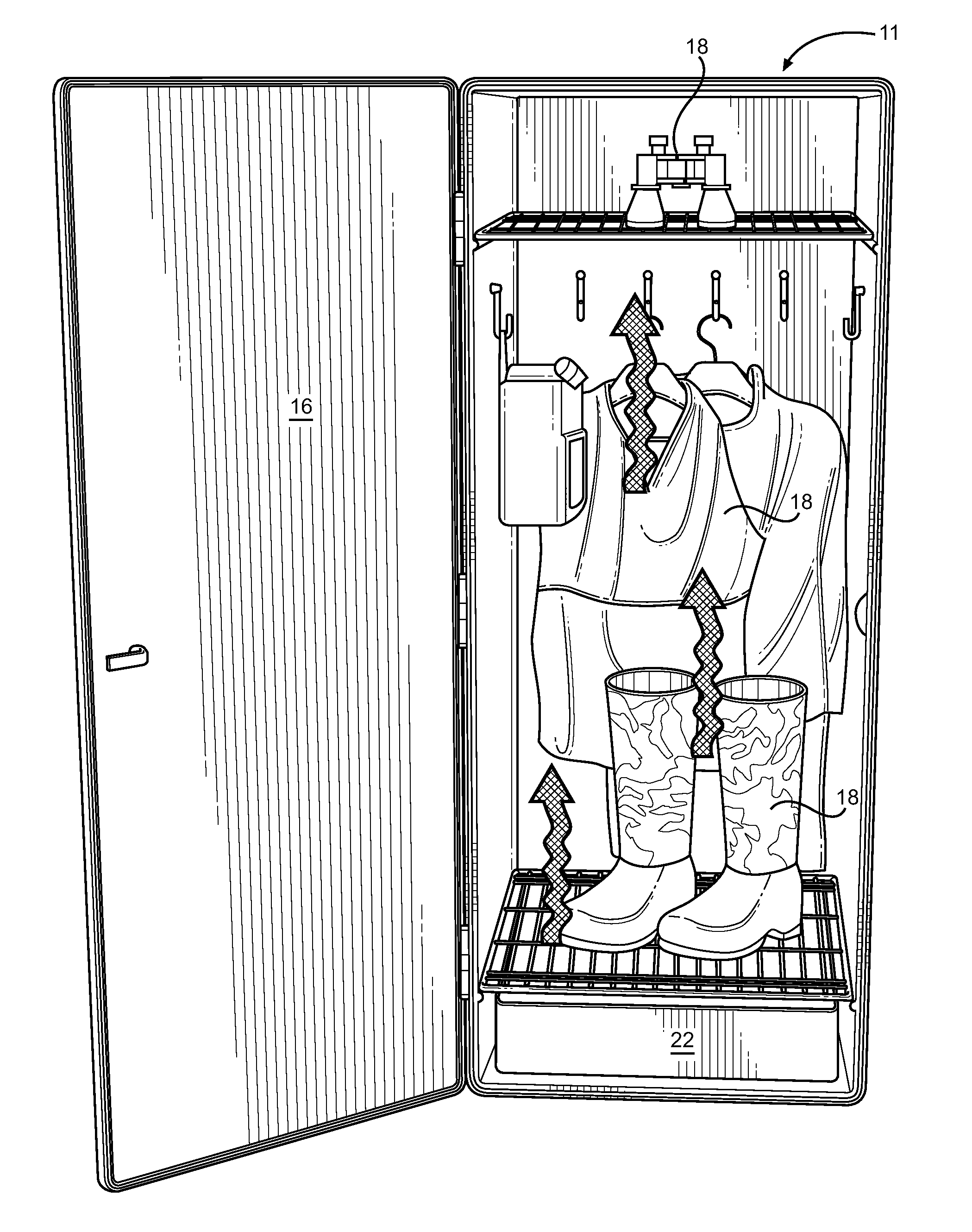
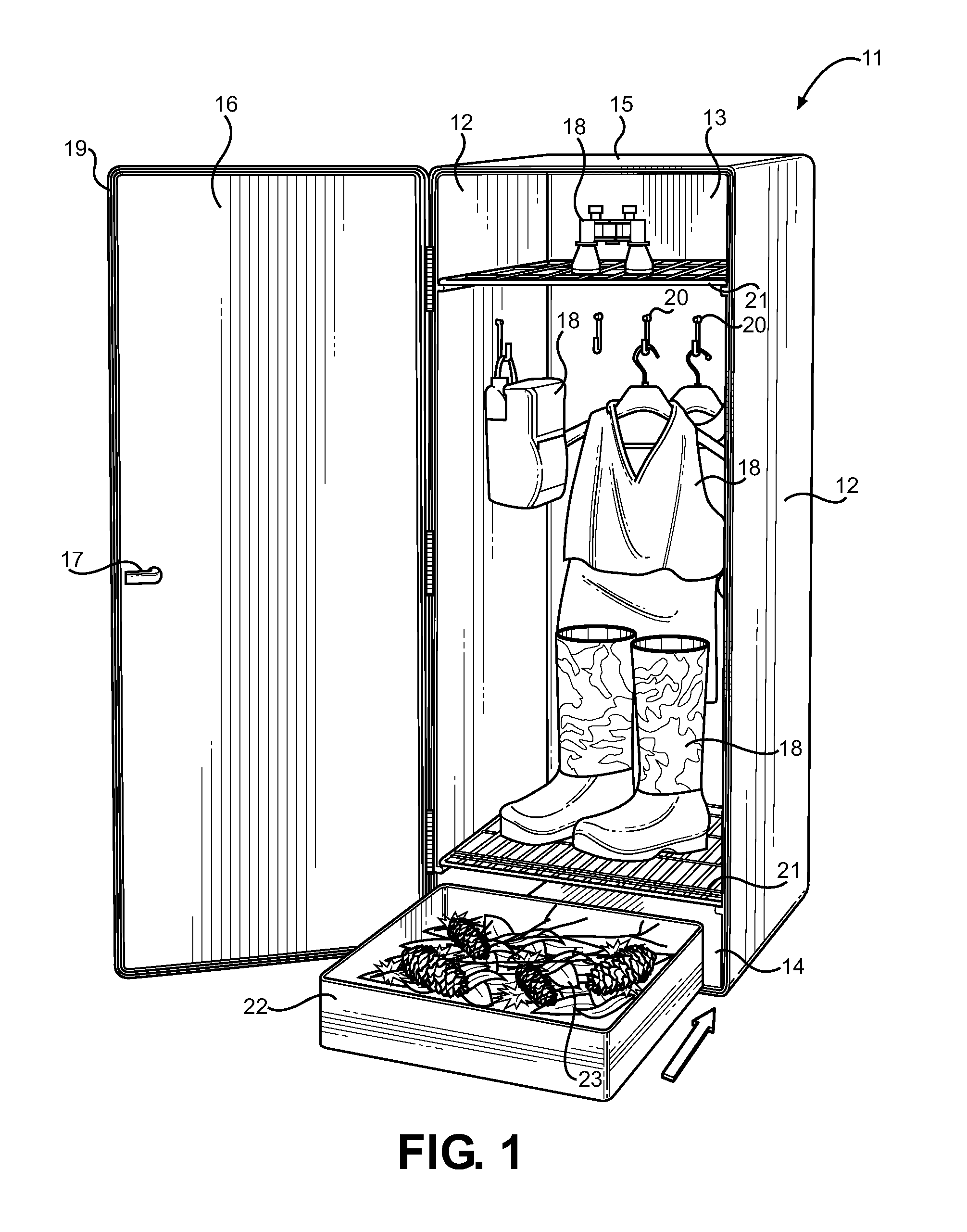
Since the scents come from materials found at the hunting site, it is difficult for an animal to detect a human in the area, since the hunter's clothes and gear have been permeated with natural scents from the surrounding environment.


 Login to View More
  Login to View More