
Finite Impulse Response Filter For Producing Outputs Having Different Phases
- Summary
- Abstract
- Description
- Claims
- Application Information
AI Technical Summary
Problems solved by technology
Method used
Image

Examples
Embodiment Construction
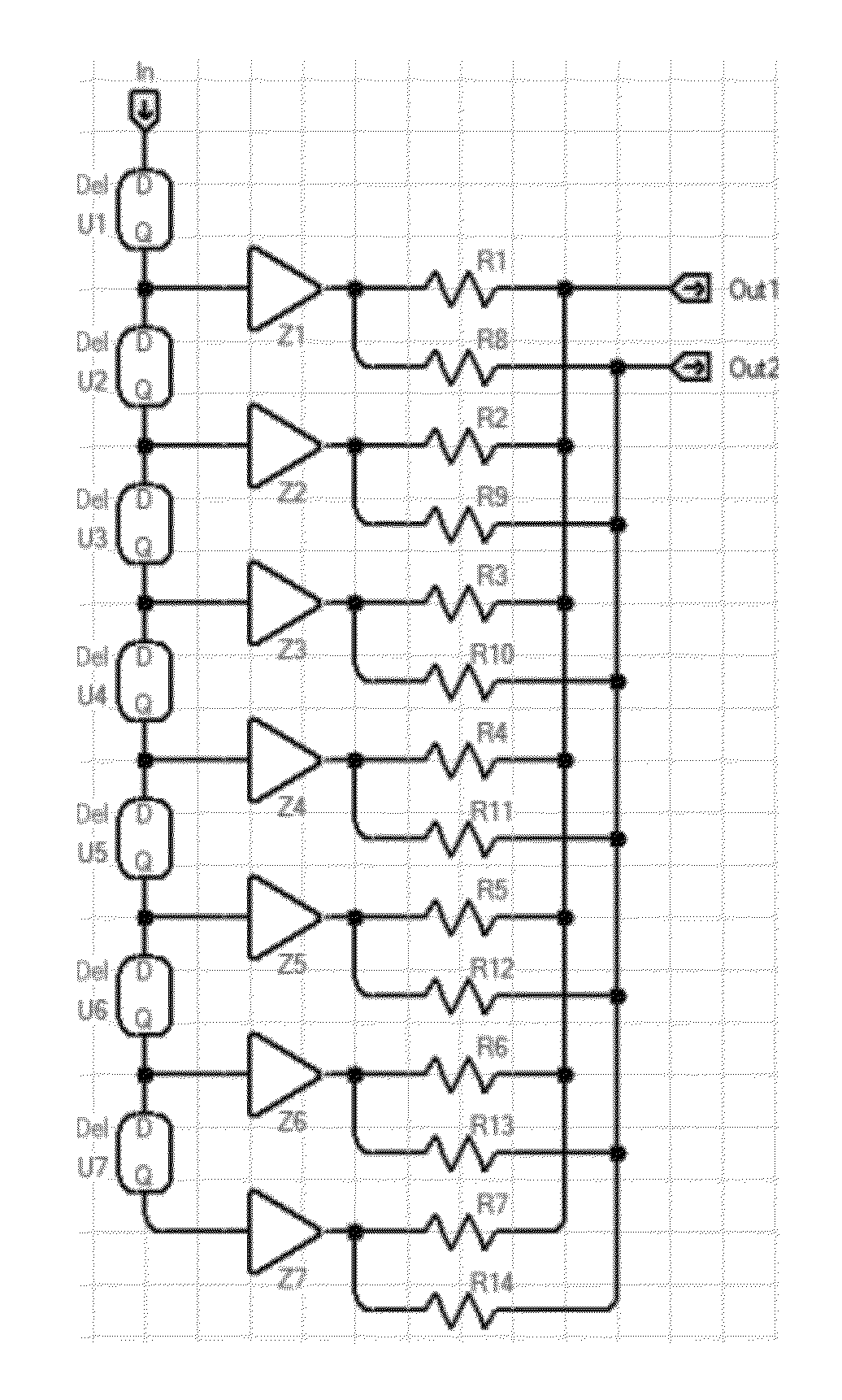
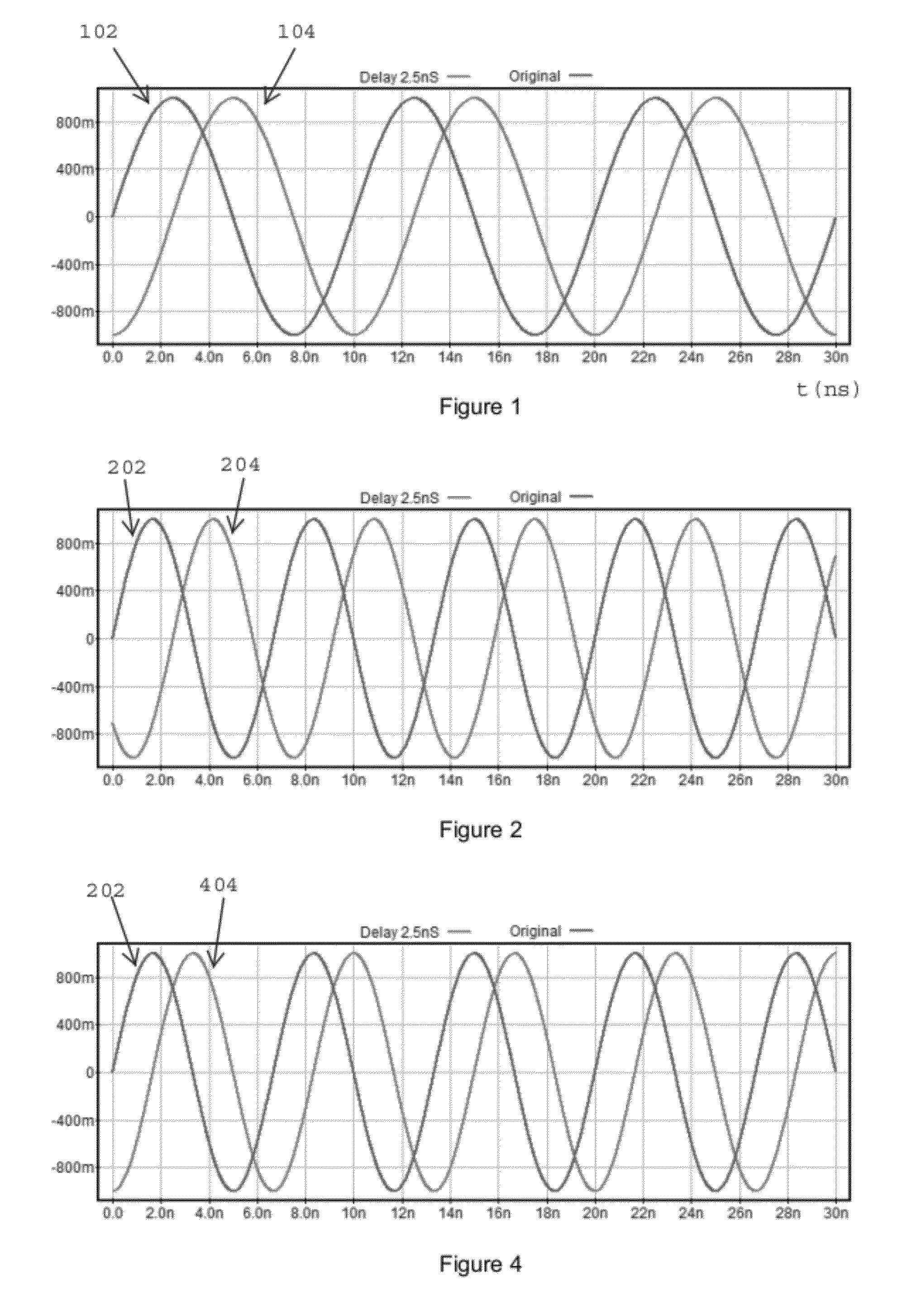
[0034]The present application describes the design and implementation of a finite impulse response (FIR) filter to create a plurality of output signals, each output signal having the same frequency but at a different phase shift from the other output(s). The phase shift is constant and independent of the frequency of the output signal.
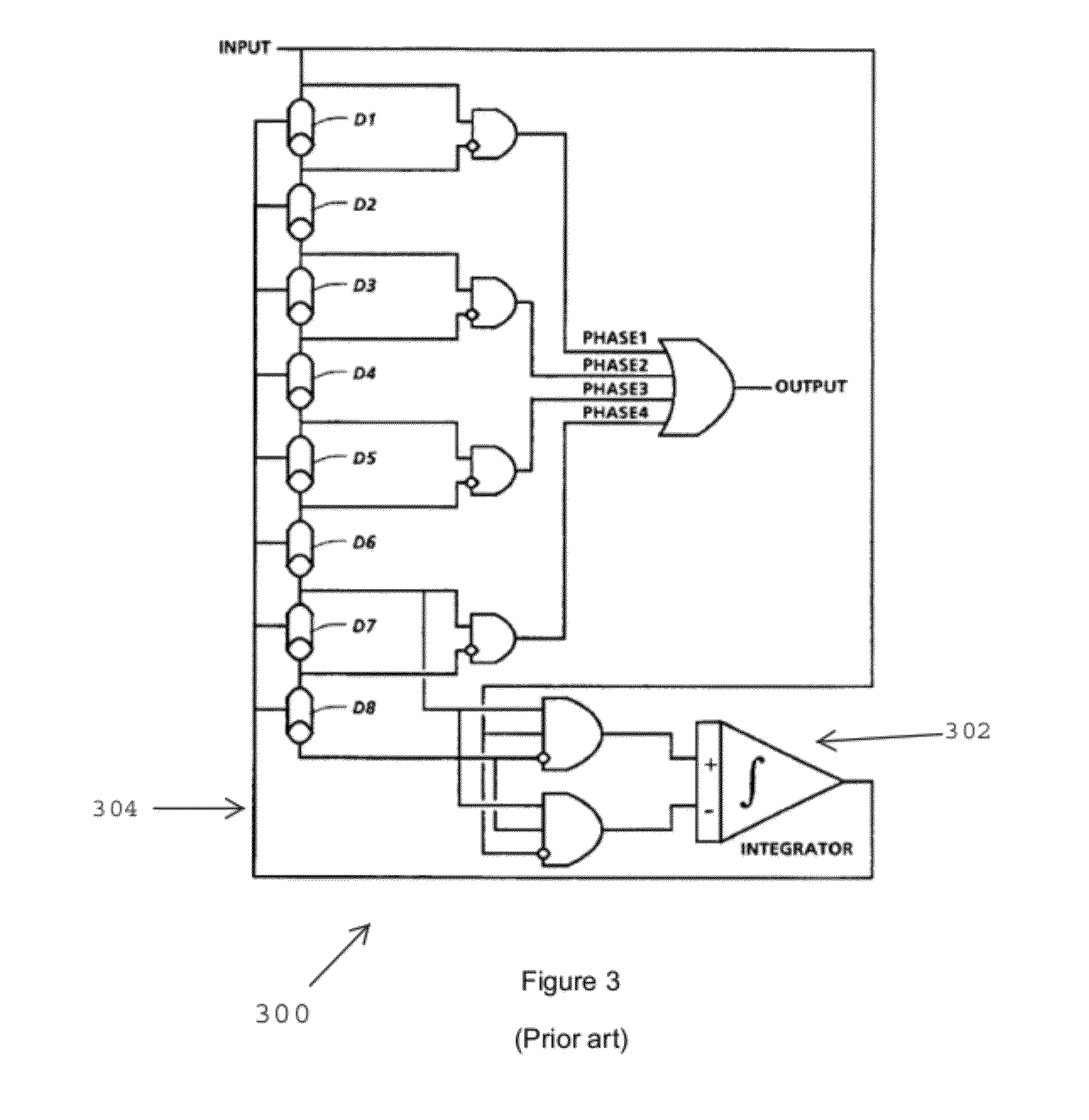
[0035]It has been found that a FIR filter with multiple outputs of the same frequency and differing phases may be created by selecting different impedance values for each output as explained herein. The ability to maintain a constant phase difference regardless of frequency can be of significant use in situations in which the known technique of maintaining a fixed delay time described above fails to accomplish a desired result. While it is expected that one use of the described apparatus and method will be to generate a number of outputs of equally spaced phase shifts, such equal spacing is not necessary, and any desired set of phase shifts may be gene...
PUM
 Login to View More
 Abstract
Description
Claims
Application Information
 Login to View More