

Building insulation system
a technology for building insulation and building walls, applied in the field of building construction systems, can solve the problems of inefficiency, high cost of heating and cooling a building, and the inability of typical building insulation to provide the full range of thermal barriers, and achieve the effect of facilitating the reflection of thermal energy radiation
- Summary
- Abstract
- Description
- Claims
- Application Information
AI Technical Summary
Benefits of technology
Problems solved by technology
Method used
Image

Examples
Embodiment Construction
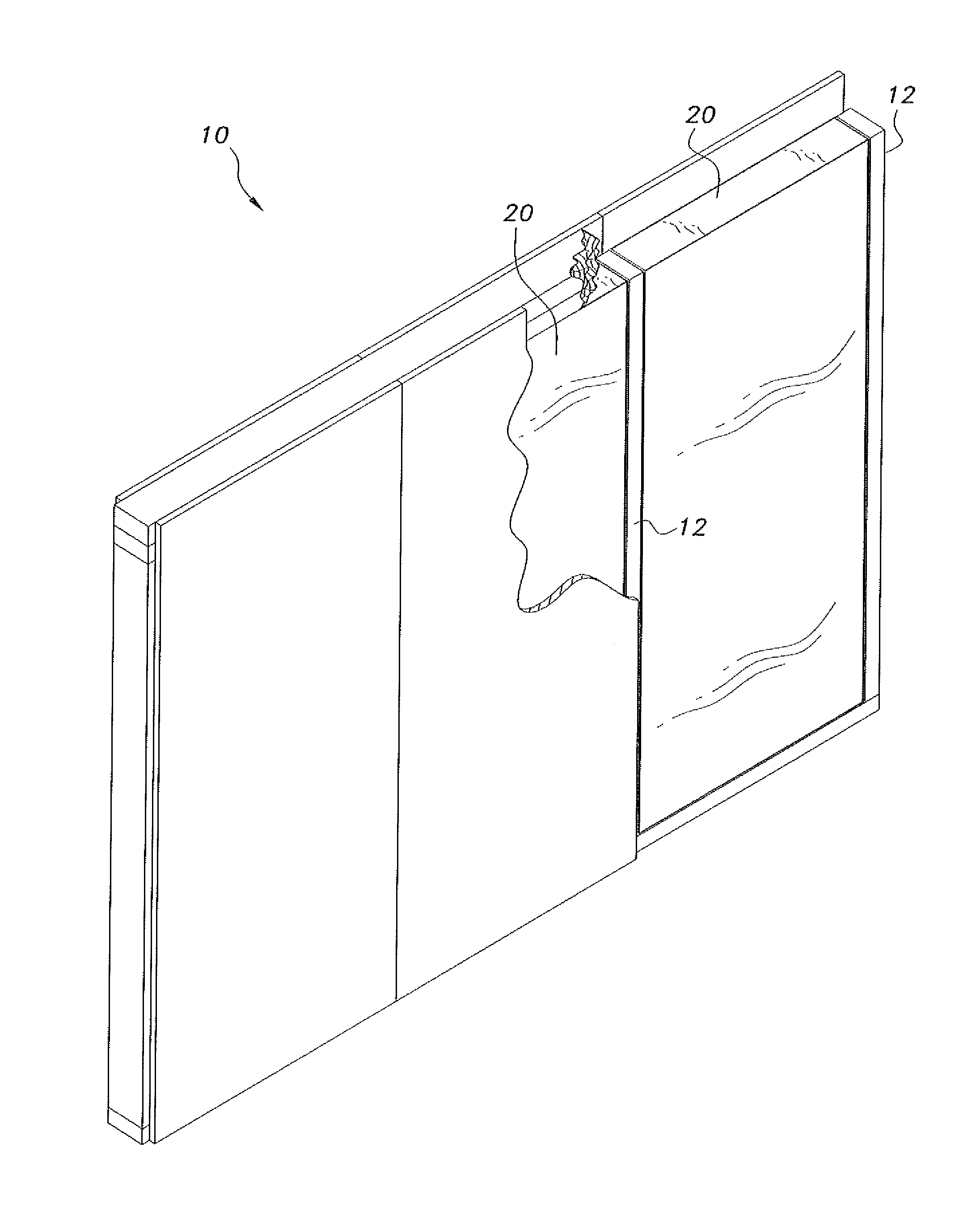
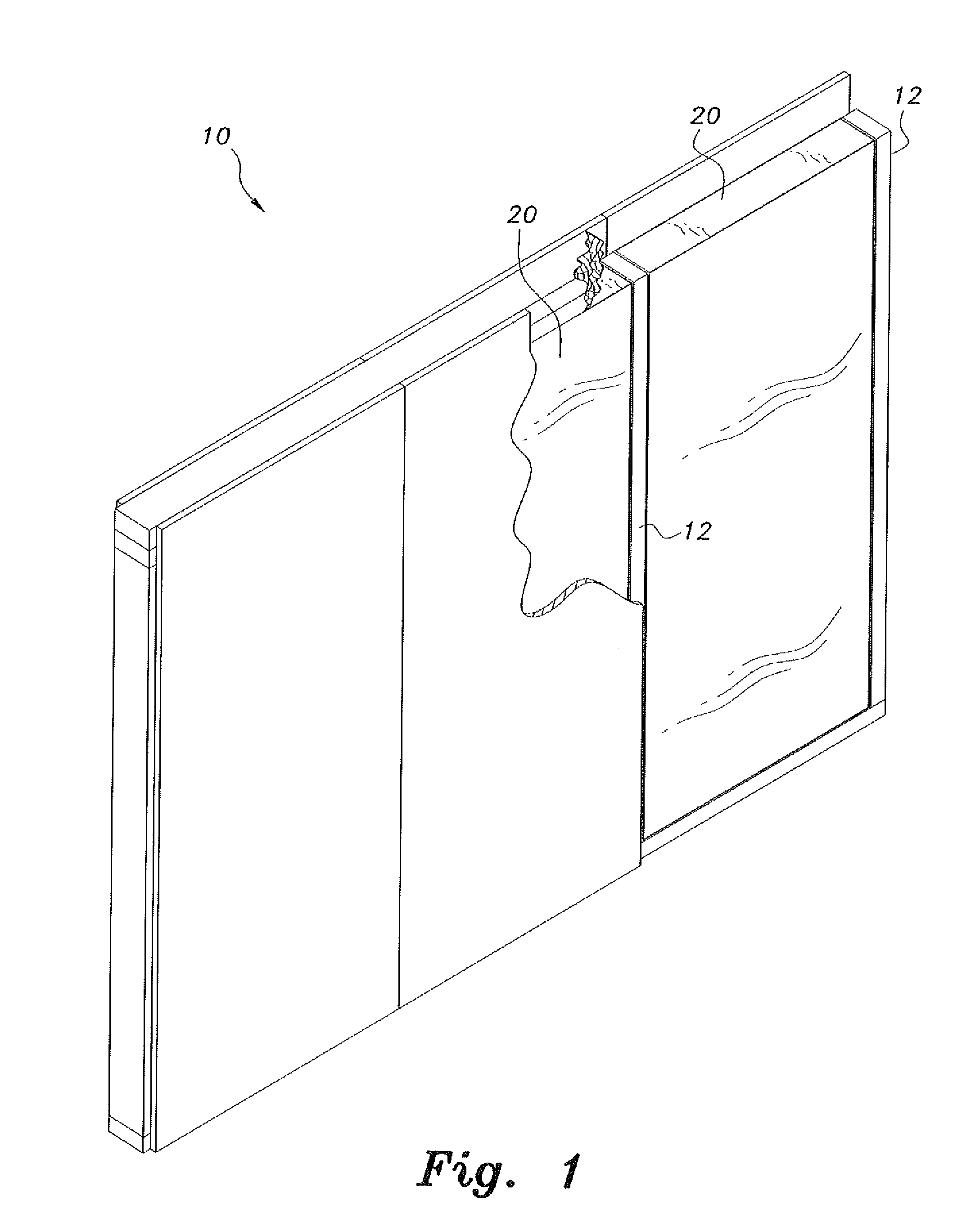
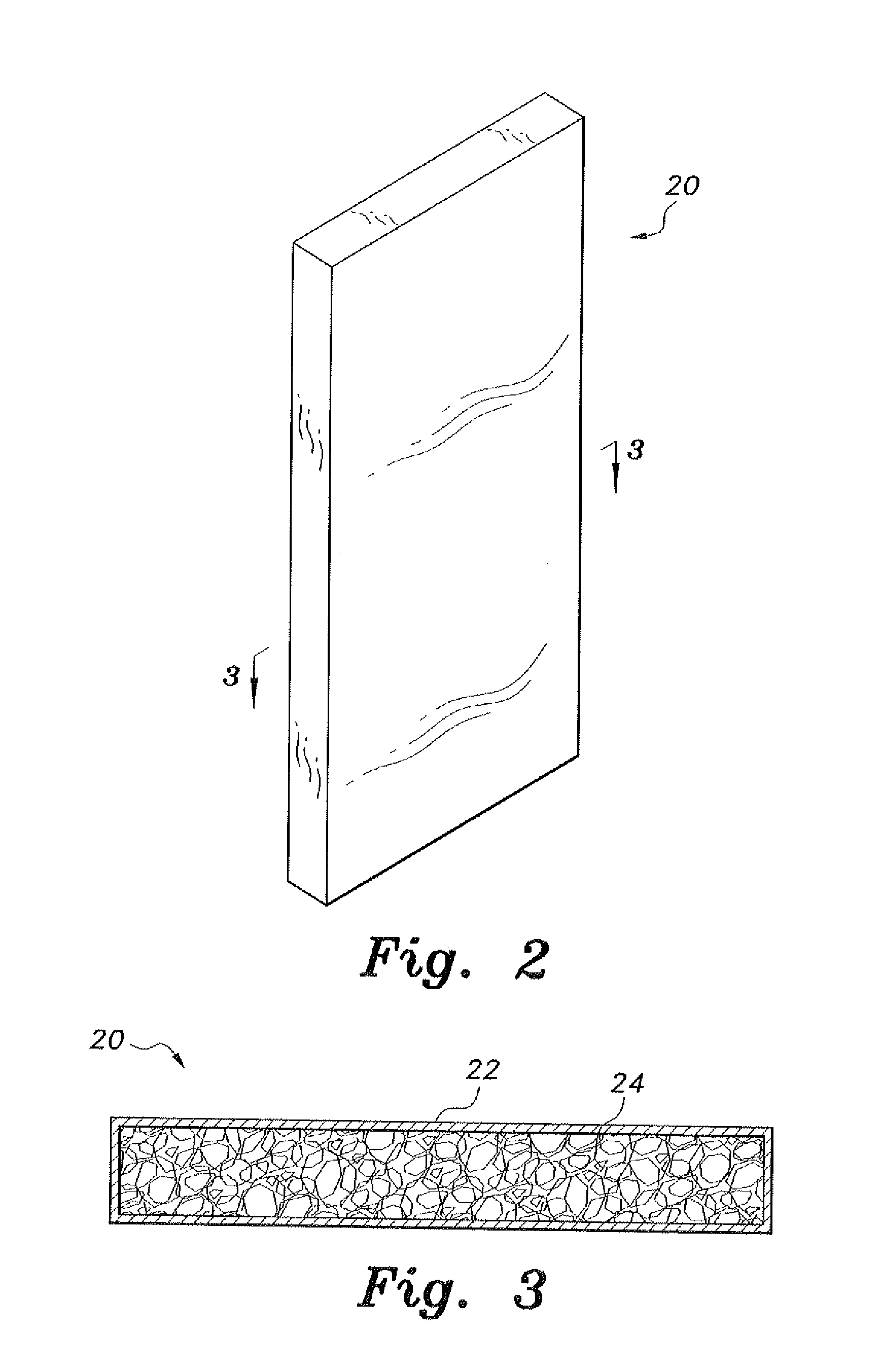
[0016]The building insulation system, generally referred to by the reference number 10, is configured to provide a thermal break for all three forms of thermal energy in a domicile or building. As shown in FIGS. 1-3, the building insulation system 10 includes a reflective, non-porous bag 20 filled with insulation material 24.
[0017]In the embodiment shown in the drawings, the covering 22 for the non-porous bag 20 can be made from a reflective polymeric facer or plastic, e.g., polyester or other polymeric sheet material with reflective metal mixed therein, similar to Mylar (Mylar is a registered trademark of E.I. du Pont de Nemours and Company of Wilmington, Del.). The covering 22 completely encapsulates both opposing faces, both opposing sides, and both opposing ends of the bag 20 to provide a non-porous barrier that reflects thermal energy from the surface facing the outer wall or siding, i.e., the surface facing the environment, and also reflects thermal energy from the interior of...
PUM
 Login to View More
 Abstract
Description
Claims
Application Information
 Login to View More