
System for controlling functions of a vehicle by speech
- Summary
- Abstract
- Description
- Claims
- Application Information
AI Technical Summary
Benefits of technology
Problems solved by technology
Method used
Image

Examples
first embodiment
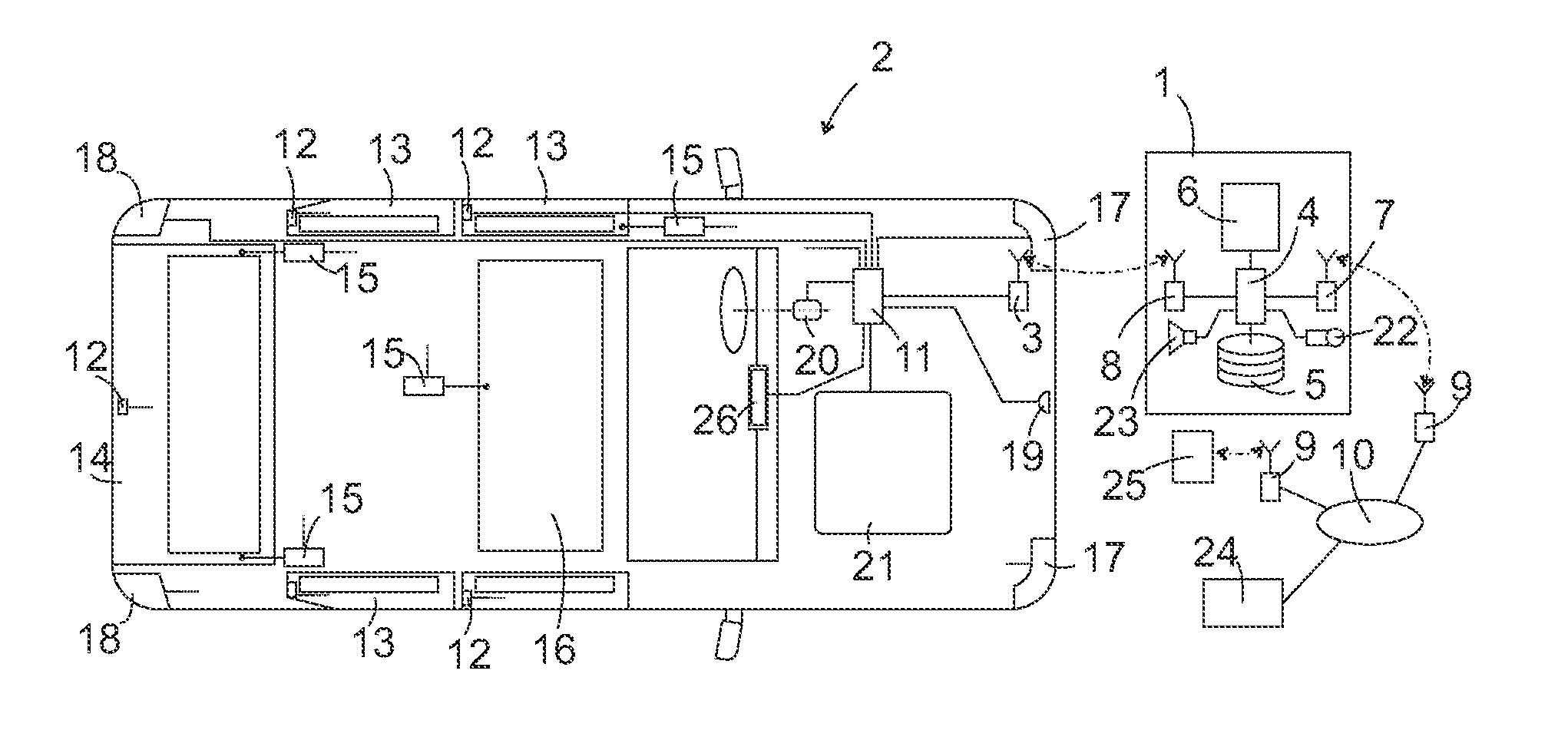
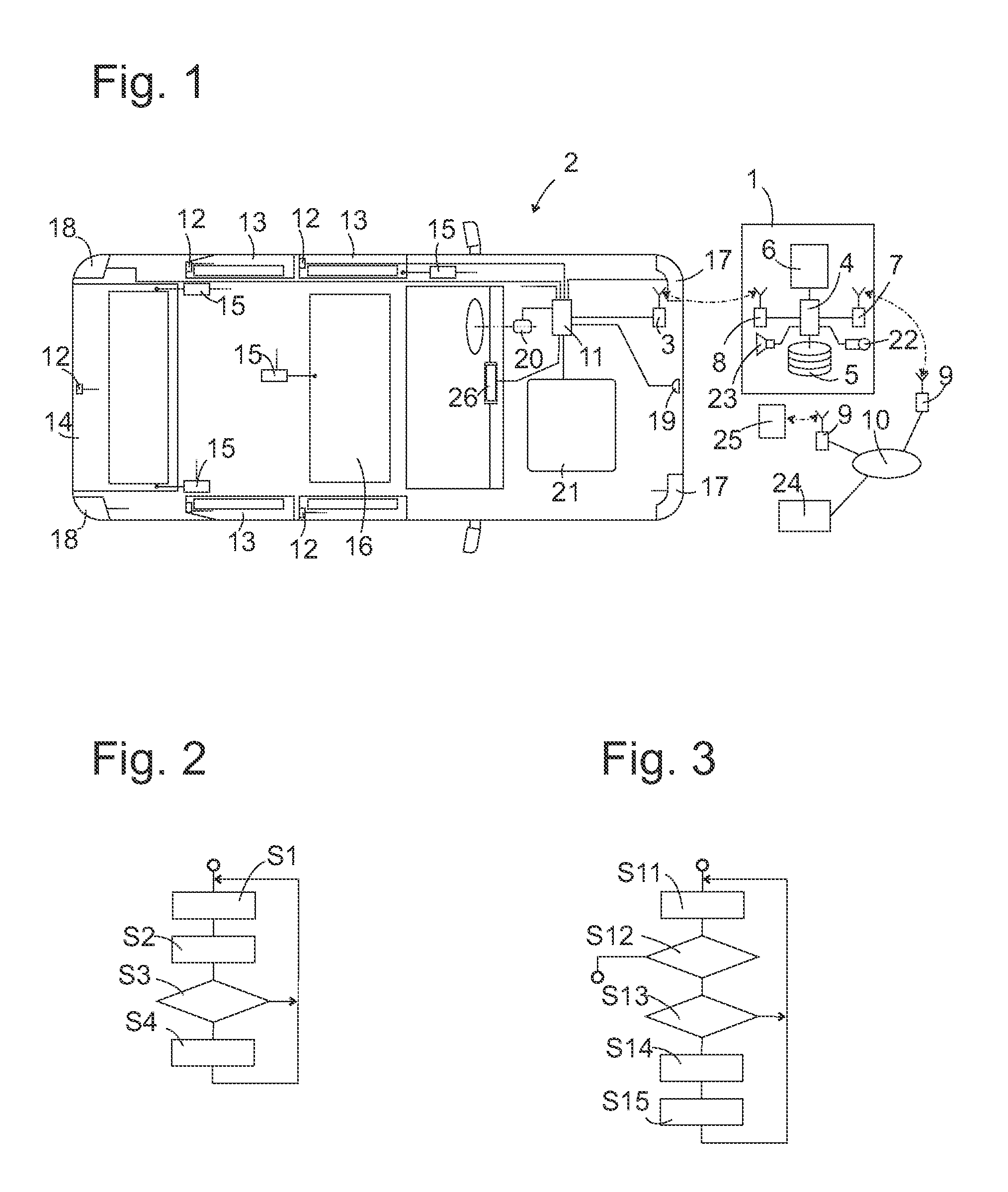
[0029]FIG. 2 is a flowchart of a control process carried out in the CPU 4 of mobile network terminal 1 according to the present disclosure. In step S1 of this process, the CPU 4 is waiting for a distinct audio signal from microphone 22. When such an audio signal is received, it is subjected to speech recognition in step S2. The speech recognition algorithm used here employs a standard vocabulary of the user's language and can output any word from this vocabulary which has a sufficient phonetic resemblance to the input audio signal e.g. in the form an ASCII character string (“general purpose algorithm”). In other words, the general purpose algorithm is not limited to the use automotive terms which would be likely to occur in an instruction addressed to the vehicle 2.
[0030]Such a general purpose algorithm requires considerable processing power and storage capacity. Although such an algorithm and its data may be stored locally in storage means 5 and executed by the CPU 4 itself, it may...
second embodiment
[0035]FIG. 3 illustrates the control process. Here, just as in step S1 of FIG. 2, in a first step S11 CPU 4 waits for distinct audio signal from microphone 22. When such an audio signal is received, CPU 4 decides in step S12 whether it is in a vehicle controlling mode or not. Processing steps which ensue if it is not in the vehicle controlling mode are not subject of the present disclosure and are not described here. If it is in the vehicle controlling mode a speech recognition algorithm executed in step S13 judges the acoustic similarity between the detected audio signal and a set of audio patterns, each of which corresponds to an instruction supported by on-board computer 11. If the similarity to at least one of these patterns is above a predetermined threshold, the instruction corresponding to the most similar pattern is identified as the instruction spoken by the user, and is transmitted to the vehicle-based interface 3 for execution in step S14. If no pattern exceeds the predet...
PUM
 Login to View More
 Abstract
Description
Claims
Application Information
 Login to View More