
Lightweight polycarbonate suspension for vehicle
a technology of polycarbonate suspension and vehicle, which is applied in the direction of passenger cars, transportation and packaging, propulsion parts, etc., can solve the problems of requiring extensive time and numerous tools to assemble, and the assembly of shocks and struts can also be dangerous
- Summary
- Abstract
- Description
- Claims
- Application Information
AI Technical Summary
Benefits of technology
Problems solved by technology
Method used
Image

Examples
Embodiment Construction
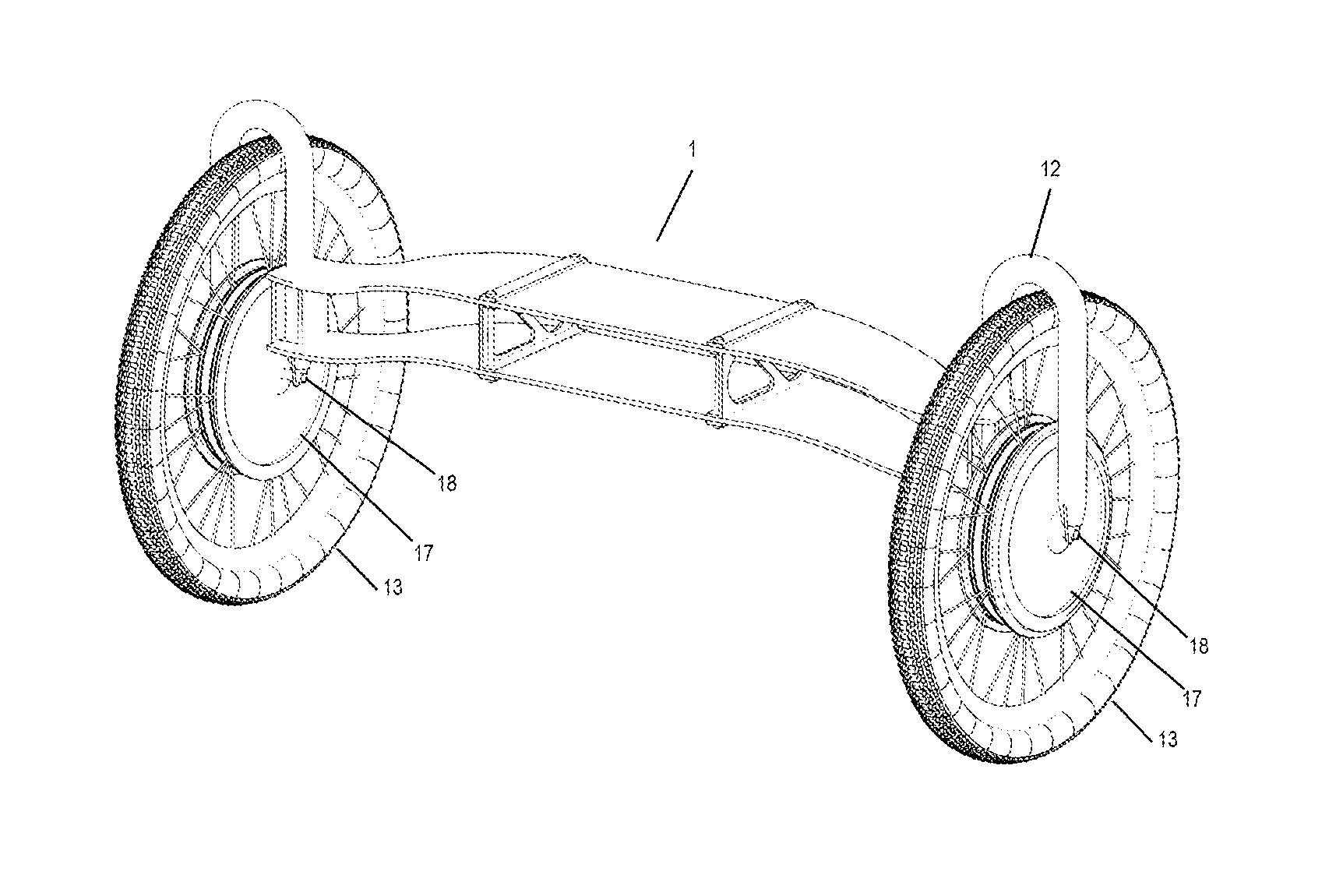
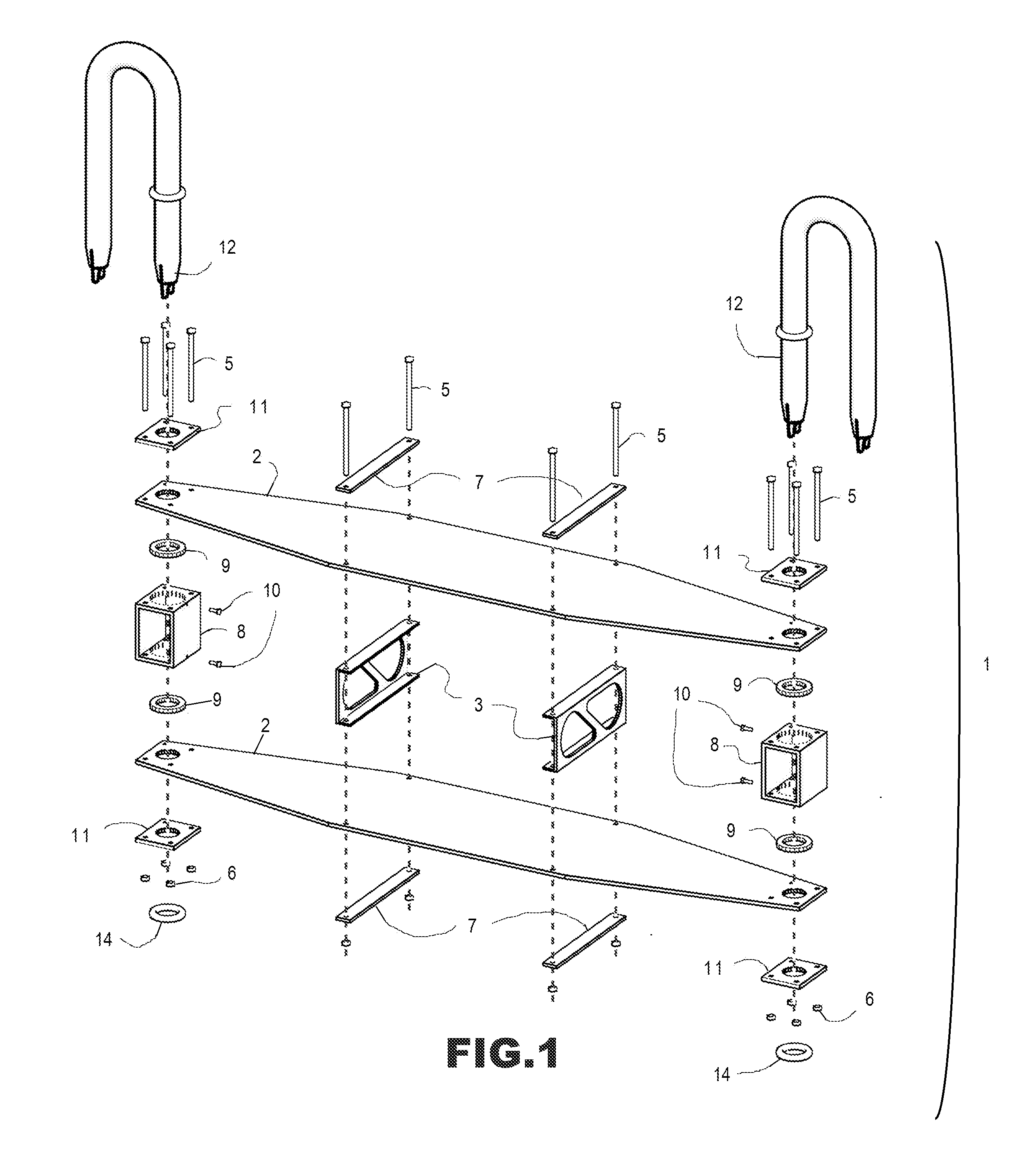
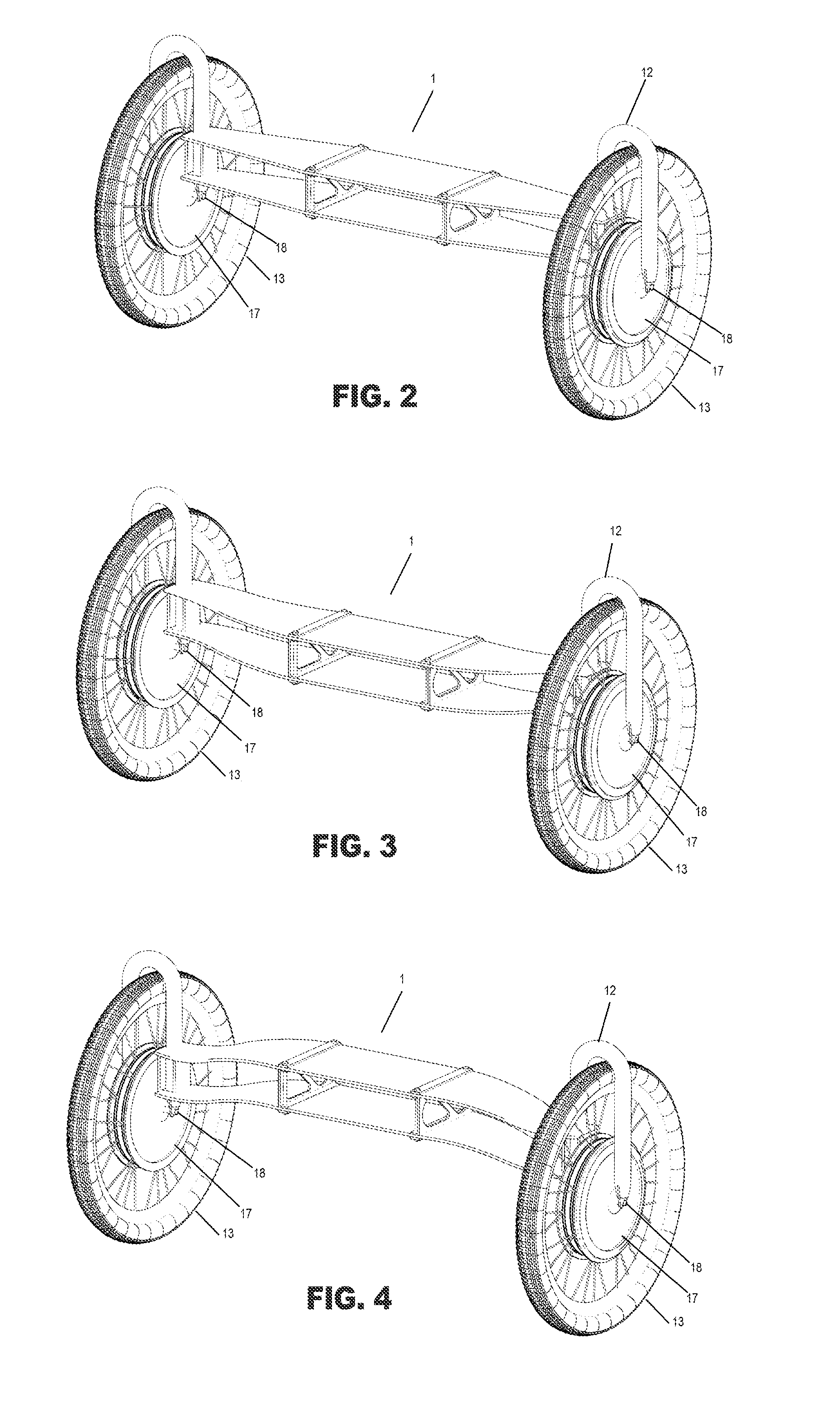
[0018]Referring to FIGS. 1-4, the suspension assembly 1 preferably comprises two resilient polycarbonate members 2 rigidly mounted together in a substantially parallel fashion to form a front or rear wheel suspension assembly 1. In the preferred embodiment, front and rear wheel suspension assemblies 1 are identical. This reduces cost and facilitates manufacturing. It is contemplated, however, that alternate configurations may comprise any other number of such polycarbonate members as required by the particular application or performance characteristics, and that the front and rear wheel suspension assemblies may differ from each other, as dictated by the particular application.
[0019]The polycarbonate members 2 are connected to one or more chassis mounting brackets 3 spaced across the length of the polycarbonate members 2. The mounting brackets 3 are secured or fastened to a chassis 4 (FIG. 1 shows mounting bolts 5, nuts 6 and hold down straps 7). The polycarbonate members 2 each act...
PUM
 Login to View More
 Abstract
Description
Claims
Application Information
 Login to View More