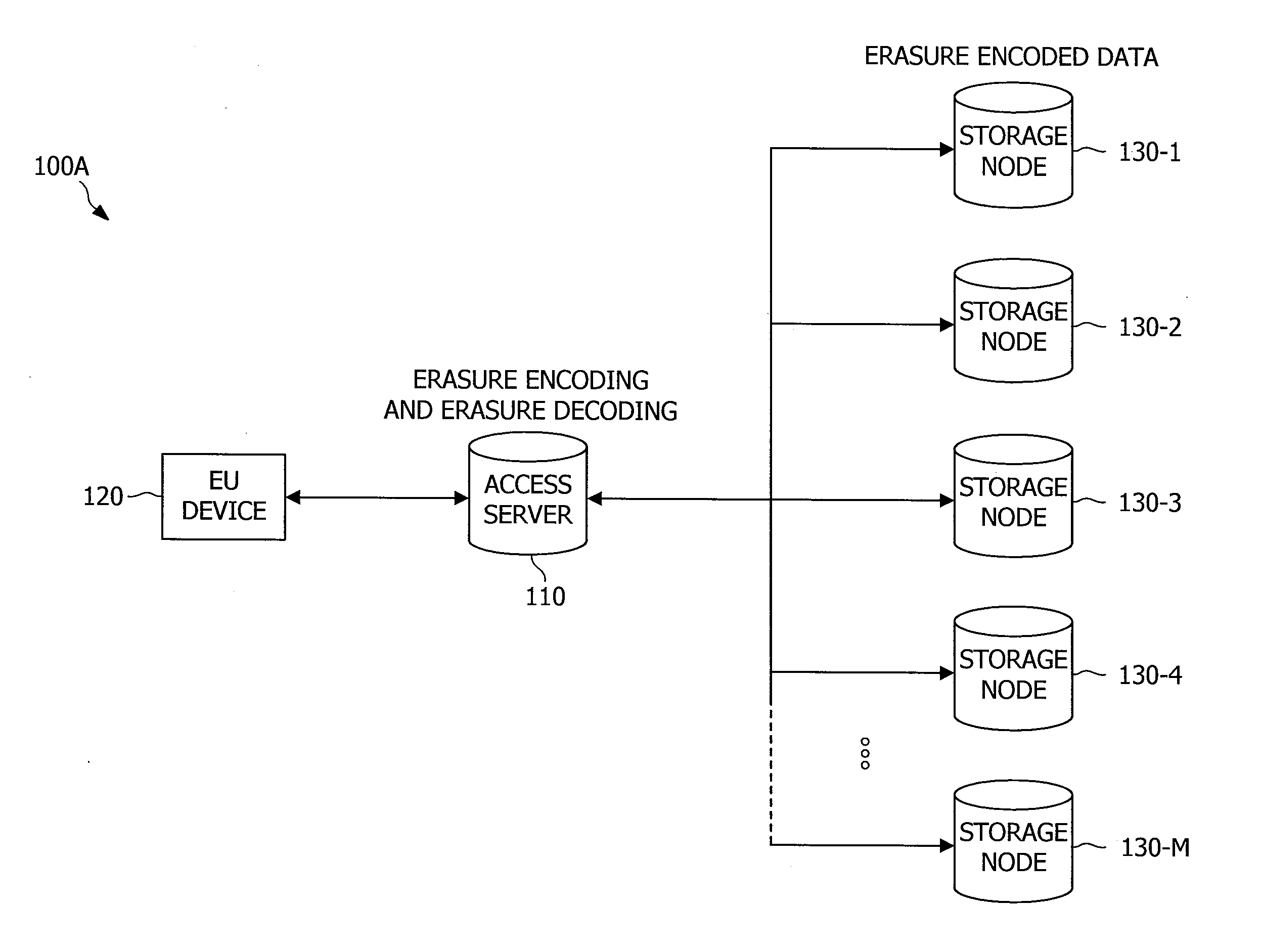
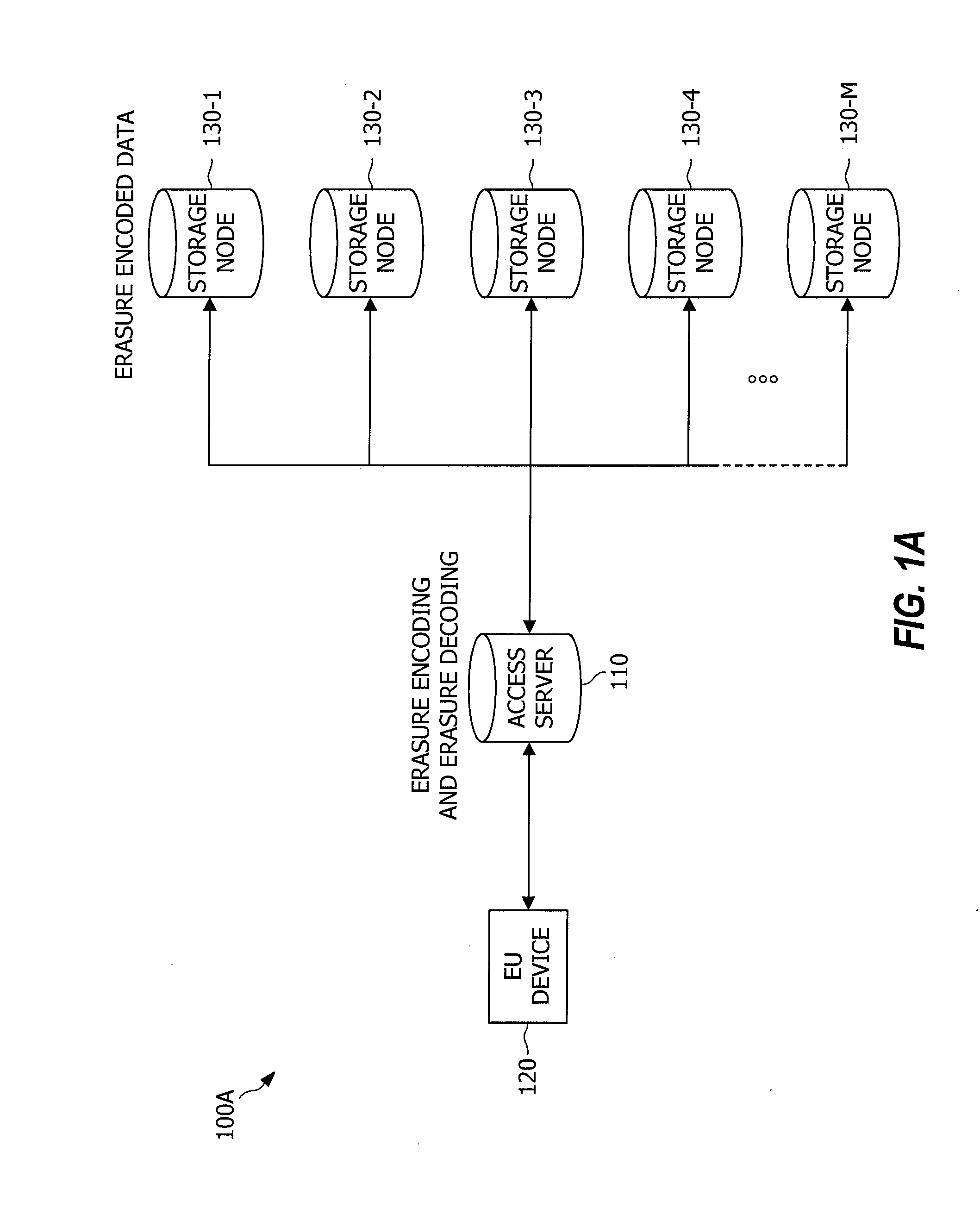
However, the individual storage nodes are somewhat unreliable in that they can intermittently fail, in which case the data stored on them is temporarily unavailable, or permanently fail, in which case the data stored on them is permanently lost (e.g., as represented by the failure of storage node 130-2 in FIG. 1C).
This can result in inefficiencies with respect to the use of resources, such as
communication bandwidth, computing resources, etc.
Because a large amount of data is stored on each node (typically many terrabytes), and all data comprising fragments stored on a node typically needs to be replaced when the node permanently fails, the repair process reads and writes a large amount of data after a node permanently fails.
This reading and writing of large amounts of data generally results in the consumption of large amounts of bandwidth in the storage
system by the repair policy and, when coupled with a reactive repair policy, can result in disruptive spikes in storage system
bandwidth utilization (e.g., delaying or preventing primary
data access services by the storage system).
That is, the repair policy implemented with respect to a small
erasure code configuration may act somewhat erratically whereby it utilizes a large amount of bandwidth for periods of time when attempting to repair data immediately upon determining fragments are unavailable due to a permanently failed node.
Although it may be possible to increase the number of fragments, k, for a particular source object, thereby decreasing the size of the fragments, this has generally been thought not to be a satisfactory solution with respect to the small
erasure code implementations.
As the number k of source fragments increases for the existing small erasure code solutions, the total amount of data that needs repair grows proportionally to k using a reactive repair policy, which has been considered undesirable.
Further compounding disadvantages associated with the typical use of small erasure codes and their corresponding reactive repair policies, is that these solutions tend to be
highly sensitive to the intermittent failure threshold, T, utilized in determining intermittent
unavailability and permanent
unavailability of fragments.
As T is decreased, the repair policy is implemented with respect to a larger number of fragments (e.g., likely including a larger number of fragments which will again become available on their own in a short amount of time), thereby increasing storage system bandwidth consumption by the repair process and leaving less bandwidth available for the
primary operation of the storage system.
However, as T is increased, the resilience and reliability of the small erasure code is at risk due to the relatively few fragments available in excess of the k fragments required for
data recovery (e.g., additional fragments may be lost in time T, thereby preventing
recovery of the data).



 Login to View More
  Login to View More