

Thermal barrier for wireless power transfer
a wireless power transfer and thermal barrier technology, applied in the direction of home appliance efficiency improvement, electric/magnetic/electromagnetic heating, sustainable buildings, etc., can solve the problems of substantial degraded power transfer performance, achieve accurate and efficient control, improve efficiency, and improve the effect of power transfer performan
- Summary
- Abstract
- Description
- Claims
- Application Information
AI Technical Summary
Benefits of technology
Problems solved by technology
Method used
Image

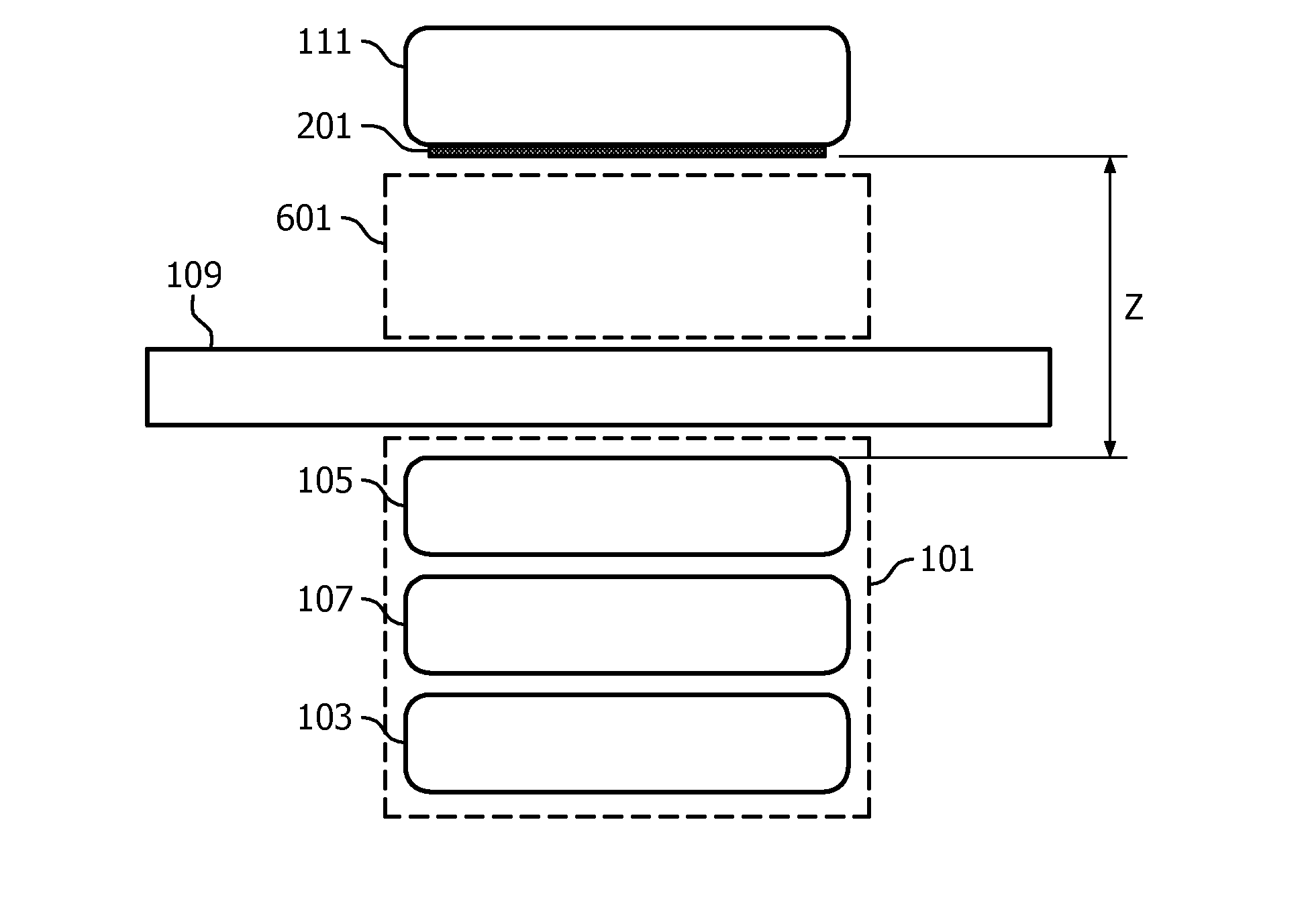
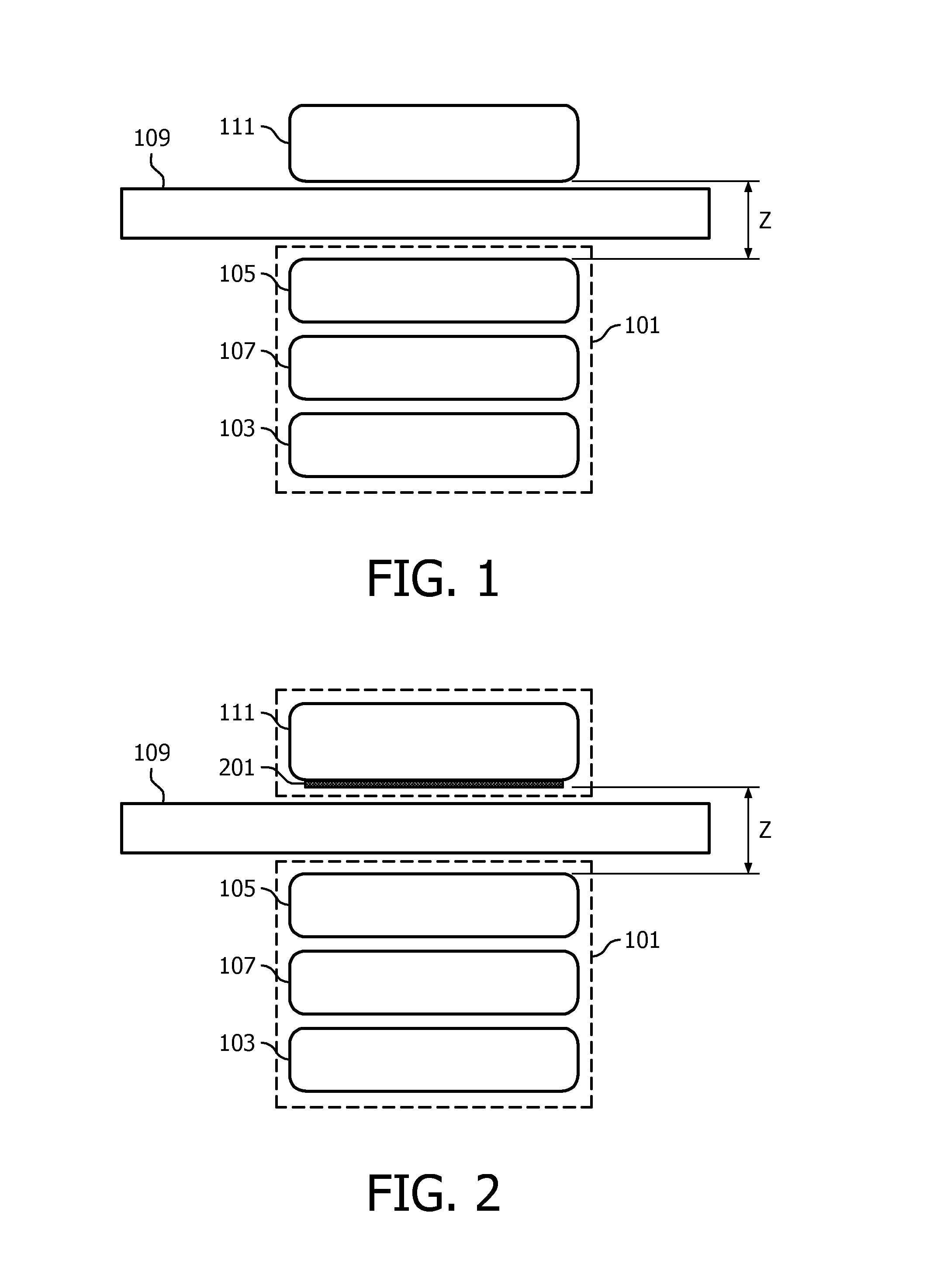
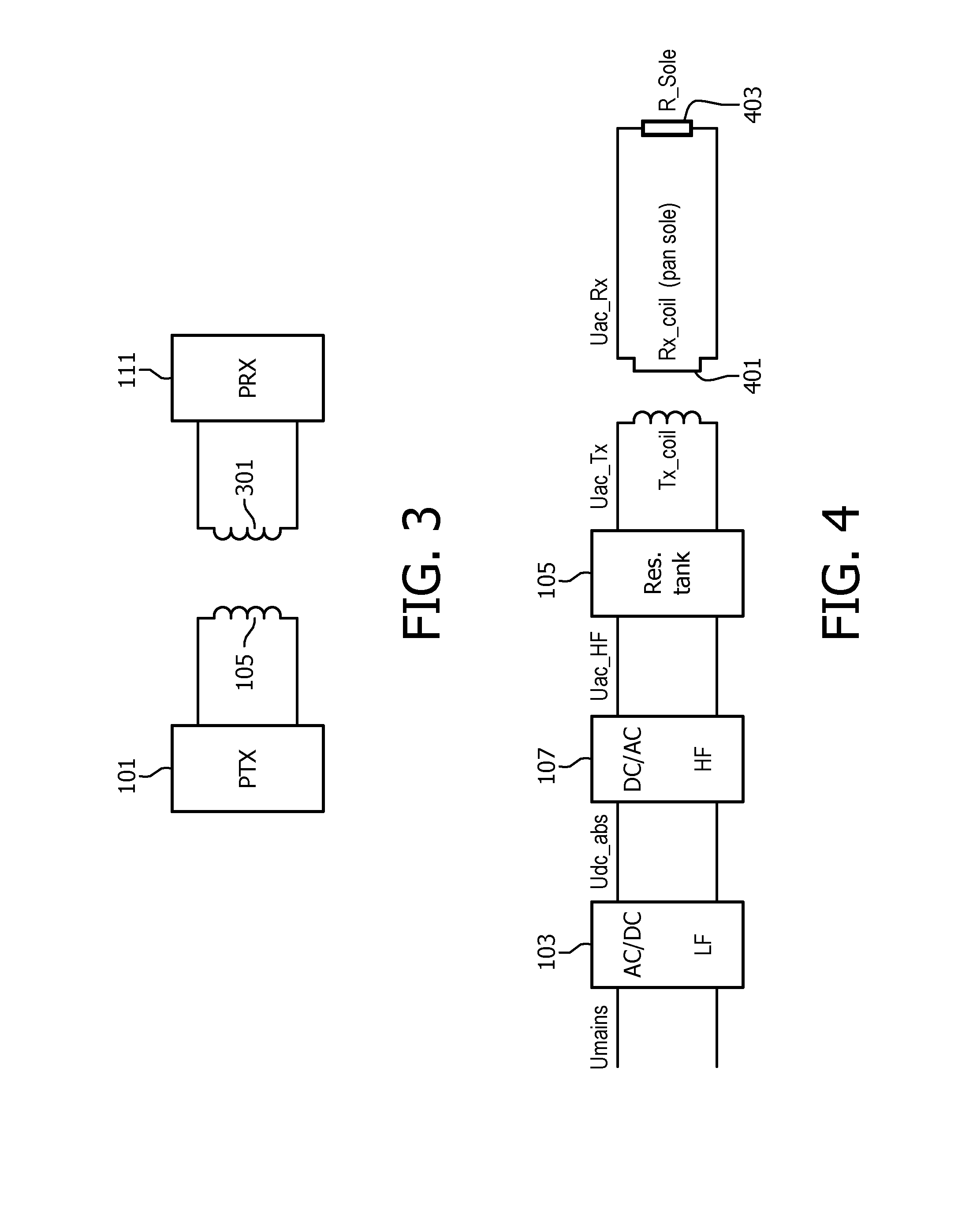
Examples
Embodiment Construction
[0119]The following description focuses on embodiments of the invention applicable to a kitchen application, and in particular to a mixed cooking and preparation zone kitchen environment using wireless power transfer. However, it will be appreciated that the invention is not limited to this application but may be applied to many other applications and wireless power transfer systems.
[0120]FIG. 3 illustrates an example of a power transfer system in accordance with some embodiments of the invention. The power transfer system comprises a power transmitter 101 which includes (or is coupled to) a transmitter coil / inductor 105. The system further comprises a power receiver 111 which includes (or is coupled to) a receiver coil / inductor 101. The receiver coil / inductor may in some embodiments be a conductive element such as specifically a heating element, i.e. it may be anything in which an electrical signal is induced when exposed to a varying magnetic field.
[0121]The system provides a wire...
PUM
 Login to View More
 Abstract
Description
Claims
Application Information
 Login to View More