Multiple bi-specific binding domain constructs with different epitope binding to treat cancer
Inactive Publication Date: 2019-08-01
FRED HUTCHINSON CANCER RES CENT
View PDF0 Cites 4 Cited by
Summary
Abstract
Description
Claims
Application Information
AI Technical Summary
This helps you quickly interpret patents by identifying the three key elements:
Problems solved by technology
Method used
Benefits of technology
Benefits of technology
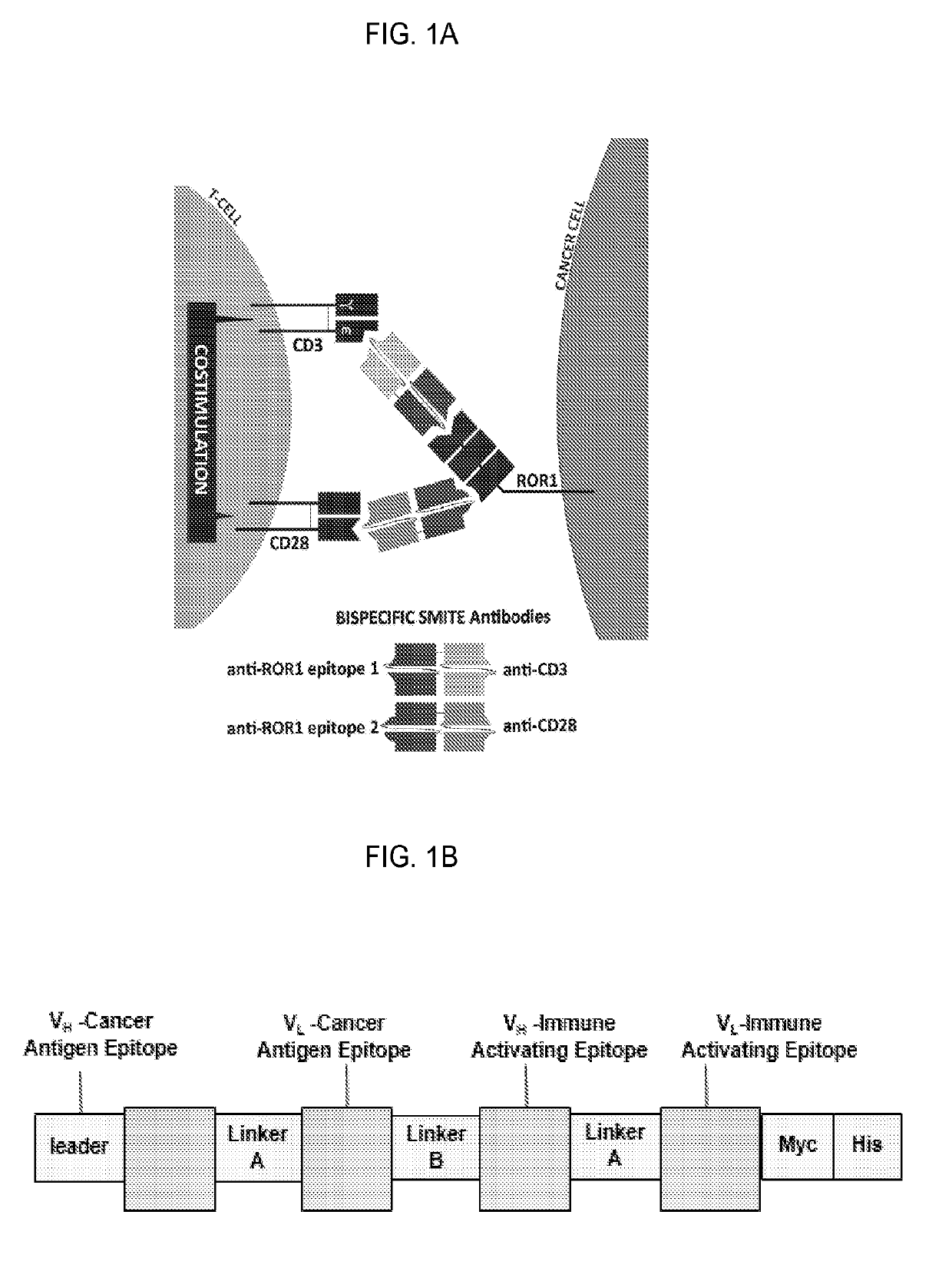
The present patent provides groups of bi-specific binding domain constructs (BS-BDCs) that can target cancer cells and immune cells simultaneously. These BS-BDCs recognize different cancer antigen epitopes and immune cell activating epitopes, which reduces competition for binding and steric hindrance. The BS-BDCs induce T-cell activation only in the presence of cancer cells, providing a versatile platform that can be utilized to target a large variety of cancers without the need for personalized genetic therapies. The therapy also activates T cells specifically at the site of a cancer, avoiding adverse treatment effects like cytokine storms. Overall, this therapy offers improved efficacy and safety compared to current cancer treatments.
Problems solved by technology
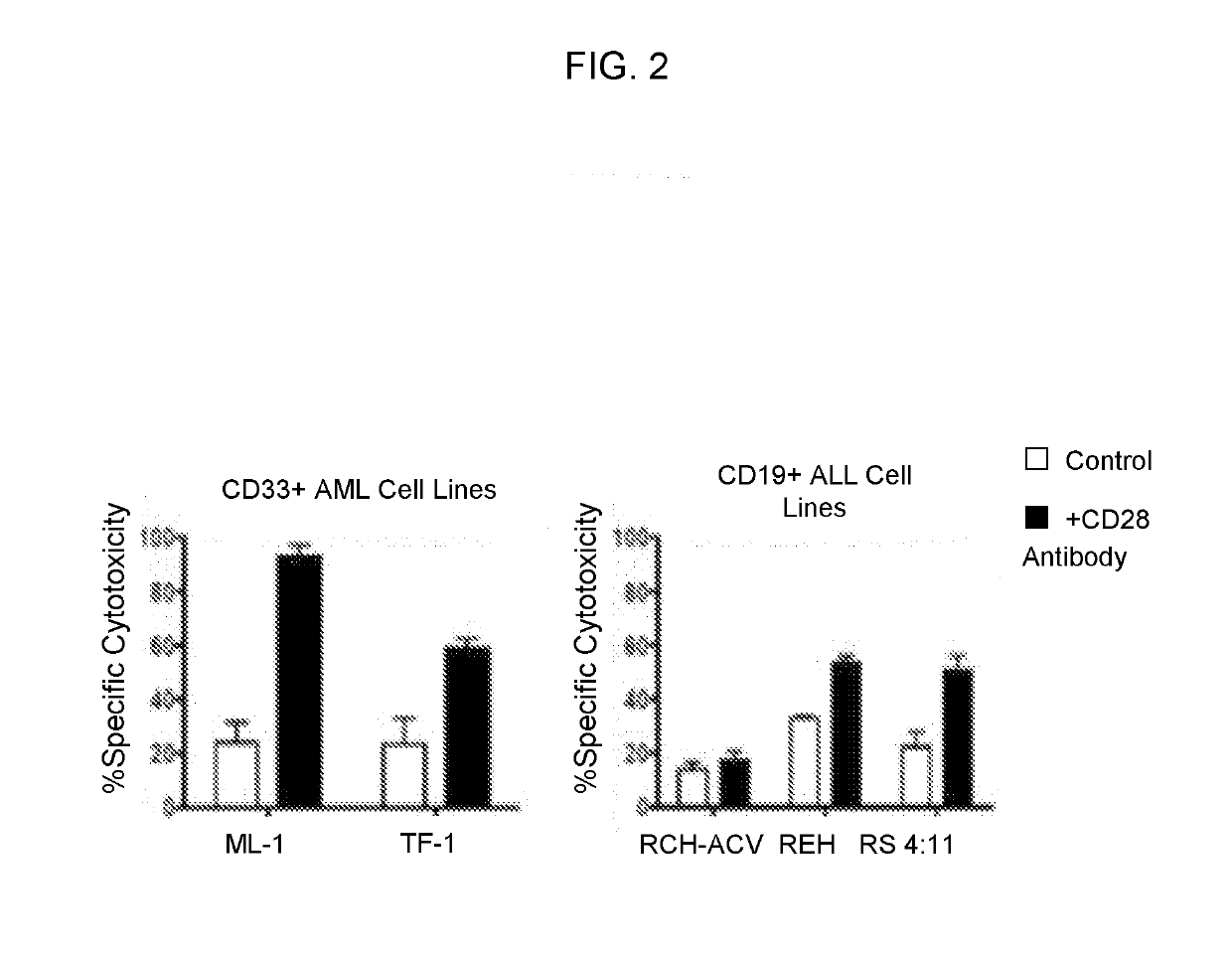
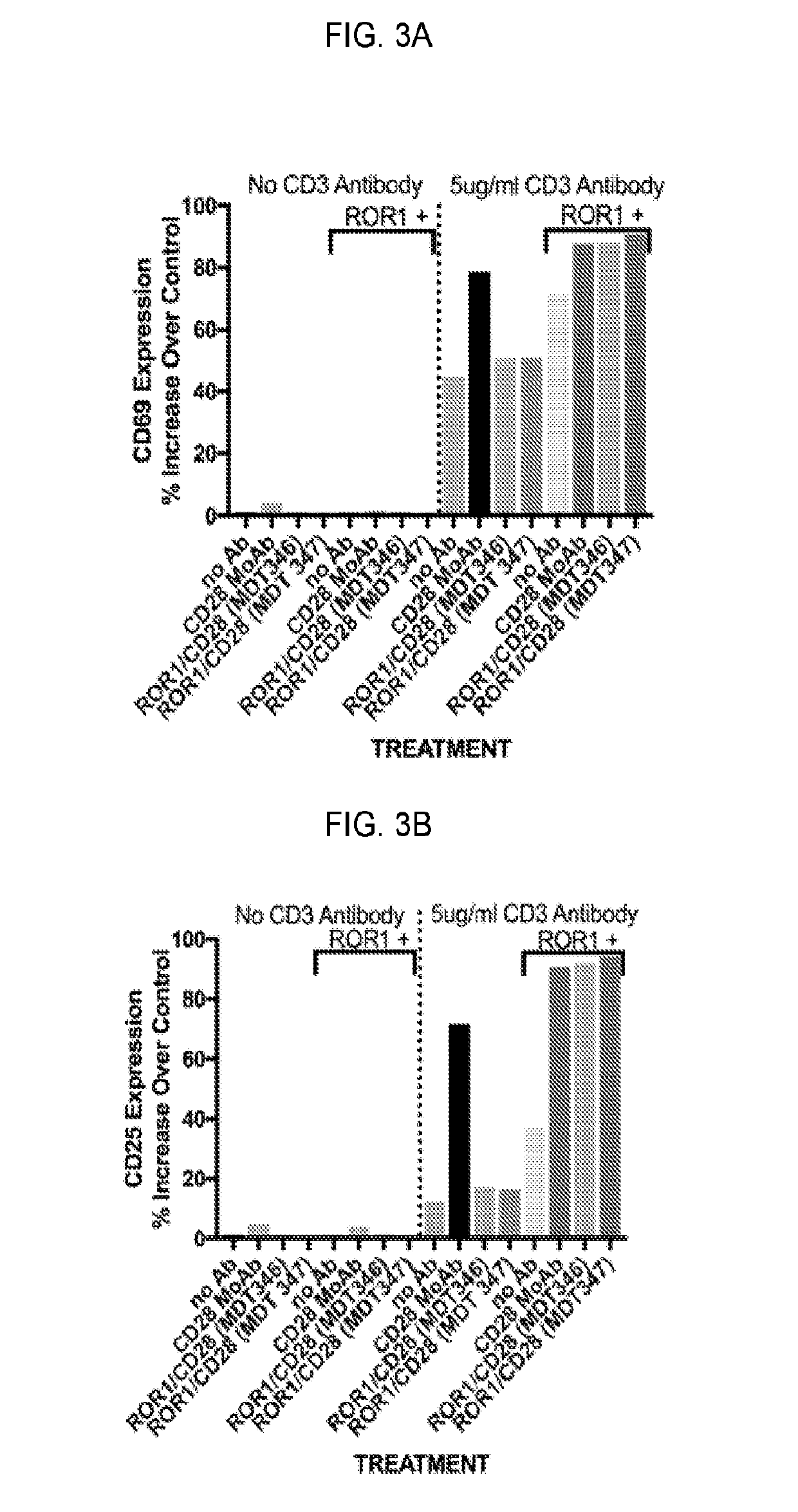
Moreover, use of the described groups of BS-BDC unexpectedly overcame cancer cell resistance to single bispecific T-cell engaging antibody constructs.
Method used
the structure of the environmentally friendly knitted fabric provided by the present invention; figure 2 Flow chart of the yarn wrapping machine for environmentally friendly knitted fabrics and storage devices; image 3 Is the parameter map of the yarn covering machine
View more
Image
Smart Image Click on the blue labels to locate them in the text.
Viewing Examples
Smart Image
Click on the blue label to locate the original text in one second.
Reading with bidirectional positioning of images and text.
Smart Image
Examples
Experimental program
Comparison scheme
Effect test
embodiment 1
2. A group of embodiment 1 wherein the different cancer antigen epitopes are non-overlapping and / or non-repetitive.
3. A group of embodiments 1 or 2 wherein all of the different targeted cancer antigen epitopes are on the same cancer antigen.
embodiment 3
4. A group of embodiment 3 wherein the same cancer antigen is BCMA, CAIX, CD19, CD20, CD22, CD33, CD133, ERBB2, folate receptor, HER2, Lewis Y, L1-CAM, mesothelin, MUC-CD, PSCA, PSMA, ROR1, SV40 T, WT-1, PD-L1, or CD123.
5. A group of embodiment 3 wherein the same cancer antigen is ROR1 and the different and non-overlapping epitopes are targeted by ROR1-A and ROR1-B or are targeted by ROR1-a and ROR1-B.
6. A group of embodiments 1 or 2 wherein the BS-BDC group additionally targets different cancer antigen epitopes on different cancer antigens.
7. A group of embodiment 6 wherein the different cancer antigen epitopes are on:[0208](i) ROR1 and CD33;[0209](ii) CD33 and PD-L1;[0210](iii) CD19 and PD-L1;[0211](iv) CD123 and CD33;[0212](v) two or more of CD19, CD20, CD22, ROR1, CD33, CD123, and WT-1;[0213](vi) two or more of PSMA, WT1, PSCA, and SV40 T;[0214](vii) two or more of HER2, ERBB2, and ROR1;[0215](viii) two or more of L1-CAM, MUC-CD, folate receptor, Lewis Y, ROR1, mesothelin, and W...
embodiment 32
34. A group of embodiment 32 wherein the same immune cell activator is CD3 and the different epitopes are on different invariant proteins including the T cell CD3 dimer.
35. A group of embodiment 31 or 32 wherein the different immune cell activating epitopes are on: CD3 and CD28; CD3 and CD8; or CD8 and CD28.
36. A group of embodiment 31 or 32 wherein the different immune cell activating epitopes are on CD3, CD8, and CD28.
37. A group of embodiment 31 or 32 wherein the different immune cell activating epitopes are on CD3, CD28, and CD137.
38. A group of embodiment 31 or 32 wherein the different immune cell activating epitopes are on (i) CD3, (ii) CD3, and (iii) CD28.
39. A group of embodiment 31 or 32 wherein the different immune cell activating epitopes are on (i) CD28, (ii) CD28, and (iii) CD3.
40. A group of any of embodiments 1-39 wherein the different immune cell activating epitopes are on one or more of CD2, CD3, CD7, CD27, CD28, CD30, CD40, CD83, CD137, OX40, LFA-1, LIGHT, NKG2C, a...
the structure of the environmentally friendly knitted fabric provided by the present invention; figure 2 Flow chart of the yarn wrapping machine for environmentally friendly knitted fabrics and storage devices; image 3 Is the parameter map of the yarn covering machine
CROSS-REFERENCE TO RELATED APPLICATIONS[0001]This application claims priority to 62 / 362,397 filed on Jul. 14, 2016 and 62 / 480,230 filed on Mar. 31, 2017, each of which are incorporated herein by reference in their entirety as if fully set forth herein.FIELD OF THE DISCLOSURE[0002]The present disclosure provides multiple bi-specific binding domain constructs (BS-BDC) to treat cancer. Each BS-BDC within a group targets a cancer antigen epitope and an immune cell activating epitope that is different from the cancer antigen epitope and immune cell activating epitope targeted by another BS-BDC within the group. The different cancer antigen epitopes can be on the same cancer antigen.REFERENCE TO SEQUENCE LISTING[0003]A computer readable text file, entitled “DN20Z1101.txt (Sequence Listing.txt)” created on or about Jul. 14, 2017, with a file size of 238 KB, contains the sequence listing for this application and is hereby incorporated by reference in its entirety.BACKGROUND OF THE DISCLOSUR...
Claims
the structure of the environmentally friendly knitted fabric provided by the present invention; figure 2 Flow chart of the yarn wrapping machine for environmentally friendly knitted fabrics and storage devices; image 3 Is the parameter map of the yarn covering machine
Login to View More
Application Information
Patent Timeline
Application Date:The date an application was filed.
Publication Date:The date a patent or application was officially published.
First Publication Date:The earliest publication date of a patent with the same application number.
Issue Date:Publication date of the patent grant document.
PCT Entry Date:The Entry date of PCT National Phase.
Estimated Expiry Date:The statutory expiry date of a patent right according to the Patent Law, and it is the longest term of protection that the patent right can achieve without the termination of the patent right due to other reasons(Term extension factor has been taken into account ).
Invalid Date:Actual expiry date is based on effective date or publication date of legal transaction data of invalid patent.



 Login to View More