
Aptazyme-embedded guide rnas for use with crispr-cas9 in genome editing and transcriptional activation
a technology of genome editing and transcriptional activation, applied in the direction of dna/rna fragmentation, hydrolase, biochemistry apparatus and processes, etc., can solve the problems of limited control over genome editing, poor temporal control, manipulation at the transcriptional level, etc., to improve the specificity, reduce the likelihood of editing, and enhance the ability to serve
- Summary
- Abstract
- Description
- Claims
- Application Information
AI Technical Summary
Benefits of technology
Problems solved by technology
Method used
Image

Examples
example 1
Blocking Guide RNA Activity
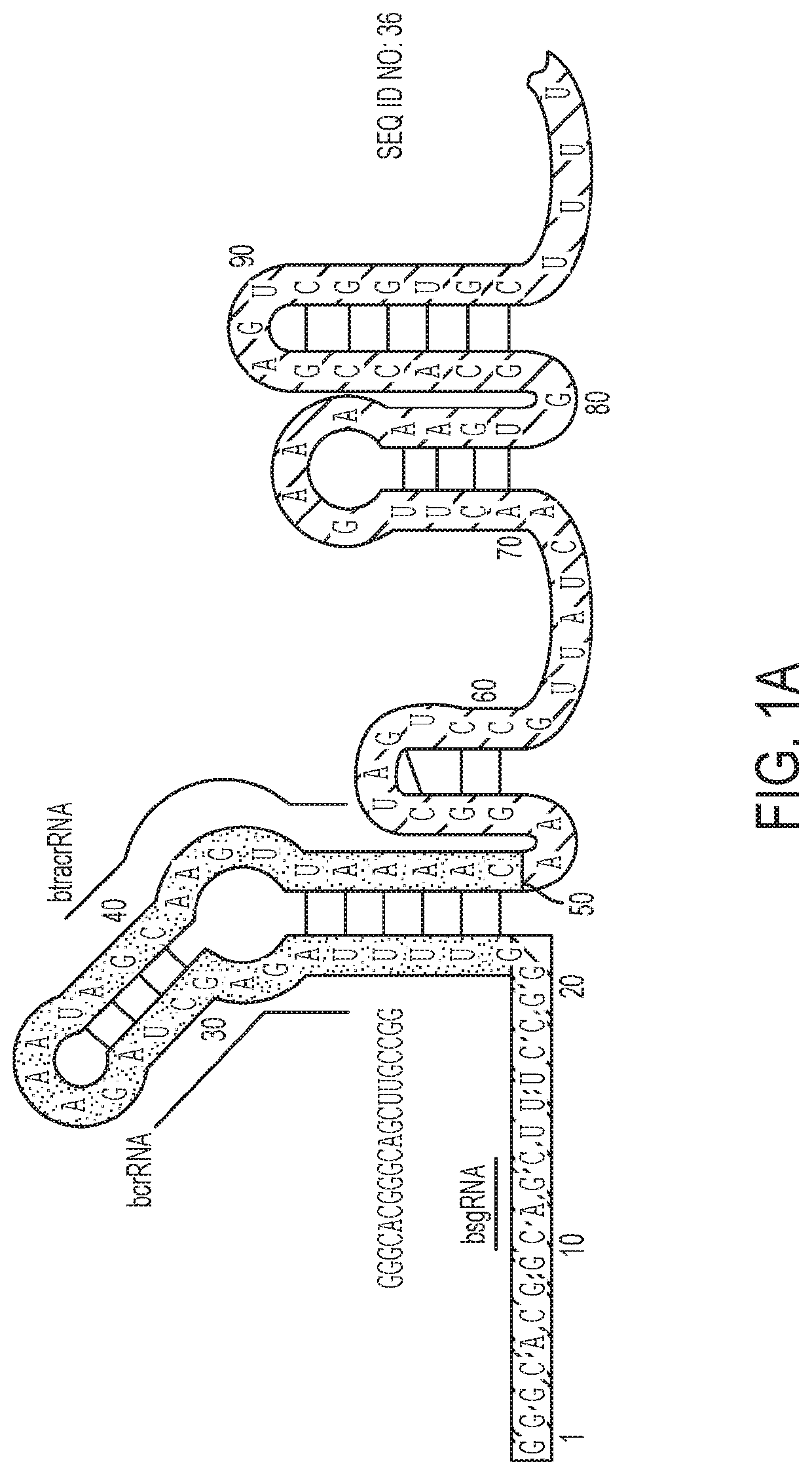
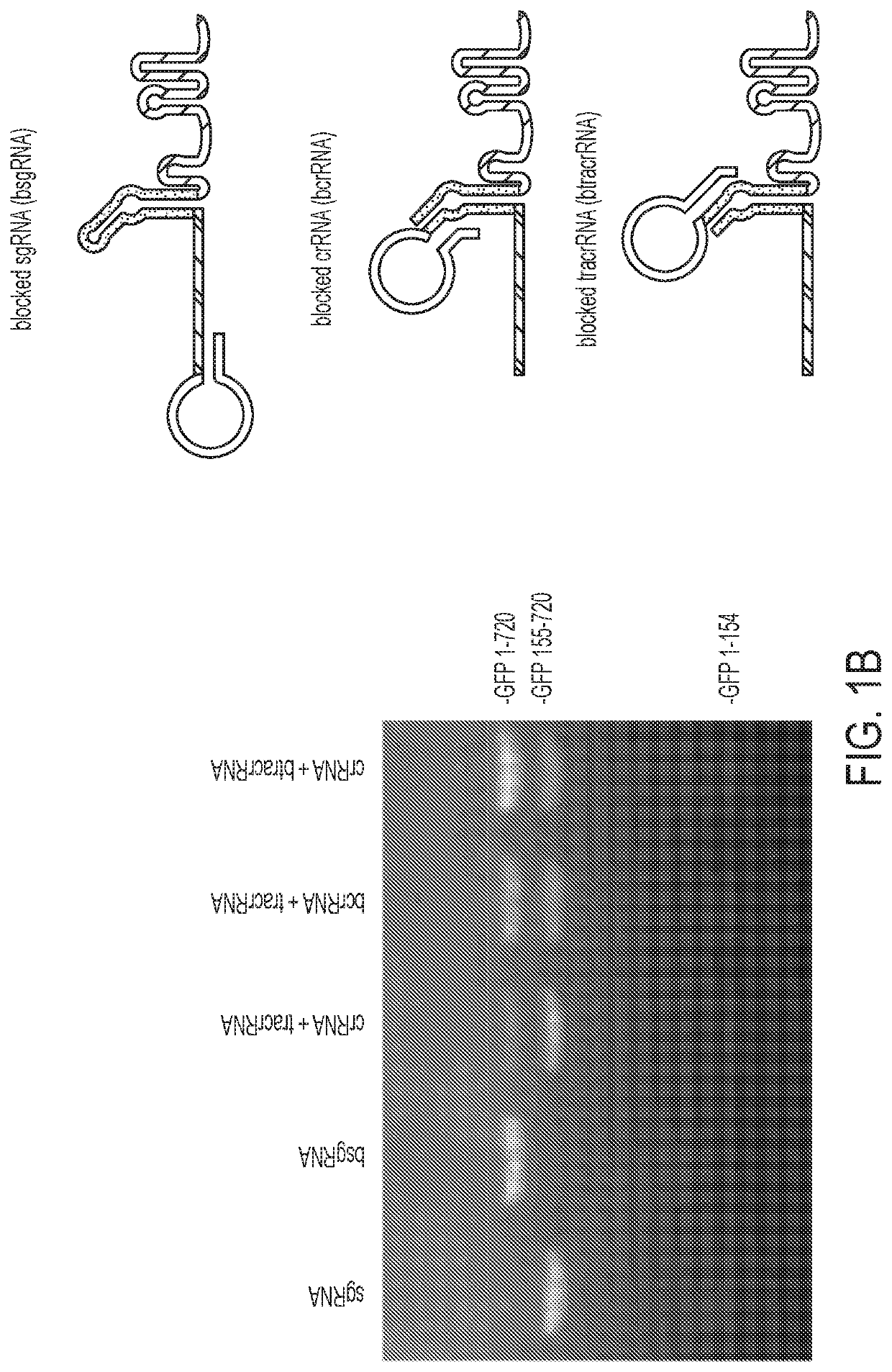
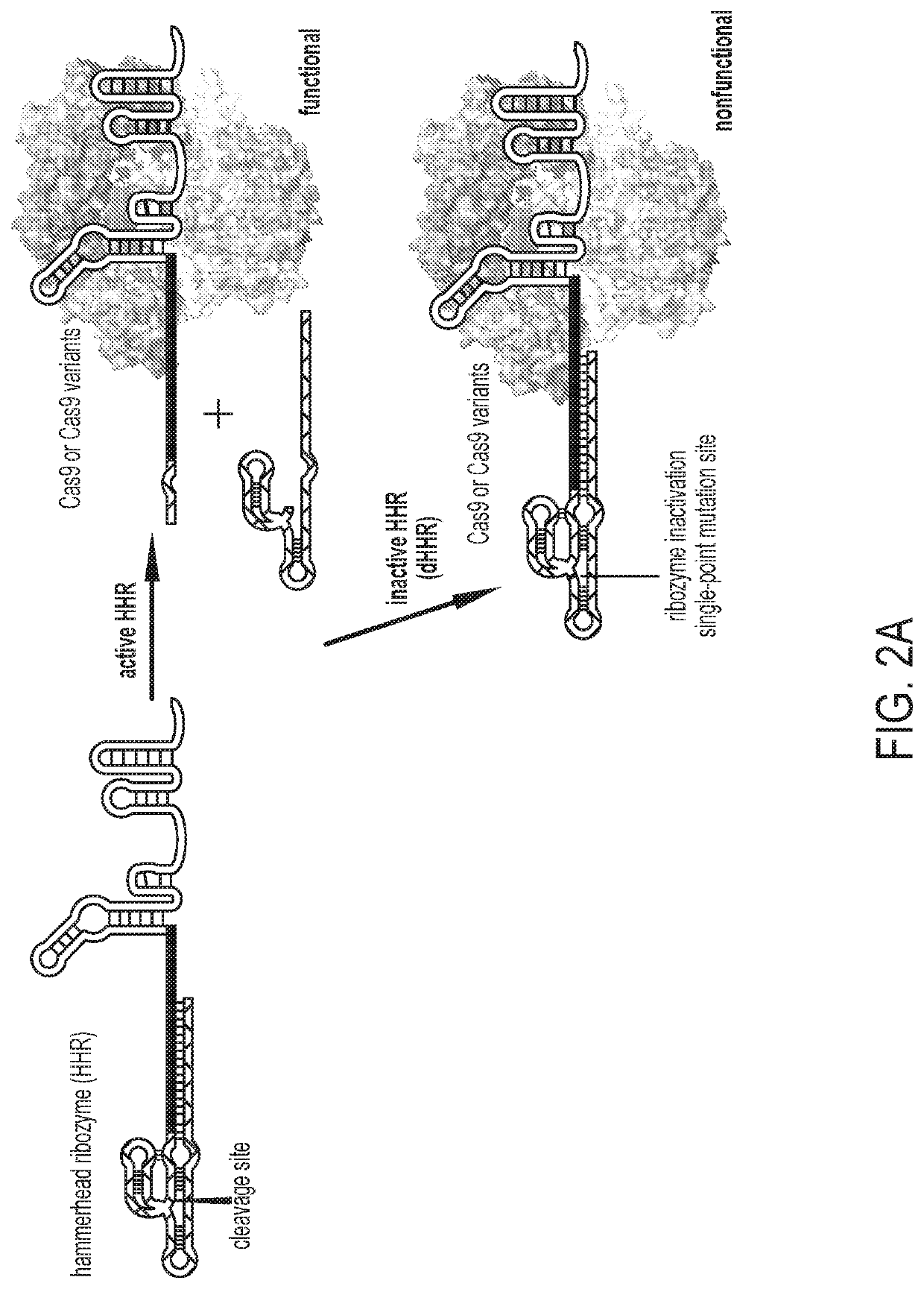
[0118]To inactivate a guide RNA in the absence of ligand, the length of the guide RNA was extended to install a “blocking sequence” complementary to a region of the guide RNA. Two key regions of the Streptococcus pyogenes single guide RNA (sgRNA) were tested as the targets of the blocking sequences: (1) the spacer and (2) the annealing region between the crRNA and tracrRNA (FIG. 1a)1. The crystal structure of the guide RNA bound to Cas9 suggests that an elongated 5′ end and insertions in the tetraloop should not significantly interfere with guide RNA function19,20. Therefore, a 42-nucleotide linker followed by a 6-nucleotide blocking sequence that complements nucleotides 1-6 in the spacer was appended to the 5′ end of the sgRNA (FIG. 1a). Eventually replacing the linker with a ligand-responsive RNA was envisioned and an elongated linker was chosen to test if the size and flexibility of the RNA would disturb intramolecular hybridization of the blocking sequ...
PUM
| Property | Measurement | Unit |
|---|---|---|
| Fraction | aaaaa | aaaaa |
| Fraction | aaaaa | aaaaa |
| Fraction | aaaaa | aaaaa |
Abstract
Description
Claims
Application Information
 Login to View More