
Fuel cell battery with afterburning at the periphery of a cell stack
a technology of fuel cell batteries and periphery, which is applied in the direction of cell components, cell component details, electrochemical generators, etc., can solve the problems of high cos
- Summary
- Abstract
- Description
- Claims
- Application Information
AI Technical Summary
Benefits of technology
Problems solved by technology
Method used
Image

Examples
Embodiment Construction
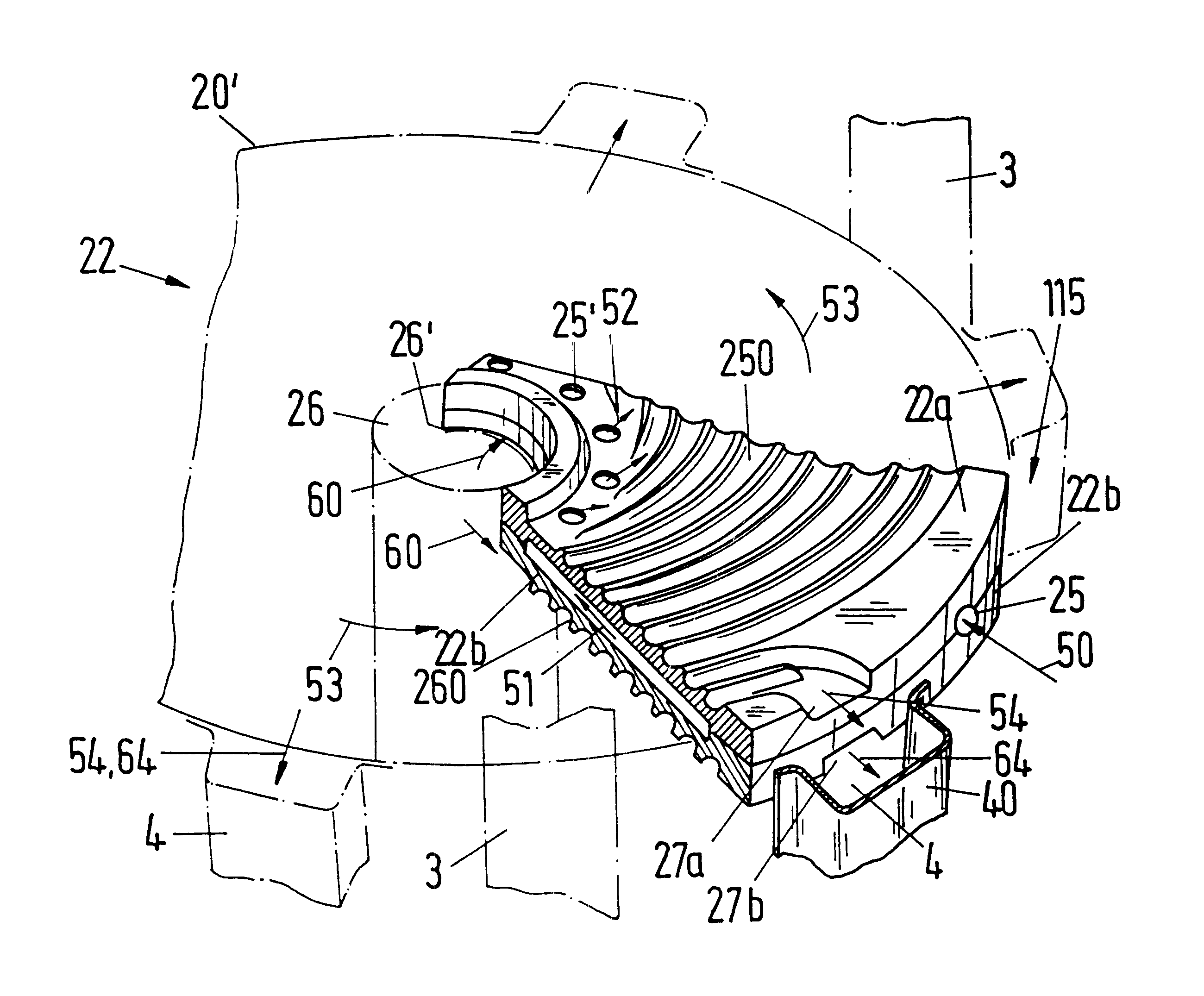
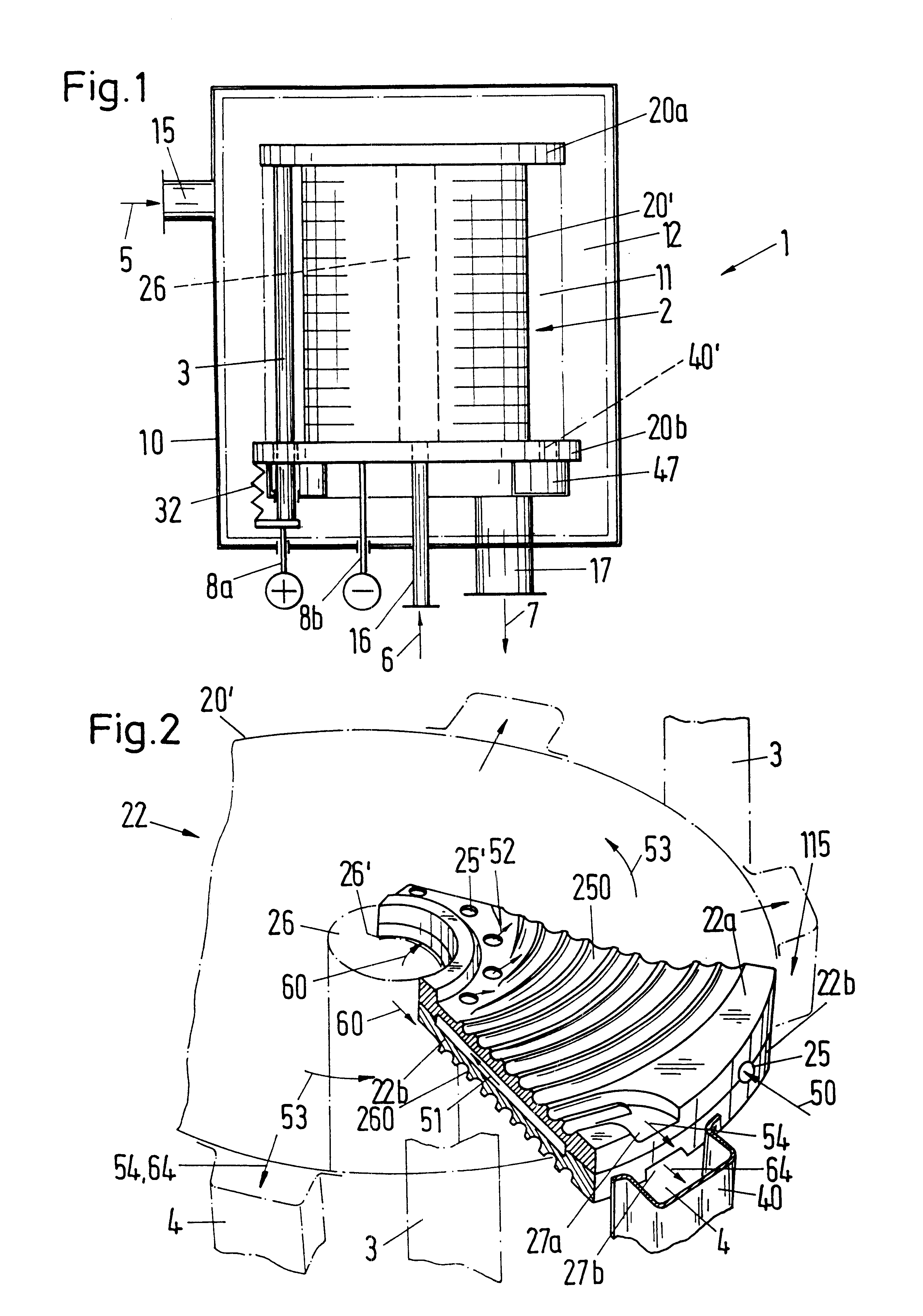
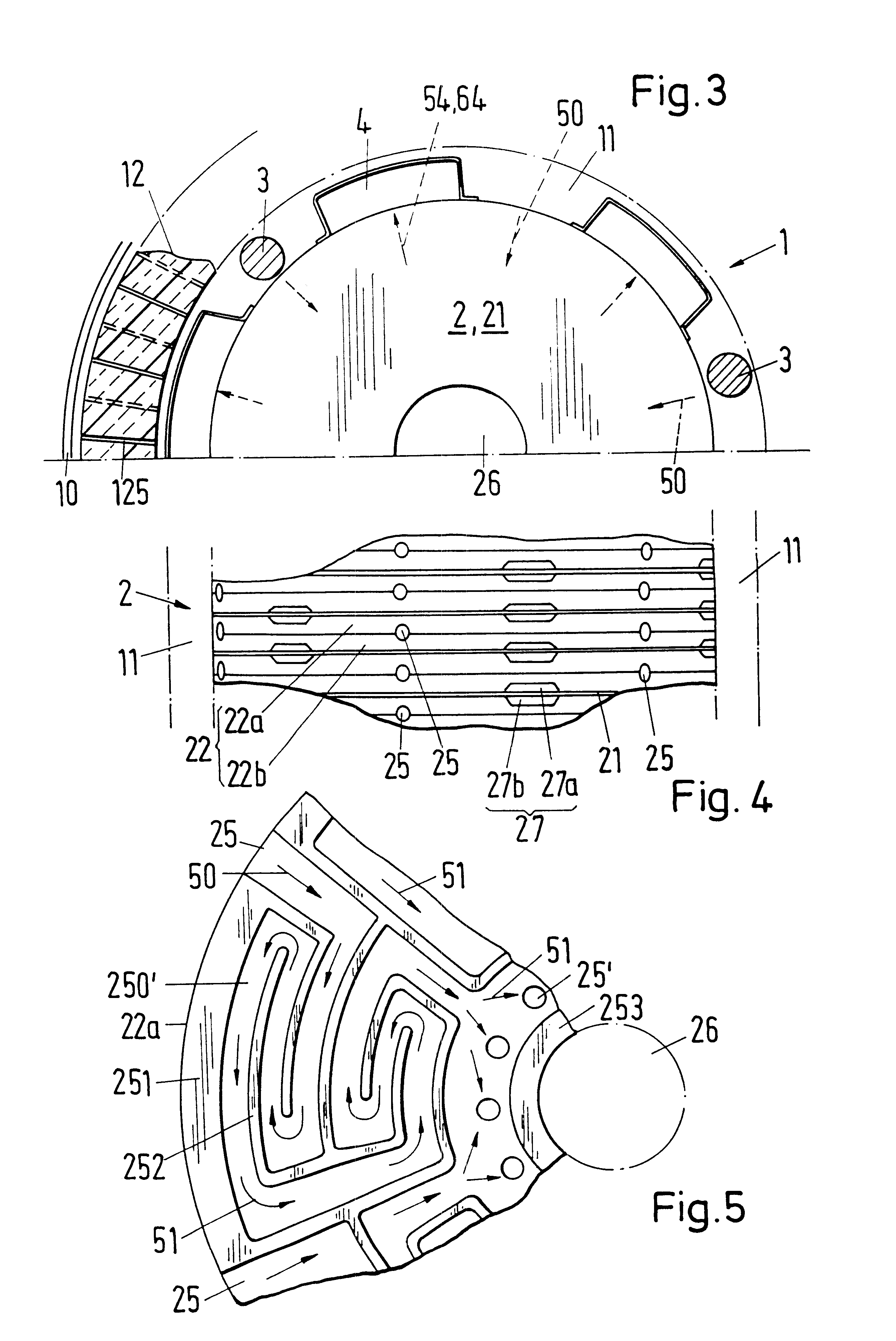
The fuel cell battery 1 illustrated in FIG. 1 comprises the following components: a cell stack 2 between a cover plate 20a and a base plate 20b which are designed as electrical poles of the battery 1; a ring-shaped space 11 at the periphery 20' of the cell stack 2, within which an afterburning is provided; a heat insulating envelope 12, of which only the outlines are drawn in chain-dotted lines; an outer wall 10 of the battery 1 with a connector stub 15 for the infeed of air 5 or of a gas containing oxygen 5; an infeed line 16 for a fluid fuel 6, which is gaseously distributed onto the individual cells along a central passage 26--where appropriate after a vaporization and / or reforming; a ring-shaped common passage 47 for an exhaust gas 7 which can be drawn off via a connector stub 17 out of the battery 1; furthermore, bars 3 (only one visible here) and draw springs 32, by means of which the two plates 20a and 20b can be drawn towards one another. Chambers 4 (see FIGS. 2 and 4) for t...
PUM
| Property | Measurement | Unit |
|---|---|---|
| temperature expansion behavior | aaaaa | aaaaa |
| electrical energy | aaaaa | aaaaa |
| temperature | aaaaa | aaaaa |
Abstract
Description
Claims
Application Information
 Login to View More