Method and mechanism for speculatively executing threads of instructions

a technology of instruction threads and instructions, applied in the field of microprocessors, can solve the problems of inability to efficiently take advantage of parallel multithreading, limited parallelism type, and inability to achieve potential performance gains from parallel multithreading

US6574725B1Inactive Publication Date: 2003-06-03GLOBALFOUNDRIES INC
15 Cites 149 Cited by

Patent Information

Authority / Receiving Office
US · United States
Current Assignee / Owner
Publication Date
2003-06-03
Estimated Expiration
Not applicable · inactive patent

Smart Images

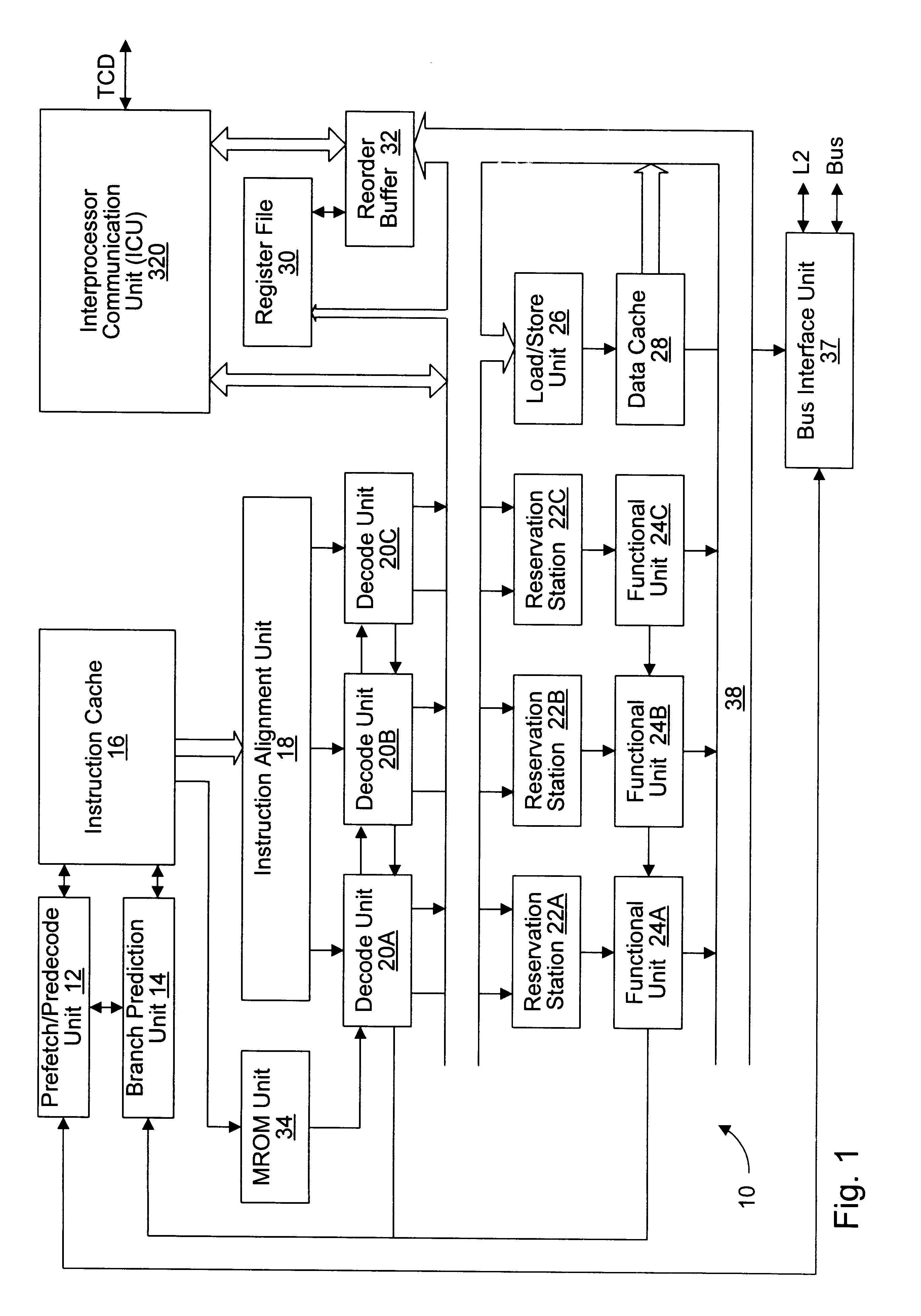
  • Figure 1
    Figure 1
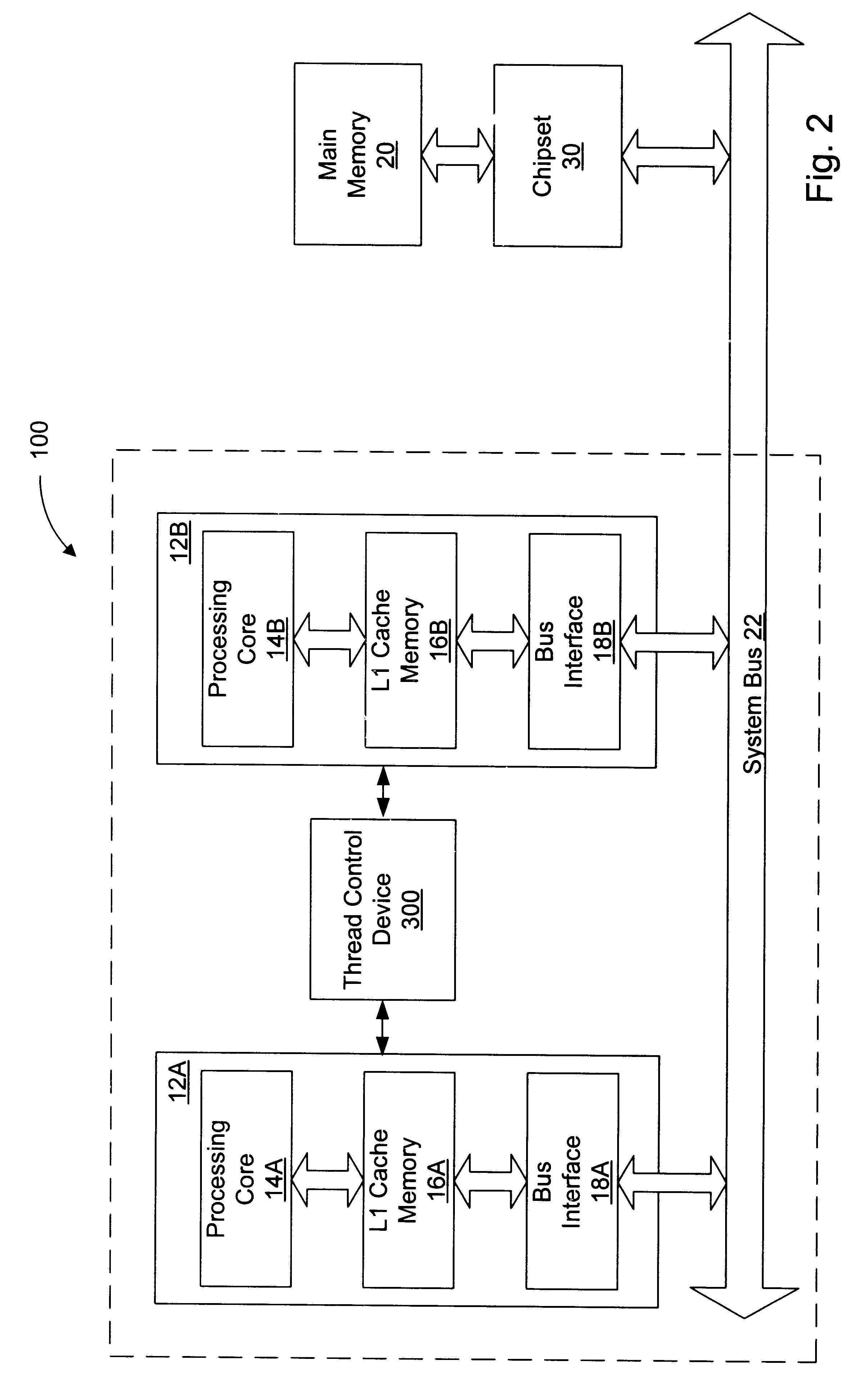
  • Figure 2
    Figure 2
  • Figure 3
    Figure 3
Patent Text Reader

Abstract

A processor architecture containing multiple closely coupled processors in a form of symmetric multiprocessing system is provided. The special coupling mechanism allows it to speculatively execute multiple threads in parallel very efficiently. Generally, the operating system is responsible for scheduling various threads of execution among the available processors in a multiprocessor system. One problem with parallel multithreading is that the overhead involved in scheduling the threads for execution by the operating system is such that shorter segments of code cannot efficiently take advantage of parallel multithreading. Consequently, potential performance gains from parallel multithreading are not attainable. Additional circuitry is included in a form of symmetrical multiprocessing system which enables the scheduling and speculative execution of multiple threads on multiple processors without the involvement and inherent overhead of the operating system. Advantageously, parallel multithreaded execution is more efficient and performance may be improved.
Need to check novelty before this filing date? Find Prior Art

Description

1. Field of the InventionThis invention is related to the field of microprocessors and, more particularly, to multithreading in multiprocessors.2. Description of the Related ArtComputer systems employing multiple processing units hold a promise of economically accommodating performance capabilities that surpass those of current single-processor based systems. Within a multiprocessing environment, rather than concentrating all the processing for an application in a single processor, tasks are divided into groups or "threads" that can be handled by separate processors. The overall processing load is thereby distributed among several processors, and the distributed tasks may be executed simultaneously in parallel. The operating system software divides various portions of the program code into the separately executable threads, and typically assigns a priority level to each thread.Superscalar microprocessors achieve high performance by executing multiple instructions per clock cycle and...

Examples

Embodiment Construction

of Operation

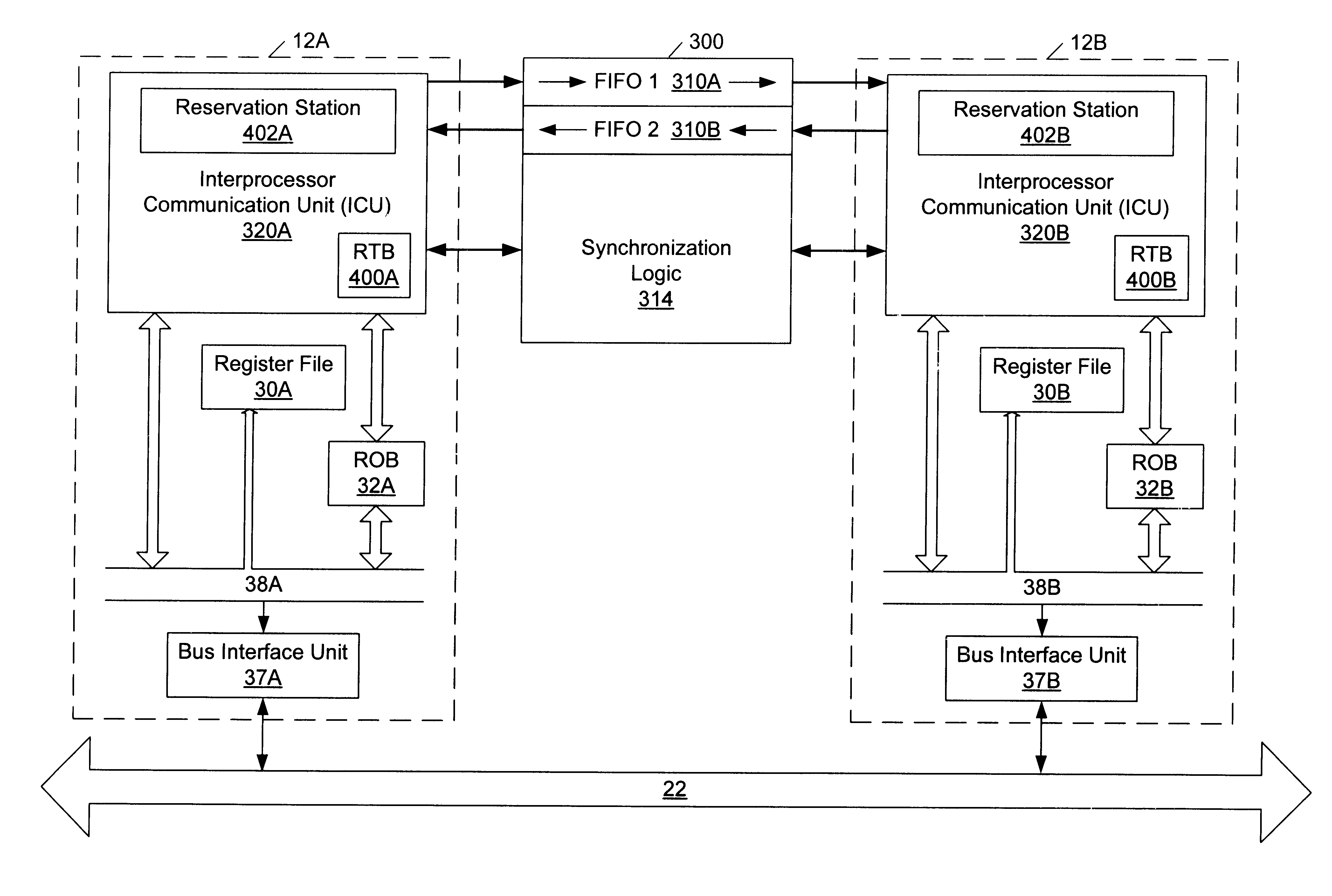
FIG. 4 shows one embodiment of a multithreaded multiprocessor. Included in FIG. 4 are portions of processors 12A and 12B, thread control device 300, and bus 22. Processors 12 include an ICU 320, register file 30, reorder buffer 32, system bus 38 and bus interface unit 37. In addition, ICU 320A includes a reservation station 402 and a reorder buffer tag translation buffer (hereinafter RTB) 400. Thread control device 300 includes two FIFOs 310 and synchronization logic 314. ICUs 320 are coupled to reorder buffer 32 and system bus 38. Register file 30 and bus interface unit 37 are coupled to bus 38. Bus interface unit 37 is also coupled to bus 22. Thread control device 300 is coupled to ICU 320.

In one embodiment of the multithreaded multiprocessor shown in FIG. 4, the five following instructions are used for the control of threads: Wr2Proc, RdFrProc, Fork, Join, Sync. Table 1 below gives a brief description of the purpose of each instruction.

Briefly, master processor 12A se...