
Compressor with unloader valve between economizer line and evaporator inlet
a compressor and unloader technology, which is applied in the direction of machines/engines, liquid fuel engines, lighting and heating apparatus, etc., can solve the problems of compressor damage, large refrigerant mass flow through the evaporator, etc., and achieve the effect of simplifying the compressor replacemen
- Summary
- Abstract
- Description
- Claims
- Application Information
AI Technical Summary
Benefits of technology
Problems solved by technology
Method used
Image

Examples
Embodiment Construction
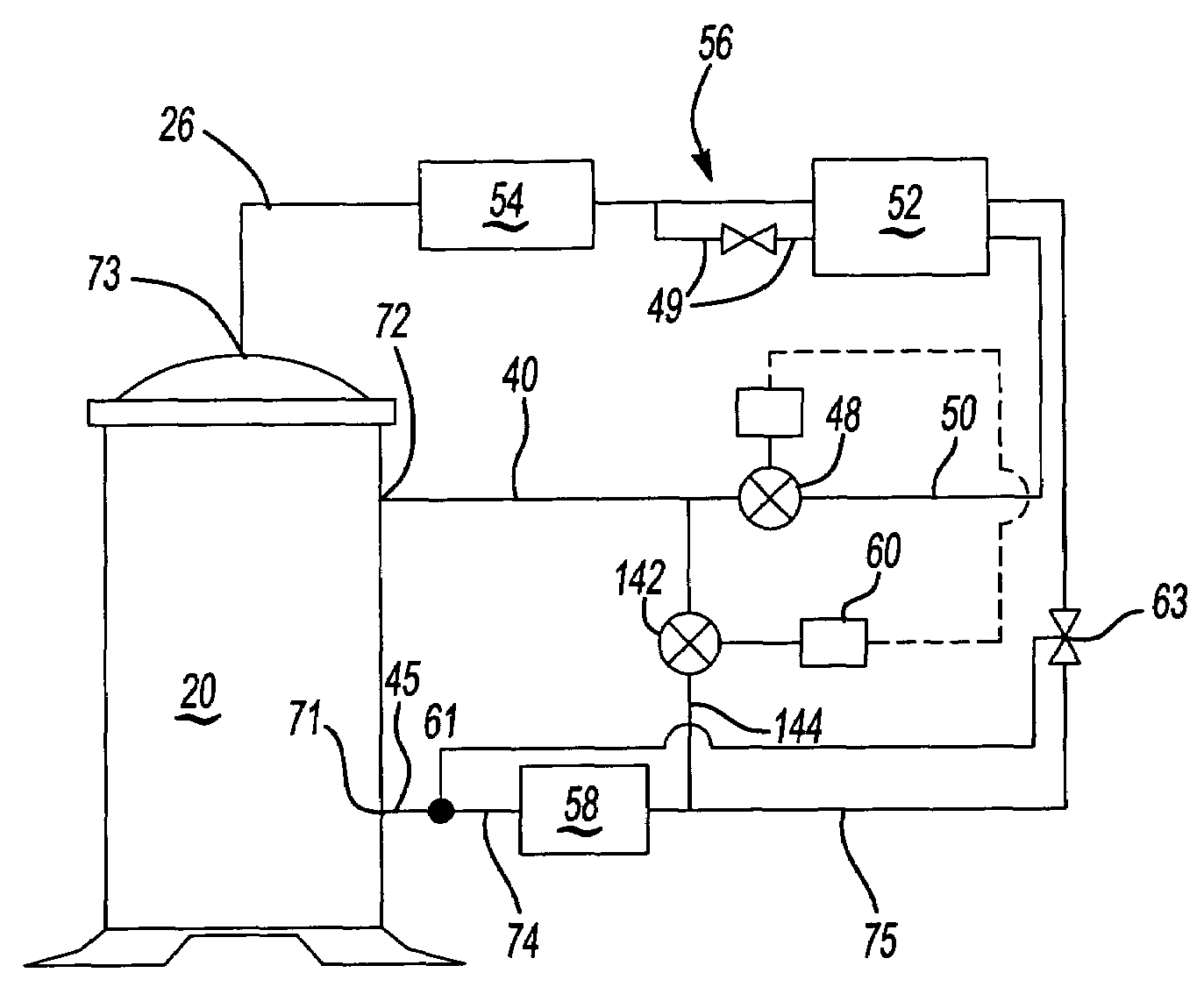
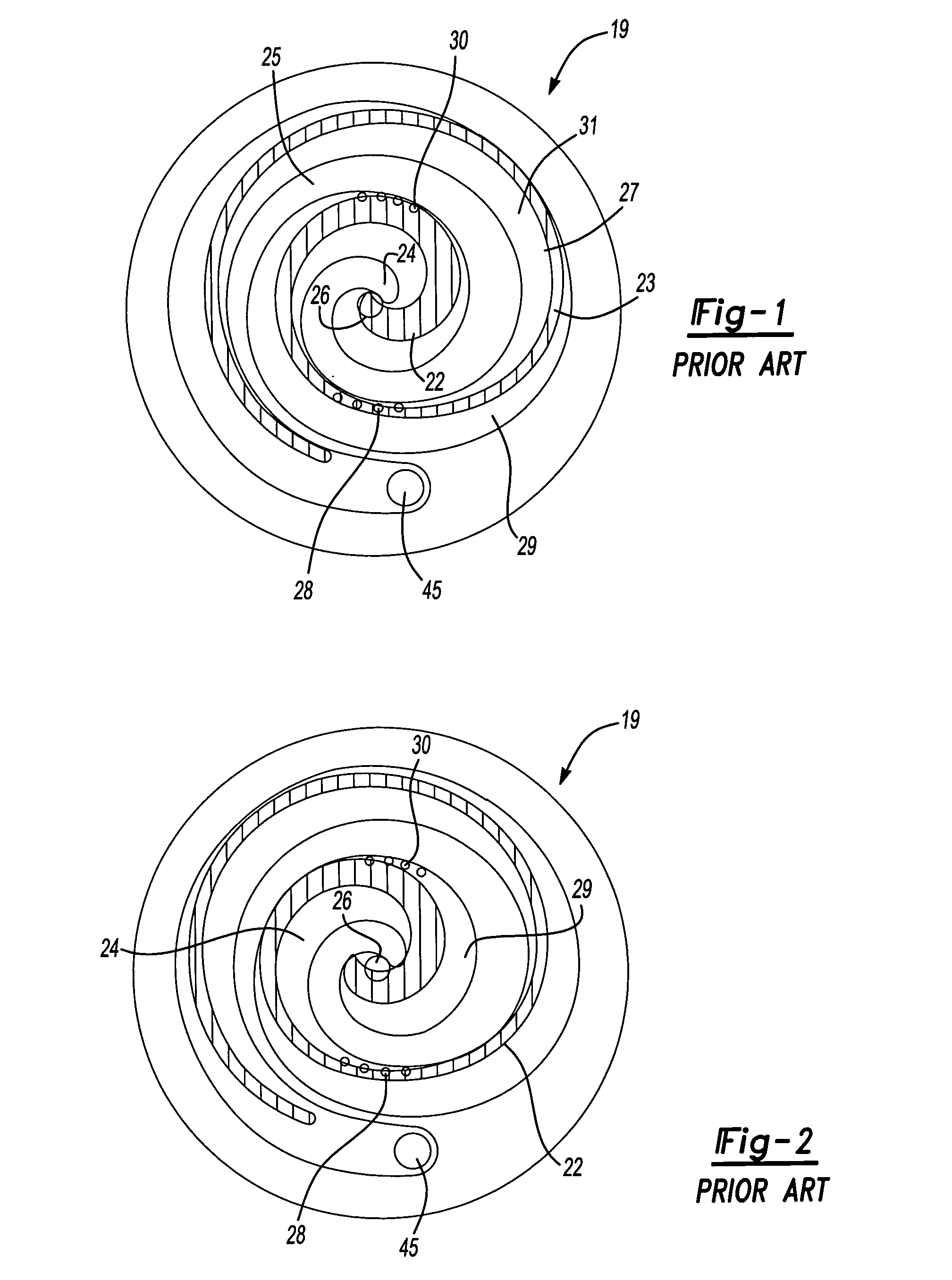
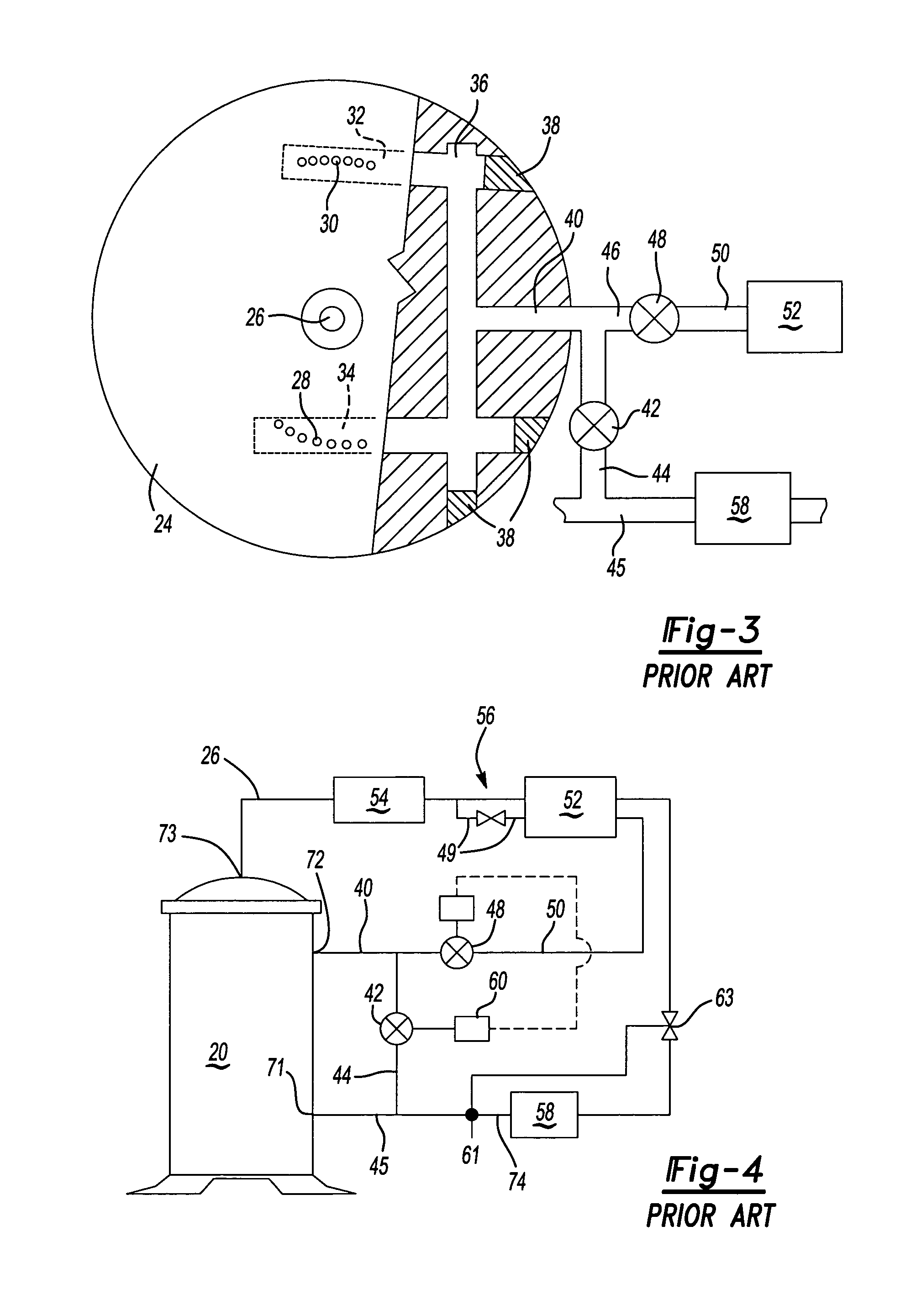
[0018]As an example of a compressor type suitable for this invention, a prior art scroll compressor pump set 19 is illustrated in FIG. 1 having an orbiting scroll element 22 which includes an orbiting scroll wrap 23 and a fixed, or non-orbiting, scroll element 24 which includes a non-orbiting scroll wrap 25. The scroll wraps interfit and surround discharge port 26. As known, the orbiting scroll element 22 orbits relative to the non-orbiting scroll element 24 and the scroll wraps 23 and 25 selectively trap pockets of refrigerant which are compressed towards discharge port 26. A plurality of ports 28 and 30 are formed in the base 31 of the non-orbiting scroll element 24. Alternately, ports 28 and 30 may consist of a pair of single, larger ports. The ports may also extend through the wraps 23, 25 or be in other locations. In the position shown in FIG. 1, ports 28 and 30 are just being uncovered by the orbiting scroll wrap 23 at about the same time as compression chambers 27 and 29 are ...
PUM
 Login to View More
 Abstract
Description
Claims
Application Information
 Login to View More