Check patentability & draft patents in minutes with Patsnap Eureka AI!

Encapsulation of nanotubes via self-assembled nanostructures

Active Publication Date: 2005-05-10
NORTHWESTERN UNIV
View PDF11 Cites 85 Cited by
  • Summary
  • Abstract
  • Description
  • Claims
  • Application Information

AI Technical Summary

Benefits of technology

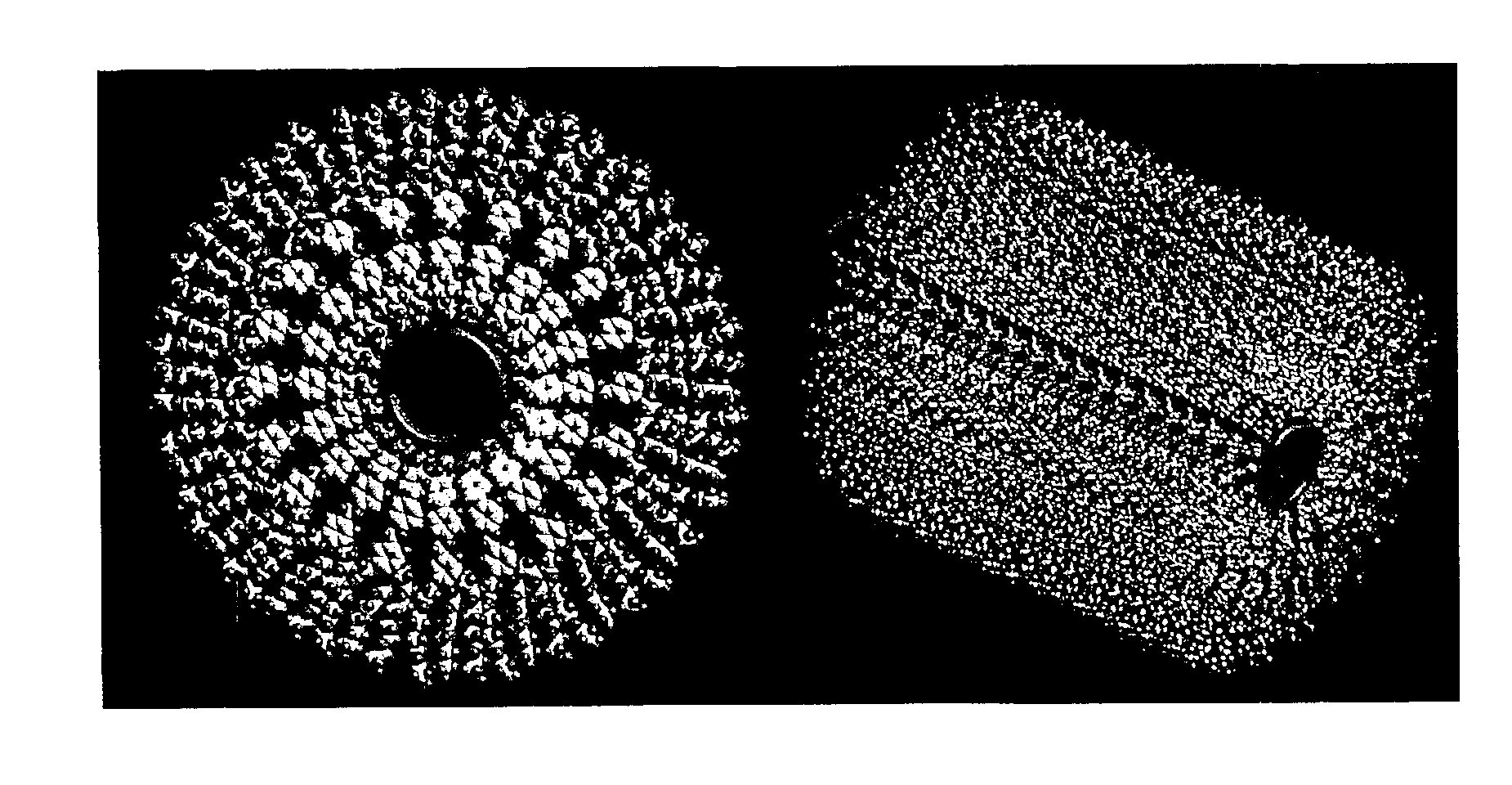
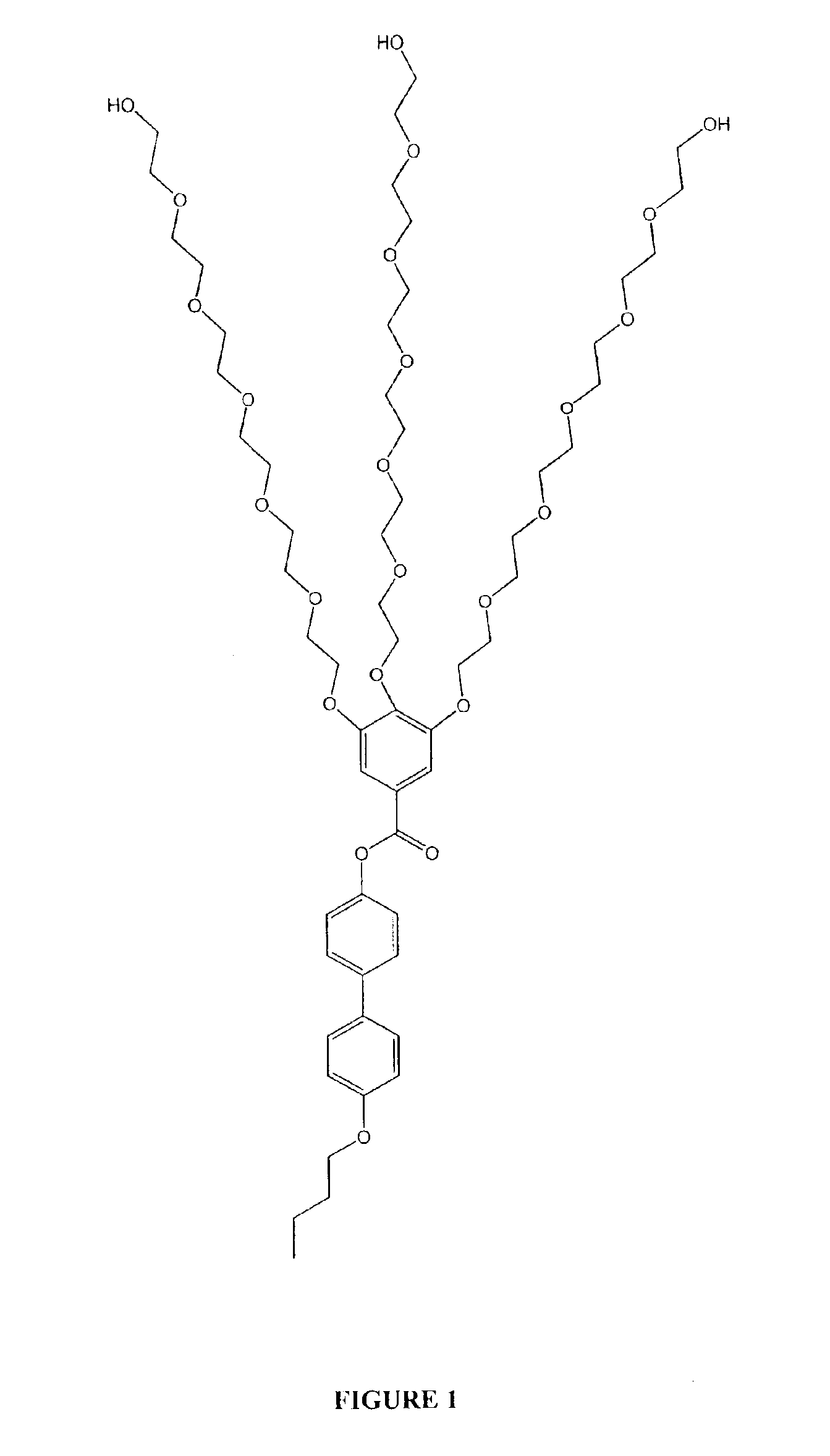
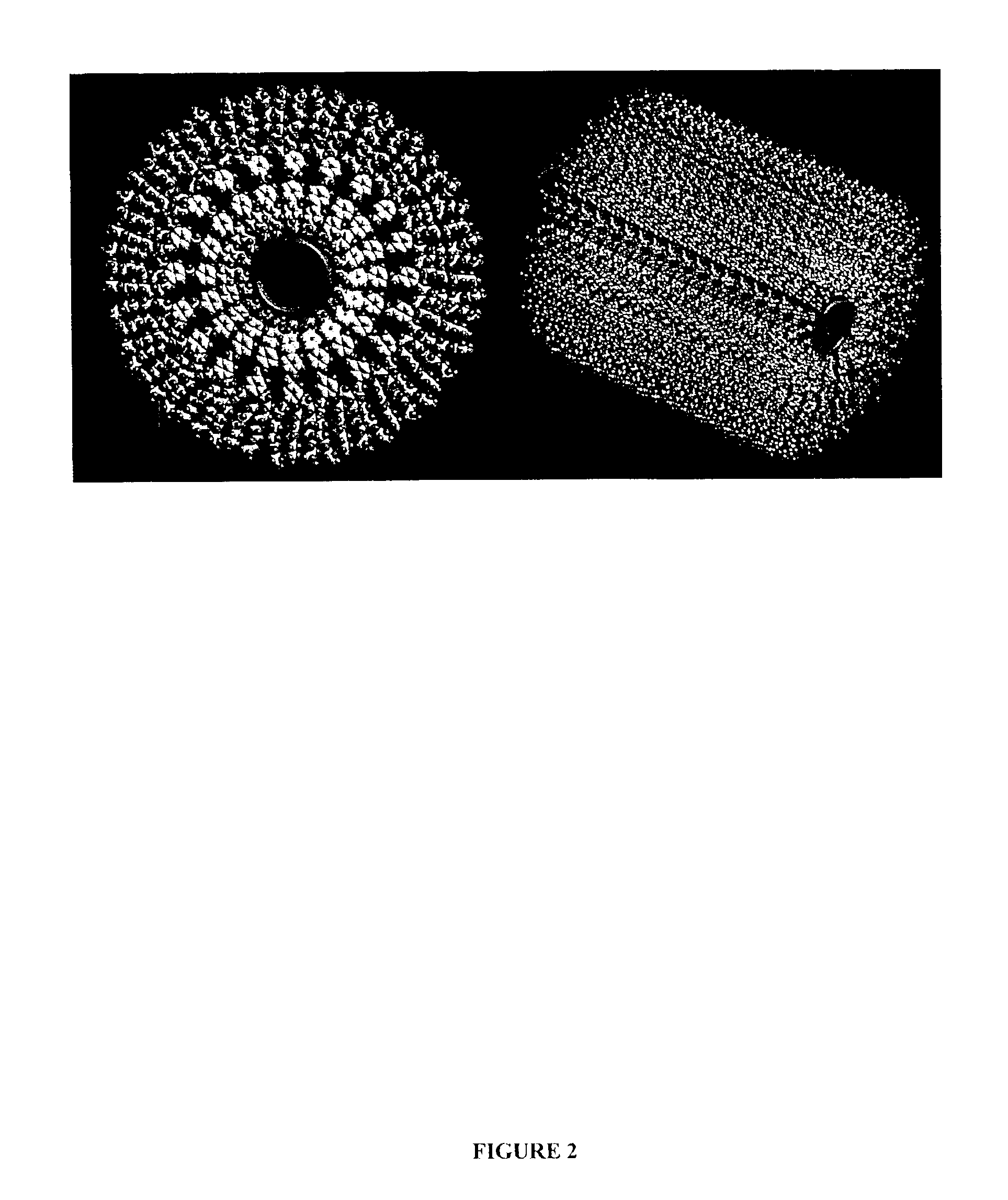
[0010]The present invention is directed to carbon nanotubes or rod-like structures encapsulated in self-assembled nanostructures. The present invention is more particularly directed to encapsulated carbon nanotubes, methods of encapsulating carbon nanotubes, methods of making encapsulated carbon nanotubes and for uses of the encapsulated carbon nanotubes. While not wishing to be bound by theory, the system proposed herein increases the solubility of nanotubes by reversibly and non-destructively encapsulating the nanotubes in an insulating layer of self-assembled amphiphiles.

Problems solved by technology

While not wishing to be bound by theory, the system proposed herein increases the solubility of nanotubes by reversibly and non-destructively encapsulating the nanotubes in an insulating layer of self-assembled amphiphiles.

Method used

the structure of the environmentally friendly knitted fabric provided by the present invention; figure 2 Flow chart of the yarn wrapping machine for environmentally friendly knitted fabrics and storage devices; image 3 Is the parameter map of the yarn covering machine
View more

Image

Smart Image Click on the blue labels to locate them in the text.
Viewing Examples
Smart Image
  • Encapsulation of nanotubes via self-assembled nanostructures
  • Encapsulation of nanotubes via self-assembled nanostructures
  • Encapsulation of nanotubes via self-assembled nanostructures

Examples

Experimental program
Comparison scheme
Effect test

Embodiment Construction

[0027]Before the present compositions and methods are described, it is to be understood that this invention is not limited to the particular molecules, compositions, methodologies or protocols described, as these may vary. It is also to be understood that the terminology used in the description is for the purpose of describing the particular versions or embodiments only, and is not intended to limit the scope of the present invention which will be limited only by the appended claims.

[0028]It must also be noted that as used herein and in the appended claims, the singular forms “a”, “an”, and “the” include plural reference unless the context clearly dictates otherwise. Thus, for example, reference to a “amphiphile” is a reference to one or more amphiphiles and equivalents thereof known to those skilled in the art, and so forth. Unless defined otherwise, all technical and scientific terms used herein have the same meanings as commonly understood by one of ordinary skill in the art. Alt...

the structure of the environmentally friendly knitted fabric provided by the present invention; figure 2 Flow chart of the yarn wrapping machine for environmentally friendly knitted fabrics and storage devices; image 3 Is the parameter map of the yarn covering machine
Login to View More

PUM

PropertyMeasurementUnit
Amphiphilicaaaaaaaaaa
Dispersion potentialaaaaaaaaaa
Molecular shapeaaaaaaaaaa
Login to View More

Abstract

This invention is directed to encapsulated nanotubes, methods of encapsulating carbon nanotubes, and uses for encapsulated nanotubes. Carbon nanotubes are encapsulated by self assembly of Uses of the present invention include making arrays as a basis for synthesis of carbon fibers.

Description

CROSS REFERENCES TO RELATED APPLICATIONS[0001]This application claims priority from U.S. Provisional Application Ser. No. 60 / 373,827 filed Apr. 18, 2002 the contents of which are incorporated herein by reference in their entirety.GOVERNMENT INTERESTS[0002]The United States Government may have certain rights to this invention pursuant to work funded thereby at Northwestern University under grants from the National Science Foundation Grant No. EEC-0118025 W Main N602.BACKGROUND OF THE INVENTION[0003]Fullerenes are closed-cage molecules composed entirely of sp2 hybridized carbons, arranged in hexagons and pentagons. Fullerenes (e.g. C60) were first identified as closed spheroidal cages produced by condensation from vaporized carbon.[0004]Fullerene tubes are produced in carbon deposits on the cathode in carbon arc methods of producing spheroidal fullerenes from vaporized carbon. Such tubes are referred to herein as carbon nanotubes. Many of the carbon nanotubes made by these processes a...

Claims

the structure of the environmentally friendly knitted fabric provided by the present invention; figure 2 Flow chart of the yarn wrapping machine for environmentally friendly knitted fabrics and storage devices; image 3 Is the parameter map of the yarn covering machine
Login to View More

Application Information

Patent Timeline
no application Login to View More
IPC IPC(8): C01B31/00C01B31/02
CPCB82Y30/00B82Y40/00C01B31/0253C01B2202/02Y10S977/742Y10T428/13Y10T428/25Y10T428/254Y10T428/2998Y10T428/30Y10T428/2991Y10S977/842C01B32/168
Inventor STUPP, SAMUEL I.MESSSMORE, BENJAMIN W.ARNOLD, MICHAEL SCOTTZUBAREV, EUGENE RT.
Owner NORTHWESTERN UNIV
Features
  • R&D
  • Intellectual Property
  • Life Sciences
  • Materials
  • Tech Scout
Why Patsnap Eureka
  • Unparalleled Data Quality
  • Higher Quality Content
  • 60% Fewer Hallucinations
Social media
Patsnap Eureka Blog
Learn More