
Operating method for a rotary engine and a rotary internal combustion engine
a technology of internal combustion engine and rotary engine, which is applied in the direction of rotary or oscillating piston engine, rotary piston engine, engine lubrication, etc., can solve the problems of poor ecological compatibility, low compression stroke efficiency, fuel inefficiency
- Summary
- Abstract
- Description
- Claims
- Application Information
AI Technical Summary
Benefits of technology
Problems solved by technology
Method used
Image

Examples
Embodiment Construction
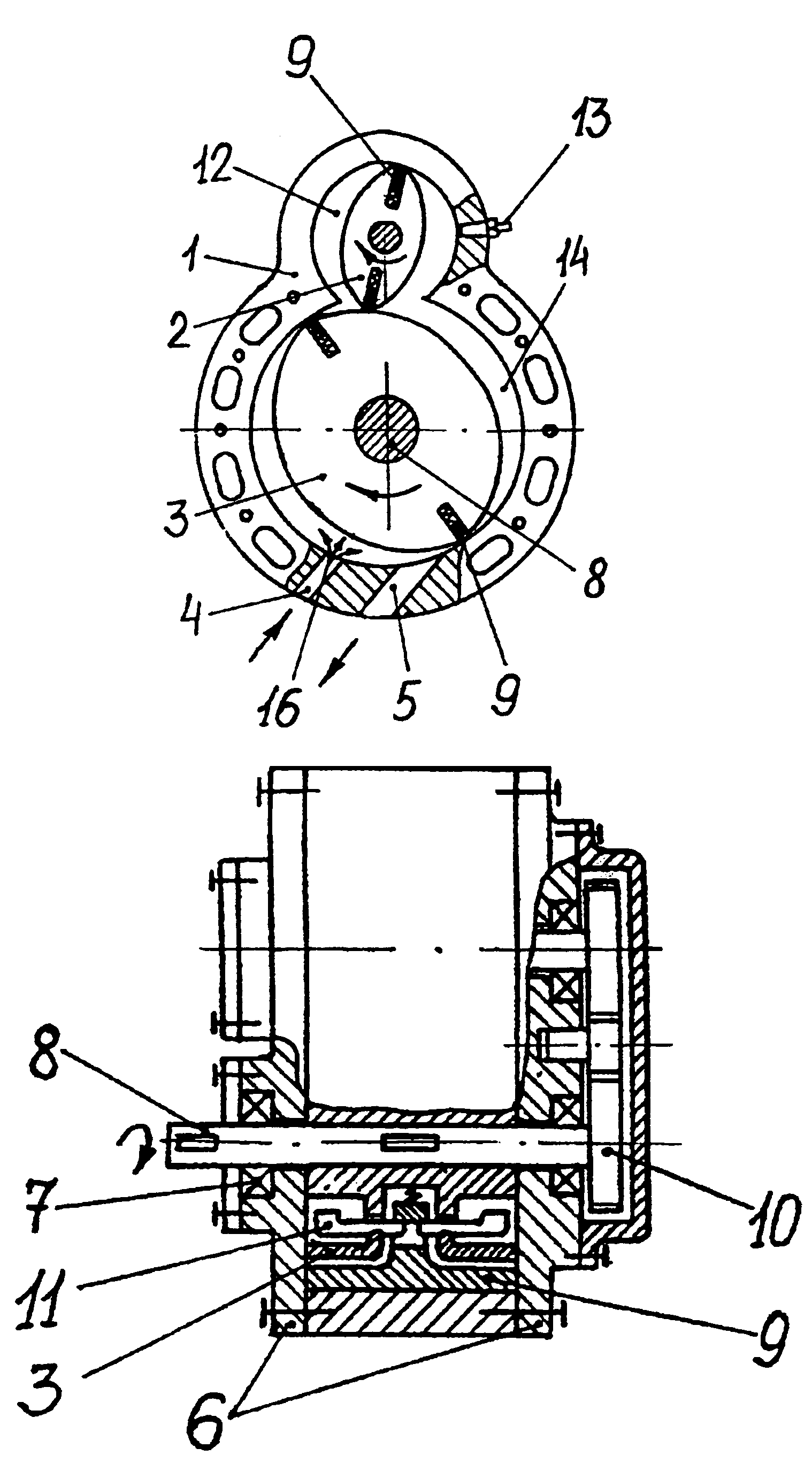
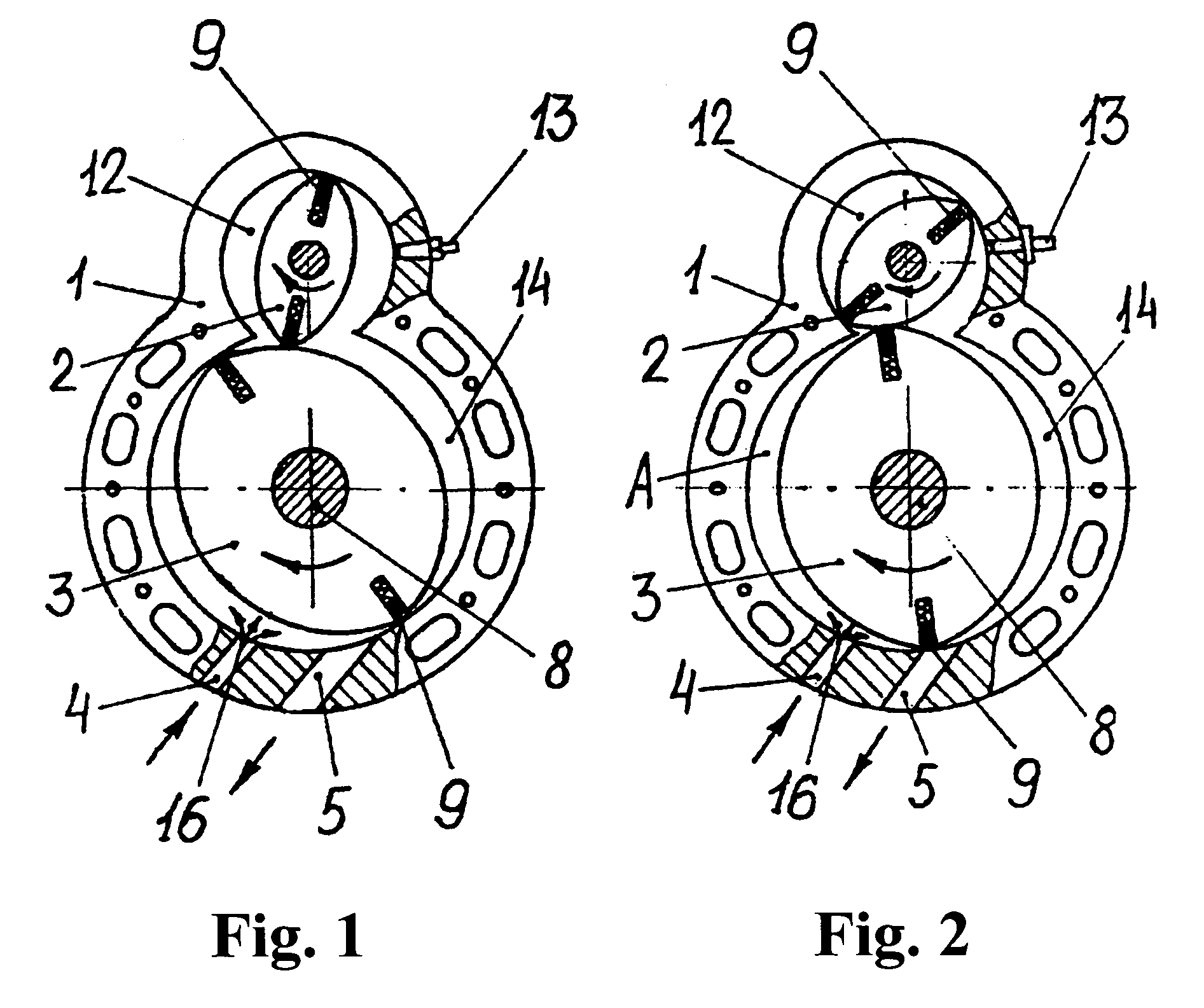
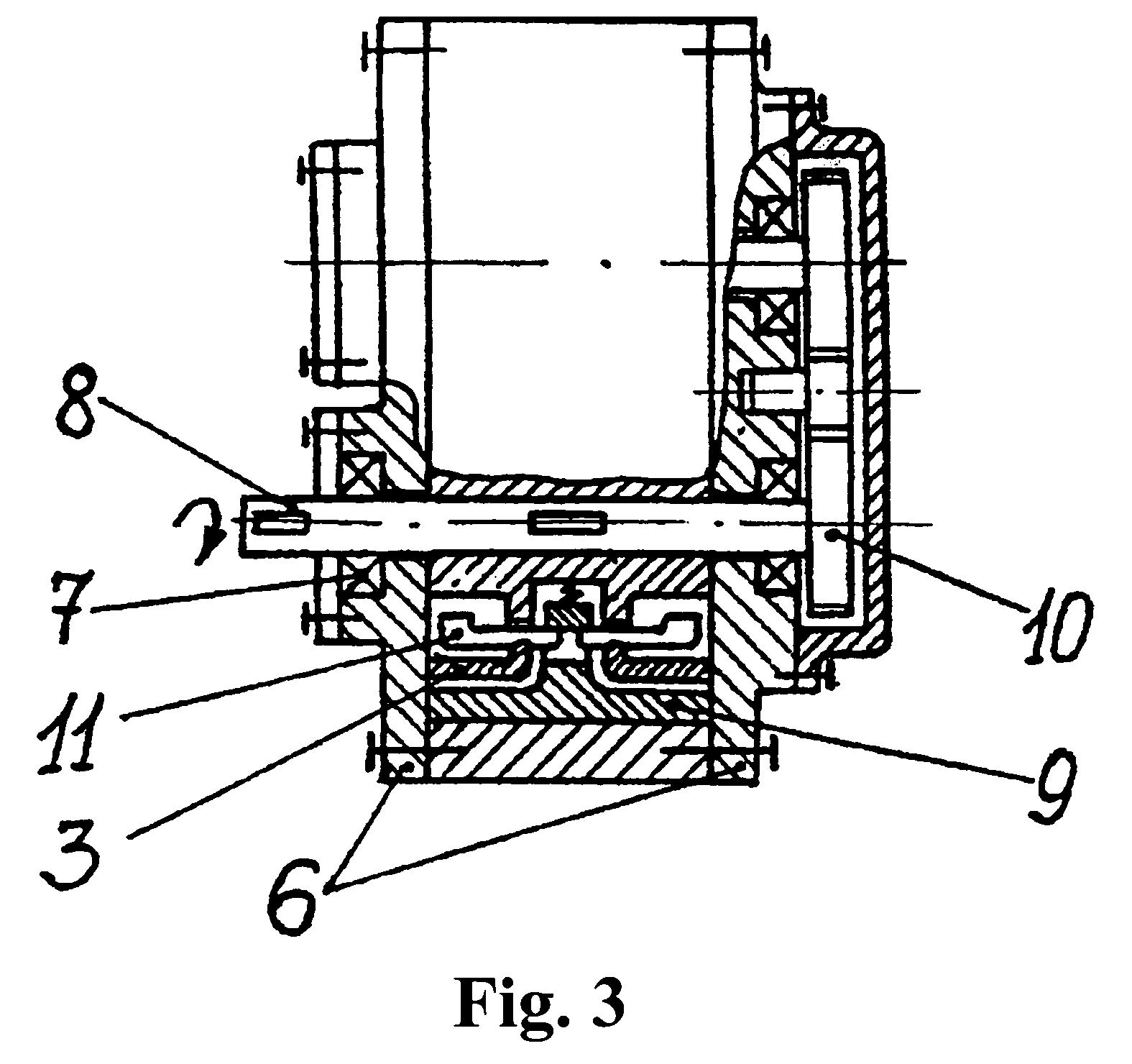
[0017]The rotary internal-combustion engine according to the invention comprises a housing 1 where rotors 2 and 3 are mounted in its chambers. The housing is provided with an intake port 4 and an exhaust port 5. The housing of the engine is also closed with lids 6 on which bearings 7 of the rotors are mounted co-axially with the chambers of the housing. The rotor 3 is connected with the working shaft 8 of the engine. The rotors comprise spring-loaded blades 9 and are connected with each other through the transmission 10 (for example, gear-type transmission) providing interrelated rotation of the rotors. The blades 9 may be equipped with the counter-loads 11 (FIG. 3) in order to reduce their pressing toward the housing of the engine by centrifugal forces during the operation of the engine. The compression chamber 12 holds a fuel injector or igniter plug 13. The screen may be made as a spring-loaded plate 15 (FIG. 7), as a gaseous (air) barrier 16 (FIGS. 1, 2, 4, 5, 6 in engines with ...
PUM
 Login to View More
 Abstract
Description
Claims
Application Information
 Login to View More