
Methods and apparatus for indirect compound VLIW execution using operand address mapping techniques
- Summary
- Abstract
- Description
- Claims
- Application Information
AI Technical Summary
Benefits of technology
Problems solved by technology
Method used
Image

Examples
Embodiment Construction
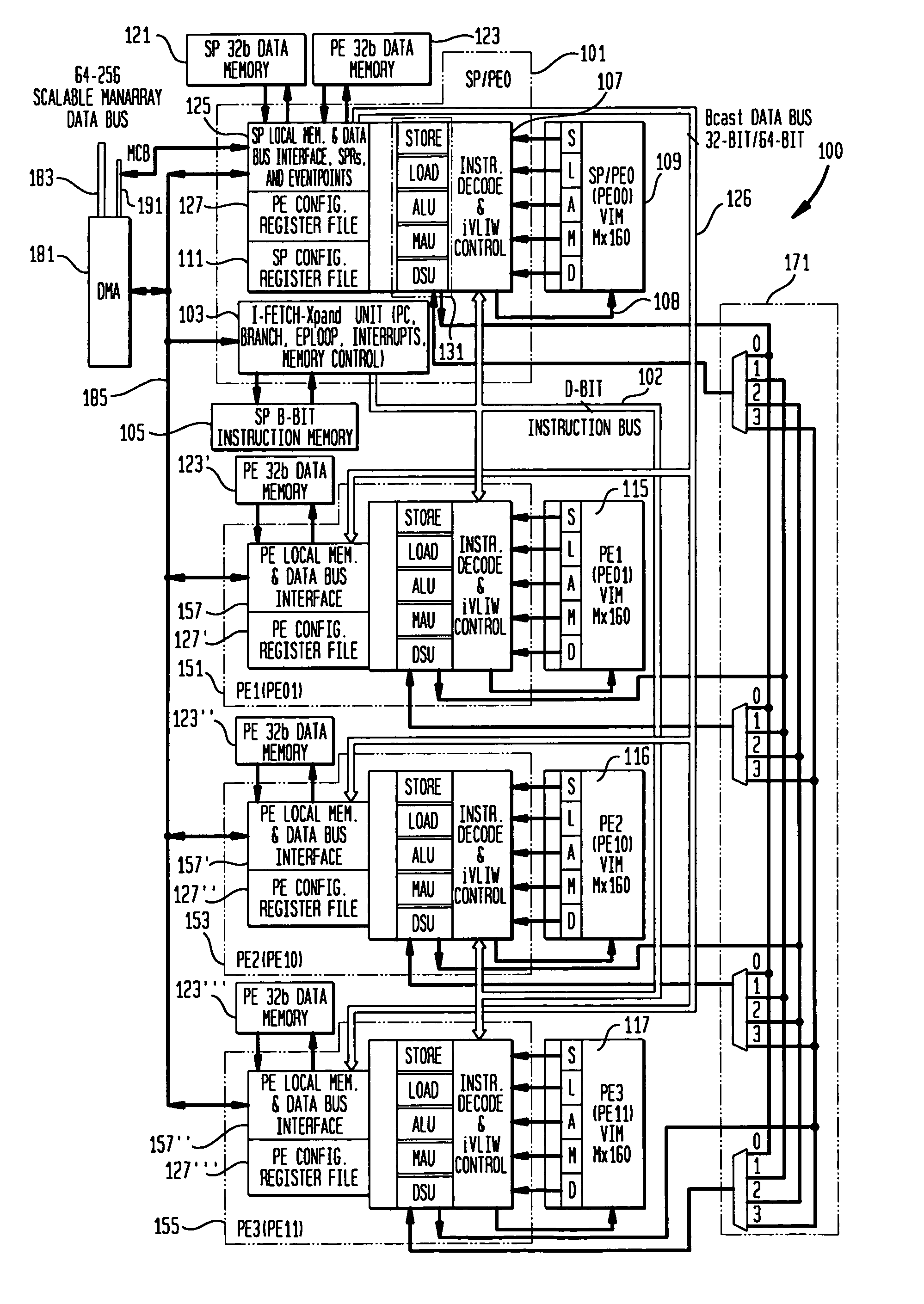
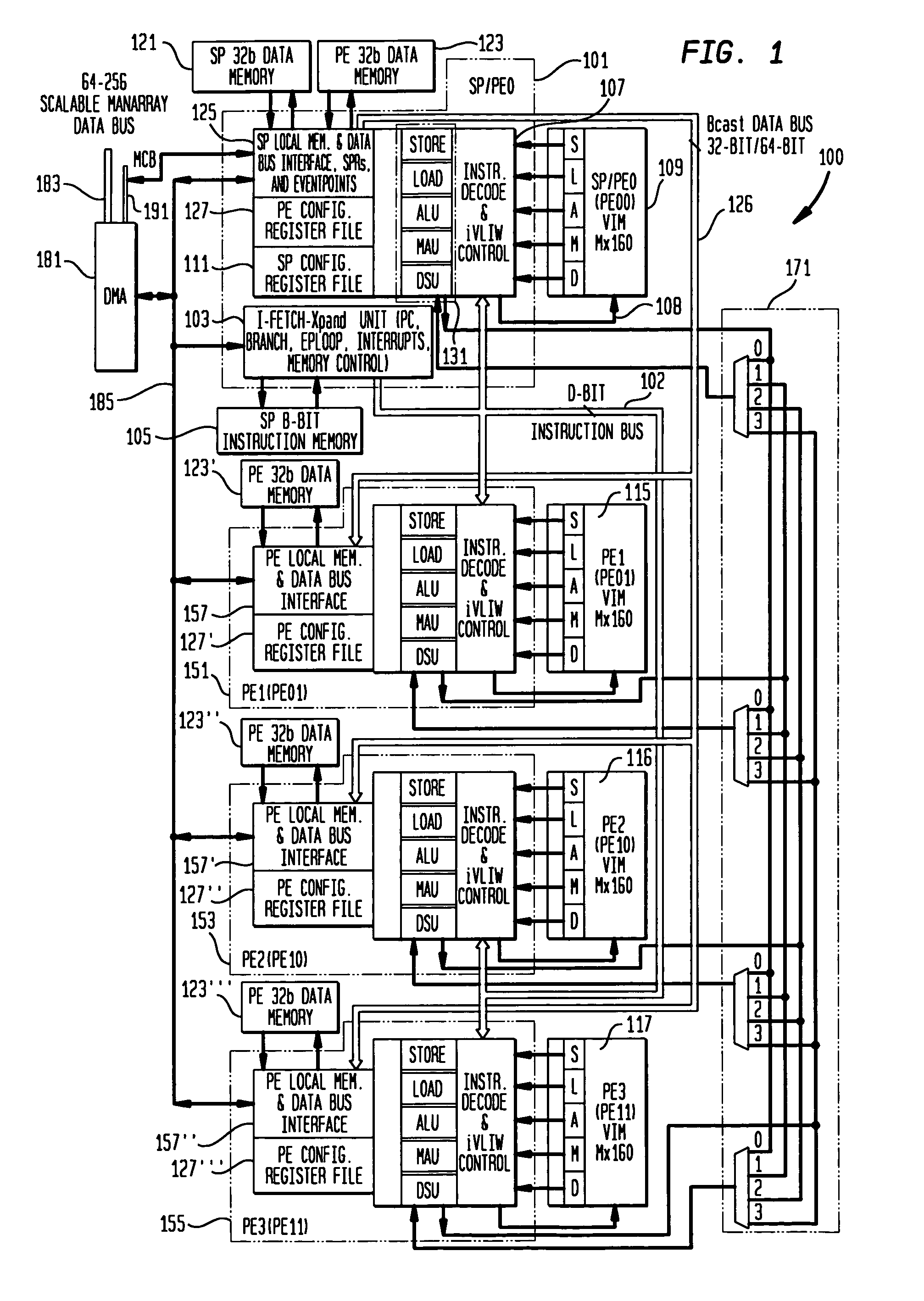
[0038]A number of aspects of the present invention address improvements to the ManArray architecture for increased performance due to use of compound execute VLIW type of instructions for both sequential and parallel code. In a presently preferred embodiment of the present invention, an exemplary ManArray 2×2 iVLIW single instruction multiple data stream (SIMD) processor 100 may suitably be employed. Processor 100 is representative of the Manta processor and the mobile media processor (MMP), both subsets of the ManArray architecture and is shown in FIG. 1. The array processor 100 shown in FIG. 1 comprises a sequence processor (SP) controller combined with a processing element-0 (PE0) SP / PE0101, as described in further detail in U.S. Pat. No. 6,219,776, for example. Three additional PEs 151, 153, and 155, are also utilized to demonstrate a number of general extensions to the indirect VLIW architecture in accordance with the present invention. It is noted that PEs can also be labeled ...
PUM
 Login to View More
 Abstract
Description
Claims
Application Information
 Login to View More