
Digital observation system
- Summary
- Abstract
- Description
- Claims
- Application Information
AI Technical Summary
Benefits of technology
Problems solved by technology
Method used
Image

Examples
Embodiment Construction
[0015]Referring now to FIG. 1, a digital observation system 10 of the present invention is presented. The system 10 includes at least one digital camera 12 coupled to at least one base unit 14 via, for example, an Ethernet connection.
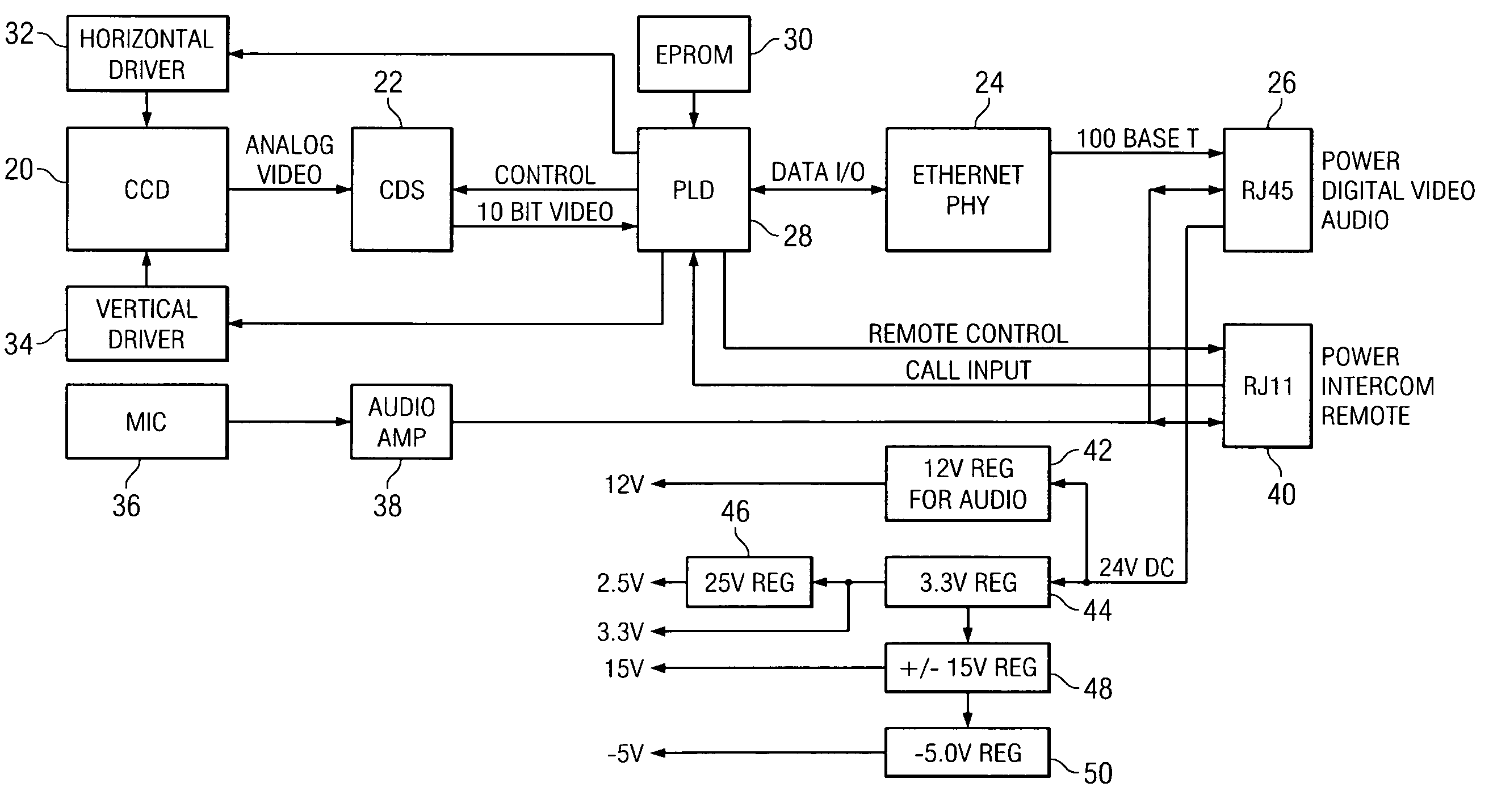
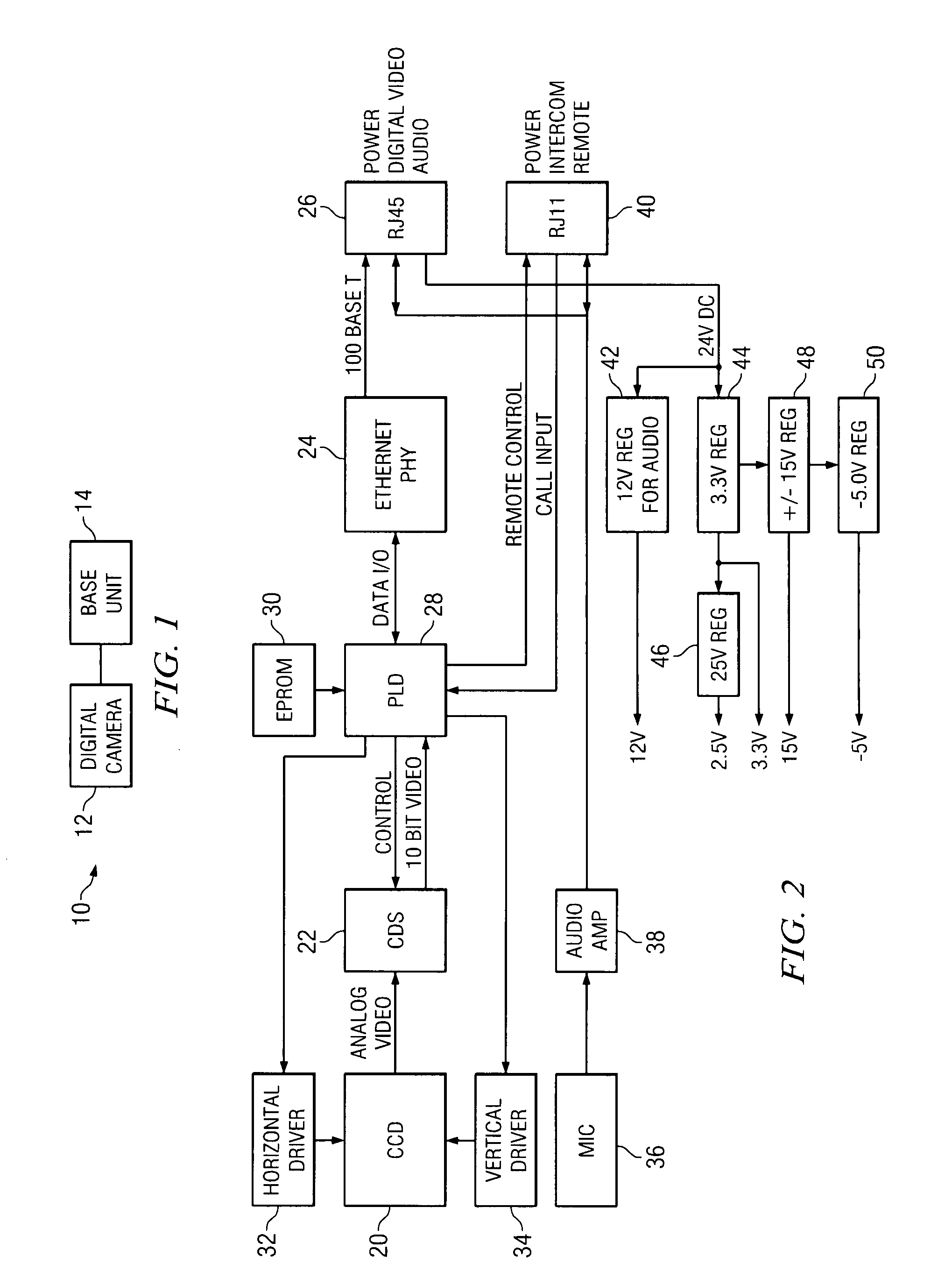
[0016]Referring now to FIG. 2, the digital camera 12 is presented. The digital camera 12 includes a charge coupled device (CCD) image sensor 20 which includes a CCD memory (not shown), a correlated double sampling (CDS) circuit 22, and a physical interface 24. Although the image sensor preferably used by the present invention is a CCD image sensor, a complementary metal oxide semiconductor (CMOS) image sensor may also be used. The CCD image sensor is a collection of tiny light-sensitive diodes, called photosites, which convert photons (light) into electrons (electrical charge). Each photosite is sensitive to light, wherein the brighter the light that hits a single photosite, the greater the electrical charge that will accumulate at that site. The value ...
PUM
 Login to View More
 Abstract
Description
Claims
Application Information
 Login to View More