
System and method of overlaying and integrating data with geographic mapping applications
a technology of overlaying and integrating data, applied in the field of geoinformation systems, can solve the problems of delay in processing time required for uploading swf files to the client browser, limited geographic area covered, delay in request processing time, etc., and achieve the effect of high resolution vector-based imagery and comprehensive geographic breadth and detail
- Summary
- Abstract
- Description
- Claims
- Application Information
AI Technical Summary
Benefits of technology
Problems solved by technology
Method used
Image

Examples
Embodiment Construction
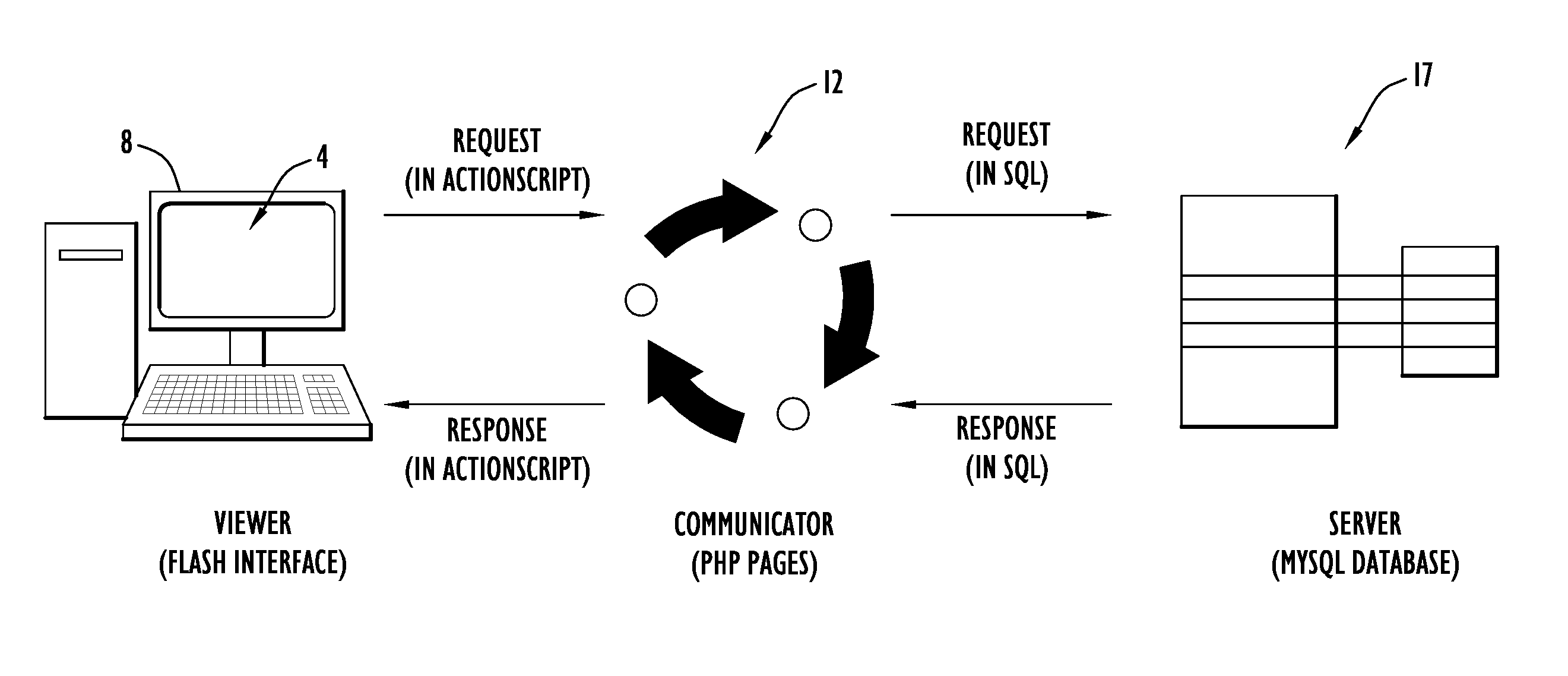
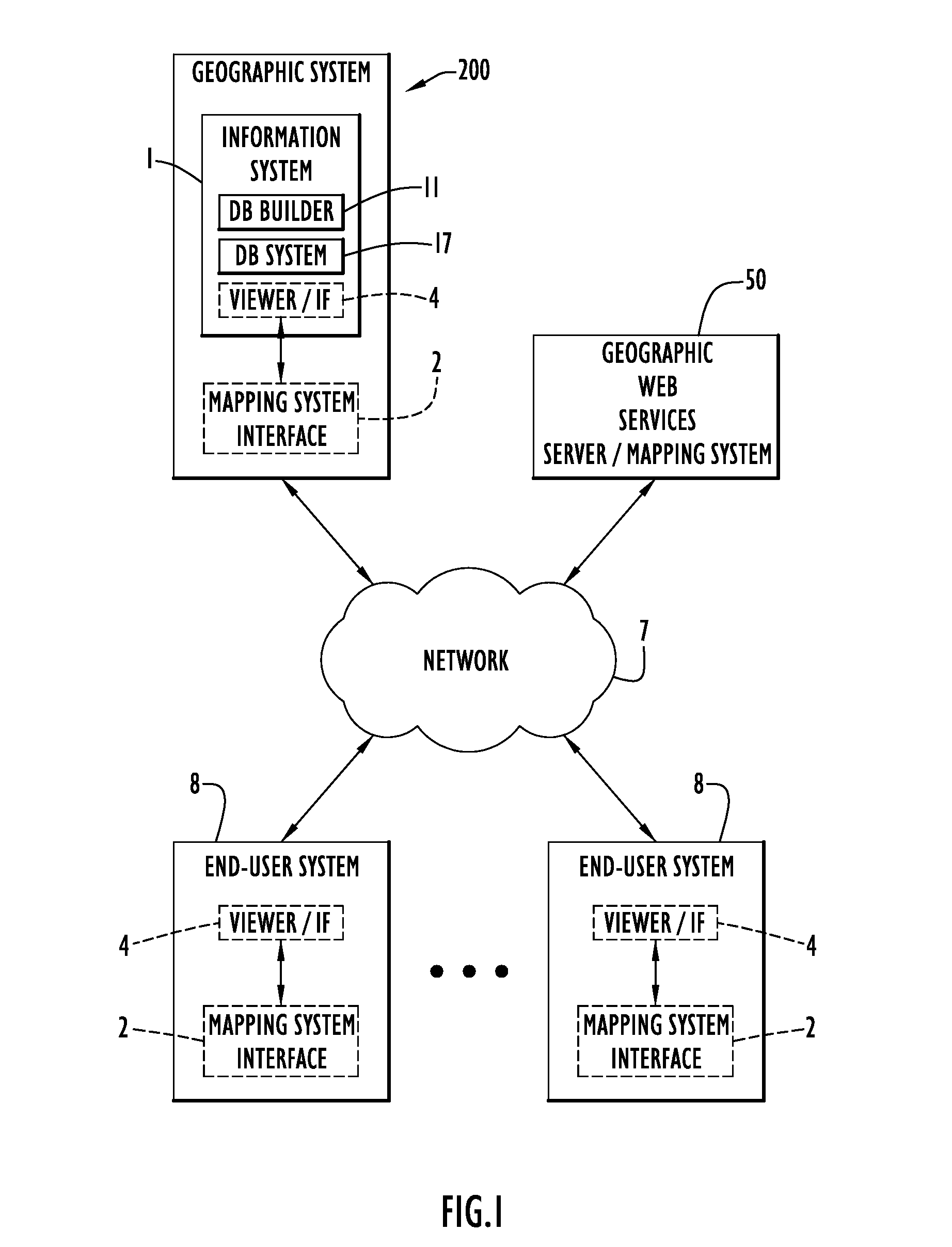
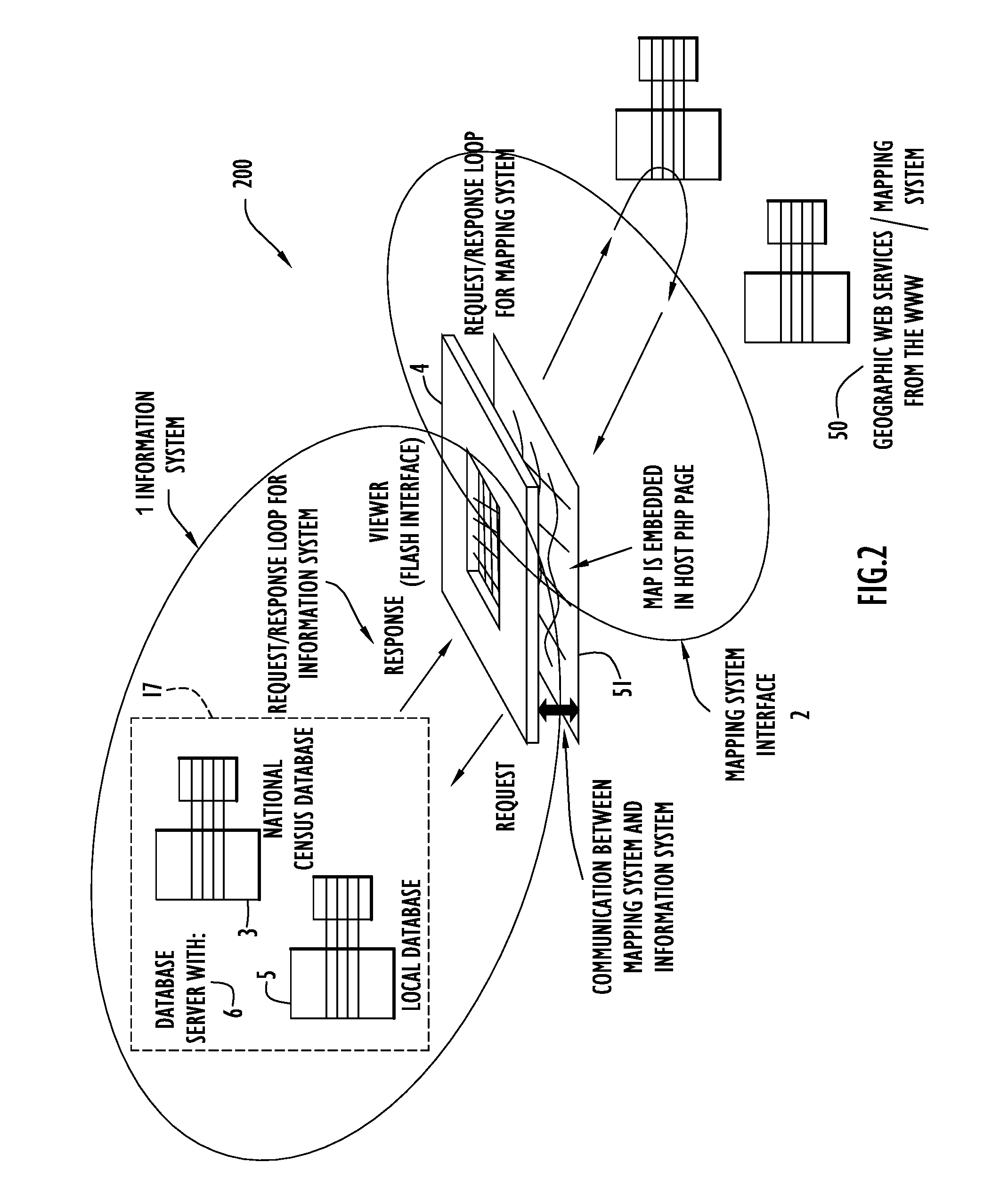
The present invention embodiments pertain to a geographic overlay system that overlays map layers onto a geographic mapping application to provide information pertaining to various locations on an underlying map. The geographic overlay system preferably utilizes geographic boundaries from National Census data to define geographic map areas and enable retrieval of corresponding information for those areas. The geographic overlay system renders points (e.g., specific locations or points of interest), lines (e.g., streets) and polygons (e.g., geographic areas, such as neighborhoods, towns, counties, etc.) within overlaying map layers to indicate corresponding locations on the underlying geographic map, and provides information associated with those locations. Thus, the geographic overlay system may enable users to draw on a map, save the boundaries, and perform a multi-layered spatial analysis that incorporates the newly drawn or generated map layer.
The geographic overlay system includ...
PUM
 Login to View More
 Abstract
Description
Claims
Application Information
 Login to View More