Thin client for computer security applications

a computer security and client technology, applied in the field of computer security, can solve the problems of computer processing capacity, local computing resources consumed by antivirus, and inability to handle the amount of processing required, and achieve the effect of reducing network traffi

US8127358B1Active Publication Date: 2012-02-28TREND MICRO INC
39 Cites 146 Cited by

Patent Information

Authority / Receiving Office
US · United States
Current Assignee / Owner
Publication Date
2012-02-28

Smart Images

  • Figure 1
    Figure 1
  • Figure 2
    Figure 2
  • Figure 3
    Figure 3
Patent Text Reader

Abstract

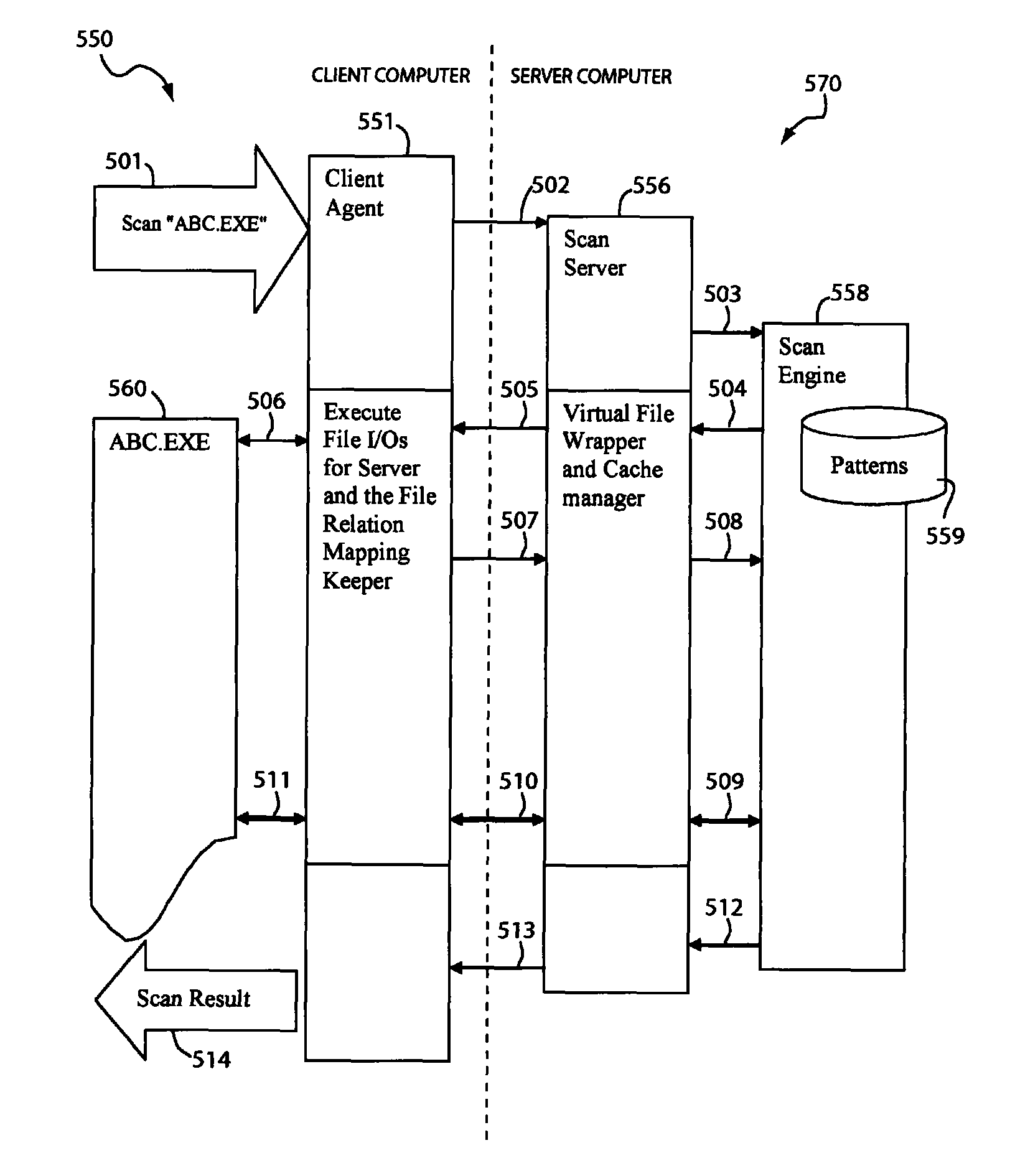
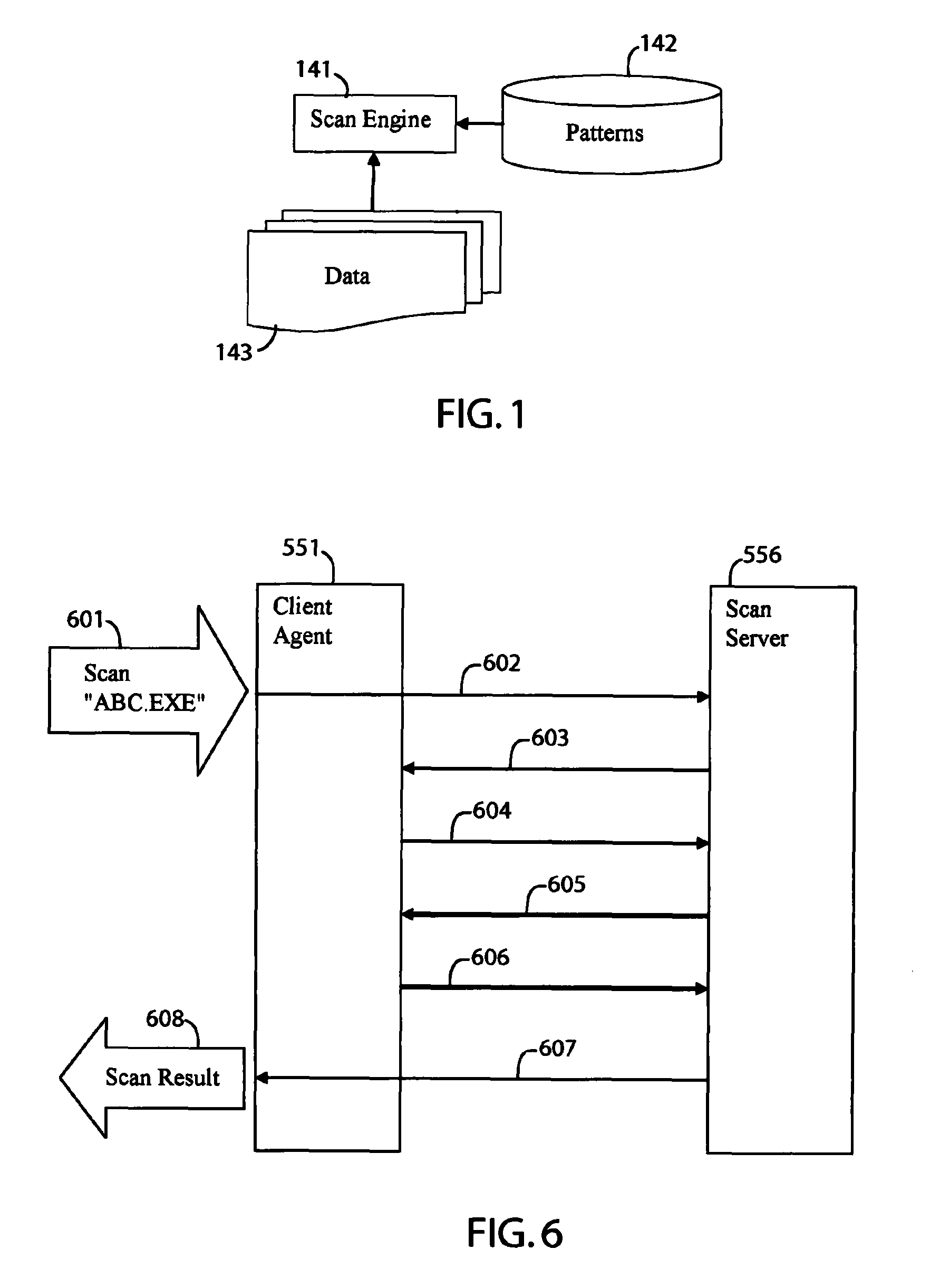
A system for scanning a file for malicious codes may include a client agent running in a client computer and a scan server running in a server computer, the client computer and the server computer communicating over a computer network. The client agent may be configured to locally receive a scan request to scan a target file for malicious codes and to communicate with the scan server to scan the target file using a scan engine running in the server computer. The scan server in communication with the client agent allows the scan engine to scan the target file by issuing file I / O requests to access the target file located in the client computer. The client agent may be configured to check for digital signatures and to maintain a file cache of previously scanned files to minimize network traffic.
Need to check novelty before this filing date? Find Prior Art

Description

BACKGROUND OF THE INVENTION

[0001] 1. Field of the Invention

[0002] The present invention relates generally to computer security, and more particularly but not exclusively to methods and apparatus for detecting malicious codes.

[0003] 2. Description of the Background Art

[0004] Computer viruses, worms, Trojans, rootkits, and spyware are examples of malicious codes that have plagued computer systems throughout the world. Malicious codes, which are also collectively referred to simply as “viruses,” may be detected using antivirus techniques implemented in software, hardware, or a combination of hardware and software. Antivirus may be performed at a central server or at a client. Regardless of where antivirus is performed, the antivirus consumes local computing resources.

[0005] Depending on the computing power of the computer where antivirus is performed, the computer may or may not be able to handle the amount of processing required for running the antivirus or the periodic downloading of incr...

Examples

Embodiment Construction

[0021]In the present disclosure, numerous specific details are provided, such as examples of apparatus, components, and methods, to provide a thorough understanding of embodiments of the invention. Persons of ordinary skill in the art will recognize, however, that the invention can be practiced without one or more of the specific details. In other instances, well-known details are not shown or described to avoid obscuring aspects of the invention.

[0022]Being computer-related, it can be appreciated that some components disclosed herein may be implemented in hardware, software, or a combination of hardware and software. Software components may be in the form of computer-readable program code stored in a computer-readable storage medium, such as memory, mass storage device, or removable storage device. For example, a computer-readable storage medium may comprise computer-readable program code for performing the function of a particular component. Likewise, computer memory may be config...