Semi-supervised learning based on semiparametric regularization

US8527432B1Active Publication Date: 2013-09-03THE RES FOUND OF STATE UNIV OF NEW YORK
2 Cites 24 Cited by

Patent Information

Authority / Receiving Office
US · United States
Current Assignee / Owner
Publication Date
2013-09-03

Smart Images

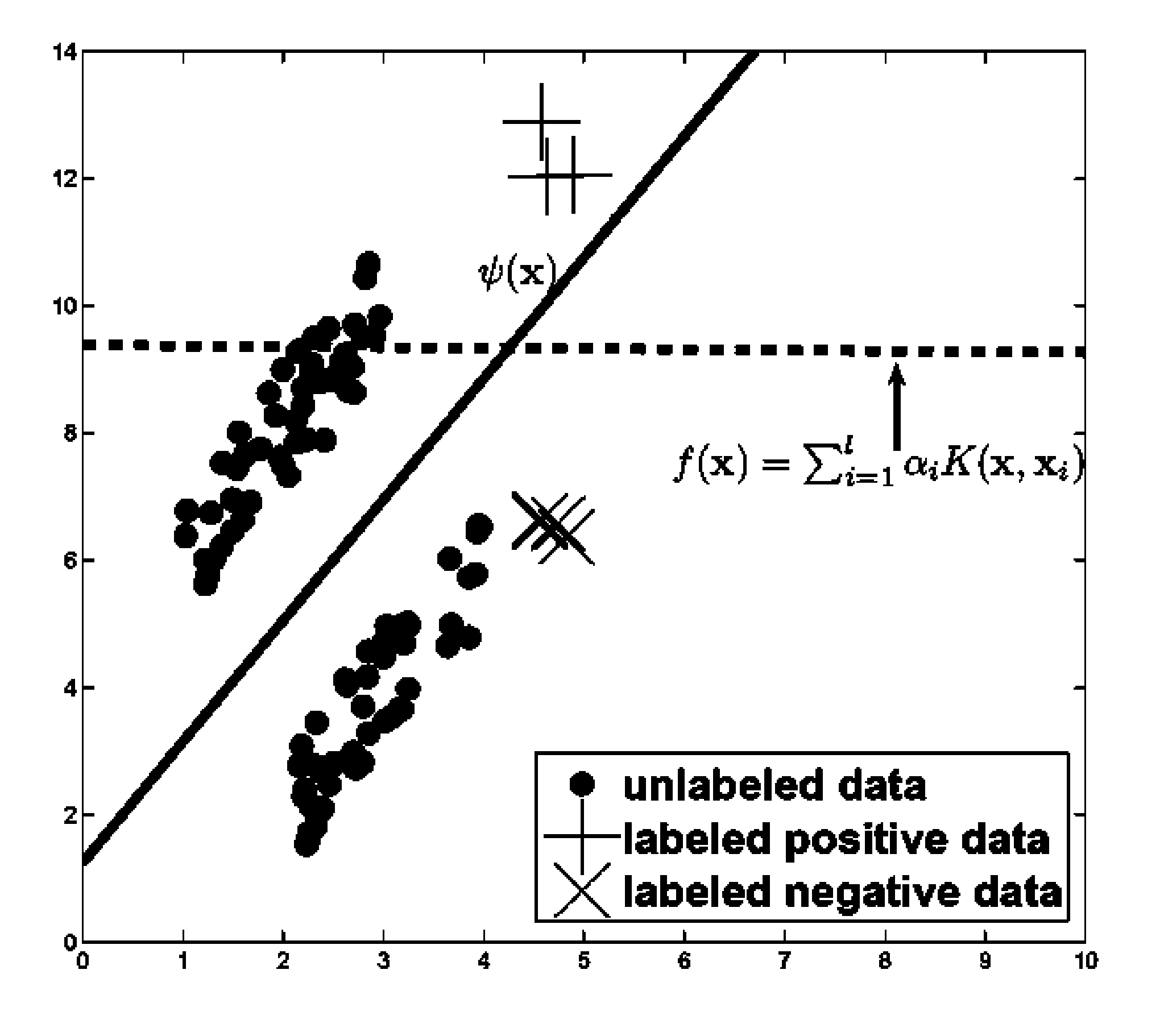
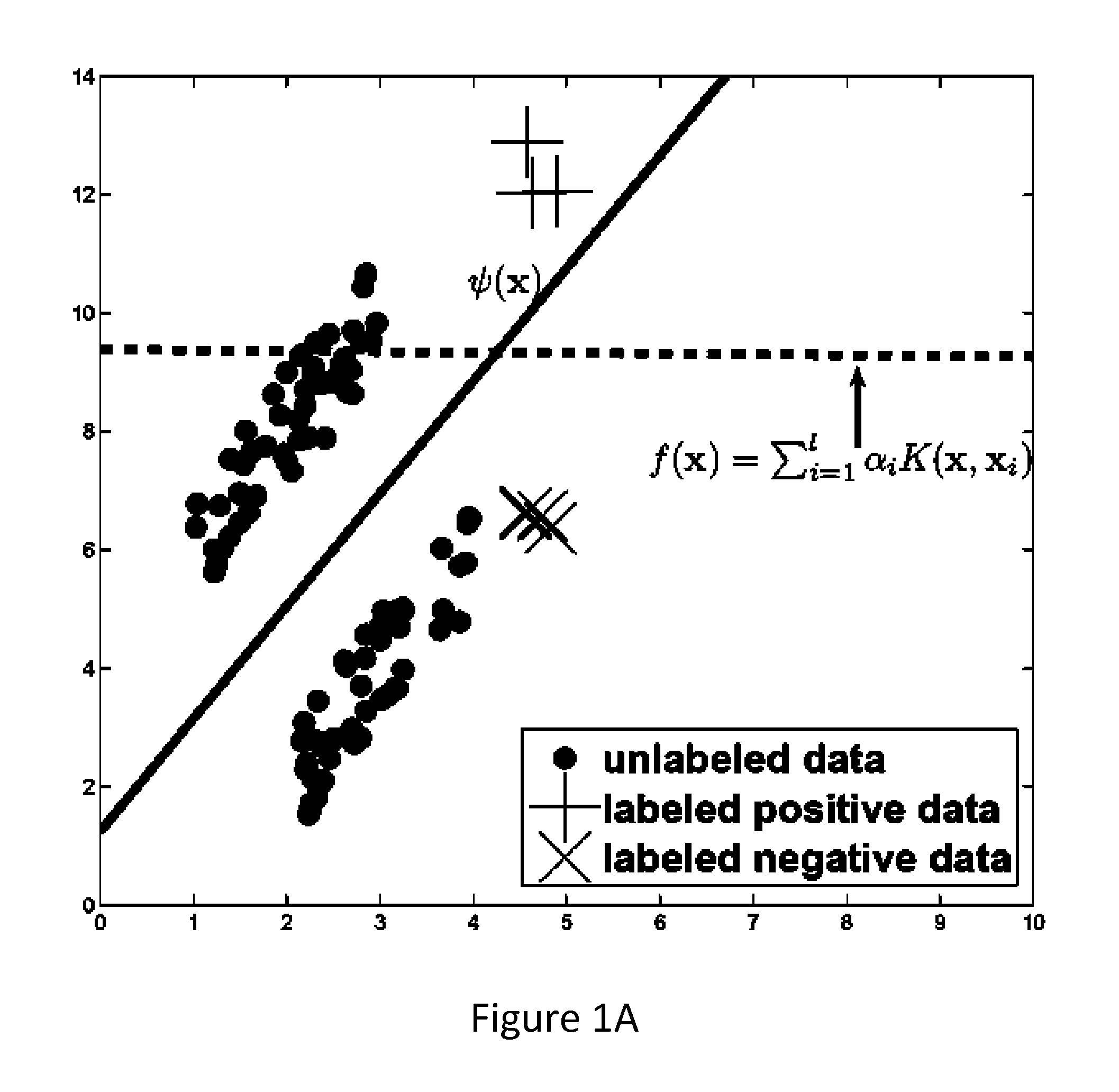
  • Figure 1
    Figure 1
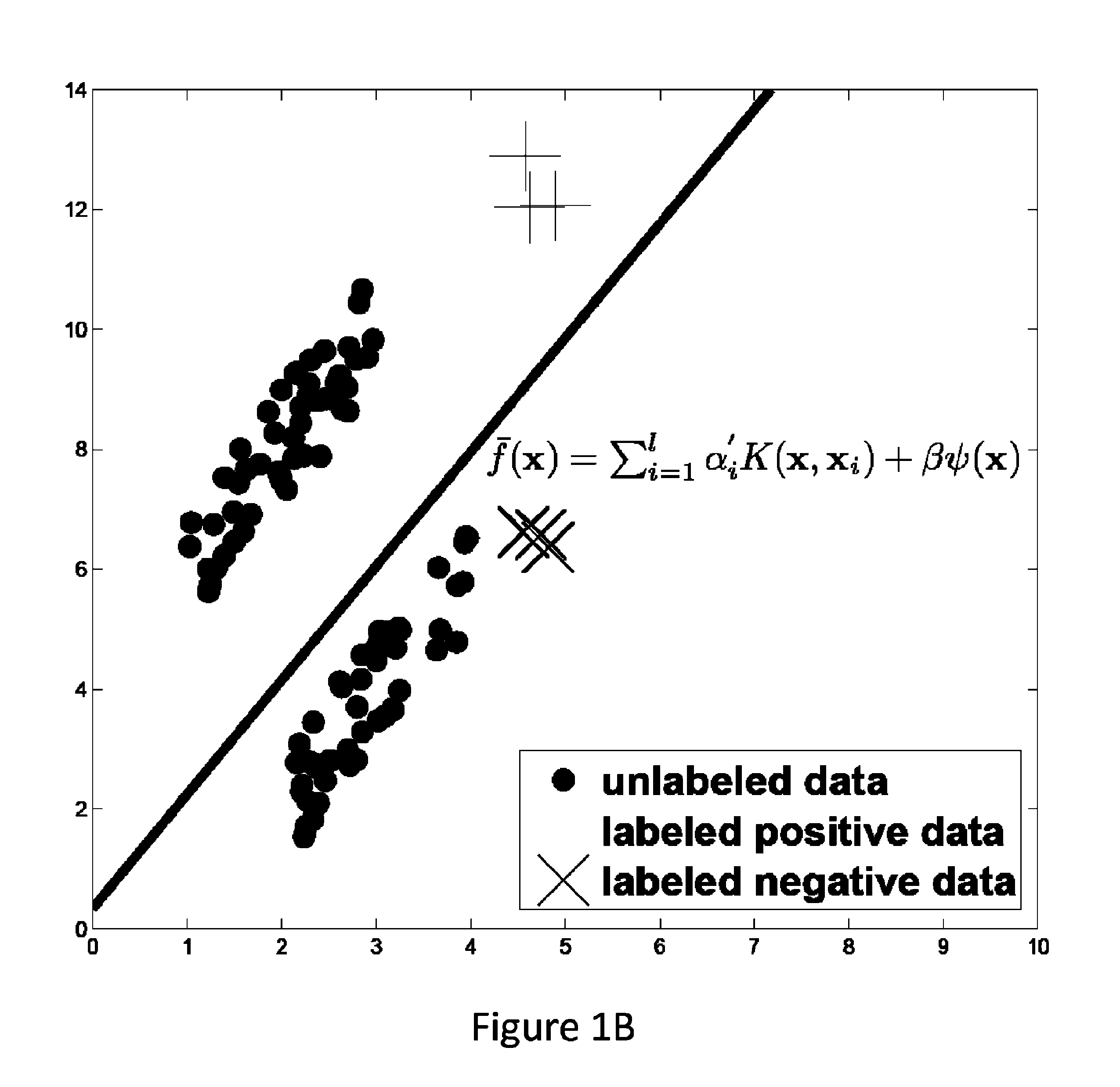
  • Figure 2
    Figure 2
  • Figure 3
    Figure 3
Patent Text Reader

Abstract

Semi-supervised learning plays an important role in machine learning and data mining. The semi-supervised learning problem is approached by developing semiparametric regularization, which attempts to discover the marginal distribution of the data to learn the parametric function through exploiting the geometric distribution of the data. This learned parametric function can then be incorporated into the supervised learning on the available labeled data as the prior knowledge. A semi-supervised learning approach is provided which incorporates the unlabeled data into the supervised learning by a parametric function learned from the whole data including the labeled and unlabeled data. The parametric function reflects the geometric structure of the marginal distribution of the data. Furthermore, the proposed approach which naturally extends to the out-of-sample data is an inductive learning method in nature.
Need to check novelty before this filing date? Find Prior Art

Description

[0001] This invention was made with government support under contract IIS0535162 awarded by NSF, contract FA8750-05-2-0284 awarded by AFRL and contract FA9550-06-1-0327 awarded by USAF / AFOSR. The government has certain rights in the invention.1 INTRODUCTION

[0002] Semi-supervised learning attempts to use the unlabeled data to improve the performance. The labeled data are often expensive to obtain since they require the efforts of experienced experts. Meanwhile, the unlabeled data are relatively easy to collect. Semi-supervised learning has attracted considerable attention in recent years and many methods have been proposed to utilize the unlabeled data. Most of the semisupervised learning models are based on the cluster assumption which states that the decision boundary should not cross the high density regions, but instead lie in the low density regions. In other words, similar data points should have the same label and dissimilar data points should have different labels.

[0003] The pre...

Examples

Example

5 EXPERIMENT RESULTS

[0115]Experiments are performed on seven well-known datasets described in Table 2 where c is the number of classes, d is the data dimension, l is the number of the labeled data points, and n is the total number of the data points in the dataset including labeled, unlabeled, and test data points. The dataset g50c, mac-win and WebKb are from [13]. The dataset g241c and BCI are from [4]. g50c is an artificial dataset generated from two unit-covariance normal distributions with equal probabilities. g241c is artificially generated such that the cluster assumption holds, but the manifold assumption does not. mac-win is taken from the newsgroups20 dataset and the task is to categorize the newsgroup documents into two topics: mac or windows. BCI dataset originates from research toward the development of a brain computer interface. The WebKb dataset is a subset of the web documents of the computer science departments of four universities. The two categories are course or ...