
High transmission optoelectonic mechanical assembly
a technology of optoelectonic and mechanical assembly, applied in the field of optogenetics, can solve the problems of cord torsion and affect the beam quality in a way which was unsatisfactory for at least some optogenetic applications, and achieve the effect of low resistance to rotation of the optic fiber patch cord, high image or beam, and low resistance to rotation
- Summary
- Abstract
- Description
- Claims
- Application Information
AI Technical Summary
Benefits of technology
Problems solved by technology
Method used
Image

Examples
Embodiment Construction
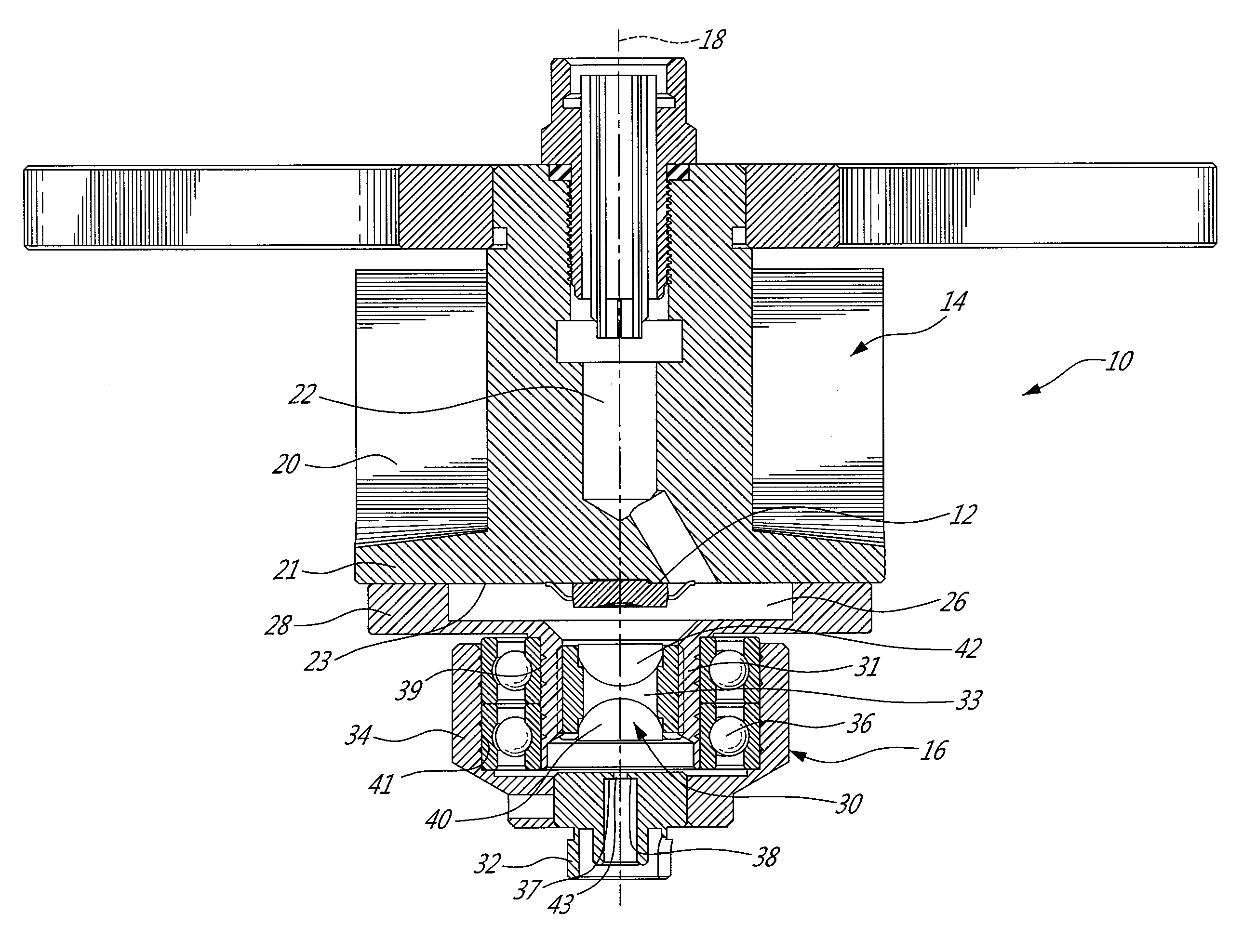
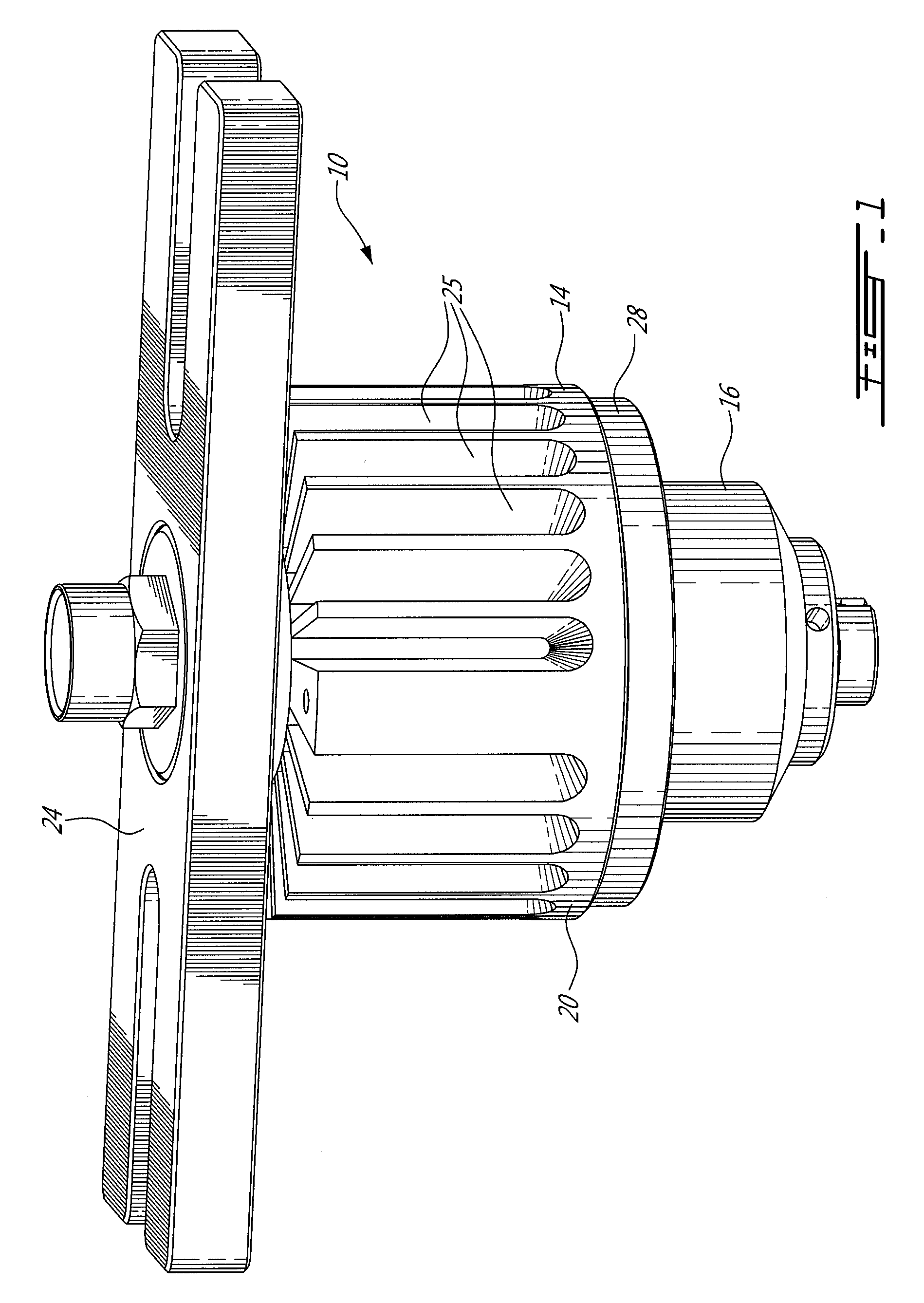
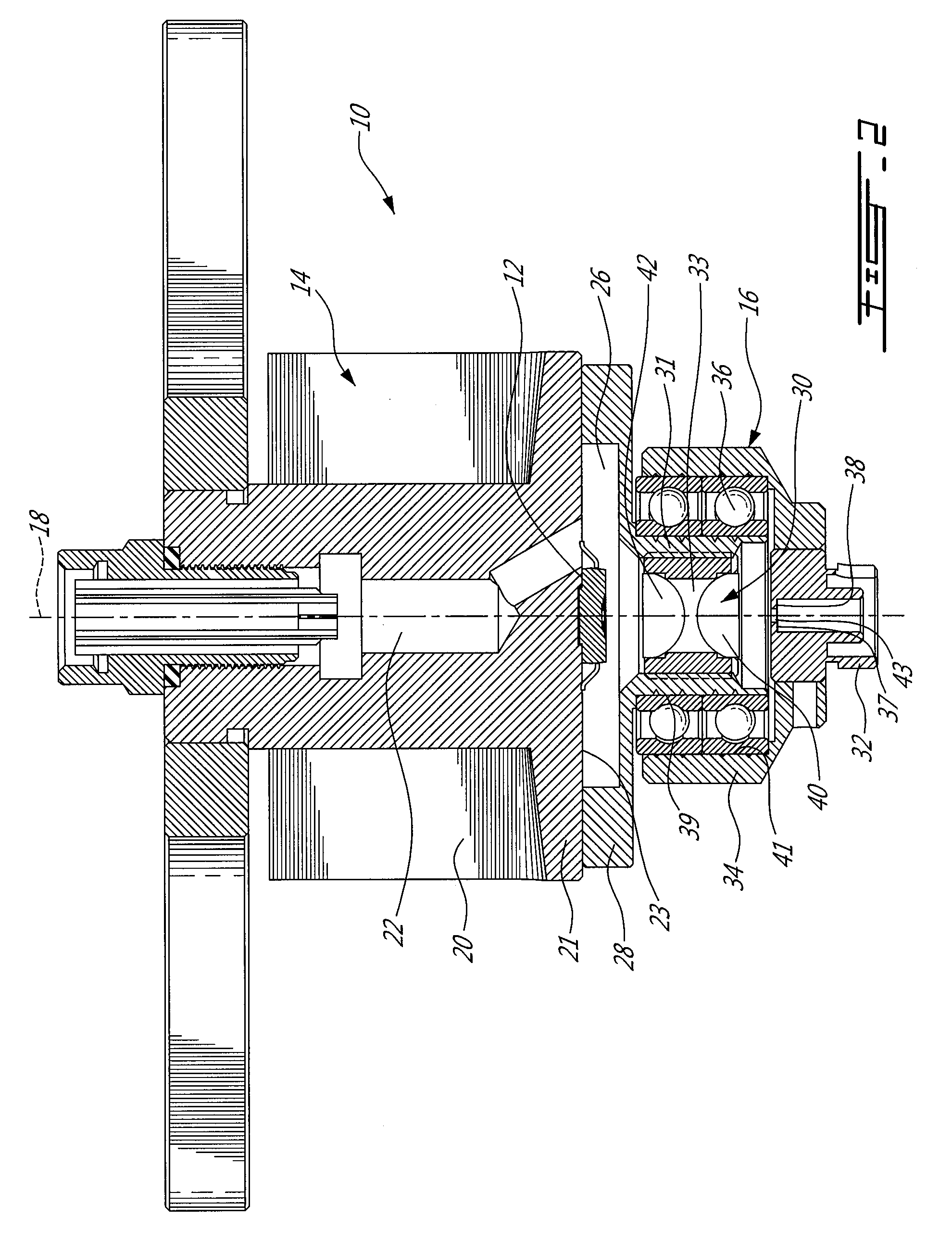
[0016]FIGS. 1 and 2 generally show an example of an optoelectronic mechanical assembly 10 having an integrated light source 12. More specifically, the assembly 10 can be seen to generally have a fixable structure 14, and a rotary structure 16 rotatably mounted to the fixable structure 14 so as to rotate about an optical rotation axis 18.
[0017]The fixable structure 14 generally includes a light source 12, which can be a LED or laser diode arrangement for instance (multiple source arrangements are possible as well as presented below), which is mounted to a heat sink 20 in order to evacuate heat therefrom during operation. In this particular embodiment, the heat sink 20 is a passive heat sink that addresses potential overheating of the light source 12. Overheating of the light source 12 is typically undesired and has been known to reduce the optical power of LEDs and / or decrease the expected lifespan thereof. The heat sink has a hub 21 having a flat surface 23 receiving the light sourc...
PUM
 Login to View More
 Abstract
Description
Claims
Application Information
 Login to View More