
Stent loading tool and method for use thereof
a technology for loading tools and stents, applied in the field of stent loading tools, can solve the problems of inability to deliver stents in a collapsed or compressed state to the hospital or medical facility, stents must be handled with great care, and the material making up the stent is easily deformed, so as to achieve a simple and reliable manner.
- Summary
- Abstract
- Description
- Claims
- Application Information
AI Technical Summary
Benefits of technology
Problems solved by technology
Method used
Image

Examples
Embodiment Construction
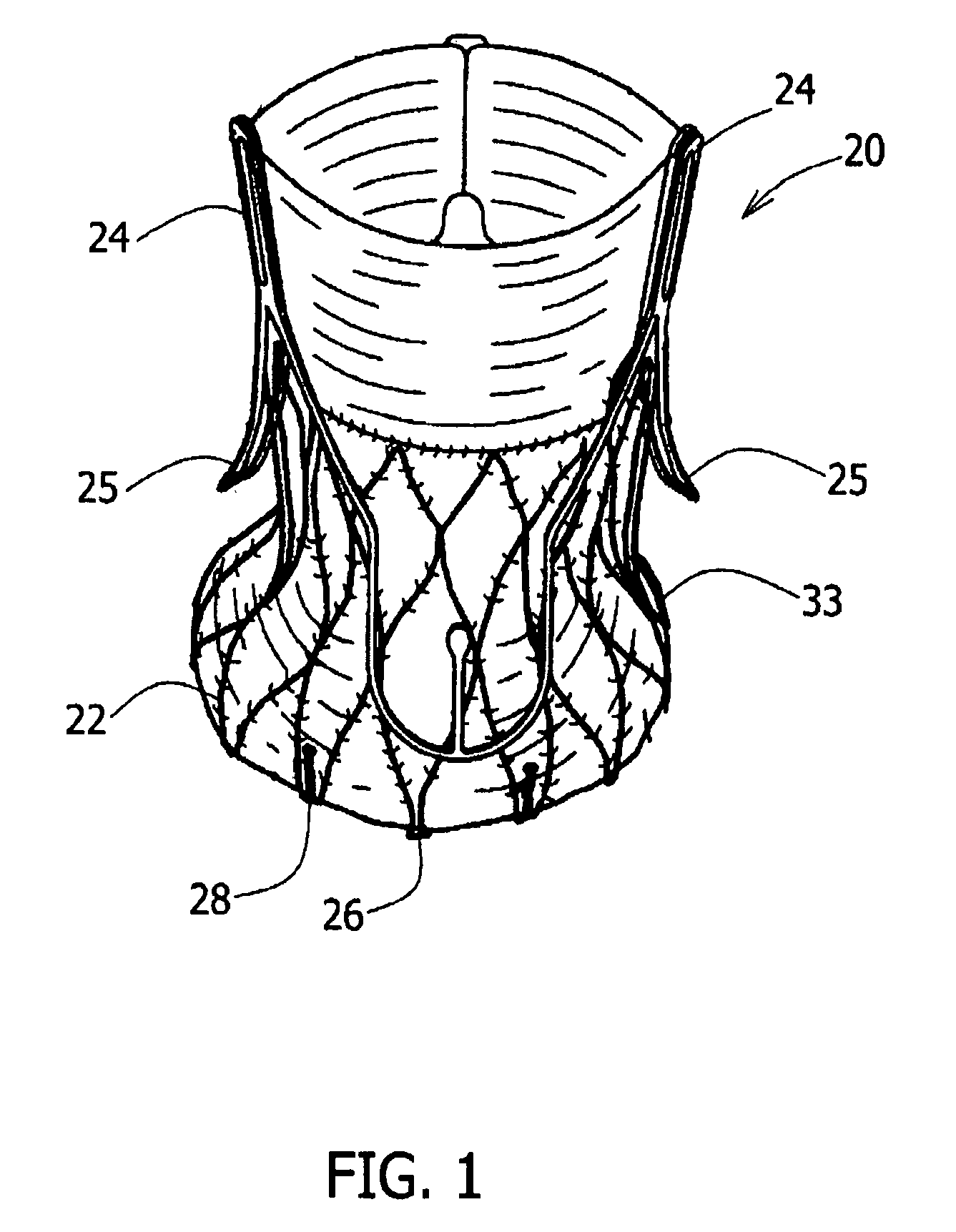
[0061]FIG. 1 is a perspective view of a self-expanding stent-mounted valve (20). Stent-mounted valve (20) may be of several types as is known to those skilled in the art, but in the example of FIG. 1, the stent-mounted valve (20) is shown as a wire structure having a wire-mesh, expandable frame stent (22). Engagement arms (25) are typically configured to engage and / or rest against floors of aortic sinuses, to position the prosthetic valve assembly (20) in the native valve, and to apply an axial force directed towards the left ventricle. A more detailed description of our basic stent-mounted valve is provided in U.S. patent application Ser. No. 11 / 024,908, filed Dec. 30, 2004, published as No. 2006 / 0149360, to Schwammenthal, et al., herein incorporated by reference in its entirety.
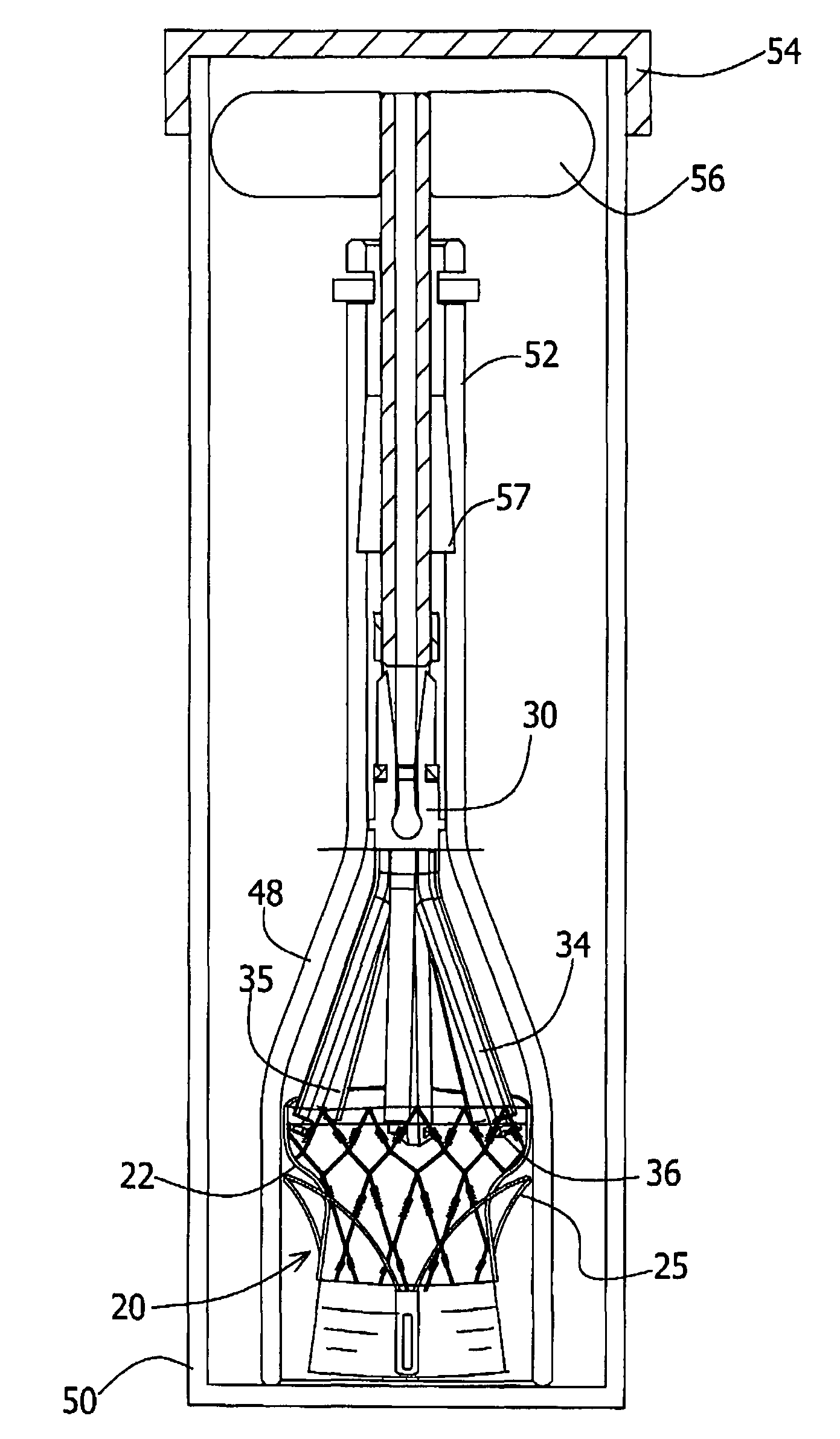
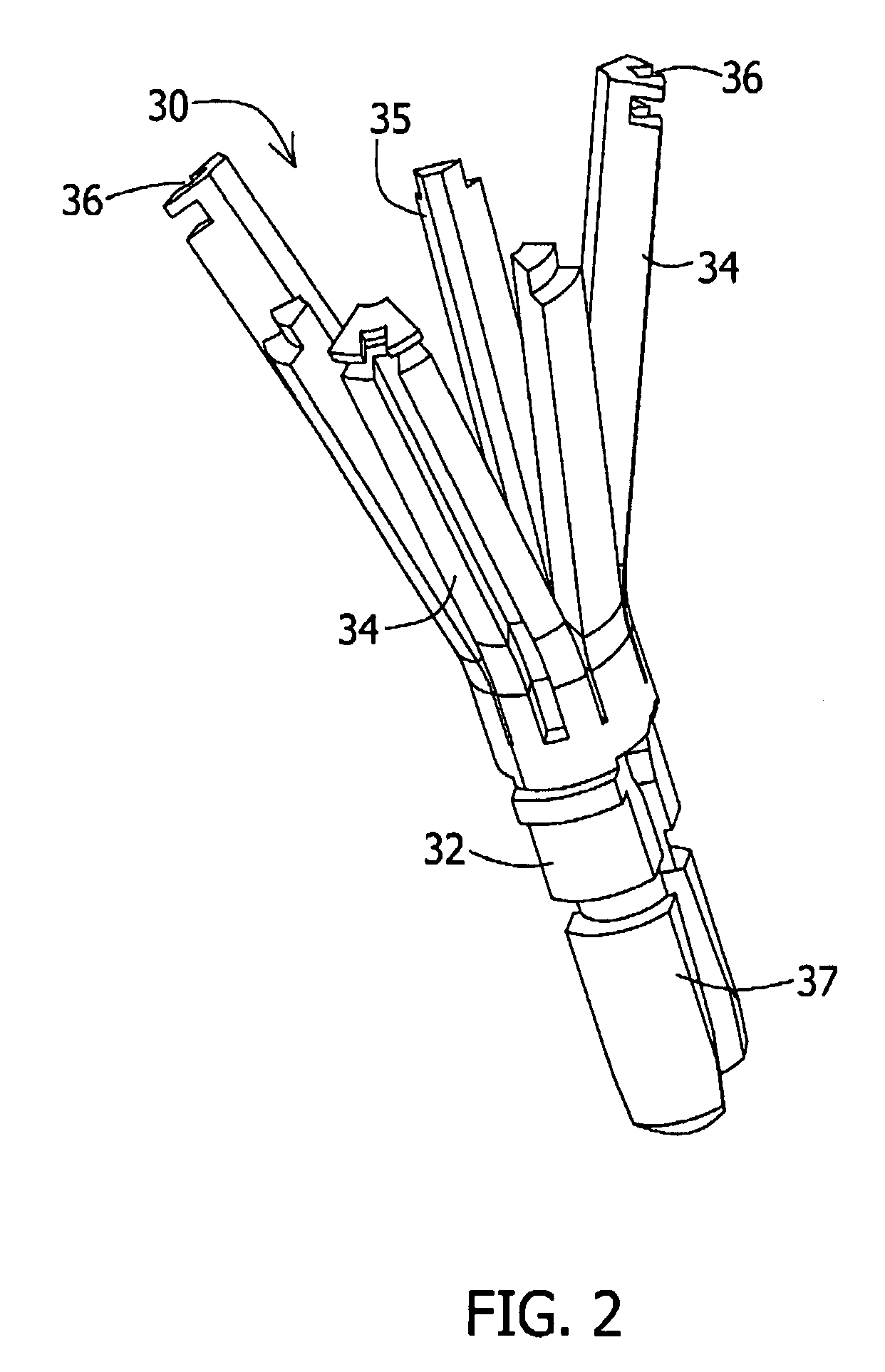
[0062]FIGS. 2 and 3 provide enlarged views of a three-prong loading tool (30) in an open state and in a closed state, respectively. The loading tool (30) has a base (32) and three prongs (34), extending the...
PUM
 Login to View More
 Abstract
Description
Claims
Application Information
 Login to View More