
Continuous process for cooking bacon with improved recovery
a technology of continuous process and recovery, applied in the direction of conveyor, milk preservation, milk treatment, etc., can solve the problem of high energy cos
- Summary
- Abstract
- Description
- Claims
- Application Information
AI Technical Summary
Benefits of technology
Problems solved by technology
Method used
Image

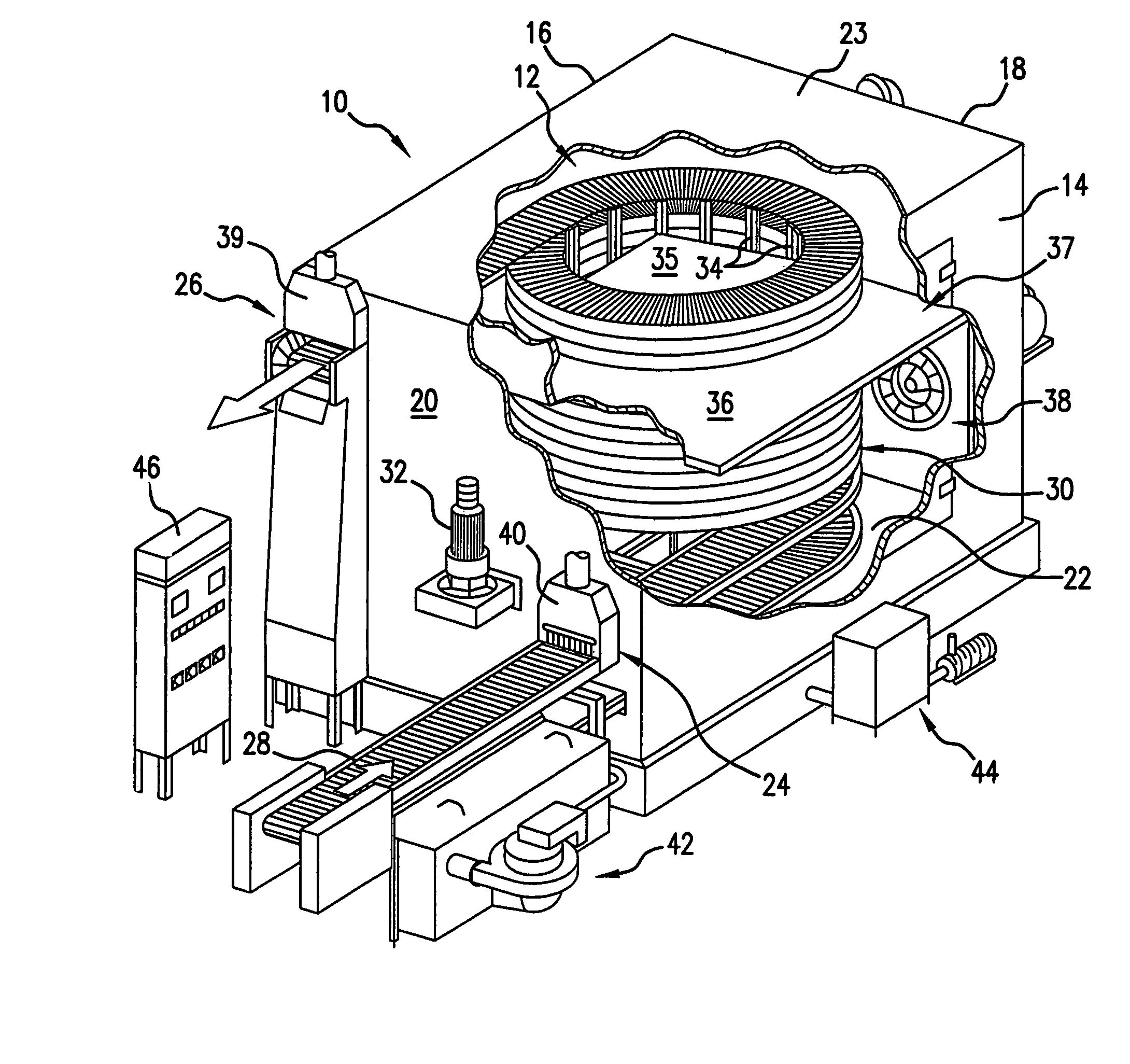
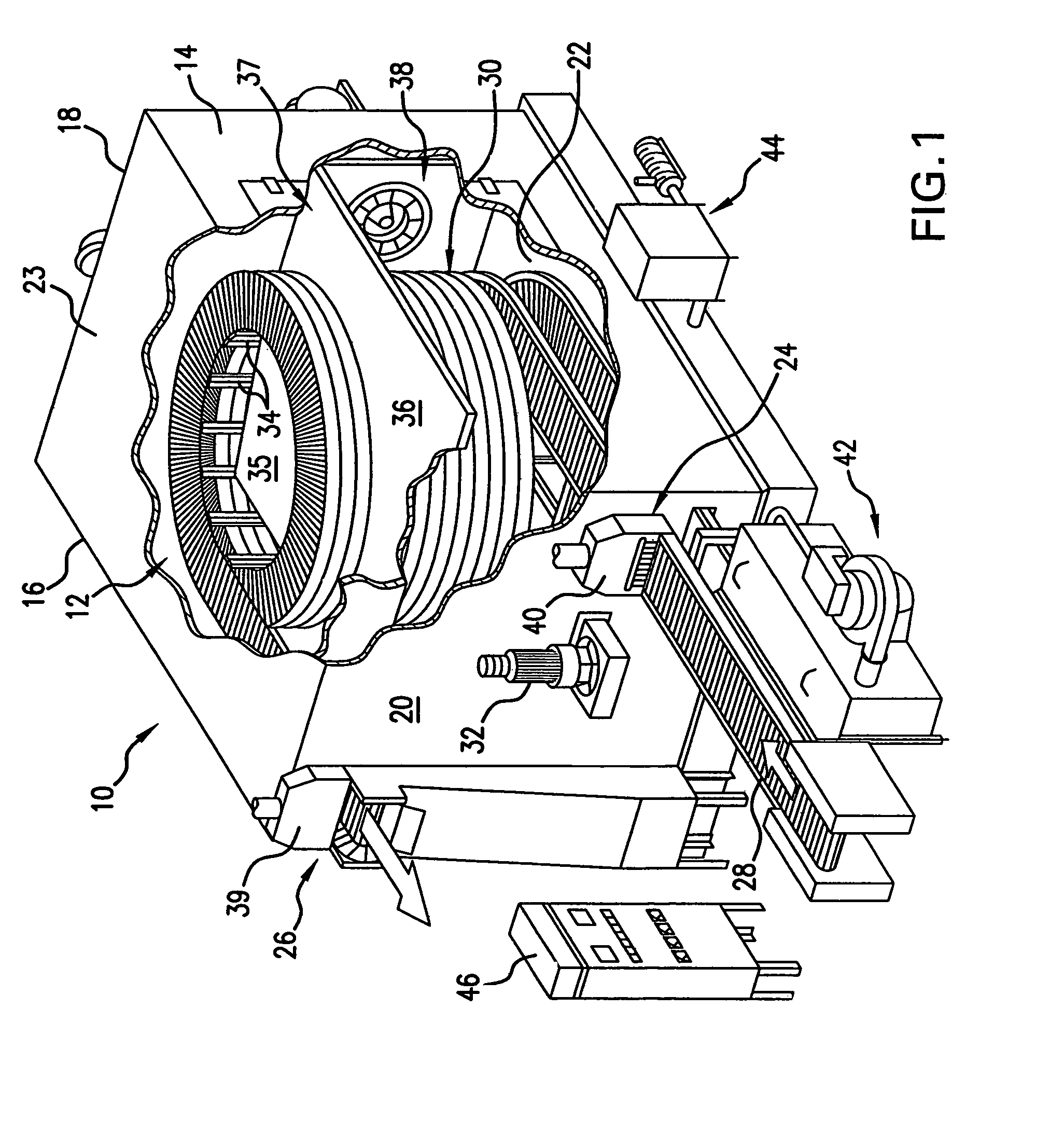
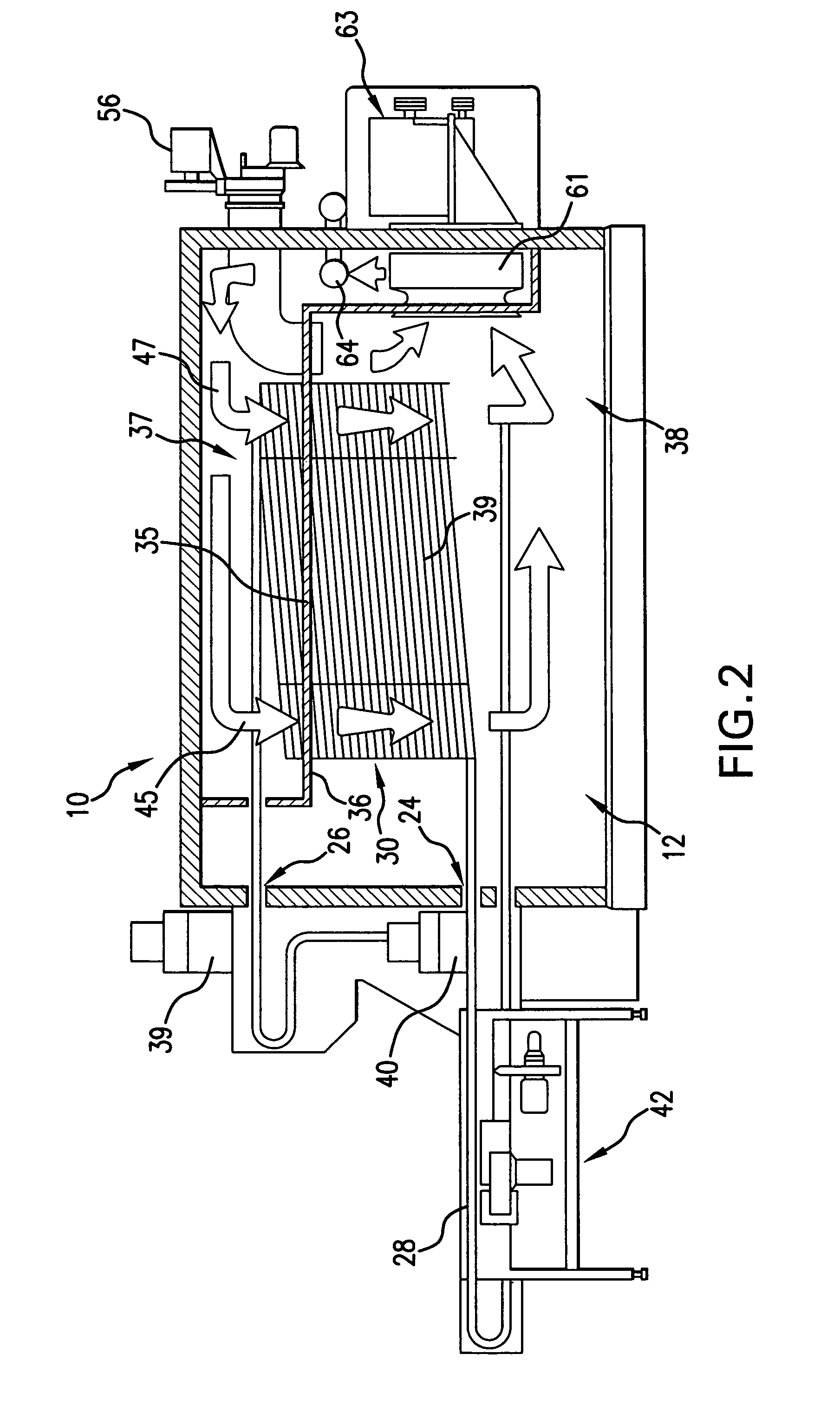
Examples
example i
Comparative
[0041]Approximately ninety bacon slices were cooked using a conventional linear microwave oven process with cooking parameters tailored to provide a target yield percentage of 34.0. The bacon strips had a raw weight range of about 87-160 grams per strip. One-third of the bacon slices were placed in a left side region of the conveyor belt, one-third were placed in a center region, and one-third were placed in a right side region. The individual bacon strips were weighed before and after cooking to determine a yield percentage for each bacon strip. The yield percentages for the bacon strips in each of the three regions were averaged to determine the mean yield percentage for that region. The mean bandwidth variation was calculated as the difference between the highest and the lowest of the three mean yield percentages. The results are summarized as follows.
[0042]
Left SideCenterRight SideRegionRegionRegionVariationMean Yield Percentage39.733.735.96.0Minimum Yield Percentage3...
example ii
Inventive
[0044]Approximately ninety bacon strips were cooked using a spiral cooking oven Model Gyro-Compact® II, the latest generation spiral oven available from JBT Corporation, modified to include a variable weave spiral conveyor belt as described above. The variable weave spiral conveyor belt had an outer portion 70 with a 9-mm pitch between adjacent links 78 and an inner portion 72 with a 13 mm pitch between adjacent links 84, as shown in FIGS. 3 and 4. The conveyor belt followed a spiral path in the oven including 10 spiral tiers. When the conveyor belt assumed the spiral configuration, the areal size of the openings 86 in the inner portion 72 approximated the areal size of the openings 80 in the outer portion 70. The bacon strips had a raw weight range of about 87-160 grams per strip. The bacon strips were cooked using a mixture of steam and heated air at atmospheric pressure and a temperature of about 210° C. The steam and heated air were proportioned to provide a moisture by...
PUM
 Login to View More
 Abstract
Description
Claims
Application Information
 Login to View More