
Low inductance electrical transmission cable
a low-inductance, electrical transmission technology, applied in the direction of power cables, insulation conductors/cables, cables, etc., can solve the problems of inducing cancellation of inductive effects, and achieve the effects of low inductance properties, high current loads, and more uniform heating or loss profiles
- Summary
- Abstract
- Description
- Claims
- Application Information
AI Technical Summary
Benefits of technology
Problems solved by technology
Method used
Image

Examples
Embodiment Construction
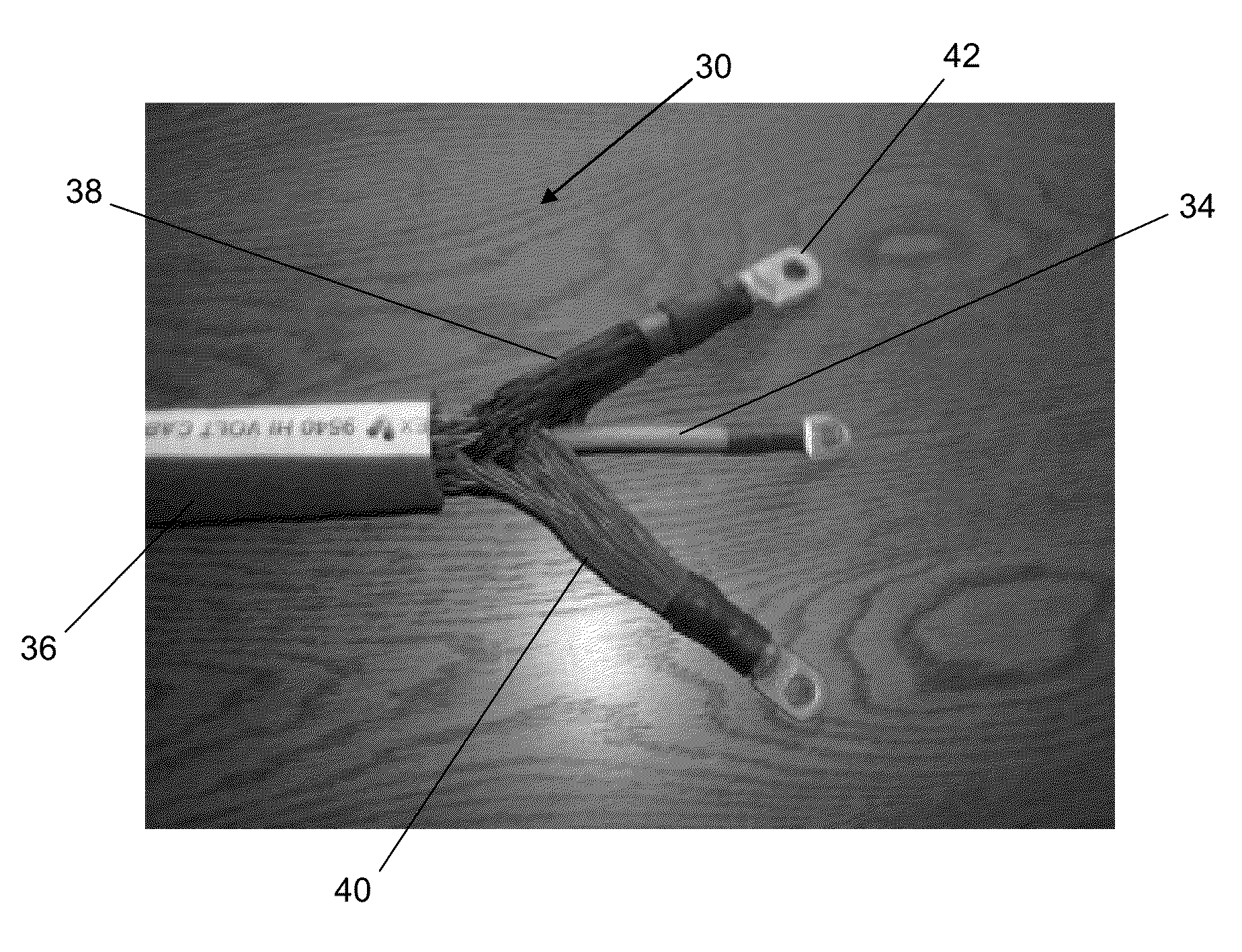
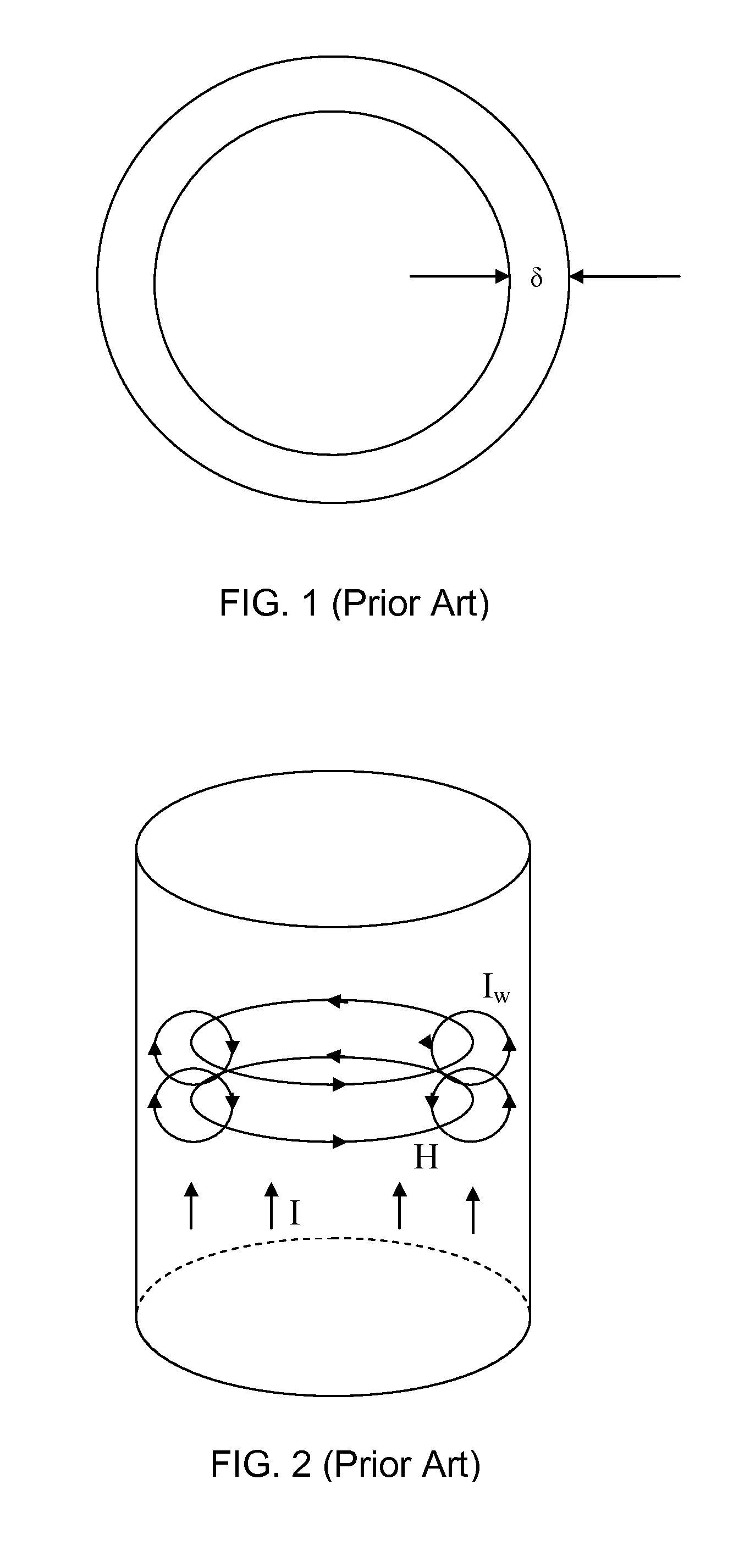
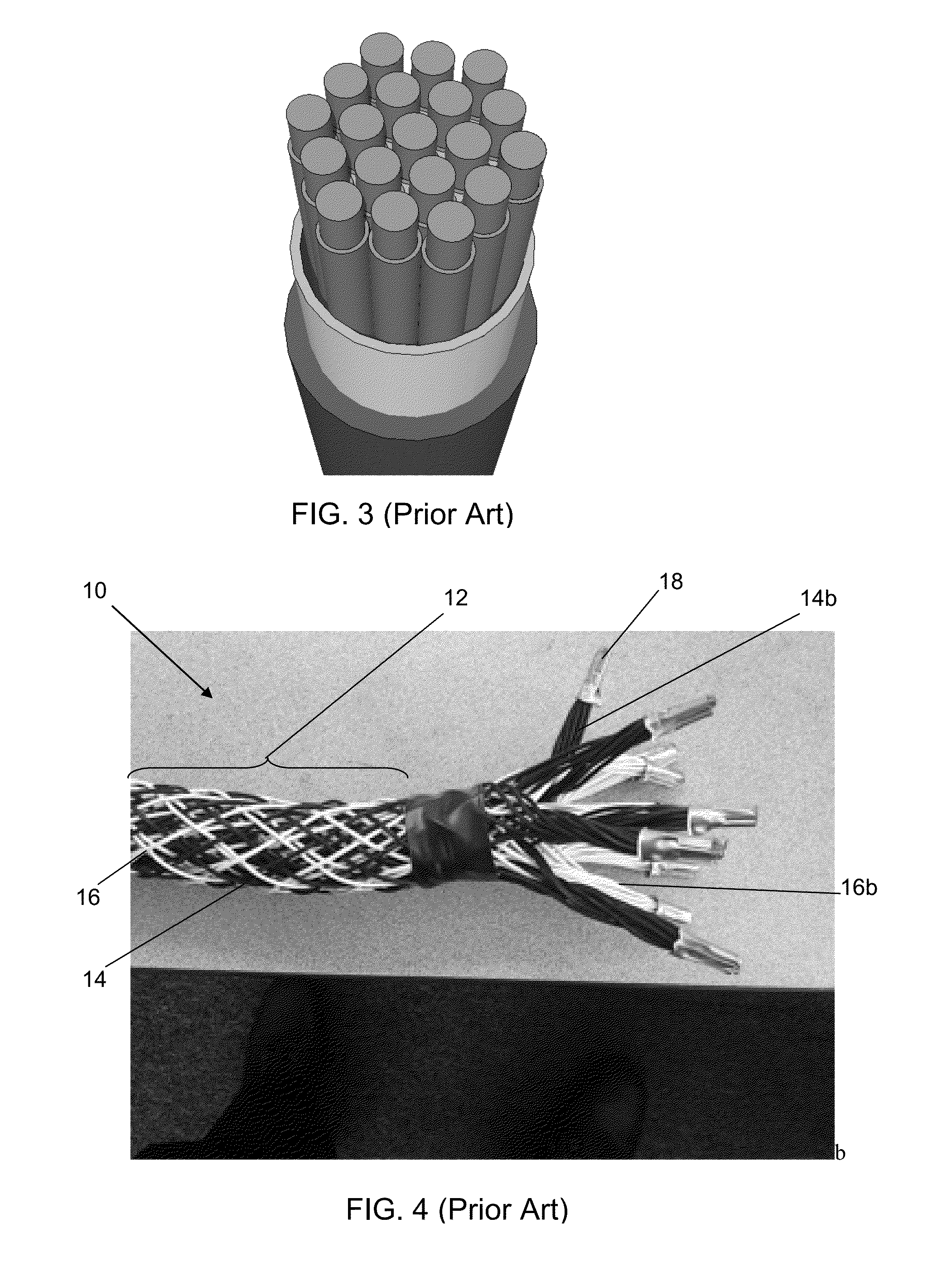
[0019]The present invention has utility as a low inductance electrical transmission cable. The low inductance properties of embodiments of the inventive cable lead to lower current losses resulting in a cooler and more efficient operation of the inventive cable even at higher alternating current (AC) frequencies. Higher current loads are accommodated by a plurality of conductor bundles configured as braided wire strands that are separated and joined into like conductors prior to termination. Equal lengths of the insulated wire strands within the conductor bundles contribute to uniform heating along the length of the inventive cable embodiments. Uniform operating temperature is manifest as more uniform current transmission across the various strands of an inventive cable. In addition, the more equal weave position for all the wire strands making up each braided wire bundle tends to induce cancellation of inductive effects. It has also been surprisingly observed that external electrom...
PUM
| Property | Measurement | Unit |
|---|---|---|
| skin depth | aaaaa | aaaaa |
| lengths | aaaaa | aaaaa |
| polarity | aaaaa | aaaaa |
Abstract
Description
Claims
Application Information
 Login to View More