
Technique for synthesizing improved disperse red 191
A technology for the preparation of disperse red, which is applied in the direction of amino-hydroxyanthraquinone dyes, etc., and can solve the problems that the product quality cannot be recognized.
Inactive Publication Date: 2008-08-20
亚邦化工集团有限公司
View PDF0 Cites 1 Cited by
- Summary
- Abstract
- Description
- Claims
- Application Information
AI Technical Summary
Problems solved by technology
However, in actual production, the product quality obtained by this route is often not recognized.
Method used
the structure of the environmentally friendly knitted fabric provided by the present invention; figure 2 Flow chart of the yarn wrapping machine for environmentally friendly knitted fabrics and storage devices; image 3 Is the parameter map of the yarn covering machine
View moreImage
Smart Image Click on the blue labels to locate them in the text.
Smart ImageViewing Examples

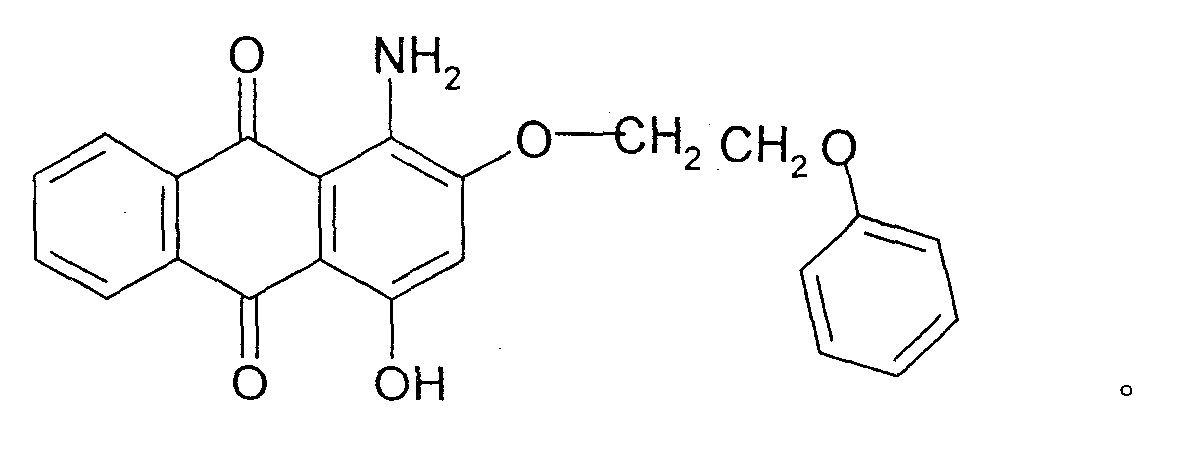
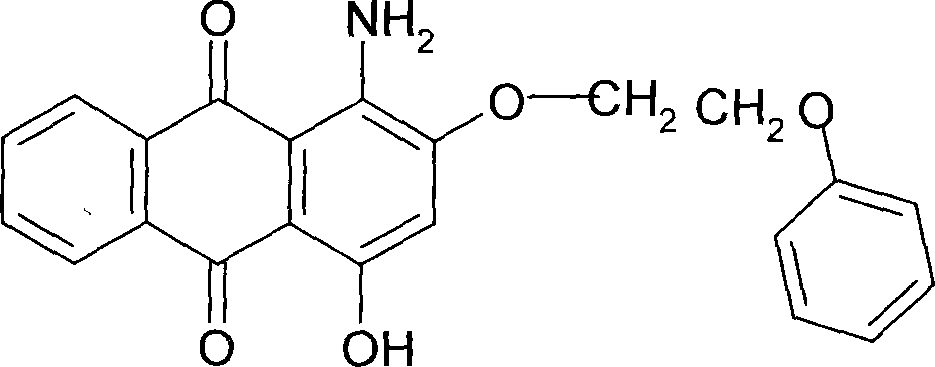
Examples
Experimental program
Comparison scheme
Effect test
Embodiment Construction
[0004] 1. Put 600 kg of ethylene glycol monophenyl ether, 100 kg of OP series emulsifier, 300 kg of disperse red 60, and 150 kg of potassium carbonate into the reactor.
[0005] 2. Heat to 130-150 degrees, keep warm for 6 hours, touch the board to judge the end point, and start to cool down after the end point is reached.
[0006] 3. Below 60 degrees, start to add 800 kg of methanol (or ethanol) dropwise, and finish adding in 2 hours.
[0007] 4. After adding, press filter, wash to obtain the product, and dry to obtain 300 kg of product.
[0008] 5. Recover methanol (or ethanol), phenol, and ethylene glycol monophenyl ether from the mother liquor.
the structure of the environmentally friendly knitted fabric provided by the present invention; figure 2 Flow chart of the yarn wrapping machine for environmentally friendly knitted fabrics and storage devices; image 3 Is the parameter map of the yarn covering machine
Login to View More PUM
 Login to View More
 Abstract
The invention relates to a synthesis technique improvement of disperse red 191 which takes the disperse red 60 and hexanediol monobenzyl ether of hydioquinone as raw materials, uses potassium carbonate or potassium hydroxide as an acid binding agent and uses an emulsifier of OP series as a catalyst; after the raw materials are condensed at high temperature to the terminal, the product can be segregated by methanol (or ethanol) when the temperature is cooled, and at last the product is filtrated and separated. The mother liquid is rectified to recycle the methanol (or ethanol), phenol and hexanediol monobenzyl ether of hydioquinone, and the technique improves the product quality.
Description
Technical field: [0001] The invention relates to an improved synthesis process for preparing Disperse Red 191 (C.I. Disperse Red 191). Background technique: [0002] Disperse Red 191 (C.I.Disperse Red 191) is used in the dyeing and printing of polyester and its blended fabrics. It has good light fastness and is widely used in the dyeing of fabrics in high-end places such as automobiles. General information is introduced with 1-aminoanthraquinone bromination , The hydrolyzate is condensed with ethylene glycol monophenyl ether. However, in actual production, the product quality obtained by this route is often not recognized. Invention content: [0003] Disperse Red 60 and ethylene glycol monophenyl ether are used as raw materials, potassium carbonate or potassium hydroxide is used as an acid-binding agent, and OP series emulsifiers are used as a catalyst. , and the product was isolated by filtration. Mother liquor rectification recovers respectively methanol (or ethanol),...
Claims
the structure of the environmentally friendly knitted fabric provided by the present invention; figure 2 Flow chart of the yarn wrapping machine for environmentally friendly knitted fabrics and storage devices; image 3 Is the parameter map of the yarn covering machine
Login to View More Application Information
Patent Timeline
 Login to View More
 IPC IPC(8): C09B1/54
Inventor周多刚詹国青殷守华张春生陈乐文
Owner亚邦化工集团有限公司