Selection method of neighbor nodes related to physical topology in P2P system

A technology of neighbor nodes and physical topology, applied in the field of computer networks, can solve the problems of large delay in data exchange, increased scheduling burden, loose service capacity, etc., to achieve load balancing, reduce maintenance overhead, and improve the effect of data exchange efficiency.

CN101645925AActive Publication Date: 2010-02-10ZHENGZHOU SEANET TECH CO LTD
0 Cites 17 Cited by

Patent Information

Authority / Receiving Office
CN · China
Patent Type
Applications(China)
Current Assignee / Owner
Publication Date
2010-02-10

Smart Images

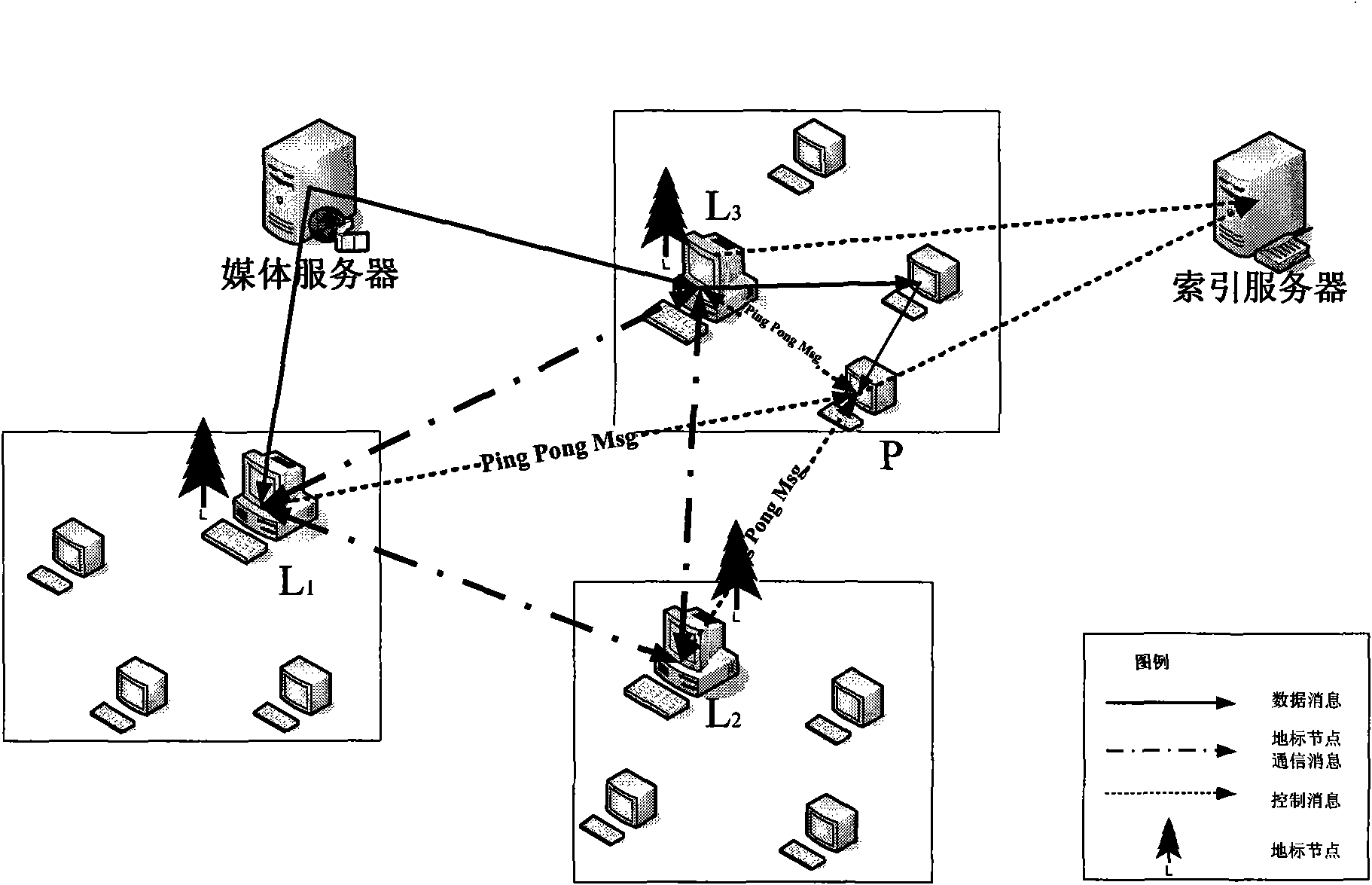
  • Figure 1
    Figure 1
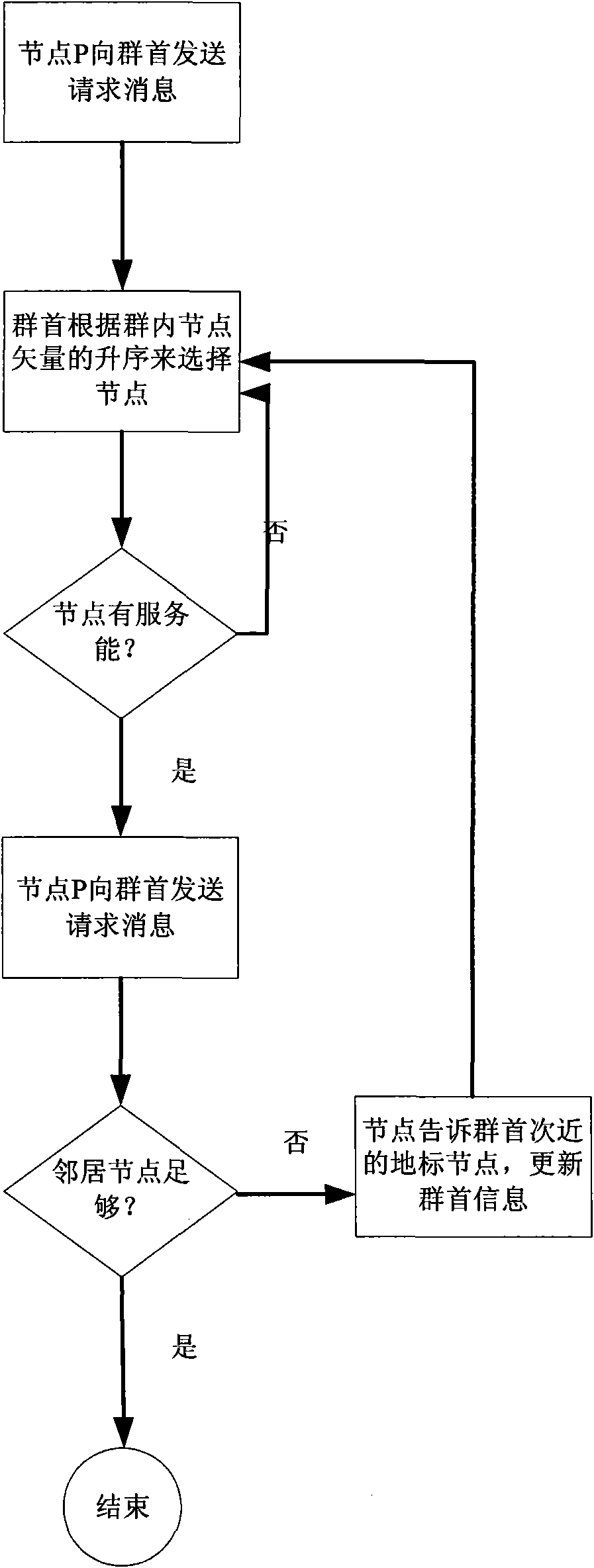
  • Figure 2
    Figure 2
  • Figure 3
    Figure 3
Patent Text Reader

Abstract

The invention relates to a selection method of neighbor nodes related to physical topology in a P2P system. The method comprises the following steps: 1) a group of landmark nodes is determined; 2) each landmark node is taken as a center to build a cluster, wherein, the cluster comprises cluster-head nodes and member nodes; the landmark nodes are cluster-head nodes, and delay time from the member nodes in the cluster to the cluster-head nodes is less than a predetermined threshold value; and the cluster-head nodes store an in-cluster delay table, and the in-cluster delay table records the delaytime from the member nodes in the cluster to the cluster-head nodes and sequentially arranges the delay time according to size of each delay time; 3) a certain solicited node requests a neighbor nodelist to the cluster-head nodes in the cluster of the node; and 4) the cluster-head nodes return the neighbor node list to the solicited node according to the in-cluster delay table. The method can help the P2P system improve data exchange efficiency, realize load balance and reduce maintenance expenditure.
Need to check novelty before this filing date? Find Prior Art

Description

technical field

[0001] The present invention relates to the field of computer network technology, in particular, the present invention relates to a node selection method related to physical topology in a P2P system. Background technique

[0002] In recent years, with the rapid development of broadband communication and multimedia technology, various Internet applications such as online live broadcast, video on demand, and file download have emerged as the times require. New challenges, as the scale of users increases, the traditional client / server (C / S) model service system needs to consume more hardware and software resources, which can no longer meet the needs of large-scale users, so P2P-based services The system develops rapidly and gradually becomes a relatively mature application.

[0003] From a functional point of view, a P2P system generally consists of two types of logical layers: 1) Overlay Layer, which mainly describes how nodes are organized in the P2P service ...

Examples

Embodiment Construction

[0033] (1) Selection of landmark nodes

[0034] When each node joins the system for the first time, it first contacts the index server. The index server (Index Server) is responsible for recording basic information such as the online time of the node and the number of neighbors of the node. According to the basic information of the node, IS selects a number from the list of all online nodes. Nodes with strong service capabilities are used as landmark nodes (generally speaking, the longer the online time, the more neighbor nodes, the stronger the service capability. In terms of specific implementation, you can set the threshold first. When an online node online time and neighbor nodes When the number exceeds the threshold, the online node is regarded as a landmark node). In order to increase the stability of the system, several nodes can be deployed in advance as landmark nodes in the initial stage. In order to avoid exiting as a landmark node and causing nodes in the group to...