Method, system and node equipment for acquiring optical wavelength path
A node device, optical wavelength technology, applied in the field of optical communication, can solve the problems of long calculation time of global optimization path algorithm, long time to obtain optical wavelength path, affecting service performance, etc., to reduce system processing time, reduce transmission delay, The effect of improving business performance
- Summary
- Abstract
- Description
- Claims
- Application Information
AI Technical Summary
Problems solved by technology
Method used
Image


Examples
Embodiment 1
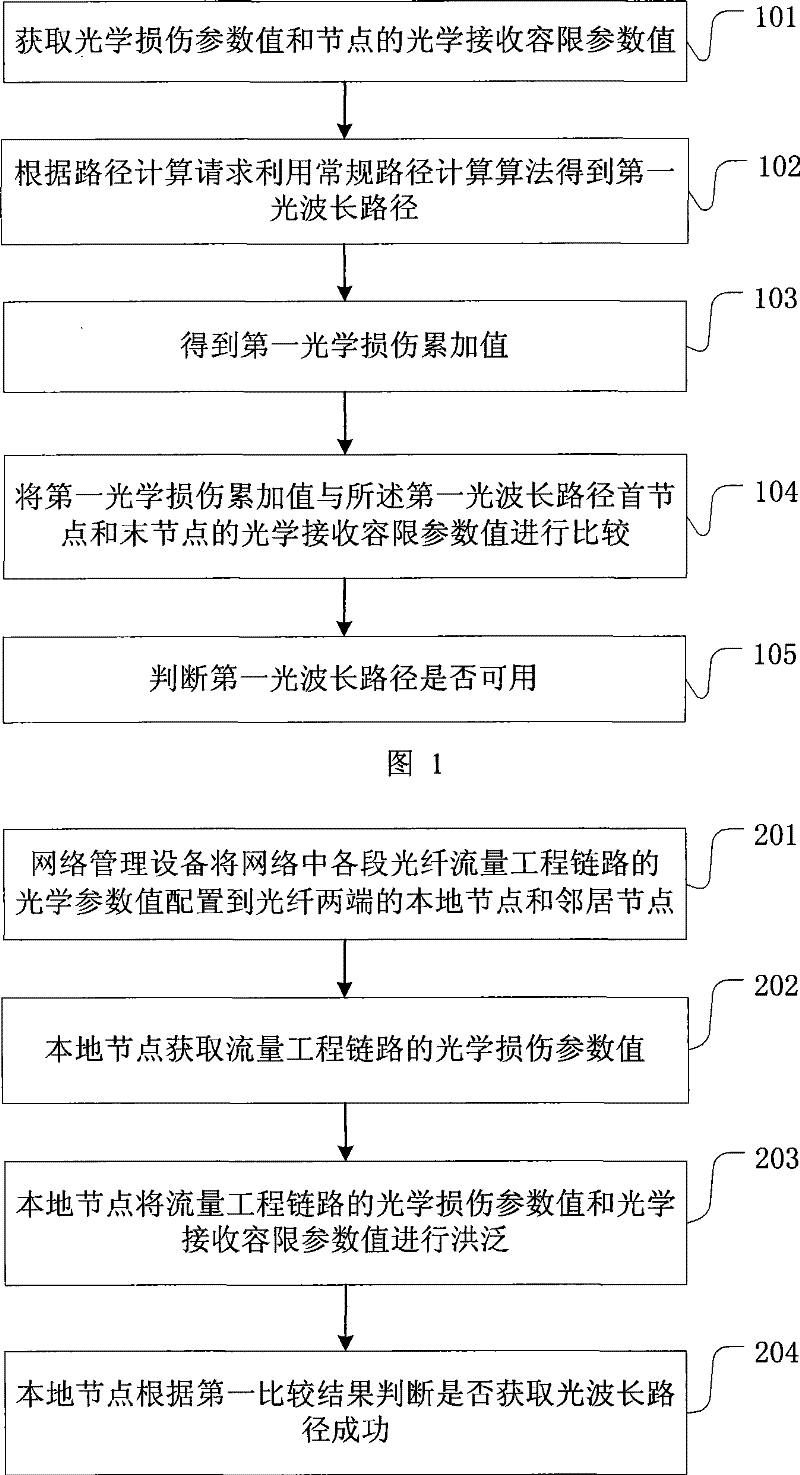
[0034] The embodiment of the present invention provides a method for obtaining an optical wavelength path, such as figure 1 shown, including:
[0035] 101: Obtain the optical damage parameter value of the traffic engineering link in the network and the optical reception tolerance parameter value of the node in the network;
[0036] 102: Obtain a path calculation request, and use a conventional path calculation algorithm to obtain a first optical wavelength path according to the path calculation request;
[0037] 103: Accumulate the optical damage parameter values of each traffic engineering link on the first optical wavelength path to obtain a first accumulated optical damage value;
[0038] 104: Compare the accumulated value of the first optical damage with the optical reception tolerance parameter value of the first node of the first optical wavelength path and the optical reception tolerance parameter value of the end node on the first optical wavelength path;
[0039] ...
Embodiment 2
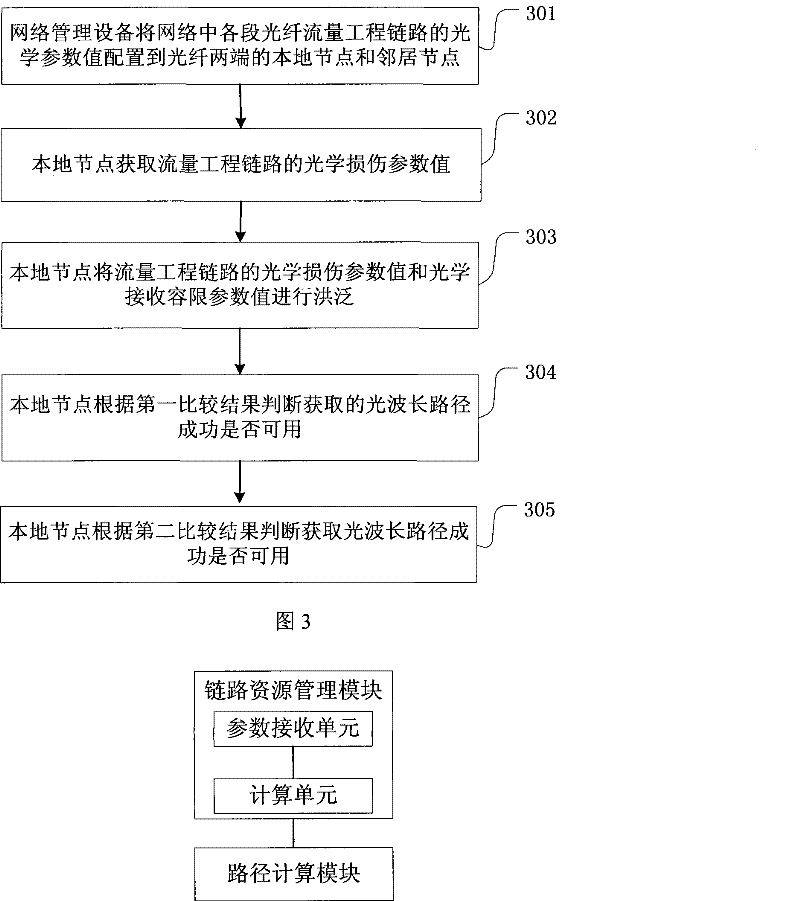
[0062] An embodiment of the present invention provides a method for obtaining an optical wavelength path, such as image 3 shown, including:
[0063] 301-304 are the same as 201-204 in Embodiment 1, and will not be repeated here.
[0064] 305: When the local node judges that the acquired optical wavelength path is unavailable, set the cost weight of the traffic engineering link as the optical damage parameter value of the traffic engineering link, and use the minimum optical damage constraint algorithm to obtain the second optical wavelength path, the minimum optical The damage constraint algorithm is as follows: the optical damage constraint values of each segment of the traffic engineering link on the path in the network are respectively accumulated according to the formula in 304 to obtain the optical damage accumulation value, and the path with the smallest optical damage accumulation value is selected as the obtained second optical wavelength path, the optical damage c...
Embodiment 3
[0068] An embodiment of the present invention provides a node device, such as Figure 4 As shown, the link resource management module and the path calculation module;
[0069] The link resource management module is used to obtain the optical damage parameter value of the traffic engineering link in the network and the optical receiving tolerance parameter value of the node in the network;
[0070] The path calculation module is used to receive a path calculation request, obtain the first optical wavelength path from the local node device to the destination node device by using a conventional path calculation algorithm according to the path calculation request, and divide each segment of the traffic engineering link through which the first optical wavelength path passes The optical damage parameter values of the first optical wavelength path are respectively accumulated to obtain the first optical damage accumulation value of the first optical wavelength path, and the first o...
PUM
 Login to View More
 Abstract
Description
Claims
Application Information
 Login to View More
 - R&D
- Intellectual Property
- Life Sciences
- Materials
- Tech Scout
- Unparalleled Data Quality
- Higher Quality Content
- 60% Fewer Hallucinations
Browse by: Latest US Patents, China's latest patents, Technical Efficacy Thesaurus, Application Domain, Technology Topic, Popular Technical Reports.
© 2025 PatSnap. All rights reserved.Legal|Privacy policy|Modern Slavery Act Transparency Statement|Sitemap|About US| Contact US: help@patsnap.com